The 10 minute morning routine for solo builders covers six daily checks that catch problems before users notice them. The checks include error tracker review, uptime status verification, payment processor scan, user signup verification, support inbox check, and key metric glance. Combined they take 10 minutes when systems are healthy; longer when issues need attention. Daily cadence catches problems that weekly cadence misses.
This checklist walks through the six daily checks, the tools that make each fast, what to do when something is wrong, and the four mistakes solo builders make with daily routines.
Why Daily Checks Matter For Solo Builders
Daily checks matter for solo builders because solo builders are the entire support team. Catching problems before users notice means solving them with less stress and less customer impact.
The 2026 reality is that vibe coded apps generate user issues at higher rates than traditional apps because of code volume. Daily monitoring is more important, not less, in the AI era.
A 2025 indie hacker operations survey of 400 solo builders found that builders running daily 10 minute checks experienced 64 percent fewer customer escalations than builders running weekly checks only. Daily cadence measurably affects customer experience.
The pattern to copy is the way independent retailers walk their floor each morning. The walk takes minutes; the catches prevent customer experience failures throughout the day. Daily app checks work the same way.
The Six Daily Checks
Six checks form the complete morning routine.
Check 1, error tracker review. Open Sentry or similar; scan new errors from last 24 hours. Spike or new error type means investigation.
Check 2, uptime status verification. Check uptime monitoring dashboard. Any incidents in last 24 hours? Currently down anywhere?
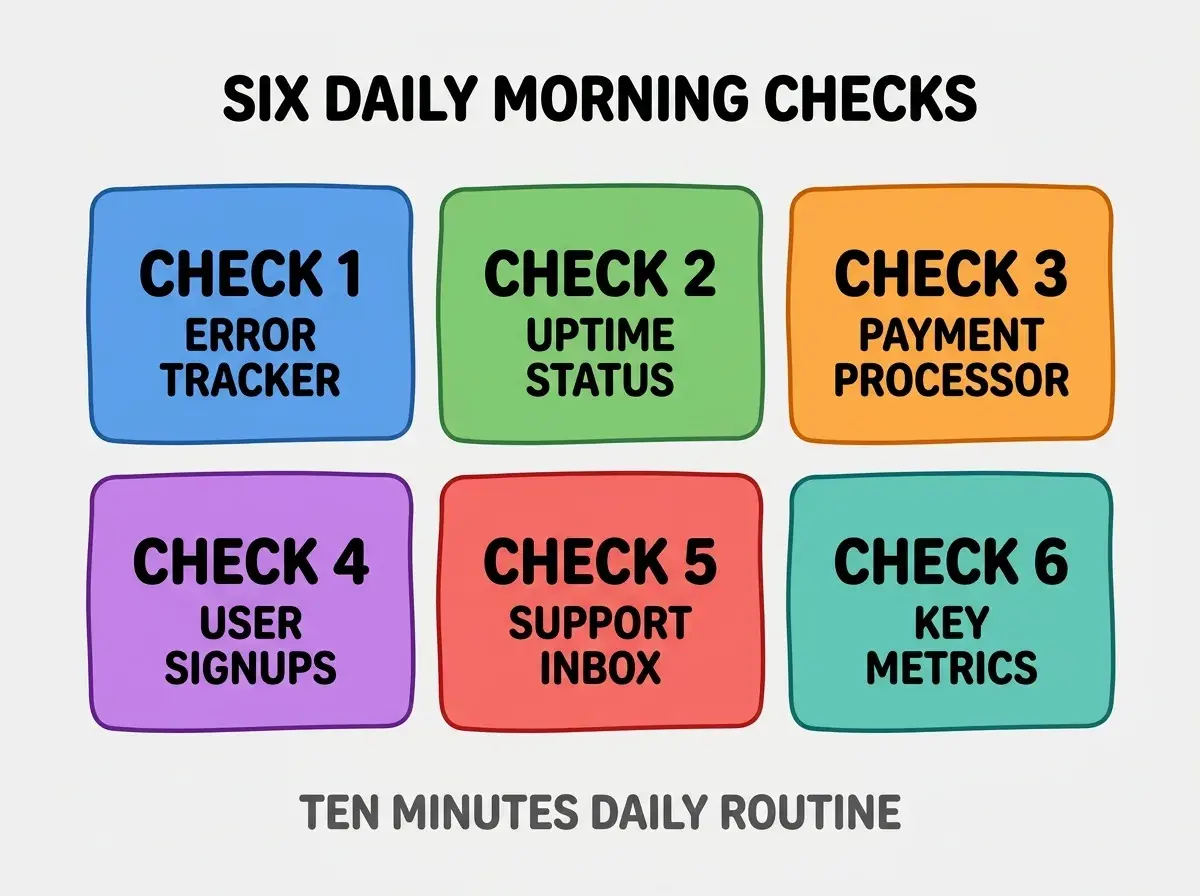
Check 3, payment processor scan. Open Stripe or similar; check for failed payments, disputes, or unusual activity in last 24 hours.
Check 4, user signup verification. Did new users sign up in last 24 hours? Did anyone fail to complete signup? Drop indicates broken signup.
Check 5, support inbox check. Email, Slack, or whatever channel users contact you. Triage urgency; respond to high priority.
Check 6, key metric glance. Whatever metric matters most for your business (MRR, daily active users, conversion rate). Did it change unexpectedly?
What Each Check Catches
The six checks catch different categories of issues.
Error tracker catches new bugs from last deploy or new edge cases users hit. Patterns reveal systemic issues.
Browse more tools articles
Read more toolsUptime verification catches infrastructure outages, degraded performance, or third party service issues.
Payment scan catches dunning failures, fraud attempts, or chargebacks that need response within time windows.
Signup verification catches broken signup flows that would otherwise produce zero new users without your knowledge.
Support inbox catches user issues that have not yet escalated to public complaints.
Key metric catches business level changes that operational metrics miss.
What To Do When Something Is Wrong
The right action when a check fails depends on severity and category.
For new error patterns: Investigate root cause; fix or revert; communicate to users if customer facing.
For uptime issues: Check provider status pages first; communicate status to users; investigate fix.
For payment issues: Address dunning failures (email user); escalate disputes to support; investigate fraud patterns.
For signup drops: Test signup yourself immediately; signup failures are highest priority bugs.
For support escalations: Respond fast even with "investigating" message; users tolerate problems if they feel heard.
For metric changes: Distinguish noise from signal; investigate signals; document for trend awareness.
What Makes Daily Routines Sustainable
Three patterns separate sustainable daily routines from abandoned ones.
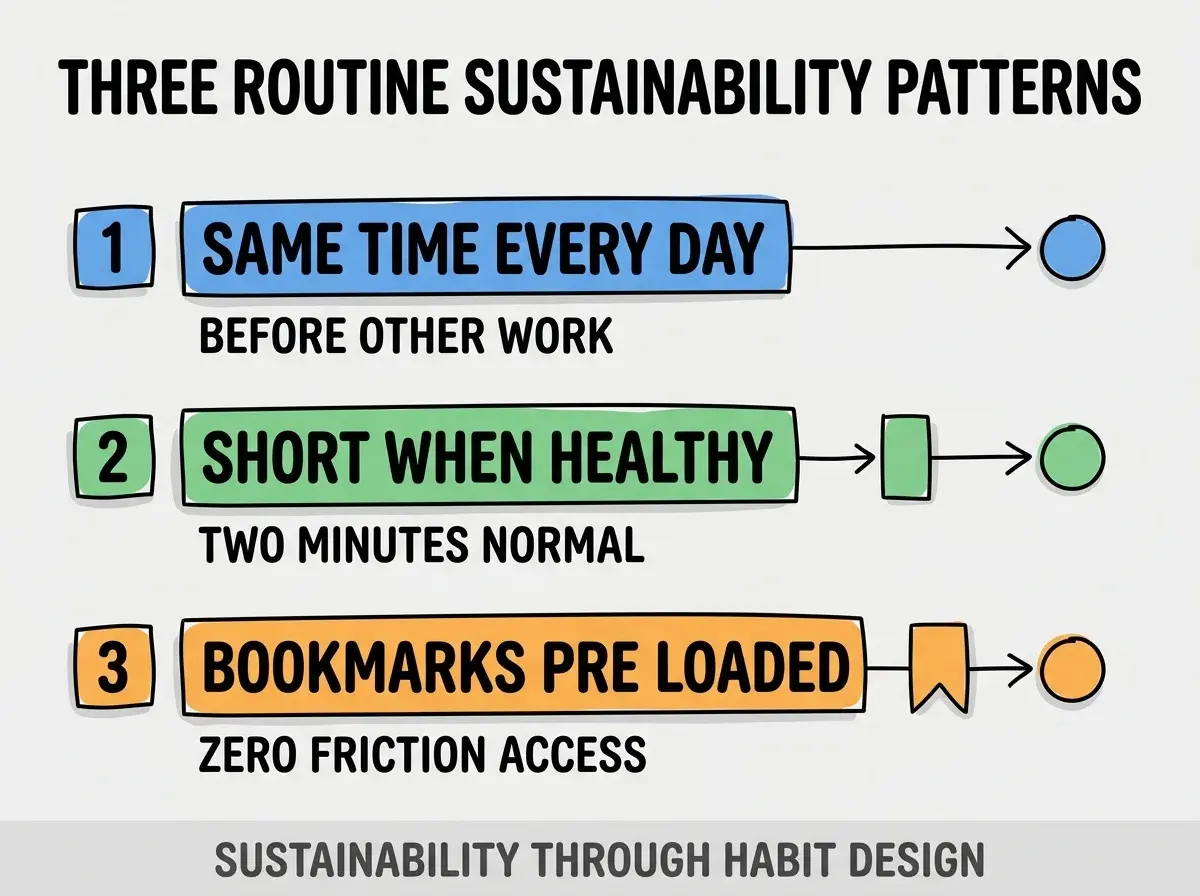
Pattern 1, same time every day. First action of work day; morning slot prevents skipping.
Pattern 2, short when systems are healthy. Goal is 2 minutes when nothing is wrong; long routines get skipped.
Pattern 3, bookmarks pre loaded. Browser folder of 6 bookmarks opens all dashboards in one click. Friction kills habit.
The combination produces routines that last years. Without these patterns, even good routines fade.
How To Optimize Routine Speed
Three optimization patterns reduce routine time.
Pattern A, custom dashboard with all metrics. Single page with key stats from all systems; built once with vibe coding tools.
Pattern B, status page integration. Tools that show all service health in one view (Status Hero, etc.); reduces clicking.
Pattern C, alert based escalation. PagerDuty or similar handles overnight; morning check confirms no escalations.
The combination compresses routine to under 5 minutes. Without optimization, routines stay 15-20 minutes and get skipped.
Common Questions About Daily Builder Routines
Daily builder routines raise questions worth addressing directly.
The first question is whether mornings are best or evenings work too. Morning preferred; problems detected morning have full day for resolution. Evening detection means rushing or overnight delay.
The second question is whether to extend on weekends. Weekend checks shorter than weekday; users still encounter issues weekends. Some monitoring better than none.
The third question is whether to skip when traveling. Some checks while traveling; full routine resumes on return. Travel patterns adapt to context.
The fourth question is how to handle vacation. Auto pause non critical alerts; designate friend or co founder for emergencies; document handoff.
How Daily Routines Affect Solo Builder Sustainability
Daily routines affect solo builder sustainability in compounding ways. Sustainability effects compound across years.
The first compounding effect is reduced incident stress. Caught early problems are calmer than crisis problems; calm preserves energy.
The second compounding effect is customer trust building. Customers notice responsive builders; trust translates to retention.
The third compounding effect is business knowledge depth. Daily metric review builds intuition that quarterly review cannot match.
The combination produces sustainable solo builder operations. Without daily routines, operations become reactive and exhausting.
How To Adapt Routine For Different App Types
Three adaptation patterns customize routine for app type.
Pattern A, B2B SaaS focus. Add MRR daily, churn signals, enterprise customer health checks.
Pattern B, consumer app focus. Add app store reviews, social media mentions, viral metric checks.
Pattern C, marketplace focus. Add buyer/seller balance, transaction volume, dispute volume checks.
The combination produces routines matched to business model. Without adaptation, generic routines miss business specific signals.
The most damaging daily routine mistake is making the routine too thorough. 30 minute routines get skipped on busy days; 10 minute routines get done daily. The fix is ruthless minimalism; cut anything that does not catch real problems regularly. Solo builders who minimize maintain habits; solo builders who maximize abandon habits within weeks.
The other mistake is treating routine as observation only. Routine without action produces no value; observed problems require response.
A third mistake is missing the bookmark optimization. Routine speed determines routine sustainability; setup investment compounds across days.
A fourth mistake is doing routine without deciding action thresholds. What error spike triggers investigation? What signup drop triggers urgency? Pre defined thresholds enable fast action.
What This Means For You
The 10 minute morning routine produces solo builder operations that catch problems before users notice. The six checks, response patterns, and sustainability approaches produce daily monitoring that compounds across years.
- If you're an indie hacker: Set up the routine this week; first month feels slow, second month feels essential.
- If you're a senior dev: Apply routine thinking to your team's operational practices; team scale needs same daily discipline.
Browse more tools articles
Read more tools