CSS Grid and Flexbox understanding what AI generates helps debug layouts when AI output not quite right. Four common patterns matter: Flexbox for one dimensional (row or column alignment), Grid for two dimensional (rows and columns together), Grid for page layout (header, sidebar, main, footer), and Flexbox for component layout (buttons, navigation items). AI generates these patterns frequently; understanding helps verify correctness and debug when wrong.
This piece walks through the four patterns, the implementation approaches, what makes layout debugging effective, and the four mistakes builders make on AI generated CSS.
Why Understanding AI CSS Matters
Understanding AI CSS matters because AI generates plausible CSS that sometimes does not work. Without understanding, debugging guess work.
The 2026 reality is that AI generates substantial CSS volume; understanding fundamentals enables verification.
A 2025 vibe coder skill survey of 800 builders found that builders understanding CSS Grid and Flexbox debugged AI CSS 73 percent faster than builders relying on AI alone, primarily through understanding what AI generated. Understanding measurably affects debug speed.
The pattern to copy is the way carpenters understand wood grain to work it correctly. Wood grain affects cuts; understanding informs technique. Same patterns apply to CSS; understanding informs AI prompts and debugging.
The Four Common Patterns
Four patterns dominate AI generated layouts.
Pattern 1, Flexbox one dimensional. Row or column. Foundation.
Pattern 2, Grid two dimensional. Rows and columns. Complex layouts.
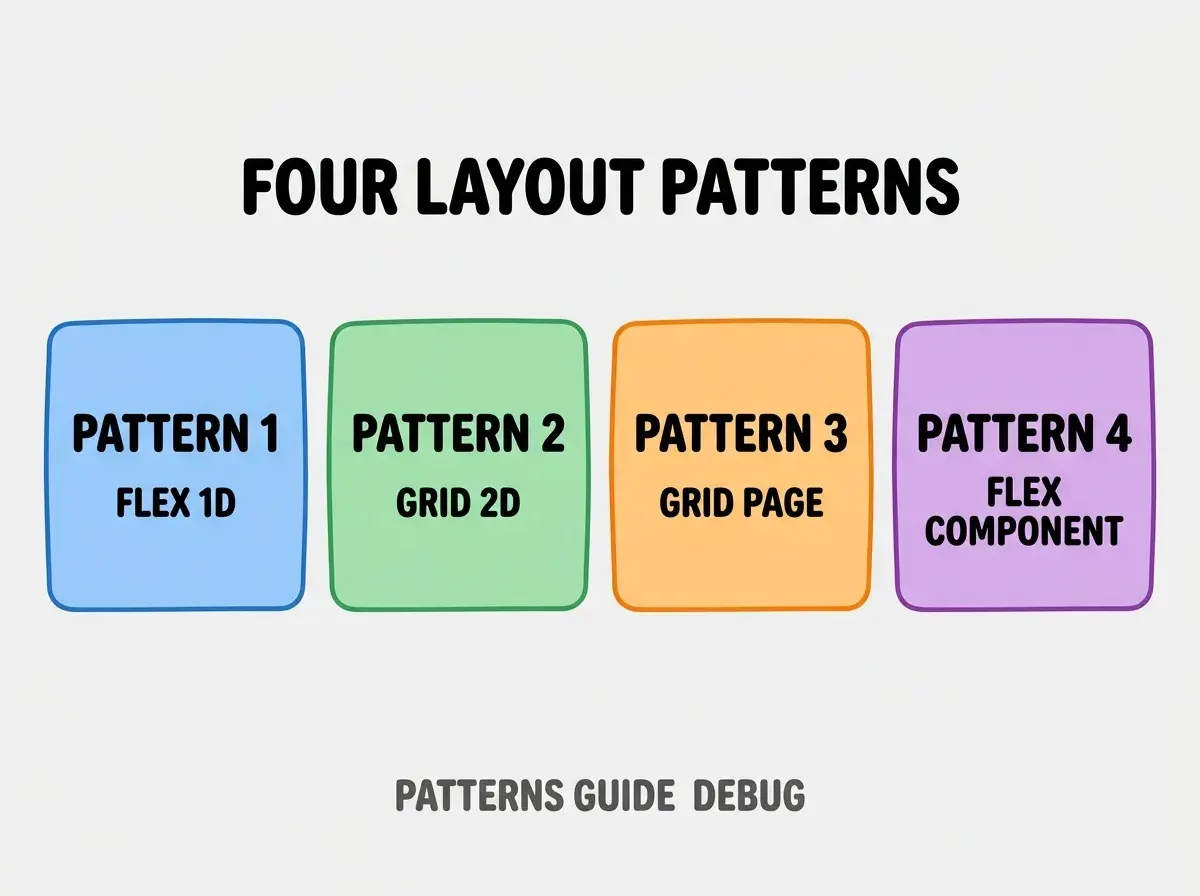
Pattern 3, Grid page layout. Header, sidebar, main, footer. Standard pages.
Pattern 4, Flexbox component. Buttons, nav items. Component level.
How To Understand Each Pattern
Four implementation approaches address each pattern.
Implementation 1, Flexbox flex direction matters. Row or column; determines axis.
Browse more build
Read more buildImplementation 2, Grid template areas readable. Named areas describe layout.
Implementation 3, Grid for whole page structure. Page level uses Grid.
Implementation 4, Flex for content alignment. Align items in row.
What Makes Layout Debugging Effective
Three patterns separate effective debugging from guess work.
Pattern 1, browser DevTools layout overlay. DevTools shows grid and flex; visual matters.
Pattern 2, isolate layout from content. Test layout with placeholder content.
Pattern 3, mental model of axis. Main vs cross axis; understanding enables debug.
What Makes AI CSS Reliable
Three patterns separate reliable AI CSS from broken.
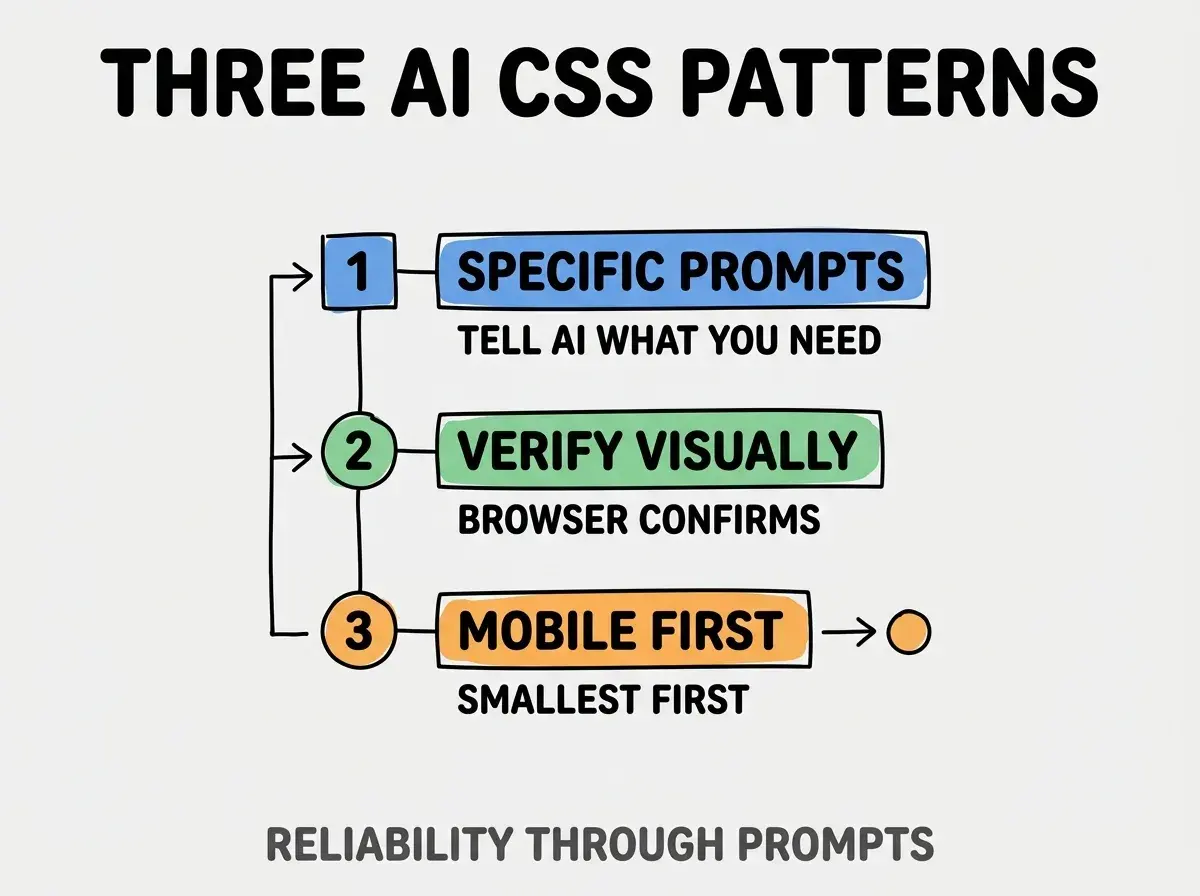
Pattern 1, specific prompts. Tell AI what you need; specifics drive quality.
Pattern 2, verify visually. Browser confirms; without verification, surprises.
Pattern 3, mobile first. Smallest first; scale up.
The combination produces reliable AI CSS. Without these patterns, CSS unpredictable.
How To Read Generated Layout
Three patterns help reading.
Pattern A, container properties first. Container determines layout type.
Pattern B, child properties second. Children behavior within layout.
Pattern C, media queries third. Responsive breakpoints.
Common Questions About AI CSS
AI CSS raises questions worth addressing directly.
The first question is when to use Flexbox vs Grid. Flex 1D; Grid 2D. Both have place.
The second question is whether to use Tailwind. AI handles Tailwind well; recommended.
The third question is what about CSS in JS. Works; preference matters.
The fourth question is whether AI handles container queries. Yes increasingly; verify.
How Layout Knowledge Affects AI Productivity
Knowledge affects productivity in compounding ways. Knowledge effects compound across CSS work.
The first compounding effect is debug speed. Understanding speeds debugging.
The second compounding effect is prompt quality. Better prompts better AI output.
The third compounding effect is review capability. Review catches AI mistakes.
The combination produces productivity shaped by CSS knowledge. Without knowledge, productivity bounded.
How To Learn Layout Effectively
Three patterns help learning.
Pattern A, Grid Garden game. Grid through play.
Pattern B, Flexbox Froggy game. Flex through play.
Pattern C, build common layouts. Layout exercises build intuition.
The combination produces layout fluency. Without practice, knowledge stays surface.
The most damaging AI CSS mistake is accepting layout that looks right but uses wrong tool. AI sometimes uses Flex for 2D or Grid for 1D; works but suboptimal. The fix is to verify tool matches need; right tool simpler maintenance. Builders who verify use right tools maintain CSS; builders who accept face awkward CSS over time.
The other mistake is missing the responsive verification. AI generates desktop layout; mobile breaks.
A third mistake is over indexing on Tailwind. Sometimes raw CSS clearer.
A fourth mistake is treating CSS as one off. CSS evolves; understanding compounds.
What This Means For You
Understanding CSS Grid and Flexbox what AI generates enables debugging AI output and writing better prompts. The four patterns, implementation approaches, and reliability practices produce CSS understanding that compounds productivity.
- If you're changing careers: CSS fluency expected for frontend work; learn early.
- If you're a student: CSS layout fundamental; learning compounds career.
- If you're a senior dev: AI CSS verification skill differentiates senior.
Browse more build
Read more build