What CS professors need to know about AI coding in 2026 covers four awareness areas that affect academic teaching: industry tool capabilities (what students will use), changing skill priorities (what employers value), assessment evolution (what tests measure), and student experience expectations (what students expect from instruction). Combined awareness produces teaching that prepares students for current industry; missing awareness produces graduates mismatched to opportunities.
This piece walks through the four awareness areas, what each requires of professors, how to maintain awareness, and the four mistakes professors make in AI era teaching.
Why Professor Awareness Matters
Professor awareness matters because students absorb professor framing of AI coding. Professors who understand AI tools accurately shape student understanding accurately; misunderstanding spreads through cohorts.
The 2026 reality is that CS professors face pace of AI tool change unprecedented in academic memory. Awareness investment is non trivial; investment matters dramatically for student outcomes.
A 2025 student survey of 1,200 CS undergraduates found that students with AI fluent professors achieved 56 percent higher job placement rates than students with professors avoiding AI tool topics. Professor awareness measurably affects student employment outcomes.
The pattern to copy is the way medical school professors maintain currency on emerging treatments. Medical knowledge evolves; professors who do not update teach outdated medicine. CS knowledge evolves with similar pace currently; same dynamic applies.
The Four Awareness Areas
Four areas form complete AI coding awareness for professors.
Area 1, industry tool capabilities. What tools students will use post graduation; capabilities that matter.
Area 2, changing skill priorities. What employers now value; how priorities differ from 2020 era.
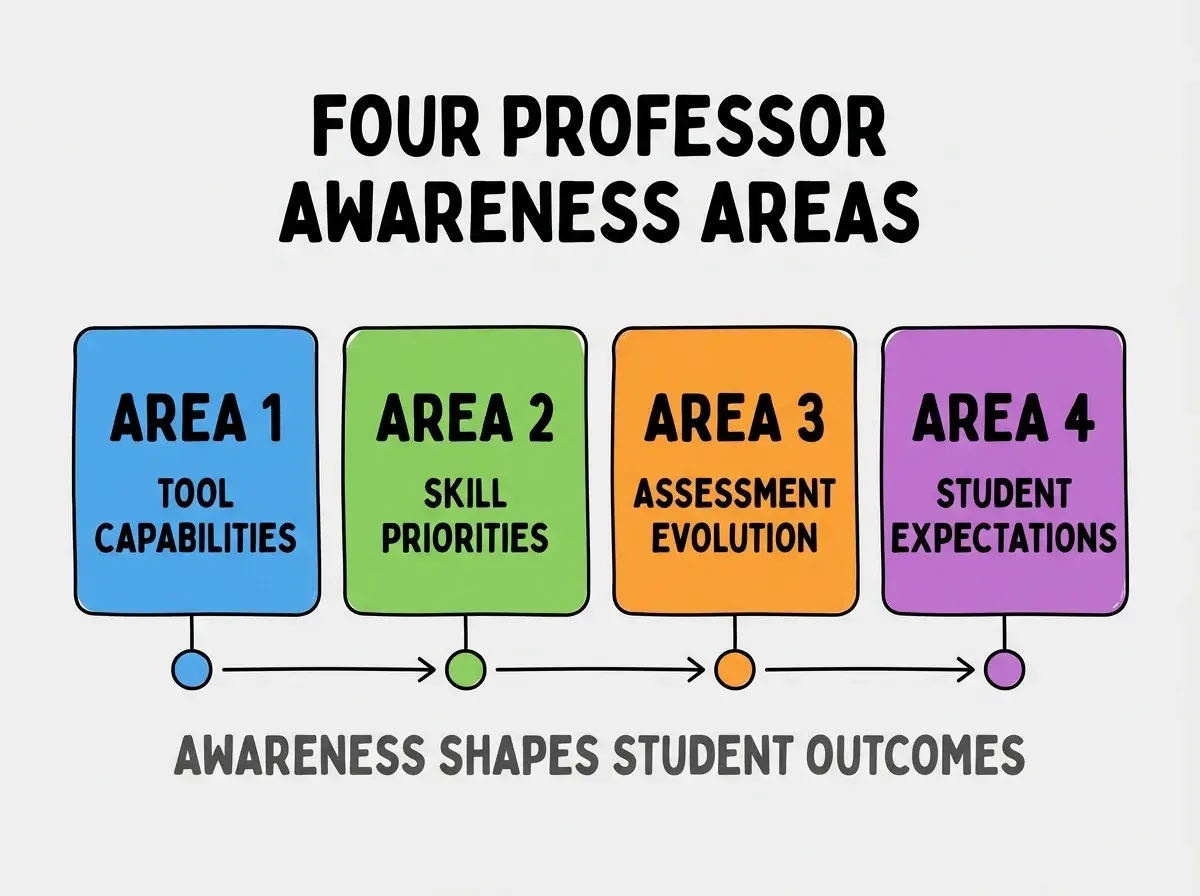
Area 3, assessment evolution. What new assessment approaches work; how to evaluate AI era skills.
Area 4, student experience expectations. What students expect from AI era instruction; expectations affect engagement.
What Each Awareness Area Requires
Four requirement summaries describe each area.
Area 1 requires hands on experience with tools students use. Reading about Cursor differs from using Cursor; experience matters.
Browse more foundations
Read more foundationsArea 2 requires industry connection beyond academic publishing. Industry skill priorities evolve faster than academic publication cycles.
Area 3 requires new assessment design. Old assessment formats easily completed by AI; new formats evaluate judgment.
Area 4 requires student input on instruction. Students reveal what works; reveal informs improvement.
How To Maintain Awareness
Three patterns help professors maintain ongoing awareness.
Pattern 1, periodic tool use yourself. Use Cursor, Claude Code monthly; experience builds intuition that reading cannot.
Pattern 2, industry partnership active. Connect with hiring managers, attend industry conferences; partnership produces awareness.
Pattern 3, student feedback systematically. Course evaluations include AI specific questions; feedback informs evolution.
What Makes AI Era Teaching Sustainable
Three patterns separate sustainable AI era teaching from one off curriculum updates.
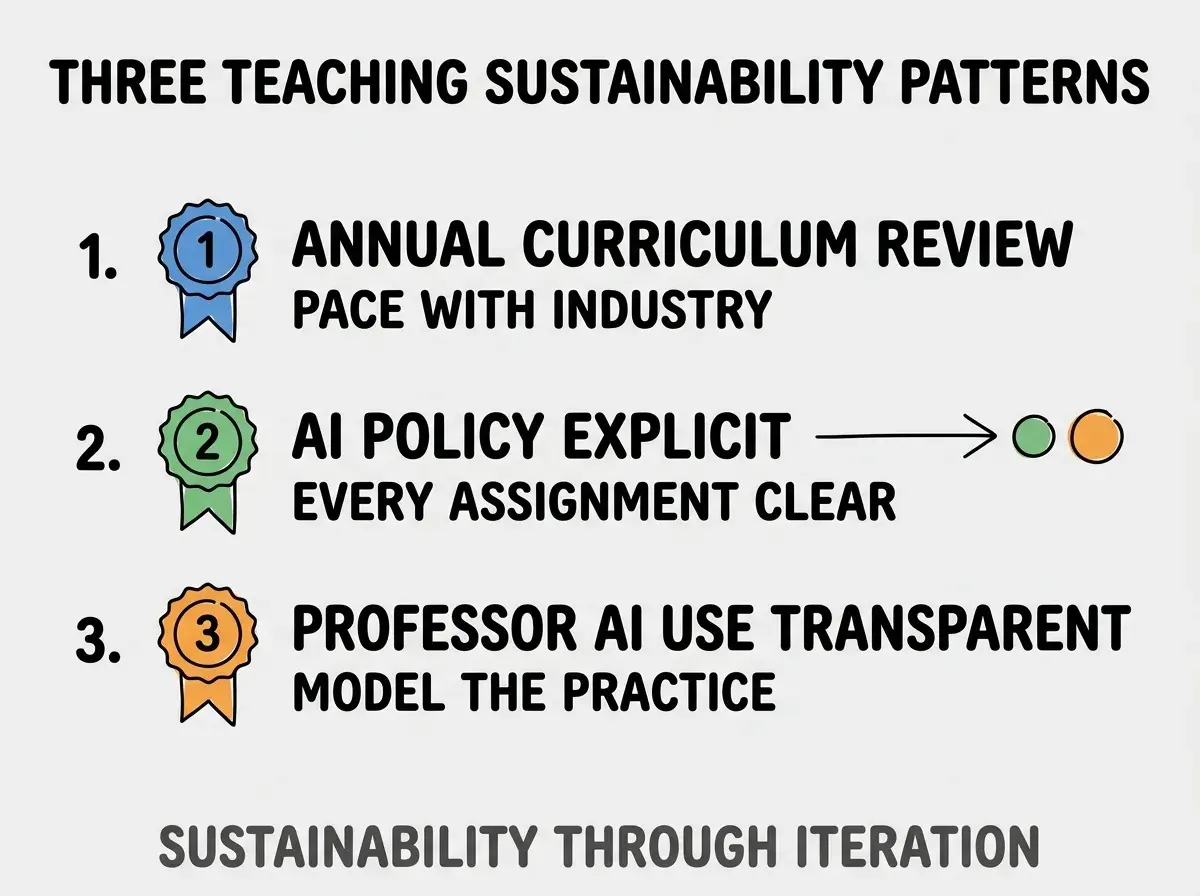
Pattern 1, annual curriculum review. Industry pace requires annual updates; longer cycles produce drift.
Pattern 2, AI policy explicit per assignment. Each assignment specifies AI policy; clarity prevents confusion.
Pattern 3, professor AI use transparent. Professors using AI in own work model the practice; modeling teaches.
The combination produces sustainable AI era teaching. Without these patterns, teaching falls behind.
How To Get Started With AI Awareness
Three patterns help professors begin AI awareness journey.
Pattern A, install Cursor or Claude Code this week. Hands on experience starts immediately; experience builds awareness.
Pattern B, build small project with AI assistance. Build something to learn AI patterns; building teaches more than reading.
Pattern C, connect with one industry contact monthly. Monthly connection produces awareness without overwhelming time investment.
Common Questions About Professor AI Awareness
Professor AI awareness raises questions worth addressing directly.
The first question is how much AI use professors should personally adopt. Enough to teach competently; enough is more than zero.
The second question is whether to ban AI in coursework while encouraging student use elsewhere. Mixed messages confuse; consistency matters more than specific policy.
The third question is how to handle academic integrity in AI era. New definitions needed; old definitions assume AI does not exist.
The fourth question is whether universities support AI tool licenses. Some yes; advocate when not. Cost barrier affects student equity.
How AI Awareness Affects Student Trust
Professor AI awareness affects student trust in compounding ways. Trust effects compound across course interactions.
The first compounding effect is student engagement. Students engage with AI fluent professors; engagement compounds learning.
The second compounding effect is course evaluation outcomes. Higher engagement produces better evaluations; evaluations affect career.
The third compounding effect is research collaboration. Students collaborate with respected professors; respect comes from currency.
The combination produces academic outcomes shaped by awareness. Without awareness, professors lose student respect.
How To Use AI For Teaching Preparation
Three patterns help AI assist teaching preparation.
Pattern A, AI generates assignment variations. AI produces multiple variations of same assignment concept; variation prevents copying.
Pattern B, AI creates rubric drafts. Rubric drafts speed grading consistency; human review essential.
Pattern C, AI summarizes recent industry developments. Industry news summaries keep professors current; awareness scaling.
The combination produces AI assisted teaching that scales preparation. Without AI assistance, teaching preparation hits time limits.
The most damaging professor AI mistake is treating AI as fad to wait out. AI is not fad; AI is current and growing professional practice. The fix is to engage with AI as serious professional development; engagement produces awareness that benefits students. Professors who engage produce prepared graduates; professors who wait produce graduates mismatched to industry.
The other mistake is over claiming AI expertise without practice. Hands on use required; reading does not substitute.
A third mistake is ignoring student AI use. Students will use AI; ignoring use does not stop it.
A fourth mistake is missing the assessment redesign. Old assessment formats fail; new formats required.
What This Means For You
What CS professors need to know about AI coding in 2026 reshapes what good teaching looks like in academic settings. The four areas, awareness patterns, and teaching adaptations produce framework for academic AI era teaching.
- If you're a student: Choose courses with AI fluent professors; fluency affects what you learn and how you are evaluated.
Browse more foundations
Read more foundations