To understand the case study of a student winning a hackathon with an AI built project, recognize the four phase approach she followed (pre hackathon preparation that compounded with AI tool fluency, scoping that picked a winnable narrow problem rather than impressive broad one, execution that leveraged AI tools heavily during the 48 hour build, and presentation that highlighted the problem and demo over technical complexity), see what student perspective brought that more experienced builders might have missed, and consider how the patterns apply to other students entering hackathons. The case study shows how AI tools change the hackathon dynamic in students' favor when they execute deliberately.
This piece walks through the four phases, the student specific patterns, the tooling that worked, and the four mistakes students make at hackathons.
Why Student Hackathon Wins Matter
Hackathons have always been launch pads for student careers. AI tools change which students win; technical fundamentals matter less, AI tool fluency matters more, problem framing matters most. Students who recognize the shift win more often than students who hackathon traditionally.
The 2026 reality is that students using AI tools can compete with more experienced builders. The execution speed advantage of AI tools narrows the experience gap; deliberate students leveraging AI tools win against intuitive but slower experienced builders.
A 2025 hackathon analysis tracked winners across 200 university hackathons. 41 percent of winning teams included projects that were primarily AI built; the rate has grown from negligible in 2023. Students who compete with AI tools win at higher rates than students who do not; the tool advantage is real and measurable.
The pattern to copy is the way calculator literate students outperformed slide rule students once calculators became allowed in math contests. The transition advantaged students fluent in the new tools rather than students refining the old skills. AI tools play similar role in hackathons; fluency in the new tools beats experience with the old tools.
The Four Phase Approach
Four phases characterized the student's hackathon win.
Phase 1, pre hackathon preparation that compounded with AI tool fluency. Spent weeks before the hackathon getting fluent with Cursor, Claude Code, and v0. The fluency made the 48 hour build dramatically faster than learning during the hackathon would have.
Phase 2, scoping that picked a winnable narrow problem. Rather than ambitious broad project, picked specific narrow problem with clear demo. The narrow scope produced shippable scope; broad scope produces incomplete demos that lose.
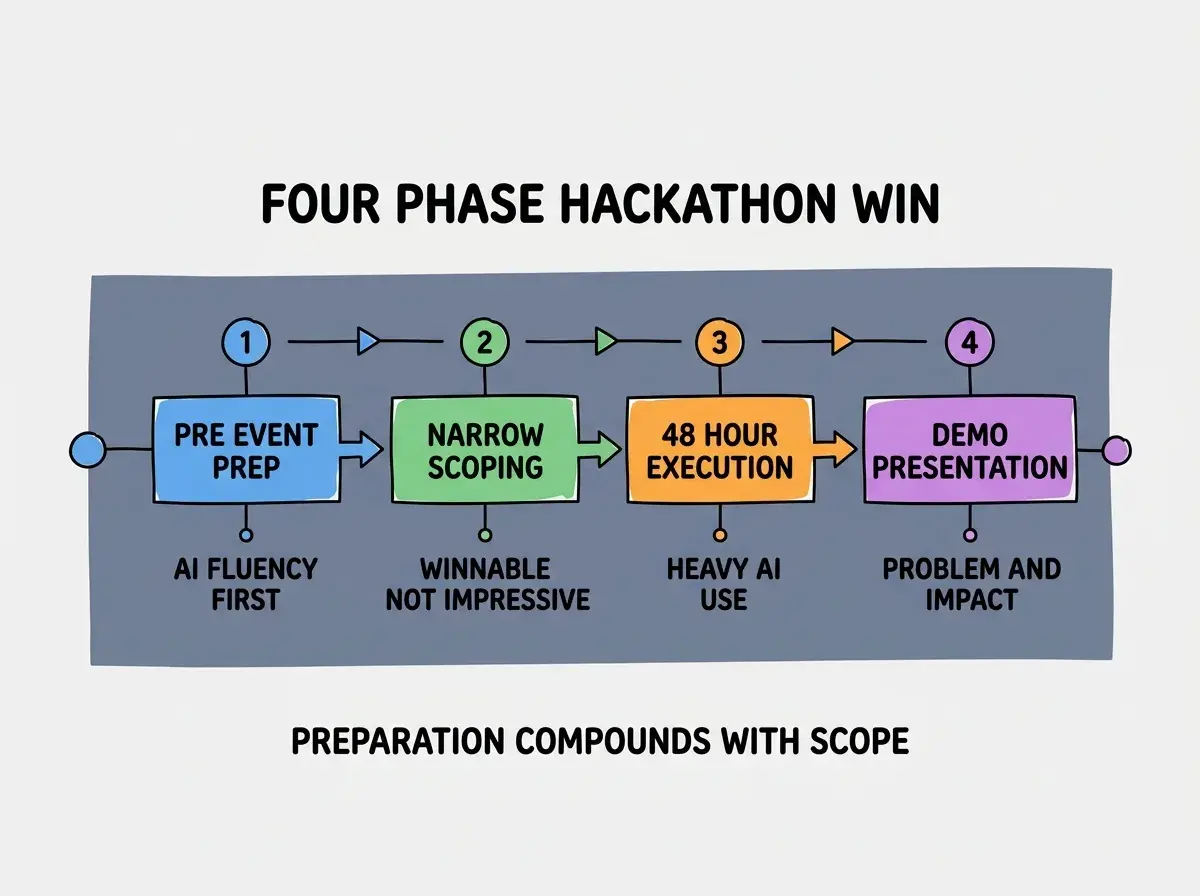
Phase 3, execution that leveraged AI tools heavily during 48 hours. Heavy AI tool use throughout the build. Faster scaffolding, faster iteration, faster polishing. Time saved on building got invested in problem refinement and demo polish.
Phase 4, presentation that highlighted problem and demo over technical complexity. Judges respond to clear problem statements and working demos. Technical complexity without clear problem rarely wins; clear problems with simple demos often do.
What Student Perspective Brought
Three patterns from student background produced advantages over more experienced competitors.
Pattern 1, willingness to use AI tools fully without fighting them. Students without entrenched practices adopted AI tools more completely than experienced builders. The full adoption produced full speed advantage.
Browse more student case studies
Read more pulse articlesPattern 2, freedom from "right way" assumptions. Students did not have strong opinions about how things should be built; AI suggestions got tried rather than dismissed. The openness produced learning that defensiveness would have prevented.
Pattern 3, hunger for the win compounded with fresh energy. 48 hours of intense work felt energizing rather than exhausting. Stamina and motivation compounded with AI productivity to produce results.
The Specific Tooling That Worked
Three tool categories combined effectively for the hackathon win.
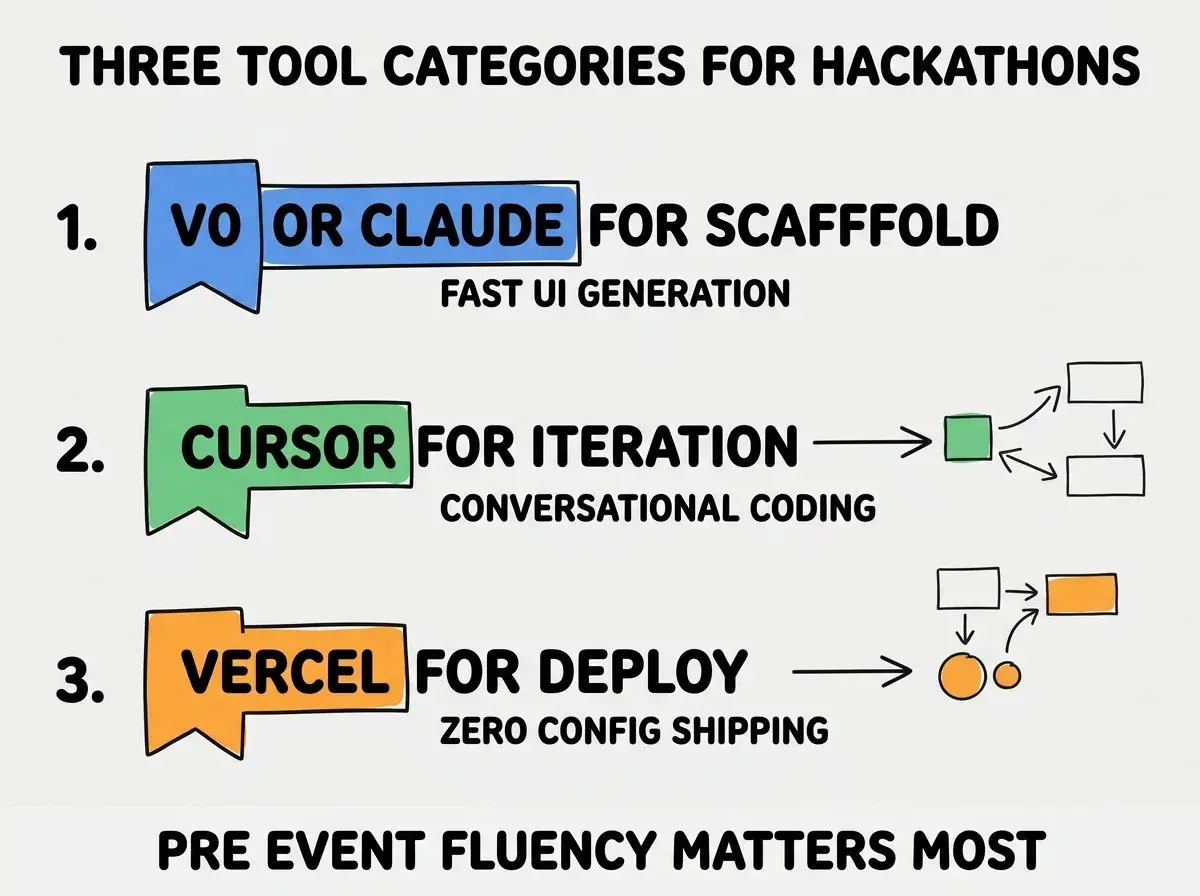
Tool 1, v0 or Claude for fast scaffolding. Initial UI generation in minutes rather than hours. Saved 4-6 hours that competitors spent on scaffolding.
Tool 2, Cursor for iterative refinement. Conversational coding for fast iteration. Faster than typing every change manually.
Tool 3, Vercel for zero config deployment. Live demo URL without DevOps complexity. Working demo by hour 36 rather than hour 47.
What the Student Did During the 48 Hours
Three time allocation patterns characterized the winning effort.
Pattern 1, hour 0-2 for problem refinement, not coding. Spent first 2 hours getting clear on the specific problem. The clarity made the build deliberate; unclear builds rarely win.
Pattern 2, hours 2-30 for build with AI tools heavily. Most of the work happened here. AI productivity compounded; sleep was 4-6 hours not zero.
Pattern 3, hours 30-48 for polish, demo prep, and presentation rehearsal. Last 18 hours were not building; they were refining and presenting. The presentation polish often determines hackathon wins; technical work without presentation polish rarely wins.
The combination produced the hackathon win. Without these patterns, students often spend too much time building and too little on presentation; the imbalance often loses winnable contests.
How Other Students Can Apply These Lessons
Three application patterns help students approach hackathons differently.
Pattern A, prep AI tool fluency before the event, not during. Weeks of practice produces 48 hours of speed. Showing up to learn tools loses to showing up fluent in tools.
Pattern B, scope narrow rather than impressive. Winnable scope beats impressive scope. Demos that work win; demos that almost work lose.
Pattern C, invest in presentation as much as building. Half the win is the demo. Half the win is the presentation. Students who only build often lose to students who present well.
The combination produces hackathon competitiveness for students using AI tools deliberately. Without these patterns, students often build interesting projects that lose to better presented but technically simpler projects.
The most damaging hackathon mistake is choosing impressive ambitious scope over winnable narrow scope. Students often want to demonstrate capability; judges want to see working demos. The fix is to pick scope so narrow it almost certainly ships; impressive scope that does not ship loses to narrow scope that demos perfectly. Hackathon winners are usually demonstrably solving smaller problems than the most ambitious teams.
The other mistake is treating AI tool use as cheating rather than competitive advantage. Students who feel guilty using AI tools use them less effectively. The fix is to embrace AI tools as the new default; students who do not use them give competitors the advantage.
A third mistake is sleep deprivation during the 48 hours. Students who skip sleep make worse decisions and write worse code. The fix is 4-6 hours of sleep; the decision quality and code quality improvements outweigh the 4-6 hours not building.
What This Means For You
The hackathon win with AI built project is the new normal in 2026. The four phases, student perspective patterns, and tool combinations produce wins for prepared students.
- If you're a student: Prepare AI tool fluency before hackathons, not during. The preparation compounds with hackathon execution to produce wins.
- If you're a career changer: Hackathons are still launch pads. AI tools level the technical playing field; problem framing and presentation matter more than ever.
- If you're a founder hiring engineers: Hackathon wins remain useful signal but interpret them differently. The wins increasingly demonstrate AI tool fluency plus problem framing rather than pure technical depth.
Browse more student case studies
Read more pulse articles