To understand the Anything.com case study of reaching $2M ARR in two weeks, recognize four ingredients that made the outcome possible (premium domain name that signaled credibility, founder team with prior exits and existing networks, market timing that captured concentrated demand, and AI-assisted execution that compressed building time), see what was genuinely unique vs what is reproducible, and resist the trap of treating outlier cases as repeatable templates. The case study is real but combines factors that rarely coexist; understanding the combination matters more than copying any single element.
This piece walks through the four ingredients, the timeline reality behind the headline, what is reproducible for builders without similar advantages, and the four mistakes founders make about extreme founder stories.
Why This Case Study Generated So Much Attention
$2M ARR in two weeks is among the most extreme founder velocity stories of 2025-2026. The combination of speed and scale captured attention because both elements are individually impressive and the combination is rare. The case study spread through founder communities as evidence of what AI-assisted building could enable.
The 2026 reality is that case studies like this shape founder expectations dramatically. Accurate understanding matters because founders who model their decisions on outlier cases often suffer when typical results arrive instead.
Anything.com reached approximately $2M ARR within 14 days of public launch. The founder team had prior exits, the domain commanded immediate credibility, and the launch leveraged existing networks substantially. The AI-assisted build was real and accelerated the technical work, but the business outcome reflected combined factors that rarely coexist. Treating the case as repeatable template misses the unique combination that produced it.
The pattern to copy is the way Hollywood box office reporting often misleads. Major film opening weekends report huge numbers; the numbers are real but reflect star power, marketing budgets, theater counts, and brand recognition that combine in specific films. Treating opening weekends as repeatable templates produces frustration when independent films open differently. Anything.com case study has similar dynamics.
The Four Ingredients That Made It Possible
Four ingredients combined to produce the outcome.
Ingredient 1, premium domain name signaled credibility. "Anything.com" is genuinely premium, worth substantial money. The domain provided immediate credibility that startup names with hyphens or unusual TLDs cannot match in the perception of casual visitors.
Ingredient 2, founder team with prior exits and existing networks. The founders had previously built and exited companies. Their existing networks distributed the launch immediately to relevant audiences who trusted them based on prior work.
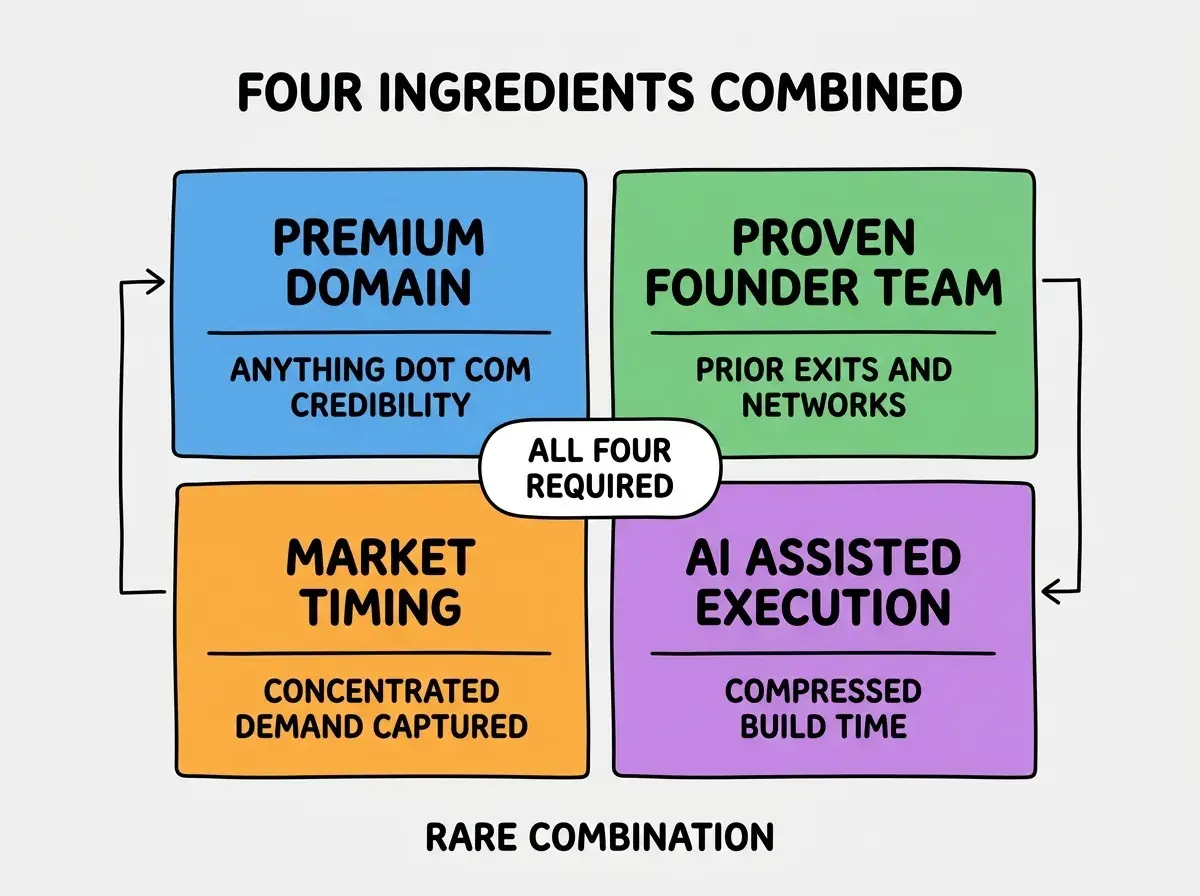
Ingredient 3, market timing captured concentrated demand. The product addressed demand that was peaking. Timing the market correctly is partly luck and partly skill; in this case, both contributed to the velocity of the launch.
Ingredient 4, AI-assisted execution compressed building time. Modern AI tools enabled the team to ship in days rather than months. The technical capability was real even though it was one factor among several that combined to produce the headline result.
What Is Reproducible
Three patterns transfer to builders without all the ingredients.
Pattern 1, AI-assisted rapid building. The technical speed is accessible to most builders. Ship things faster than was possible 2-3 years ago; the tooling is available to anyone willing to learn it well.
Browse more rapid-scale case studies
Read more pulse articlesPattern 2, leverage existing networks for launch. Even smaller networks help; the principle of distribution-through-relationships transfers. Build relationships before you need them; relationships built during launch produce far less than relationships maintained over years.
Pattern 3, time markets by working in your obsessions. Founders who work in spaces they personally care about often time markets correctly because they sense shifts. Working outside your interest area makes timing harder; passion drives the attention that produces good timing.
What Was Unique to Their Situation
Three factors specifically depended on their situation and do not transfer easily.
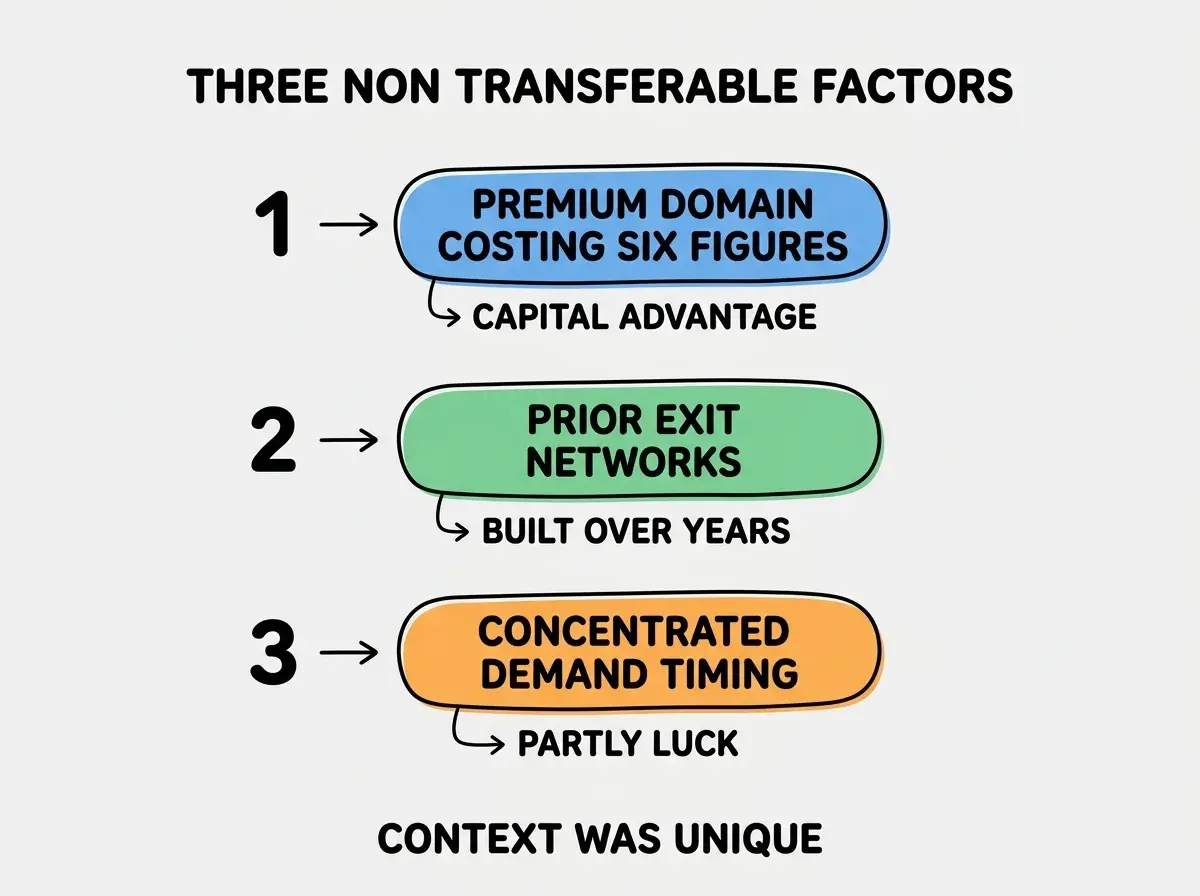
Factor 1, premium domain costing six figures. Most builders cannot afford premium domains. The domain advantage is real but capital-intensive in ways that bootstrapped founders cannot easily replicate.
Factor 2, prior exit networks took years to build. The networks that distributed the launch were built over previous companies. New founders cannot recreate this overnight; the relationships compound over multiple ventures and years.
Factor 3, market timing was partly luck. Even sophisticated founders cannot consistently time markets perfectly. Acknowledging the luck component is honest analysis, not dismissal of the skill that other ingredients required to capitalize on the timing.
What the Founders Did During the 14 Days
Three specific actions during the 14-day window deserve study.
Action 1, focused entirely on launch and customer success. No additional features, no new initiatives. The team focused exclusively on supporting the launch and converting incoming customers.
Action 2, responded to every customer message personally. Founder-led customer support during the launch window built loyalty that automated support could not. The personal touch was a differentiator.
Action 3, captured pricing data in real time. Different customer segments tested different prices; the founders adjusted pricing based on real conversion data within hours rather than weeks.
The combination compressed normal scaling-stage work into the launch window. Without explicit focus, founders sometimes try to do too much during launch and lose the launch advantage to scattered effort.
How to Apply Realistically
Three patterns help apply the case study without unrealistic conclusions.
Pattern A, build the building speed capability now. AI-assisted rapid building is genuinely accessible. Develop the skill regardless of other factors; it is the universally applicable lesson that costs nothing to start practicing.
Pattern B, invest in relationship building over years. Networks that distribute launches take years to build. Start now; the investment pays back in distribution multiple businesses from now even though the immediate return is small.
Pattern C, work in domains you understand deeply. Domain depth produces better timing intuition than general market analysis. Focus where you have natural insight rather than trying to time markets you do not understand.
The combination produces realistic application. Without these patterns, founders sometimes pursue extreme tactics from outlier cases and produce dramatically different outcomes.
The most damaging extreme case study mistake is treating the headline number as repeatable. $2M ARR in two weeks is the outcome of multiple rare factors combining. Most launches produce dramatically different results regardless of execution quality. The fix is to study cases for transferable patterns while accepting that outlier outcomes depend on combinations that are rare for good reason. Founders who calibrate expectations to typical rather than outlier outcomes maintain motivation through the much-longer typical journey.
The other mistake is dismissing case studies because they involve unique factors. The opposite extreme also misleads; transferable patterns exist within unique stories. The fix is to extract the transferable patterns honestly while acknowledging the unique factors. Both extremes (full replication or full dismissal) miss the actual learning.
A third mistake is comparing your timeline to the case study timeline directly. Anything.com's 2-week scaling reflects compressed circumstances; typical scaling takes much longer regardless of execution. The fix is to celebrate progress at any pace; comparing to outlier timelines produces unwarranted discouragement when typical pace produces typical progress.
What This Means For You
The Anything.com case study teaches real lessons about combining ingredients for rapid scaling. The four ingredients, transferable patterns, and unique factors produce realistic application.
- If you're a founder: Build the transferable capabilities; do not expect outlier outcomes from typical situations. Both honest assessments improve decision-making.
- If you're changing careers into building: Use extreme case studies for inspiration; calibrate expectations to typical rather than outlier outcomes; the typical path is still worth pursuing.
- If you're a student: Study what factors combined to produce extreme outcomes. The pattern recognition is valuable across founder analysis broadly.
Browse more rapid-scale case studies
Read more pulse articles