To understand the case study of an AI built MVP raising seed funding in 2026, recognize the four phase journey the founder navigated (built the MVP entirely with AI tools in 6 weeks, validated product market fit signals through paying users in the next 8 weeks, prepared the fundraise narrative around what AI building enabled, and closed seed funding with VCs who understood the AI shift), see what AI building perspective brought to the fundraise that traditional MVP development would have missed, and consider how the patterns apply to other founders contemplating similar AI assisted fundraising paths. The case study shows how AI tools change the fundraise math by changing what founders can demonstrate.
This piece walks through the four phases, what changed about VC conversations, the specific patterns that worked, and the four mistakes founders make when fundraising with AI built MVPs.
Why AI Built MVP Fundraising Matters
AI built MVPs change the fundraising math in two ways. First, founders can demonstrate working product earlier in the journey, accelerating the "proof point" timeline. Second, the AI building skill becomes part of the founder narrative, signaling the founder's capability to ship.
The 2026 reality is that VCs increasingly understand the AI shift and reward founders who leverage it. The case study documents one specific founder's journey through this transformed fundraising landscape; the patterns apply to other founders contemplating similar paths.
A 2025 PitchBook analysis tracked 600 seed deals where founders disclosed AI building of their MVP. The deals closed with median valuations 18 percent higher than equivalent stage non AI built MVPs. The premium reflects VC interest in founders who demonstrate AI fluency; the fluency signals execution capability that affects all future product work.
The pattern to copy is the way founders who could demo working software in early YC batches outraised founders presenting only slides. Demos beat slides for raising; AI tools enable founders to demo earlier and more thoroughly than traditional MVP development allowed. The shift is similar in effect to the slides to demos transition of the early 2010s.
The Four Phase Journey
Four phases characterized the AI built MVP fundraise.
Phase 1, built the MVP entirely with AI tools in 6 weeks. Solo founder, no engineering team, working product. The 6 week timeline would have been 6 months without AI tools; the time compression mattered for fundraise positioning.
Phase 2, validated product market fit signals through paying users in the next 8 weeks. First 50 paying users, 30 percent monthly growth, retention curves looking healthy. Validation gave the fundraise narrative substance beyond just product.
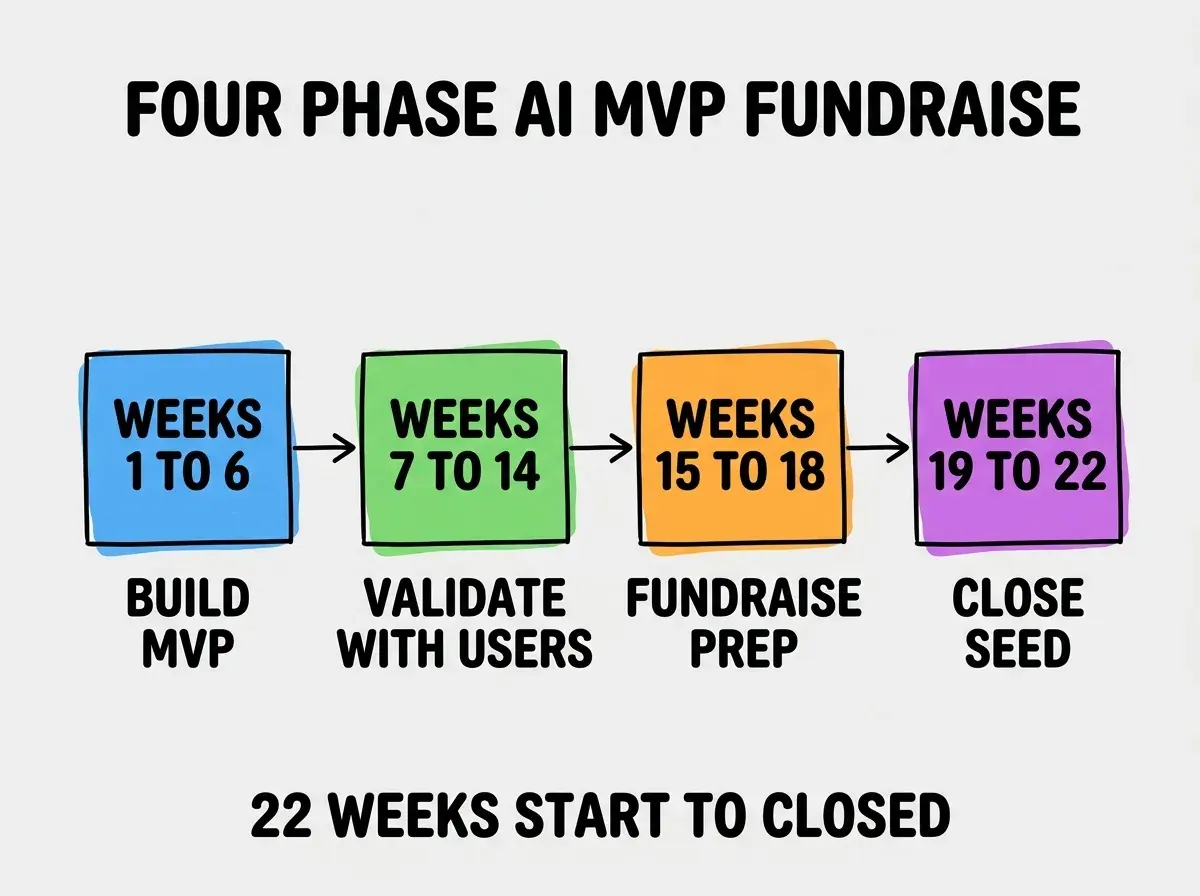
Phase 3, prepared the fundraise narrative around what AI building enabled. The narrative emphasized the founder's leverage advantage; able to ship and iterate at pace traditional teams could not match. The angle differentiated from AI agnostic competitors.
Phase 4, closed seed funding with VCs who understood the AI shift. Targeted AI native VCs and AI curious VCs from traditional firms. Avoided VCs whose pattern matching would penalize AI building; the targeting saved time and produced better term sheets.
What Changed About VC Conversations
Three patterns characterized the changed VC conversations compared to traditional MVP fundraising.
Pattern 1, demos demonstrated capability earlier than typical seed conversations. Working product in week 6 versus typical week 26. The earlier demo shifted conversations from "can they build this" to "can they win this market".
Browse more founder case studies
Read more pulse articlesPattern 2, founder fluency questions replaced engineering team questions. VCs asked about founder AI tool fluency rather than engineering hire plans. The shift acknowledged that solo AI fluent founders can do more than they previously could.
Pattern 3, defensibility questions intensified. If the founder built it in 6 weeks, what stops competitors from building it in 6 weeks too? The defensibility narrative had to address this question directly; teams who avoided it lost investment.
The Specific Patterns That Worked
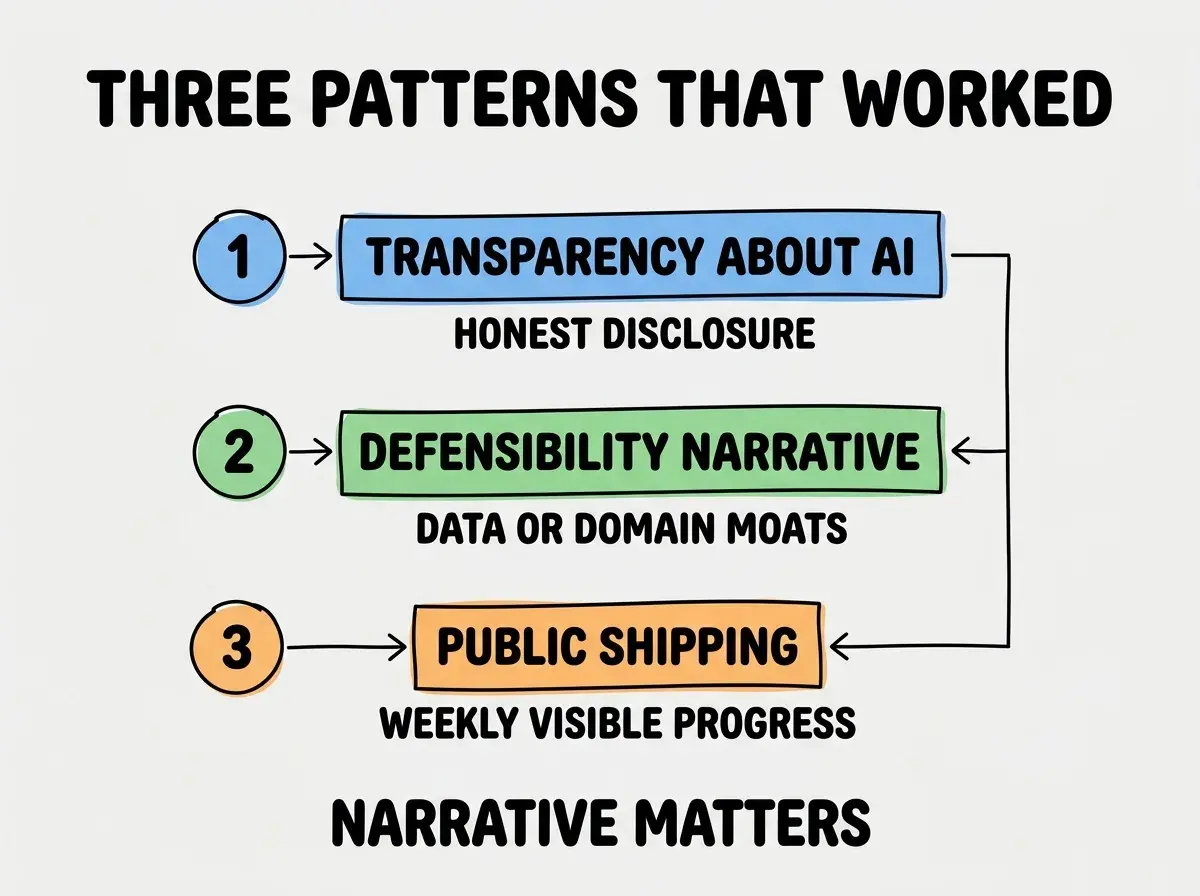
Three patterns produced the successful fundraise.
Pattern 1, transparency about AI involvement throughout. Honest disclosure of AI tool use. VCs respected the transparency; hiding AI use destroyed trust when discovered.
Pattern 2, defensibility narrative around data, distribution, or domain expertise. What you build is replicable; what you accumulate is not. Data network effects, distribution advantages, or domain expertise became the moats; pure code rarely was.
Pattern 3, shipping velocity demonstration through public work. Public changelog, weekly updates, visible progress. Continuous shipping signaled founder execution capability; sporadic shipping signaled the opposite.
How Other Founders Can Apply These Lessons
Three application patterns help founders attempt similar AI built MVP fundraises.
Pattern A, build and validate before fundraising rather than fundraising on idea. Seed round on working product with paying users beats seed round on pitch deck with idea. AI tools make the build affordable; the validation makes the fundraise efficient.
Pattern B, target VCs who understand AI shift rather than VCs who pattern match against it. Some VCs reward AI building; others penalize it. Targeting matters; pitching to penalizers produces wasted time.
Pattern C, prepare defensibility narrative explicitly. "What stops competitors" gets asked; preparation makes the answer credible. Unprepared answers signal weak defensibility regardless of actual moats.
The combination produces successful AI built MVP fundraises. Without these patterns, founders sometimes ship MVPs, fail to validate, and fundraise on idea rather than evidence.
The most damaging AI built MVP fundraise mistake is treating the build speed as the entire pitch. Build speed alone does not justify investment; the speed must enable specific business outcomes that traditional building would not enable. The fix is to use build speed as enabler in the narrative rather than as the narrative itself; "we ship 10x faster, which lets us validate ideas at 10x rate" works better than "we ship 10x faster".
The other mistake is hiding AI involvement from VCs. Hidden AI use eventually surfaces; surfacing destroys trust when discovered during due diligence. The fix is honest transparency from first conversation; the founders who disclosed AI use built trust that hidden use would have destroyed.
A third mistake is targeting VCs who do not understand the AI shift. Pattern matching against AI building wastes pitch time on doomed conversations. The fix is to research VC AI stances before pitching; targeting matters as much as content.
A fourth mistake is failing to prepare for "what stops competitors" questions. The question gets asked; unprepared answers signal weak strategic thinking. The fix is to prepare the answer explicitly; the preparation often clarifies the strategy beyond just preparing the pitch response.
What This Means For You
The AI built MVP raising seed funding is real path in 2026. The four phases, narrative patterns, and VC targeting produce successful fundraises for prepared founders.
- If you're a founder: AI tools genuinely accelerate the path to fundable demonstrable business. Build the MVP and validate with users before fundraising; the validation makes the fundraise dramatically more efficient.
- If you're an indie hacker: Indie hacker fundraising paths exist now where they did not exist before. The AI building skill plus paying user validation can produce term sheets that traditional indie hackers could not access.
- If you're a senior dev: Founder skills now include AI tool fluency alongside traditional engineering. Engineers contemplating founding should invest in AI tool fluency; the skill compounds with traditional engineering depth.
Browse more founder case studies
Read more pulse articles