To understand the case study of a 66 year old career changer building and selling three Laravel apps with vibe coding, recognize the four phase journey he navigated (built foundational skills despite no prior coding background, scoped first apps narrow enough to ship, marketed and sold to specific niches he understood from prior career, and reinvested earnings into building subsequent apps), see what late career perspective brought that younger builders might have missed, and consider how the patterns apply to other late career changers contemplating similar transitions. The case study shows how AI tools genuinely open new entry paths for people previously locked out of building.
This piece walks through the four phases, the late career advantages, the specific app pattern, and the four mistakes late career changers make when attempting similar transitions.
Why Late Career Transitions Matter
Late career changes have always been viable but historically required either strong existing skills or significant retraining time. AI tools change the math; the entry barrier to building drops dramatically, opening paths that previously required years of preparation.
The 2026 reality is that late career builders using AI tools are shipping products at growing rates. The case study documents one specific 66 year old's journey worth studying; the patterns apply broadly to other late career professionals.
A 2025 Indie Hackers survey of 800 builders over age 55 found that 34 percent had shipped revenue generating products in the previous year using AI tools. The rate has grown from negligible in 2023; late career building is real and increasingly common rather than exceptional. Age does not preclude shipping products.
The pattern to copy is the way late career farmers transitioned to consulting after retirement. Their decades of operational knowledge became consulting value; their product was wisdom rather than physical output. Late career builders can convert career knowledge into shipped products that serve niches they understand deeply; the conversion produces apps younger builders cannot easily replicate.
The Four Phase Journey
Four phases characterized the 66 year old's journey from no coding background to three sold apps.
Phase 1, built foundational skills despite no prior coding background. 6 months of structured learning with AI tools heavily. Patience produced learning that anxiety would have prevented; late career discipline served the patient approach.
Phase 2, scoped first apps narrow enough to ship. Resisted ambition that would have produced never shipping projects. Picked narrow problems he could complete; the narrow scope produced finished apps.
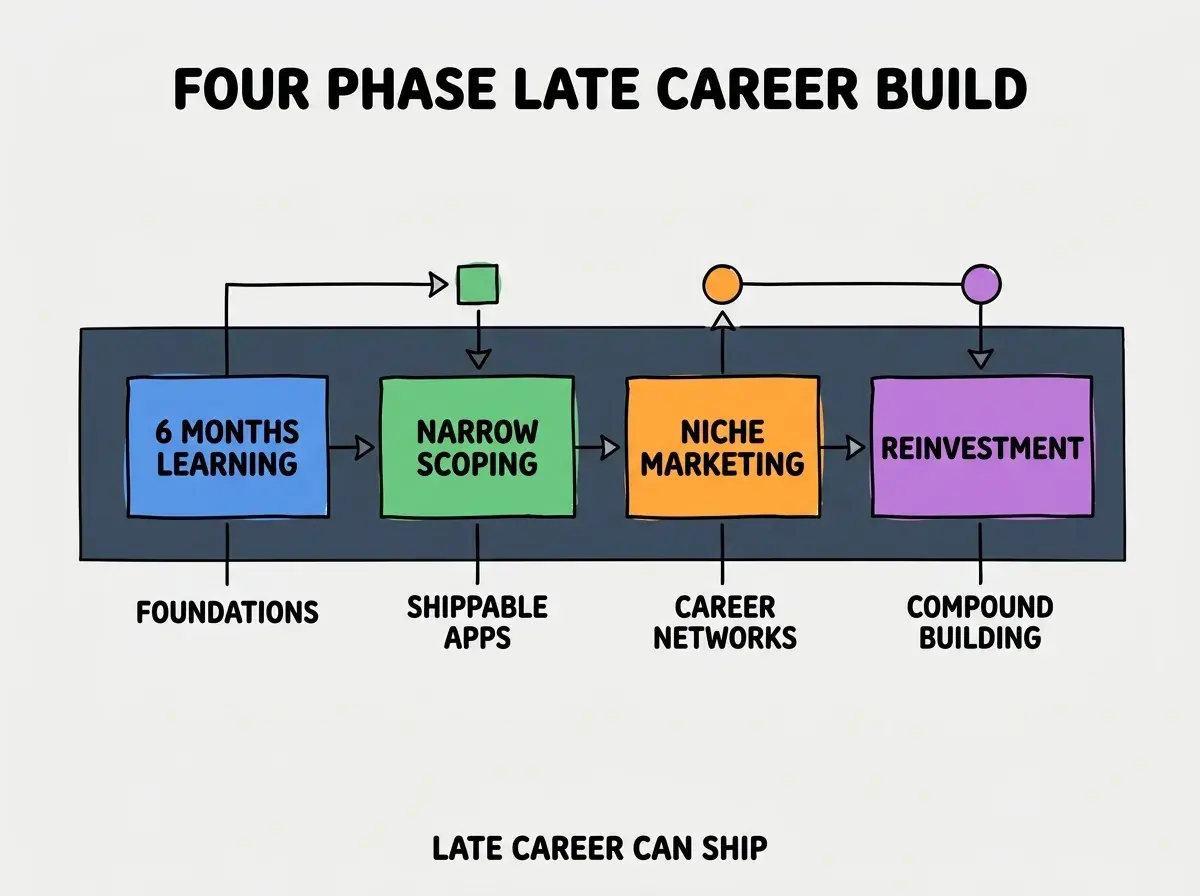
Phase 3, marketed and sold to specific niches he understood from prior career. 40 years in his industry produced contacts and credibility. The contacts became first customers; the credibility produced trust.
Phase 4, reinvested earnings into building subsequent apps. First app revenue funded second app development time. The compound effect produced three apps within 18 months.
What Late Career Perspective Brought
Three patterns from late career produced advantages over younger builders.
Pattern 1, patience with learning produced sustainable progress. No urgency to prove anything; progress at a sustainable pace. The patience prevented burnout that affects younger builders chasing quick wins.
Browse more career change case studies
Read more pulse articlesPattern 2, deep domain knowledge in his industry niche. 40 years of industry experience produced product judgment that researchers cannot replicate. He knew what mattered to customers because he had been a customer for decades.
Pattern 3, established network became distribution channel. First customers came from his network. Younger builders without networks must build distribution from scratch; late career builders often have built in distribution.
The Specific App Pattern
Three patterns characterized the apps he built.
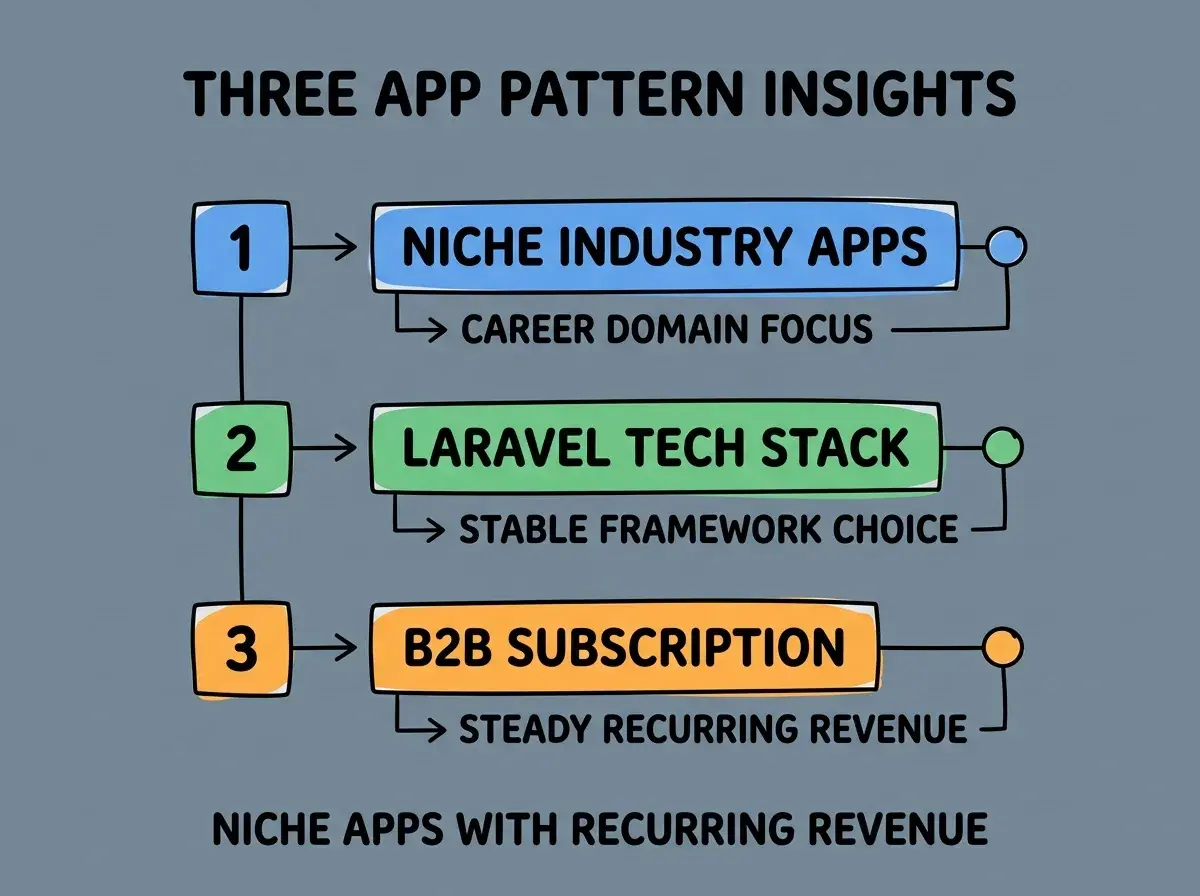
Pattern 1, narrow industry niche apps. Each app served his specific industry's specific workflow. Niche focus produced apps competitors did not build because the market was too small for VCs.
Pattern 2, Laravel as the consistent tech stack. PHP framework that AI tools handled well. Stable framework choice meant learning compounded across apps.
Pattern 3, B2B subscription model for steady revenue. Monthly recurring revenue produced predictable income. Single purchase or freemium models would have produced more revenue volatility.
How Late Career Changers Can Apply These Lessons
Three application patterns help late career changers attempt similar transitions.
Pattern A, leverage your career domain knowledge. Pick problems in industries you know deeply. Younger builders without your experience cannot easily replicate; the experience becomes your competitive moat.
Pattern B, accept that learning takes longer at 60+ than at 25. Plan for 6-12 months of foundations before shipping. Younger builders sometimes ship in 3 months; older builders should plan longer and accept the timeline.
Pattern C, monetize through niches your network reaches. First customers through warm introductions beat first customers through cold acquisition. Network advantages compound; use them deliberately.
The combination produces successful late career transitions. Without these patterns, late career changers sometimes attempt transitions, hit early friction, and conclude they are too old when patient execution would have produced shipped products.
The most damaging late career building mistake is comparing yourself to younger builders shipping faster. Age affects learning velocity; comparison to outliers produces unwarranted discouragement. The fix is to compare to other late career builders rather than younger ones; the comparison produces realistic expectations and sustained motivation. Late career building works on different timelines than early career building, and that is normal.
The other mistake is choosing tech stacks based on hype rather than stability. Late career builders benefit from stable mature stacks like Laravel; chasing newest frameworks adds learning curve without proportional benefit. The fix is to pick boring stable tech.
A third mistake is failing to monetize from the start. Building without monetization plans produces apps that never make revenue. The fix is to plan monetization from day one; even small revenue validates the path.
A fourth mistake is undervaluing your career domain knowledge. Late career changers sometimes feel they should compete on tech rather than knowledge; the better path is to use the knowledge as the differentiator. Tech is a means; knowledge is the moat.
How the 18 Month Timeline Unfolded
Three timeline insights from his journey deserve attention. Months 1-6 produced no shippable work; just learning and small experiments. The patience was hard but necessary; rushing the foundations would have produced fragile builds. Months 7-10 produced first app from scratch; first customers came from his network within weeks of launch. Months 11-18 produced second and third apps building on first app patterns; the compound learning made each subsequent app faster than the previous one. The realistic timeline matters; expecting first app at month 3 would have produced disappointment that often ends transitions.
What This Means For You
The 66 year old building and selling Laravel apps is a real path in 2026. The four phases, late career advantages, and app patterns produce successful transitions for committed late career changers.
- If you're a career changer over 50: Try the transition with one narrow app in your industry niche. The transition becomes career renewing if it works; the cost is one project worth of effort.
- If you're a founder: Late career builders bring valuable industry expertise. Consider hiring or partnering with them; their domain knowledge often produces better products than younger generalists.
- If you're a younger builder: Watch what late career builders do well and adapt the patterns. Niche focus, network leverage, and patient execution work at any age.
Browse more late career case studies
Read more pulse articles