To understand the Plinq case study of going from non-coder to $456K ARR through vibe coding, recognize four phases the founder navigated (learning the basics through small projects, validating the idea with non-technical customers, building the production version with AI assistance, and scaling through systematic founder-led sales), see specific lessons that emerged from each phase, and consider how the patterns apply to your own founder journey. Plinq is one of the clearest case studies of vibe coding enabling a non-technical founder to build a real business; the patterns are worth studying.
This piece walks through the four phases of the Plinq journey, the specific patterns the founder used, the lessons that emerged, and the four caveats that distinguish replicable patterns from non-replicable luck.
Why Plinq Became a Reference Case
Plinq became one of the most-cited case studies for vibe coding because the founder was genuinely non-technical when she started, the revenue is real and verifiable, and the founder has been transparent about the patterns that worked and did not. The combination of authenticity, scale, and transparency makes it useful reference.
The 2026 reality is that case studies like Plinq influence how non-technical founders think about whether to pursue vibe coding. The accuracy of the case study matters because aspiring founders model their decisions on it.
The Plinq journey reached $456K ARR within 18 months of the founder starting to code. The founder reports having no programming background before starting; the revenue came primarily from B2B customers in a specific niche the founder understood from previous career experience. The combination of vibe coding capability plus domain expertise plus customer development skill produced the outcome; vibe coding alone would not have been sufficient.
The pattern to copy is the way successful first-time restaurateurs build profitable restaurants. They typically have deep domain knowledge (food, cooking, hospitality) plus business operations skills, even when they lack restaurant management background specifically. Plinq follows similar pattern; vibe coding skill compounded with domain expertise from previous career.
The Four Phases of the Journey
Four distinct phases characterized the Plinq journey from start to $456K ARR.
Phase 1, learning the basics through small projects. Months 1-3. Built throwaway projects to learn vibe coding fundamentals. No business pressure; pure skill building.
Phase 2, validating the idea with non-technical customers. Months 3-6. Used vibe coding to build minimal demos that validated demand. Customer development drove product decisions, not technical capability.
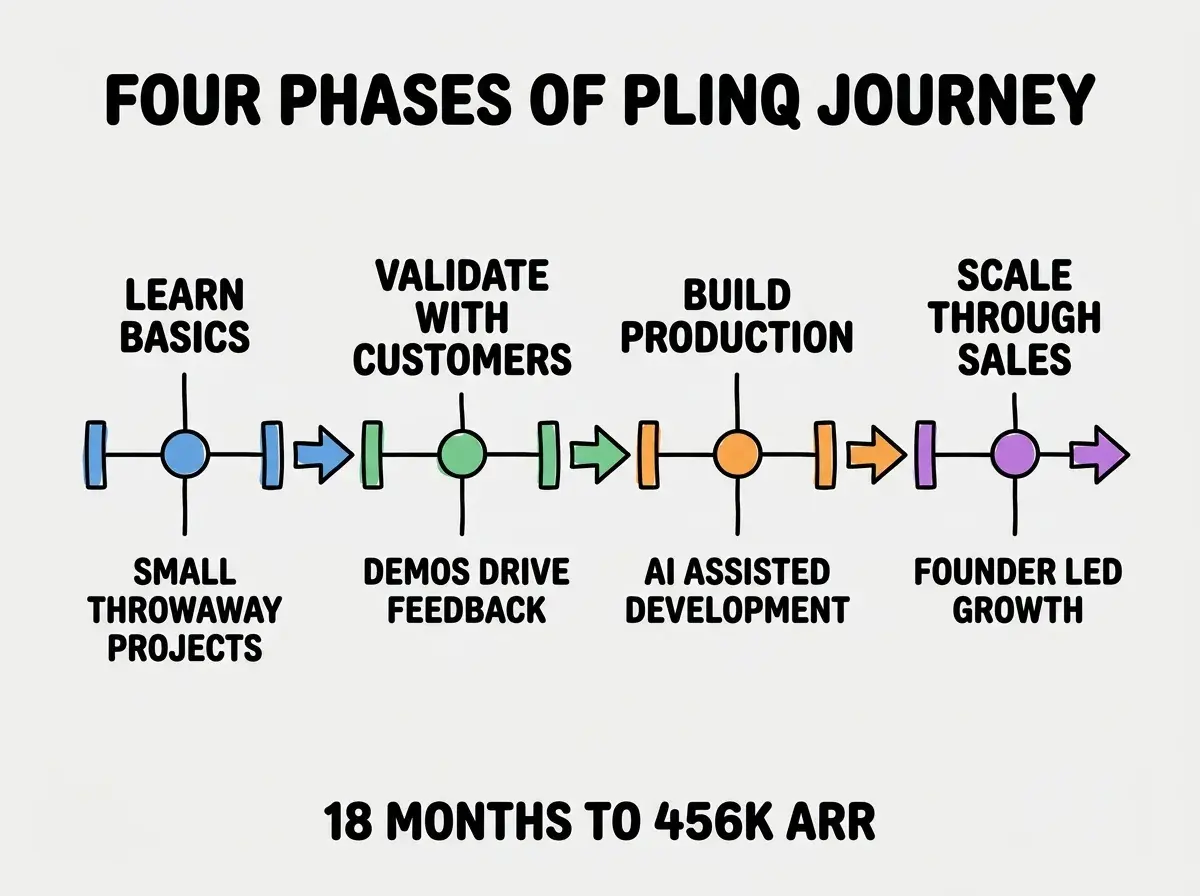
Phase 3, building the production version with AI assistance. Months 6-12. Production-quality build with AI tools. Founder learned production engineering practices alongside building.
Phase 4, scaling through systematic founder-led sales. Months 12-18. Sales discipline, customer success, growth marketing. The technical work continued but business work became dominant.
The Specific Patterns That Worked
Three specific patterns from the Plinq story are worth emulating.
Pattern 1, domain expertise paired with vibe coding skill. The founder picked a niche from previous career. The combination of "know the customer deeply" plus "build with AI" was much more powerful than either alone.
Browse more case studies
Read more pulse articlesPattern 2, customer development before scaling building. The founder spent significant time with prospective customers before building the production version. The customer learning shaped what to build; vibe coding was instrument, not strategy.
Pattern 3, founder-led sales for first 100 customers. Direct sales by the founder produced both revenue and product feedback. Automated sales came later; the founder-led phase built understanding that automation later replicated.
The Caveats That Matter
Three caveats distinguish replicable patterns from outcomes that depended on specific circumstances.
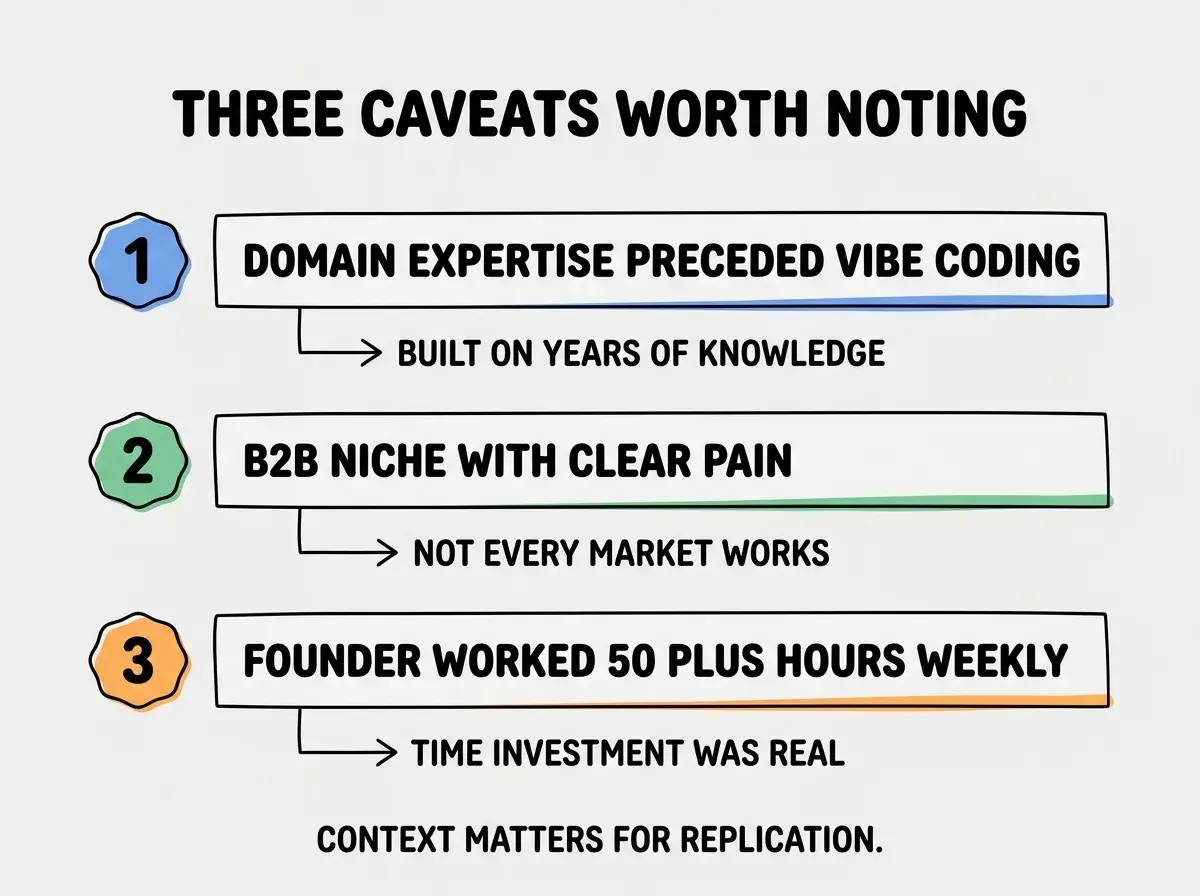
Caveat 1, domain expertise preceded vibe coding. The founder had years of experience in the specific niche before starting. Vibe coding amplified existing expertise; it did not create the expertise.
Caveat 2, B2B niche with clear pain. The market had clear, specific pain that customers paid to solve. Not every market produces this clarity; B2B with clear pain points is easier than consumer or B2B without clear pain.
Caveat 3, founder worked 50+ hours weekly. The journey required sustained intense effort. Vibe coding did not eliminate the work; it changed the type of work and made it possible at all.
What the Founder Did That Most People Skip
Three specific actions from the case study are commonly skipped by founders attempting similar journeys.
Action 1, structured customer development for 30 days before building. Most founders rush to building; the case study founder spent dedicated time understanding customers first. The customer understanding shaped what to build.
Action 2, transparent pricing experiments. The founder tested different prices openly with customers, asking what they would pay rather than guessing. The transparency surfaced willingness-to-pay that guessing would have missed.
Action 3, weekly retrospectives on her own journey. The founder documented what was working, what was not, what she was learning. The discipline of reflection compounded the learning rate substantially.
The combination produced learning velocity that pure building would not have produced. Without these actions, similar journeys often progress more slowly because key insights are missed.
How to Apply These Lessons
Three application patterns help adapt Plinq lessons to your situation.
Pattern A, identify your domain expertise honestly. What do you know that most builders do not? Where do you have customer access others lack? The honest assessment shapes which markets fit your background.
Pattern B, validate before scaling building. Customer development comes first; production building comes after validation. Reversing the sequence produces wasted building work.
Pattern C, plan for the multi-year journey. Plinq took 18 months to $456K ARR. Plan accordingly; the timeline matters more than the technical capability for sustainable success.
The combination produces realistic founder journeys. Without these adaptations, founders sometimes copy Plinq's tactics without copying the underlying principles that made the tactics work.
The most damaging case study consumption mistake is treating outcomes as repeatable templates rather than unique trajectories. Plinq's specific outcomes depended on specific factors (founder, niche, market, timing); copying tactics without recreating context produces different outcomes. The fix is to extract principles, not tactics; the patterns that generalize are at principle level, not at specific implementation level. Founders who study principles outperform founders who copy tactics.
The other mistake is using case studies as substitute for your own learning. Case studies provide patterns; your own customer development, building, and selling provides understanding. The fix is to use case studies as input but build your own understanding through your own work; passive case study consumption produces no founder development.
A third mistake is timing your journey based on someone else's timeline. Plinq took 18 months; your journey may take 12 or 36 months depending on your context. The fix is to focus on the right activities at each phase rather than trying to hit specific time milestones. Quality of execution matters more than timeline matching.
What This Means For You
The Plinq case study offers real lessons about non-technical founders building with vibe coding. The four phases, specific patterns, and caveats produce useful reference for similar journeys.
- If you're a founder: Apply the principles (domain expertise, customer development, founder-led sales) without copying the specific tactics. Your context differs; the principles transfer.
- If you're changing careers into founding: Plinq shows the journey is possible but real. Plan for 18+ months of intense work; the outcomes follow the work.
- If you're a student: Study how Plinq's founder thought about the journey, not just what she did. The thinking generalizes; the specific actions do not.
Browse more case studies and founder stories
Read more pulse articles