To understand the Pieter Levels flight sim case study of building in 3 hours and generating $1M+ annually, recognize four patterns that enabled the outcome (existing massive audience that distributed launch, AI tools that compressed the technical build to 3 hours, monetization model that captured value immediately, and creator playing in a niche he understood deeply), see what is replicable for builders without his audience, and avoid the misleading conclusion that 3-hour builds typically produce $1M businesses. The case study is real but context-dependent; understanding both is the work.
This piece walks through the four enabling patterns, what is and is not replicable, the timeline reality behind the headline, and the four mistakes builders make when interpreting viral founder stories.
Why This Case Study Became Viral
Pieter Levels is one of the best-known indie hackers, with a substantial audience and track record of shipped products. The flight sim story spread because it combined an extreme example (3 hours to working product) with an extreme outcome ($1M+ annual revenue). The combination made for compelling content; the underlying complexity is more nuanced than the headline.
The 2026 reality is that case studies like this shape what aspiring builders believe is possible. Accurate understanding of the case matters because it shapes decisions; misunderstanding produces unrealistic expectations.
The Pieter Levels flight sim reportedly took 3 hours of building time and reached $1M+ annual revenue within months. The build time is real; the audience that enabled the launch is also real. The case study is one of the clearest examples of audience-as-asset; without the audience, the same build would have generated different outcomes. Understanding the audience as the dominant factor is essential.
The pattern to copy is the way successful Hollywood directors leverage existing fame to launch new films. The film itself takes effort; the launch leverages the director's existing audience. Studios still have to make the films; the launch advantage is real but distinct from the film-making itself. Pieter Levels' flight sim follows similar dynamics; the build was real but the launch leveraged years of audience building.
The Four Patterns That Enabled the Outcome
Four patterns combined to produce the outcome.
Pattern 1, existing massive audience distributed the launch. Pieter has hundreds of thousands of followers across platforms. The launch reached audience that immediately tried the product; without the audience, distribution would have taken months.
Pattern 2, AI tools compressed the technical build. Modern AI coding tools genuinely make 3-hour builds possible for prototypes. The technical reality is real, even when the business outcome depends on other factors.
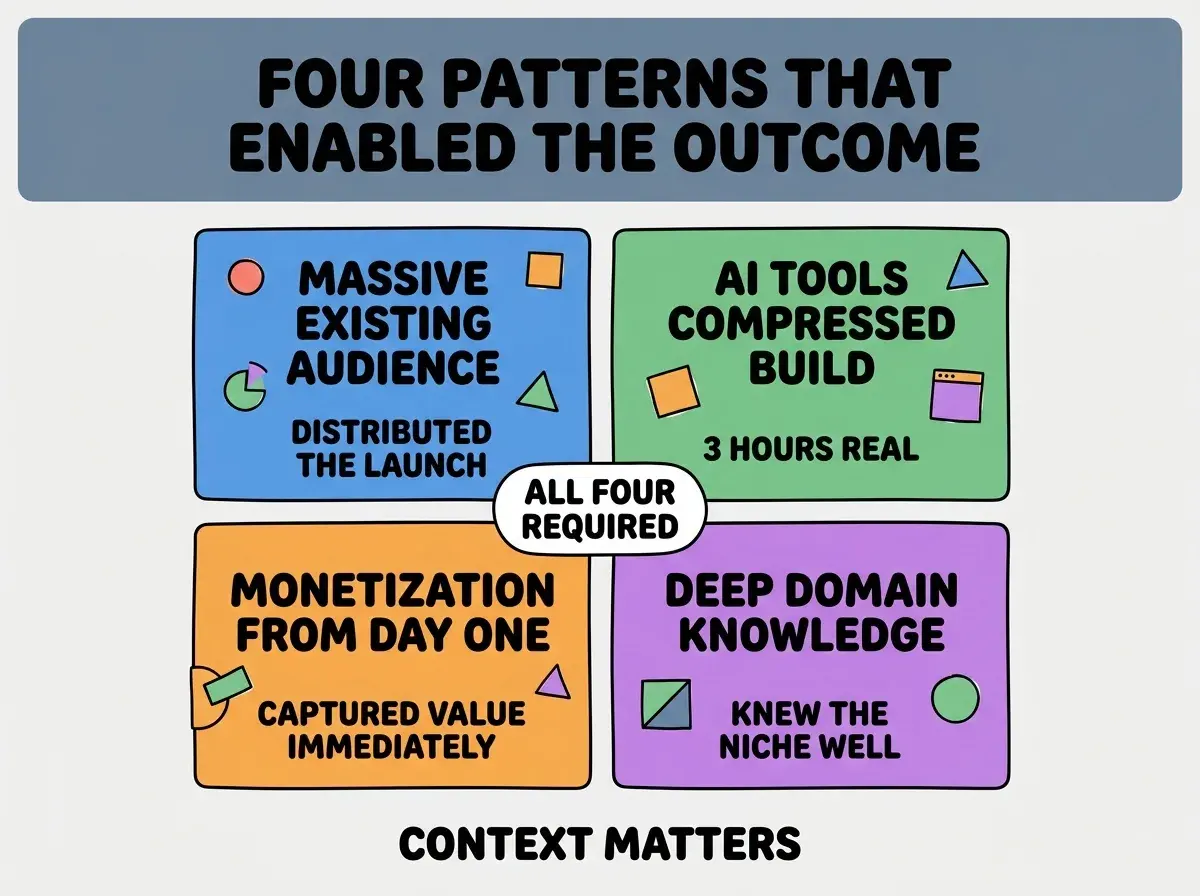
Pattern 3, monetization model captured value from day one. Direct payment model meant value capture started immediately. No freemium funnel; no trial period; pay to play.
Pattern 4, creator played in niche he understood deeply. Pieter understands his audience's interests, including specific niches like flight simulation. The product fit existing demand he could see; speculation would have produced worse outcomes.
What Is Replicable for Builders Without His Audience
Three patterns transfer to builders who lack Pieter's audience.
Pattern 1, AI-assisted rapid building. The 3-hour build technical capability is real and accessible. Build something quickly; the speed advantage transfers across builders regardless of audience size or other factors.
Browse more indie hacker case studies
Read more pulse articlesPattern 2, monetization from day one. Charge from the start; do not assume free-to-paid funnels. The monetization discipline transfers regardless of audience size and produces real signal that free models cannot.
Pattern 3, niche depth through audience access. Even without massive audience, you can build niche depth through customer development. Talk to potential users before building; the depth produces better products that fit real demand rather than imagined demand.
What Did Not Transfer
Three patterns specifically depended on Pieter's situation and do not transfer easily.
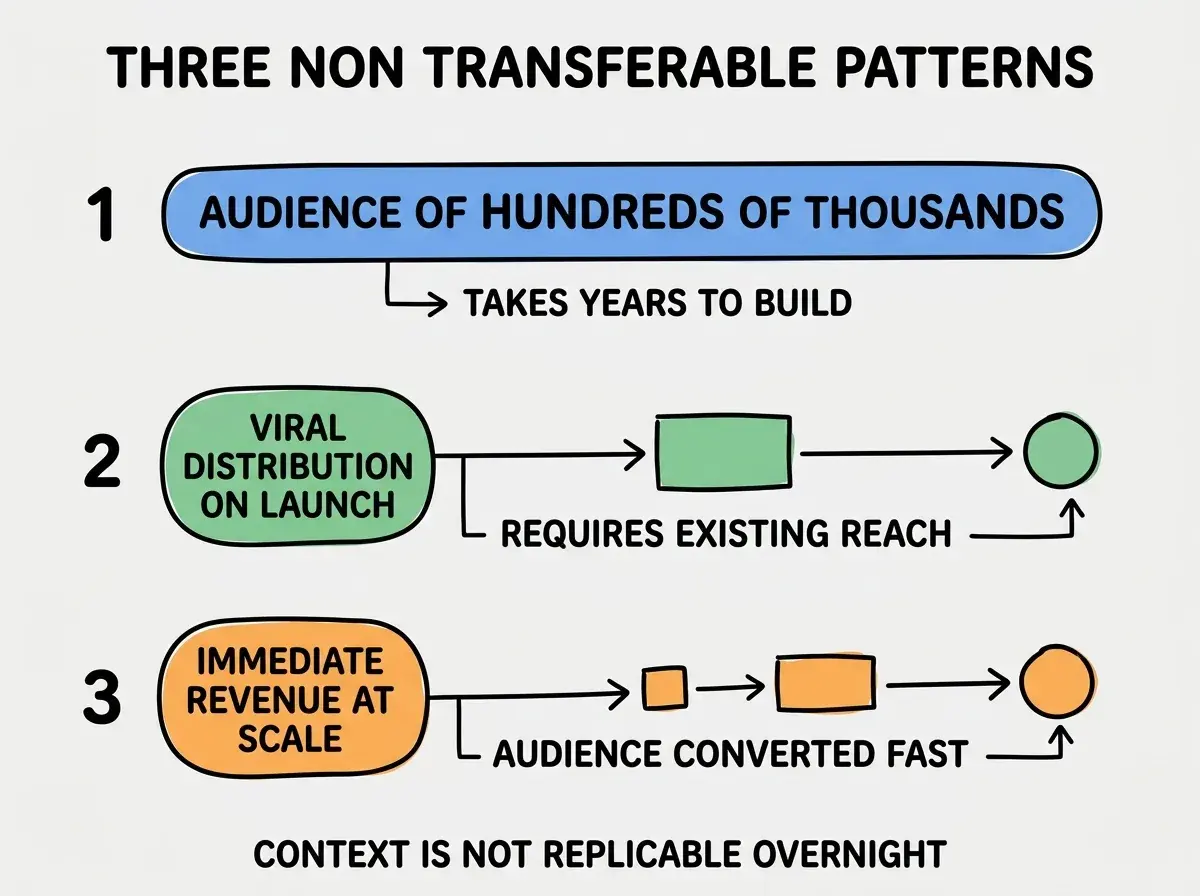
Limit 1, audience of hundreds of thousands took years to build. The audience was the multiplier; the audience itself took years of consistent content and shipping to build.
Limit 2, viral distribution on launch requires existing reach. Same product launched without audience would have grown gradually rather than virally. The viral nature was audience-enabled.
Limit 3, immediate revenue at scale required audience that converted. The audience trusted Pieter and converted at high rates. New builders need to prove themselves before audiences convert similarly.
How to Build Audience Like Pieter Did
Three patterns from Pieter's audience-building approach are worth studying.
Pattern 1, build in public consistently for years. Pieter has shared his work, decisions, and revenue numbers publicly for over a decade. The transparency built trust that converted to audience.
Pattern 2, ship many small things rather than one big thing. Pieter has shipped many products of varying success. The portfolio approach demonstrated capability and gave audience constant new content to engage with.
Pattern 3, share the process, not just the outcomes. Behind-the-scenes content (struggles, decisions, lessons) often outperformed pure success content. The honesty differentiated his content from typical founder marketing.
The combination produced audience that compounded over years. Without these patterns, audience-building takes much longer or fails entirely; the principles transfer regardless of platform changes.
How to Apply the Lessons Realistically
Three patterns help apply the case study without buying into the unrealistic version.
Pattern A, build audience alongside building products. The compound advantage builds over years. Start now even if you are early-career; audience-building has long lead times that make late starts costly.
Pattern B, treat 3-hour builds as prototypes not as scalable businesses. Quick builds are great for validation; scaling them into businesses takes additional months of work that the headline omits but matters for sustainable revenue.
Pattern C, focus on what is genuinely transferable. Speed of building, monetization discipline, niche focus are all transferable. Audience size is not transferable on the same timeline; investing in audience now pays dividends years from now.
The combination produces realistic application. Without these patterns, builders sometimes copy tactics from outlier case studies and produce dramatically different outcomes than they expected.
The most damaging case study mistake is treating outlier outcomes as reliable templates. Pieter Levels' flight sim is genuinely impressive but is one case at the extreme end of distribution. Most 3-hour builds produce zero revenue, not $1M. The fix is to study outlier cases for patterns but expect distribution-typical outcomes for similar attempts. Survivorship bias in case study consumption produces unrealistic expectations that lead to disappointment when typical results arrive.
The other mistake is ignoring the audience-building that enabled the outcome. Builders who copy Pieter's product strategy without copying his audience strategy miss the dominant factor. The fix is to build audience deliberately over years, alongside product building. The audience is the asset that produces the outlier outcomes; products are the means of monetizing the audience.
What This Means For You
The Pieter Levels flight sim case study teaches real lessons about AI-enabled building and audience-leveraged distribution. The four patterns, replicable elements, and limits produce realistic application.
- If you're a founder: Apply the speed and monetization patterns; build your own audience deliberately over years; do not expect 3-hour builds to produce $1M outcomes without the audience multiplier.
- If you're changing careers into building: Use case studies as inspiration for what is possible; calibrate expectations to typical rather than outlier outcomes.
- If you're a student: Study how Pieter built his audience over years. The audience-building is the longer-running case study that the flight sim case study sits on top of.
Browse more indie hacker case studies
Read more pulse articles