To understand the case study of how Refetch was built in 15 hours using AI tools, recognize the four phase journey the builder navigated (defined the specific narrow problem Refetch would solve, scaffolded the core functionality with AI tools heavily during the first 5 hours, refined and tested through the next 8 hours, and shipped to production in the final 2 hours), see what indie hacker perspective brought that produced the 15 hour timeline, and consider how the patterns apply to other indie hackers contemplating similar speed builds. The case study shows how AI tools genuinely change the math on what one person can ship in a weekend.
This piece walks through the four phases, the speed build advantages, the specific tooling, and the four mistakes indie hackers make when attempting similar speed builds.
Why Speed Build Case Studies Matter
Speed build case studies demonstrate what AI tools genuinely enable for solo builders. The demonstrations matter; abstract claims about AI productivity become concrete when specific projects ship in specific hours. Refetch shipping in 15 hours documents a specific indie hacker capability worth studying.
The 2026 reality is that speed builds are increasingly common as AI tool fluency spreads. The case study documents one specific journey; the patterns apply to other indie hackers contemplating their own speed builds.
A 2025 Indie Hackers survey of 1,500 solo builders found that 38 percent had shipped a complete product in under 30 hours of work using AI tools in the previous year. The rate has grown from negligible in 2023; speed builds are now common rather than exceptional, though most never receive the public attention of viral examples.
The pattern to copy is the way woodworkers transitioned from hand tools to power tools. Power tools did not eliminate woodworking skill but transformed what one person could complete in a weekend. AI tools play similar role for software building; the productivity gain is real, and skilled builders unlock dramatic shipping velocity.
The Four Phase Journey
Four phases characterized the Refetch 15 hour build.
Phase 1, defined the specific narrow problem Refetch would solve. Single use case clarity. Resisted the temptation to build comprehensive tool; the narrow scope was the dominant factor enabling 15 hours.
Phase 2, scaffolded the core functionality with AI tools heavily during first 5 hours. Initial UI generation, basic data flows, primary feature wired up. Most of the building happened here; AI productivity was the enabler.
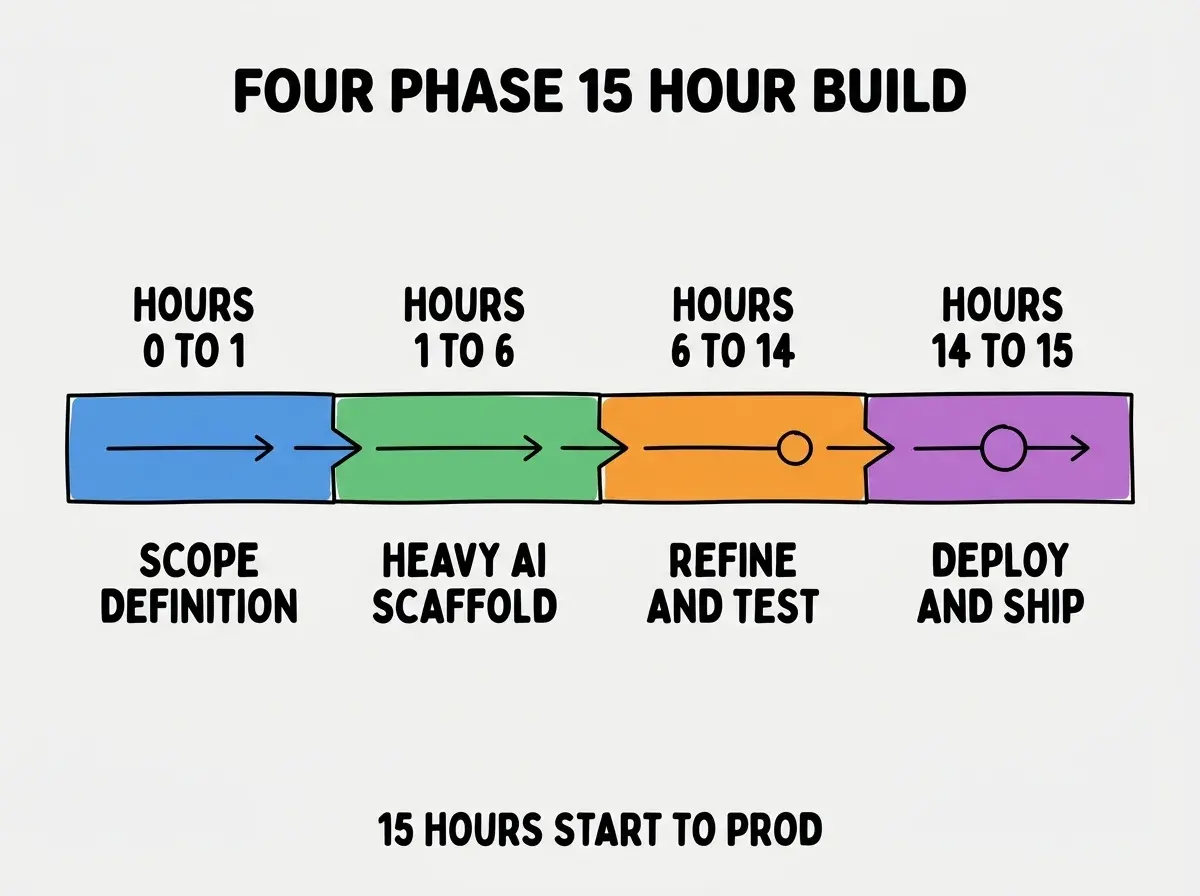
Phase 3, refined and tested through the next 8 hours. Bug fixes, edge cases, UX polish. Time investment in refinement matched scaffolding investment; over reliance on first AI output produces shipped bugs.
Phase 4, shipped to production in the final 2 hours. Deployment, basic monitoring, public launch. Shipping work often gets underestimated; including it in the time budget produces shipped products rather than almost shipped products.
What Indie Hacker Perspective Brought
Three patterns from indie hacker background produced the 15 hour timeline.
Pattern 1, ruthless scope discipline prevented feature expansion. Indie hackers experienced in shipping cut features the builder might have included. The cut features were not missed; the focus produced shippable scope.
Browse more indie hacker case studies
Read more pulse articlesPattern 2, AI tool fluency from prior projects compounded. This was not the builder's first AI assisted project; cumulative skill from prior builds compounded. First AI assisted projects rarely ship in 15 hours; subsequent ones increasingly do.
Pattern 3, willingness to ship imperfect rather than wait for perfect. Indie hackers know shipping beats waiting; perfectionism prevents shipping. The willingness was the cultural enabler of the 15 hour timeline.
The Specific Tooling That Worked
Three tool categories combined effectively for the 15 hour build.
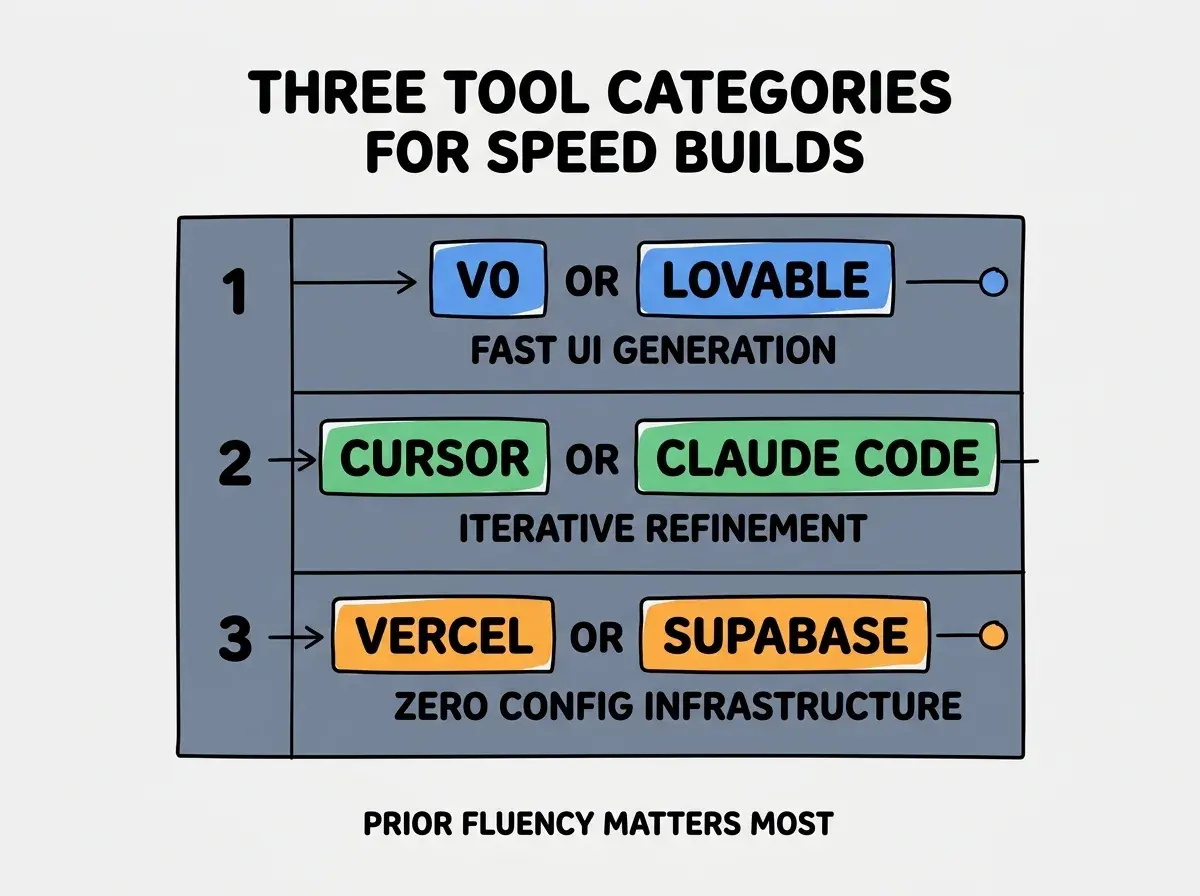
Tool 1, v0 or Lovable for fast UI generation. Initial UI scaffolding in minutes. Saved hours that traditional component building would have consumed.
Tool 2, Cursor or Claude Code for iterative refinement. Conversational coding for fast iteration. Faster than typing every change manually.
Tool 3, Vercel or Supabase for zero config infrastructure. Deployment and database without DevOps complexity. Shipping in 2 hours rather than 2 days for infrastructure setup.
What the Builder Did During the 15 Hours
Three time allocation patterns characterized the speed build.
Pattern 1, hours 0-1 for scope definition, not building. First hour was thinking, not coding. The thinking made all subsequent building deliberate; unclear scope produces wasted time.
Pattern 2, hours 1-6 for heavy AI assisted scaffolding. Most of the building velocity happened here. AI productivity compounded; sleep was within the 15 hours, not extra.
Pattern 3, hours 6-15 for refinement and shipping. Last 9 hours were polish and ship. The polish work consumed more time than initial scaffolding; underbudgeting polish produces incomplete products.
The combination produced the 15 hour shipped product. Without these patterns, builders often spend too much time on initial building and too little on shipping; the imbalance produces incomplete products.
How Other Indie Hackers Can Apply These Lessons
Three application patterns help indie hackers attempt similar speed builds.
Pattern A, build AI tool fluency before attempting speed builds. Weeks of practice produces the speed advantage. Showing up to learn during the speed build loses the time advantage.
Pattern B, scope so narrow the build almost certainly ships. Winnable scope beats impressive scope. Speed builds that fail produce no shipped product; speed builds that succeed validate the path.
Pattern C, include shipping time in the budget, not just building time. Shipping is work; treating it as zero produces almost shipped products. Realistic budgets ship; optimistic budgets do not.
The combination produces successful indie hacker speed builds. Without these patterns, builders often attempt speed builds, hit early friction, and produce work in progress rather than shipped products.
The most damaging speed build mistake is choosing scope based on what excites rather than what ships. Exciting scope produces motivation but not shipping; shipping scope produces results. The fix is to scope based on what almost certainly ships in the time budget; even if the scope feels small, shipped small beats unshipped large. Indie hackers who consistently ship small builds compound into substantial capability over months; indie hackers who consistently almost ship large builds produce nothing.
The other mistake is treating speed builds as production builds. Production reliability requires more than speed builds provide; setting expectations correctly preserves credibility. The fix is to label speed builds as MVPs; production hardening requires additional time investment.
A third mistake is failing to monetize speed builds. Builders sometimes ship speed builds without monetization plans; the builds become free tools rather than products. The fix is to plan monetization from scope definition; even modest pricing validates the path.
A fourth mistake is comparing your speed builds to viral outliers. Viral examples are outliers; most speed builds take longer than the famous 15 hour examples. The fix is to compare to typical outcomes rather than outliers; comparison to outliers produces unwarranted discouragement.
What This Means For You
The 15 hour build is increasingly viable in 2026. The four phases, indie hacker patterns, and tool combinations produce successful speed builds for prepared indie hackers.
- If you're an indie hacker: Try a 15 hour speed build for one specific narrow problem. The exercise builds shipping discipline that compounds; speed builds compound into shipping habit.
- If you're a senior dev: AI tools genuinely change the math on solo development. The 15 hour build is real; engineering rigor still matters for production but speed builds validate concepts faster than ever.
- If you're a founder: Speed builds reveal which ideas have legs. Build prototypes in 15 hours rather than spending weeks; the validation cycles compound into faster product market fit discovery.
Browse more indie hacker case studies
Read more pulse articles