To understand the case study of a non technical PM shipping an internal tool in a weekend, recognize the four phase approach he followed (defined the specific team workflow problem in 2 hours, scaffolded the tool with AI tools in 8 hours, refined and tested in 6 hours, and shipped to internal users in 4 hours), see what PM trained perspective brought that engineering perspective might have missed, and consider how the patterns apply to PMs contemplating similar weekend shipping. The case study shows how PM judgment about problem definition compounds with AI execution speed to produce shipped tools faster than coordination with engineering teams typically allows.
This piece walks through the four phases, the PM specific patterns, the 20 hour breakdown, and the four mistakes PMs make when attempting similar weekend builds.
Why PM-to-Builder Transitions Matter
PMs have always understood team workflows and pain points deeply but historically required engineering coordination to ship solutions. AI tools change the math; PMs can increasingly ship internal tools without engineering bottlenecks. The combination of PM problem judgment plus AI execution produces shipped tools faster than traditional coordination allows.
The 2026 reality is that PM-to-builder transitions are accelerating. PMs who develop AI tool fluency unlock new ways to serve their teams; the case study documents one specific weekend worth studying.
A 2025 product management survey of 800 PMs found that 23 percent had shipped internal tools without engineering team involvement using AI tools. The rate has grown from negligible in 2023; PM-to-builder transitions are real and increasingly common rather than exceptional.
The pattern to copy is the way good chefs personally cook prep work rather than waiting for line cooks. The chefs could delegate but choose to handle small tasks themselves for speed and quality control. PMs handling small internal tools themselves rather than queuing engineering work follows similar logic; the speed and quality often beat coordinated alternatives for small tools.
The Four Phase Approach
Four phases characterized the PM's weekend build from problem to shipped tool.
Phase 1, defined the specific team workflow problem in 2 hours. Internal interviews with affected teammates, documentation of the current process, identification of the highest impact intervention. The clarity made the build deliberate rather than exploratory.
Phase 2, scaffolded the tool with AI tools in 8 hours. Component generation, basic data model, initial workflows. AI tools accelerated the building dramatically; PM perspective on problem fit kept the building focused.
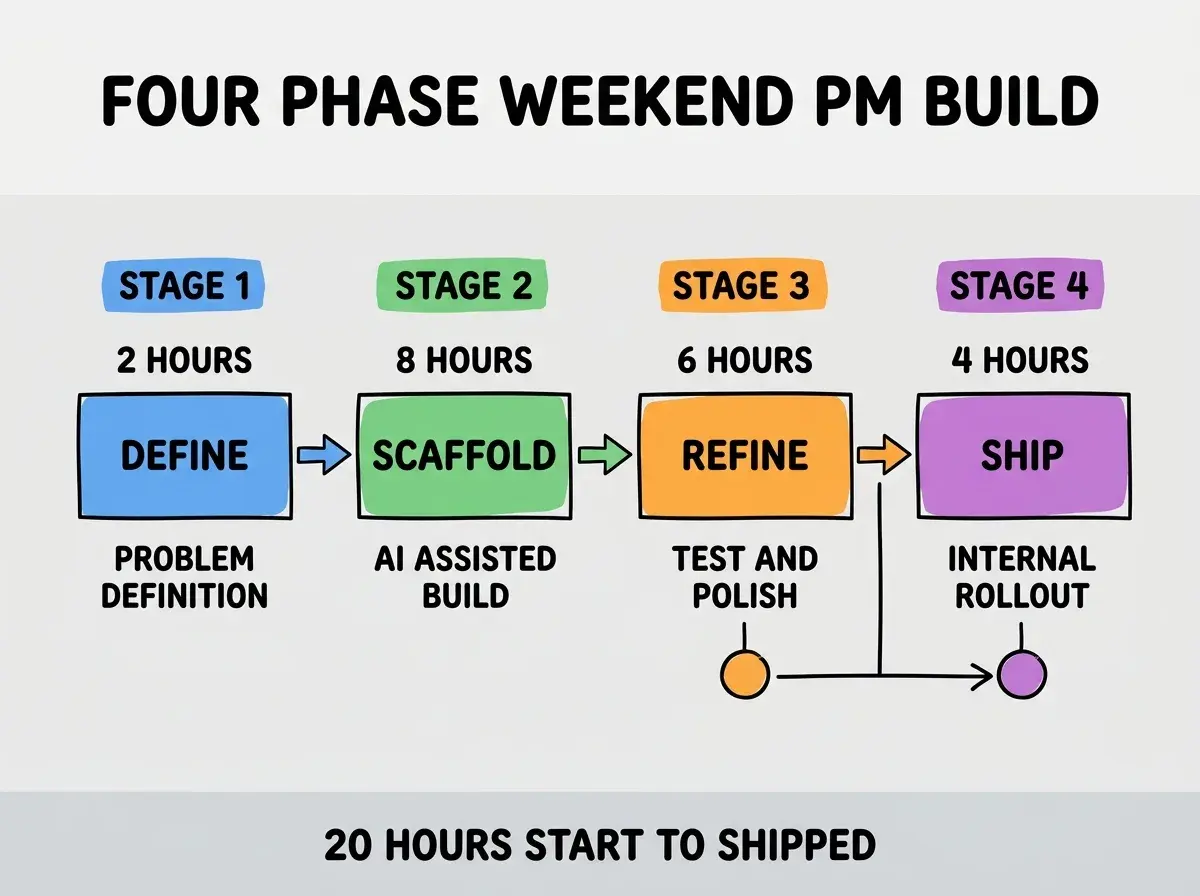
Phase 3, refined and tested in 6 hours. Bug fixes, UX polish, edge case handling. PM eye for user experience caught issues that engineering only review might have missed.
Phase 4, shipped to internal users in 4 hours. Deployment, documentation, team rollout. Shipping work often gets underestimated; PMs who include shipping time in their plans avoid the common "almost shipped" trap.
What PM Trained Perspective Brought
Three patterns from PM background produced better outcomes than typical engineering approaches for this internal tool.
Pattern 1, ruthless scope control prevented feature creep. PMs trained in MVP discipline cut features the engineer might have included. The cut features were not missed; the focus produced shippable scope.
Browse more case studies
Read more pulse articlesPattern 2, user empathy informed UX choices throughout. PMs trained in user research made micro decisions about UI flow that engineers without that training often miss. The result was a tool teammates immediately understood.
Pattern 3, stakeholder communication during build prevented scope misunderstandings. PMs trained in stakeholder management kept teammates informed during the weekend. The communication produced aligned expectations; engineering builds without communication often produce mismatched tools.
The 20 Hour Breakdown
Three time allocation patterns in the 20 hour build deserve study.
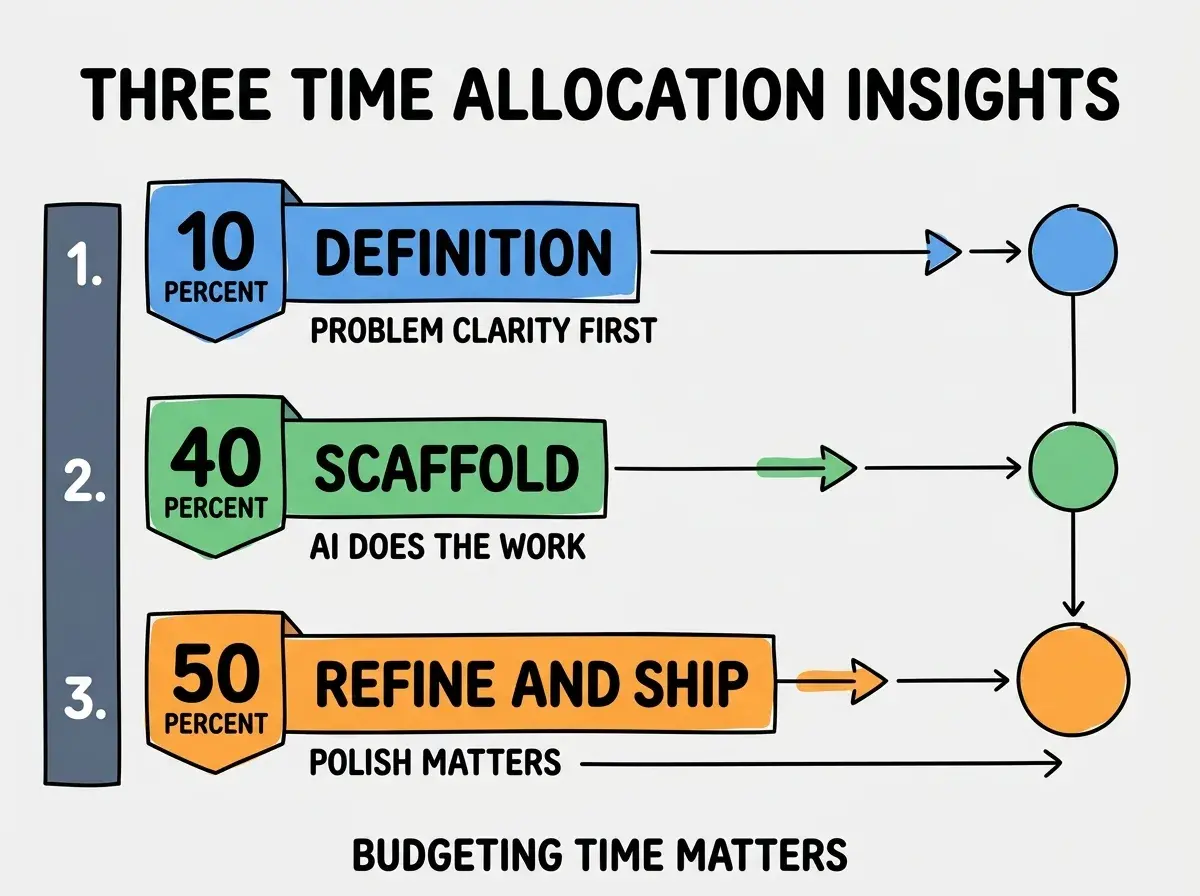
Insight 1, problem definition got 10 percent of total time. 2 of 20 hours. Brief but deliberate; PMs experienced in problem framing got clear quickly.
Insight 2, AI assisted scaffold got 40 percent. 8 of 20 hours. Most of the building happened here; AI productivity was the enabler of weekend shipping.
Insight 3, refinement and shipping got 50 percent combined. 10 of 20 hours. Polish and rollout consumed half the time; under budgeting these phases is the common reason for "almost shipped" projects.
How Other PMs Can Apply These Lessons
Three application patterns help PMs attempt similar weekend builds.
Pattern A, start with one team workflow pain point you understand deeply. Personal familiarity with the problem accelerates the build; unfamiliar problems take much longer than expected.
Pattern B, accept that learning curve is real. Even with AI tools, the first weekend involves real friction. Plan for learning time; the second weekend goes faster than the first.
Pattern C, ship to internal users, not external. Internal tools forgive imperfection; external tools punish it. PMs starting with internal tools build confidence without external risk.
The combination produces successful PM weekend builds. Without these patterns, PMs sometimes attempt builds, hit early friction, and conclude they cannot ship when patient execution would have produced shipped tools.
The most damaging PM weekend build mistake is choosing too ambitious a first project. Excited PMs often pick complex tools and burn out before shipping. The fix is to pick tools so simple they almost certainly ship; the simplicity produces the success that motivates more ambitious second projects. PM-to-builder transitions succeed through small wins compounding; failures often come from oversized first attempts.
The other mistake is failing to coordinate with engineering after shipping. Internal tools that engineering does not know about become support burdens when they break. The fix is to inform engineering at shipping time; visibility prevents friction later.
A third mistake is treating PM-built tools as throwaway. PMs sometimes ship and forget; the tools then break without owner. The fix is to commit to ongoing maintenance or explicitly hand off; abandoned tools generate technical debt.
A fourth mistake is hiding the build from leadership rather than celebrating it. PMs sometimes worry leadership will object to non engineering work; the result is hidden builds with limited adoption. The fix is to celebrate the shipping publicly; leadership usually appreciates the productivity demonstration, and the visibility produces faster adoption among teammates who otherwise might not learn about the new tool.
What the PM Built and Why It Mattered
The specific tool was a feedback aggregation dashboard that collected user feedback from multiple channels (intercom, surveys, sales calls) into a single tagged interface. Before the tool, the PM spent 4 hours weekly manually consolidating feedback. After the tool, consolidation took 30 minutes. The 3.5 hour weekly time savings paid back the 20 hour build investment in 6 weeks.
The tool also unlocked weekly feedback summaries that the PM could not produce manually due to time constraints. The summaries became valued artifacts within the team; teammates who previously did not see consolidated user feedback started referencing the summaries in their work. The unlocked benefit exceeded the productivity benefit.
What This Means For You
The PM weekend build is increasingly viable in 2026. The four phases, PM perspective patterns, and time allocation produce successful shipping for committed PMs.
- If you're a product manager: Try the weekend build for one specific team pain point. The transition becomes career changing if it works; the cost is one weekend.
- If you're a founder: PMs shipping internal tools reduce engineering bottlenecks. Encourage the practice for low risk internal work; reserve engineering bandwidth for higher risk customer facing work.
- If you're a senior dev: PM built tools deserve respect rather than dismissal. The PMs deeply understand the workflow problems; engineering critiques should be collaborative rather than dismissive.
Browse more PM case studies
Read more pulse articles