To understand the case study of a non profit platform built with zero budget using AI tools, recognize the four phase journey the founder navigated (defined the specific community problem the platform would address, scaffolded the platform with free tier AI tools and infrastructure during 6 weeks, validated value with beta community over 8 weeks, and grew through community contribution rather than paid acquisition over the following 9 months), see what non profit perspective brought to AI tool adoption that for profit founders might have missed, and consider how the patterns apply to other mission driven founders contemplating similar zero budget builds. The case study shows how AI tools democratize platform building for missions that previously required significant funding.
This piece walks through the four phases, the non profit specific advantages, the cost breakdown, and the four mistakes mission driven founders make when attempting zero budget builds.
Why Zero Budget Non Profit Builds Matter
Zero budget non profit builds demonstrate that mission driven work no longer requires significant funding to launch. The demonstrations matter; many community problems lack platform solutions because traditional building costs exceed what community founders could fundraise. AI tools change the math.
The 2026 reality is that solo founders with mission focus can launch community platforms at pace previously requiring grant funding or significant volunteer time investment. The case study documents one specific non profit launch; the patterns apply to other mission driven builders.
A 2025 nonprofit technology survey of 600 small nonprofits found that 31 percent had launched their primary platform with under 5,000 dollars in total cost using AI tools, compared to historical averages of 40,000+ dollars for equivalent platforms. The cost compression has changed nonprofit founder economics; small organizations can now build what previously required large grants.
The pattern to copy is the way community gardens spread without institutional funding. Small groups with shared purpose built gardens through volunteer effort and donated materials; the sustainability came from community ownership rather than funding. AI tools play similar role for digital platforms; community ownership plus low tool cost enables sustainability.
The Four Phase Journey
Four phases characterized the non profit platform launch.
Phase 1, defined the specific community problem the platform would address. Single problem clarity. Resisted scope creep that comprehensive nonprofit platforms often suffer.
Phase 2, scaffolded the platform with free tier AI tools and infrastructure during 6 weeks. Vercel free tier, Supabase free tier, AI tools at personal subscription level. Total infrastructure cost under 50 dollars per month.
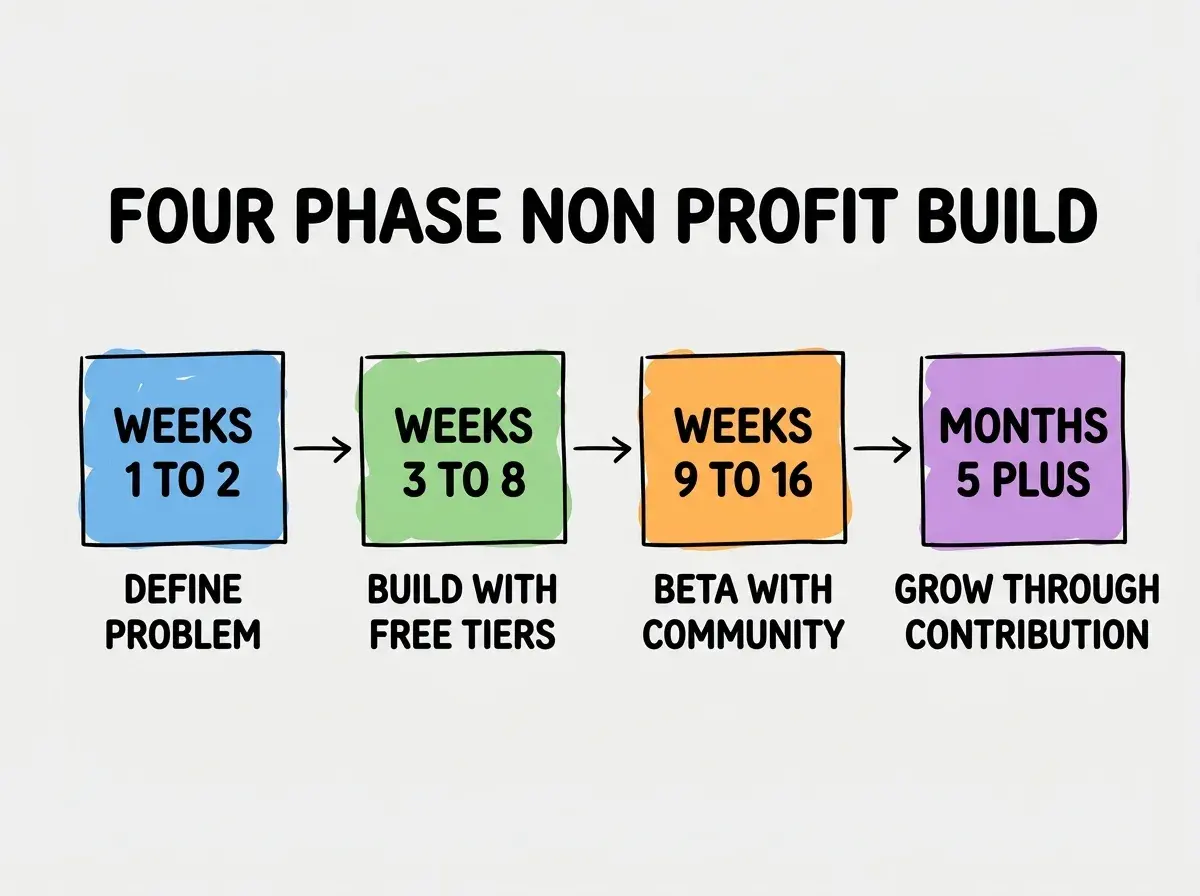
Phase 3, validated value with beta community over 8 weeks. Initial 50 community users, organic feedback, iteration based on real use. Validation gave the platform substance beyond just shipped code.
Phase 4, grew through community contribution rather than paid acquisition over the following 9 months. Word of mouth, content marketing, community advocacy. Growth without paid marketing produced sustainable community ownership rather than funded user acquisition.
What Non Profit Perspective Brought
Three patterns from non profit perspective produced advantages over for profit AI adoption.
Pattern 1, mission alignment produced volunteer contributors. Mission attracted volunteers; for profit motivations rarely attract free contributors. The volunteer contribution stretched the zero budget further.
Browse more mission driven case studies
Read more pulse articlesPattern 2, community ownership reduced platform pressure for revenue. No investor pressure for revenue allowed focus on community value. The patience produced quality that revenue pressure often prevents.
Pattern 3, transparent budget produced community trust. Open about zero budget operation built community trust and contribution. Mystery budgets produce skepticism; transparent budgets produce support.
The Cost Breakdown
Three cost categories matter for understanding the zero budget reality.
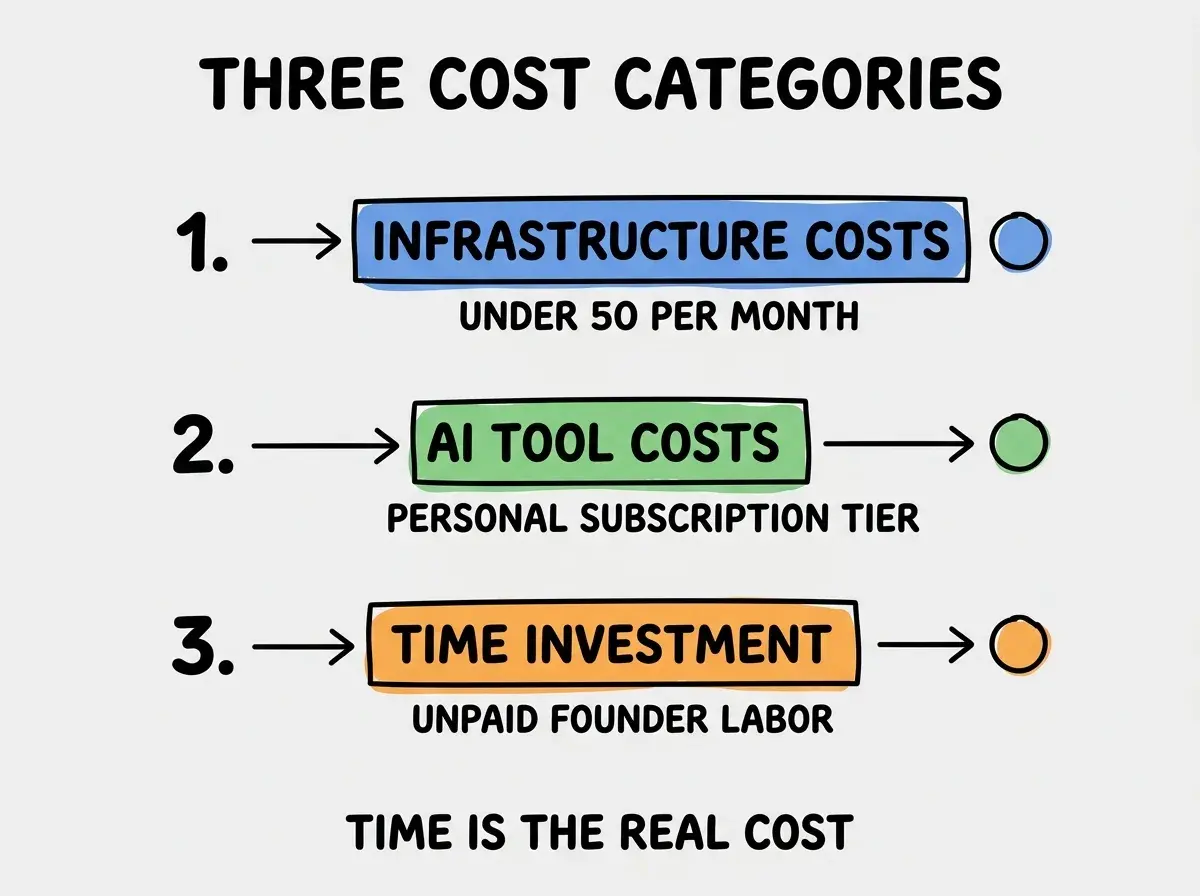
Insight 1, infrastructure costs stayed under 50 dollars per month. Free tiers handled the platform comfortably at small scale. Scale costs would emerge with growth but could be addressed with grant funding then.
Insight 2, AI tool costs were personal subscription level. Founder used personal subscriptions for AI tools. Total AI tool cost under 100 dollars per month including premium tier subscriptions.
Insight 3, time investment was substantial. Founder time was the real cost; treating founder time as free undercount the true cost. The investment produced launch but consumed founder bandwidth.
How Other Mission Driven Founders Can Apply These Lessons
Three application patterns help mission driven founders attempt similar builds.
Pattern A, scope so narrow the launch almost certainly ships. Single community problem, defined user base. Narrow scope produces successful launches; broad scope often produces incomplete launches.
Pattern B, leverage free tiers aggressively. Vercel, Supabase, Cloudflare all offer generous free tiers. Free tier infrastructure handles most early stage non profit platforms.
Pattern C, recruit volunteer contributors through mission alignment. Mission attracts contributors that for profit cannot. Community contribution stretches zero budget into substantial platform.
The combination produces successful zero budget non profit launches. Without these patterns, mission driven founders sometimes wait for grant funding that never arrives; AI tools enable launching without waiting.
The most damaging zero budget mistake is treating founder time as free. Founder time is the real cost of zero budget builds; without explicit accounting of time, projects underestimate cost and overestimate sustainability. The fix is to value founder time explicitly even when not paying for it; the valuation reveals whether the project is sustainable or whether founder burnout will end it. Zero budget often means substantial unpaid founder labor; understanding this prevents disappointment.
The other mistake is hiding the budget situation from community. Communities respect transparency; hiding budget realities erodes trust when discovered. The fix is to be transparent about budget; transparency produces community support that secrecy prevents.
A third mistake is failing to plan for scale costs. Free tiers have limits; growth eventually triggers paid tier costs. The fix is to plan for the transition; sustainable funding model needs to exist before scale costs emerge.
A fourth mistake is treating non profit as one founder rather than community organization. Solo founder dependencies create single points of failure; community organizations survive founder transitions. The fix is to build community ownership from the start; the ownership produces sustainability beyond founder bandwidth.
A fifth mistake is ignoring legal and tax structure. Non profit status requires legal and tax filings; without them, the platform operates in murky territory. The fix is to handle structure early; even minimal structure beats no structure for non profit platforms that intend to grow.
What This Means For You
The non profit platform built with zero budget represents a real new path for mission driven founders in 2026. The four phases, non profit specific patterns, and cost breakdown produce successful launches for committed mission driven builders.
- If you're a founder with mission interest: Try a zero budget non profit build for one specific community problem. The mission impact compounds; AI tools enable mission focused work that previously required funding.
- If you're a career changer: Mission driven projects build skills and portfolio while serving causes. The dual benefit makes mission projects valuable career investments beyond direct mission impact.
- If you're a senior dev contemplating mission work: Your skills can serve missions at scale that previously required teams. AI tools amplify individual contribution dramatically; consider mission contribution as career portfolio expansion.
Browse more non profit case studies
Read more pulse articles