To understand the case study of a content creator building and monetizing personal tools using AI, recognize the four phase journey she navigated (built tools she personally needed for her content workflow during 4 months, shared the tools with her audience as free utilities first, gradually added paid tiers as users requested advanced features, and built recurring revenue alongside her primary content business), see what creator perspective brought to tool building that pure engineers might have missed, and consider how the patterns apply to other content creators contemplating similar tool monetization. The case study shows how AI tools change creator economics by adding tool revenue alongside content revenue.
This piece walks through the four phases, the creator specific advantages, the monetization pattern, and the four mistakes creators make when monetizing tools.
Why Creator Tool Monetization Matters
Creator tool monetization demonstrates a new income stream for content creators beyond ads and subscriptions. The demonstrations matter; creators who add tool revenue diversify income and reduce platform dependency that pure content creators face.
The 2026 reality is that AI tools enable creators to build the tools they previously bought from SaaS providers. The case study documents one specific creator's tool building journey; the patterns apply to other creators contemplating similar transitions.
A 2025 creator economy survey of 800 mid sized content creators found that creators who added tool revenue earned median 2.8x more total income than creators with content only revenue. The tool income tends to be more stable than ad revenue and less platform dependent than subscription revenue; diversification matters for creator longevity.
The pattern to copy is the way authors transitioned from book sales to multiple revenue streams. Authors who added courses, consulting, and licensing earned more than authors dependent on book royalties alone. AI tools play similar role for content creators; tool revenue diversifies income streams.
The Four Phase Journey
Four phases characterized the creator's tool building and monetization.
Phase 1, built tools she personally needed for her content workflow during 4 months. Personal need produced authentic tools; tools built without personal need often miss what users actually want.
Phase 2, shared the tools with her audience as free utilities first. Free distribution built audience trust. The free utility introduced users to the tool quality before any paid request.
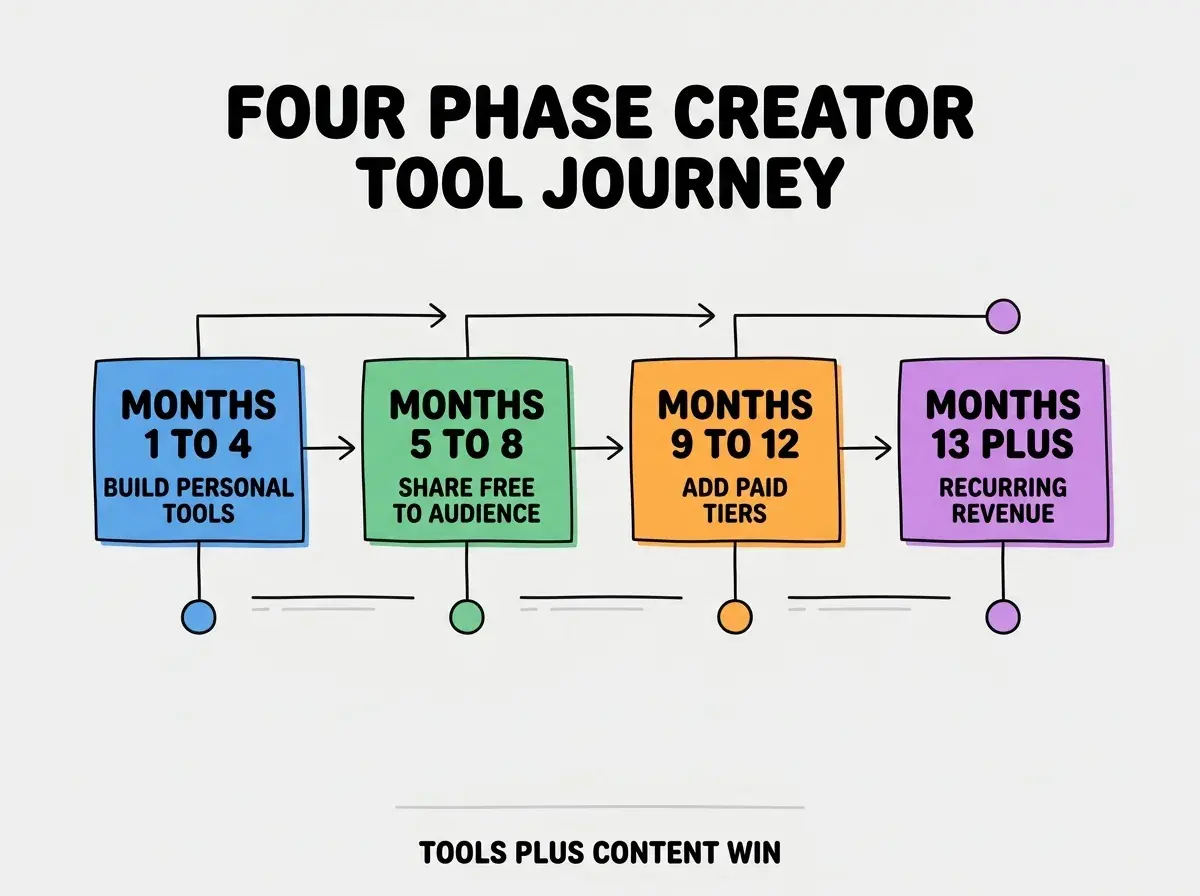
Phase 3, gradually added paid tiers as users requested advanced features. User requests drove paid tier design rather than guesses. The user driven design produced features users would pay for rather than features the creator imagined users wanting.
Phase 4, built recurring revenue alongside her primary content business. Tool revenue grew to 35 percent of total creator income within 18 months. Recurring revenue stabilized income that ad revenue alone could not.
What Creator Perspective Brought
Three patterns from creator perspective produced advantages over pure engineer tool building.
Pattern 1, deep audience understanding informed product decisions. Years of audience interaction revealed what users wanted; engineers without audience would have guessed wrong.
Browse more creator case studies
Read more pulse articlesPattern 2, established distribution channel through content. Newsletter, social platforms, video channels. Content distribution produced tool distribution at no incremental marketing cost.
Pattern 3, content created marketing for tools naturally. Tutorial content featured the tools; the content marketed without dedicated marketing effort. Engineers without content channels must build distribution from scratch.
The Monetization Pattern
Three patterns characterized the creator's monetization evolution.
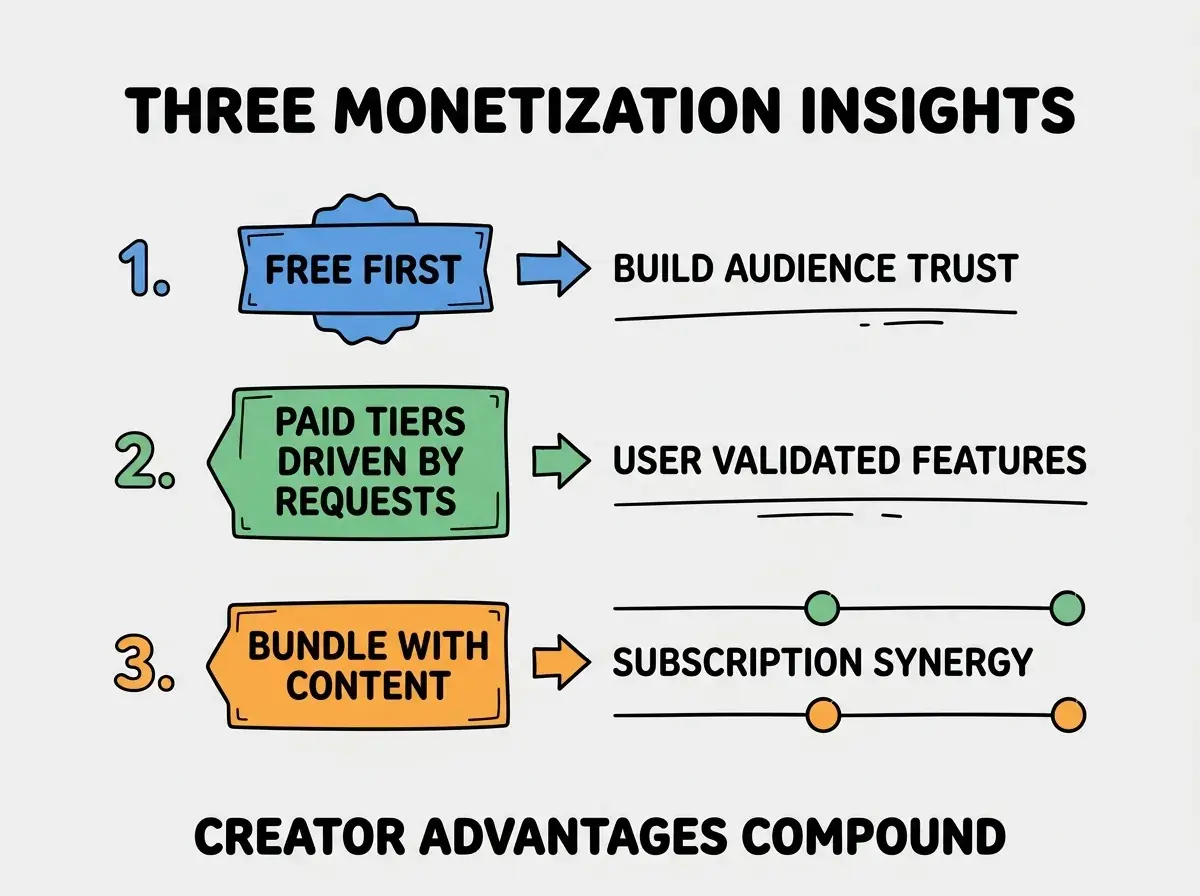
Insight 1, free first built audience trust before any paid request. Trust enables monetization; without trust, paid tiers fail at launch regardless of feature quality.
Insight 2, paid tiers driven by user requests rather than creator guesses. Requested features produced sales; guessed features often produced no sales regardless of quality.
Insight 3, bundle with content subscription created synergy. Tool access plus content subscription priced higher than either alone. Bundle pricing produced retention beyond what either offering alone would have produced.
How Other Creators Can Apply These Lessons
Three application patterns help creators attempt similar tool monetization.
Pattern A, start with tools you personally need. Personal need produces authentic tools; tools built without personal need often miss what users actually want.
Pattern B, distribute free first to build trust. Free distribution produces audience trust; trust enables paid conversion. Skipping the free phase often produces failed paid launches.
Pattern C, monetize through user requests rather than creator guesses. User requested paid features produce sales; creator guessed features often produce nothing. Listen rather than assume.
The combination produces successful creator tool monetization. Without these patterns, creators sometimes build tools, fail to monetize, and conclude tool building does not work when the issue was monetization approach rather than tool building.
The most damaging creator tool mistake is monetizing too early before audience trust is established. Tools that launch paid often produce no sales regardless of quality; the audience needs to trust the creator before paying for tools. The fix is to distribute free first for 3-6 months before any paid tier; the trust building phase produces the customer base that paid tiers monetize. Without trust, paid tools fail; with trust, they succeed.
The other mistake is treating tools as separate from content rather than complementary. Tools and content are mutually reinforcing for creators; ignoring the synergy reduces both. The fix is to integrate tools and content explicitly; tutorial content featuring the tools markets without dedicated marketing.
A third mistake is ignoring user requests for features the creator does not personally use. The creator's needs are not the only valid needs; user requests reveal market demand the creator may not personally feel. The fix is to take user requests seriously even when they do not match personal needs.
A fourth mistake is failing to handle support as tool revenue scales. Tool support consumes time; without support planning, tools become support burdens that hurt content creation time. The fix is to plan support time as tools scale; budget the support cost in pricing.
How the Content Tool Synergy Worked
Three patterns characterized the synergy between content and tools that the creator built. First, tutorial content for the tools doubled as marketing without dedicated marketing investment; the tutorials helped existing users while attracting new users. Second, user feedback on tools became content topics; the feedback loop produced both better tools and better content. Third, paid tool subscribers got bonus content access; the bundle increased perceived value of both offerings. The compound effect grew both content audience and tool revenue faster than either alone would have grown.
What This Means For You
The content creator monetizing personal tools represents a new revenue stream for creators in 2026. The four phases, creator specific patterns, and monetization approach produce sustainable tool revenue alongside content revenue.
- If you're a creative: Try building one tool you personally need. The transition to tool revenue requires technical learning but produces income diversification that pure content cannot match.
- If you're an indie hacker: Content creators with audiences are your competitors and potential partners. Their distribution advantages are real; partnerships with creators can accelerate tool growth.
- If you're a founder: Content creators building tools are blurring the lines between SaaS and creator economy. The trend matters for talent acquisition and competitive positioning.
Browse more creator case studies
Read more pulse articles