To build a wedding planning app with AI tools, follow the four phase approach (define what wedding tasks and timeline patterns the app should support, build the data model that handles guests, vendors, and budgets, design the planning interface that reduces stress for couples, and ship with the collaboration patterns that include partners and family members), recognize what separates wedding apps couples use through the entire planning journey from apps couples download then forget, and apply the patterns that produce sustained engagement. The wedding planning app becomes valuable when it reduces stress while improving organization; without that bar, spreadsheets win.
This piece walks through the four phases, the collaboration patterns, the specific tooling, and the four mistakes that produce wedding apps couples abandon.
Why Wedding Planning Apps Matter
Wedding planning apps turn the chaos of wedding coordination into structured workflows. The transformation matters; weddings involve dozens of vendors, hundreds of guests, and thousands of small decisions; without apps, planning happens through scattered emails, spreadsheets, and phone calls.
The 2026 reality is that AI tools dramatically accelerate wedding app building while AI integration during planning can suggest vendors, draft messages, and detect timeline conflicts faster than manual coordination. The combination means small teams can build wedding apps matching what enterprise wedding platforms previously required.
A 2025 wedding industry survey of 600 engaged couples found that couples using purpose built wedding apps reported 28 percent lower planning stress and 19 percent better budget adherence than couples planning through spreadsheets and email. The structure produces both stress reduction and financial discipline.
The pattern to copy is the way project management software transformed business projects. Project management replaced ad hoc coordination with structured workflows; the structure produced better outcomes than the chaos before. Wedding planning apps play similar role for weddings; structure produces better wedding outcomes than ad hoc planning.
The Four Phase Approach
Four phases produce wedding planning apps couples engage with throughout planning.
Phase 1, define what wedding tasks and timeline patterns the app should support. Venue, catering, attire, photography, music. Different wedding types have different task patterns.
Phase 2, build the data model that handles guests, vendors, and budgets. Guests, RSVPs, vendors, budget items, timeline. AI tools generate the schema effectively given clear specifications.
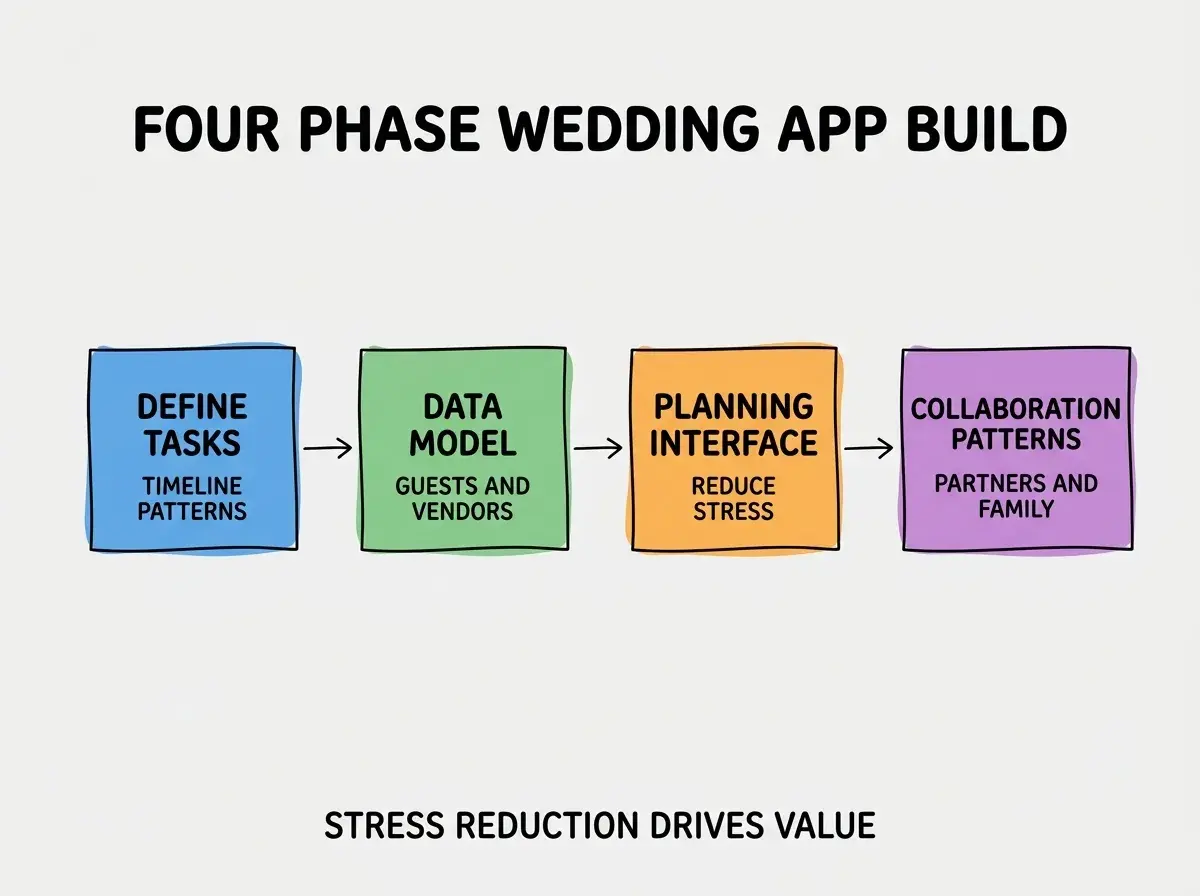
Phase 3, design the planning interface that reduces stress for couples. Clear timelines, prioritized tasks, progress visibility. Stress reduction determines sustained use; stressful interfaces produce abandonment.
Phase 4, ship with collaboration patterns that include partners and family members. Multi user access, role based permissions, shared decisions. Collaboration matters; weddings are family events that solo planning rarely captures well.
The Collaboration Patterns That Reduce Stress
Three patterns produce collaboration that reduces wedding planning stress.
Pattern 1, both partners get equal access and visibility. Wedding planning often falls heavily on one partner; equal app access encourages shared participation. Equal participation reduces planning stress.
Browse more event tutorials
Read more build tutorialsPattern 2, family members get appropriate permissions. Parents, siblings, wedding party get scoped access. Appropriate permissions enable family help without losing couple control.
Pattern 3, vendor communication centralized in app. Vendor messages in app rather than scattered email. Centralization preserves history and reduces communication chaos.
The Specific Tooling That Worked
Three tool categories combine effectively for wedding app building.
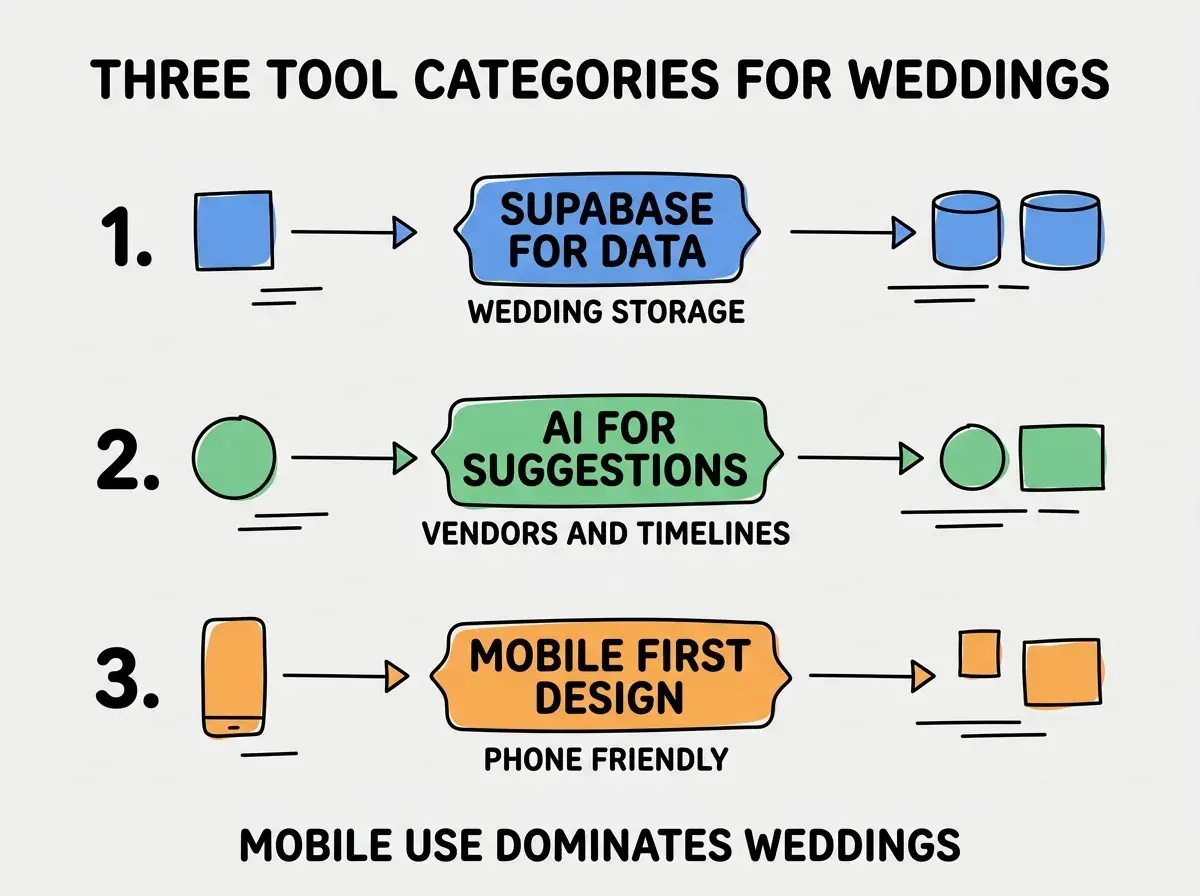
Tool 1, Supabase for wedding data storage. Guests, vendors, budgets, timelines, decisions. Relational data fits naturally.
Tool 2, AI for suggestions and recommendations. Claude or GPT suggests vendors, drafts messages, detects timeline conflicts. AI assistance reduces manual coordination work.
Tool 3, mobile first design for phone friendly use. Planning happens at vendor visits, during commutes, in bed before sleep. Mobile design matters dramatically for wedding apps.
What Makes Wedding Apps Get Sustained Use
Three patterns separate sustained wedding app use from quick abandonment.
Pattern 1, easier than spreadsheets for common operations. If app is more complex than spreadsheet for simple tasks, couples abandon for spreadsheets. Simplicity matters.
Pattern 2, integration with email for vendor communication. Wedding vendors often communicate via email; integration captures these communications. Without integration, key information lives outside app.
Pattern 3, post wedding archive value preserves data. Couples want wedding memories preserved; archive value extends app use beyond planning. Pure planning apps lose value at wedding day.
The combination produces apps couples use throughout the entire planning journey. Without these patterns, apps get tried then abandoned for spreadsheets and email.
How to Build Your First Wedding App
Three implementation patterns help first wedding apps succeed.
Pattern A, start with one wedding aspect, not comprehensive planning. Guest list management or budget tracking first. Single aspect validates the app. Multi aspect from day one often produces incomplete features.
Pattern B, beta test with engaged couples for 3-6 months. Wedding planning takes months; short beta misses planning challenges. Long beta reveals real usage patterns.
Pattern C, instrument task completion across planning timeline. Where do couples drop off in planning. Without instrumentation, planning friction stays hidden.
The combination produces first wedding apps that establish use patterns. Without these patterns, first apps often launch with planning friction that produces abandonment.
The most damaging wedding app mistake is treating wedding planning as single user activity rather than collaborative. Wedding planning involves couples, families, wedding parties, and vendors; single user apps produce friction when collaboration matters. The fix is to build collaboration features from start; multi user access, role based permissions, shared decision making. Solo wedding planning is rare; apps that assume solo planning miss the actual use case dramatically.
The other mistake is missing budget tracking integration with planning decisions. Wedding budget often drives planning decisions; budget tracking separate from planning produces disconnect. The fix is to integrate budget tracking with planning decisions.
A third mistake is failing to handle the emotional dimension of wedding planning. Wedding planning involves emotional decisions; pure logistical apps miss this. The fix is to acknowledge the emotional dimension; checkpoints to celebrate progress, gentle reminders that reduce anxiety, supportive language throughout.
A fourth mistake is overengineering vendor management. Most couples work with 5-15 vendors; comprehensive vendor management often adds complexity without value. The fix is to keep vendor management simple; focus on the core needs.
A fifth mistake is missing post wedding archive features. Wedding planning apps lose value at the wedding day if they do not archive memories. The fix is to build photo upload, guest message collection, and timeline preservation features that extend app value past the wedding itself; archive features turn one time use into lasting value.
What This Means For You
The wedding planning app built with AI tools becomes valuable through stress reduction, collaboration features, and post wedding archive value. The four phases, collaboration patterns, and tool combinations produce apps couples use throughout planning.
- If you're a founder: Wedding industry has substantial market with established competitors. Niche wedding apps (specific cultural traditions, specific budget levels, specific wedding types) often outcompete general apps.
- If you're a career changer: Wedding apps require deep domain understanding beyond pure tech. Learn wedding planning thoroughly before building; without understanding, apps miss what couples actually need.
- If you're a senior dev: AI tools handle wedding app implementation effectively. The bottleneck is domain understanding and emotional design, not implementation; invest in those areas more than feature breadth.
Browse more event tutorials
Read more build tutorials