To add AI powered recommendations to your app effectively, follow the four recommendation patterns (collaborative filtering using user behavior similarity, content based filtering using item attributes, hybrid approaches combining both methods, and contextual recommendations using session signals), recognize what makes recommendations genuinely valuable versus annoying, and apply the patterns that produce sustained user engagement. The recommendation capability matters because well done recommendations drive engagement while poorly done recommendations erode trust.
This piece walks through the four recommendation patterns, what makes recommendations valuable, the specific tooling, and the four mistakes that produce recommendation systems users disable.
Why AI Recommendations Matter
AI recommendations matter as user expectation across most product categories. The matter; users now expect personalized experiences that pure browsing cannot provide.
The 2026 reality is that AI recommendations have matured beyond simple algorithms to context aware patterns. Capability gap between excellent and mediocre recommendation systems has grown.
A 2025 product analytics study of 300 apps with recommendation systems found that apps with well designed recommendations showed 47 percent higher engagement and 38 percent higher retention compared to apps with mediocre recommendations. Quality of recommendation system matters dramatically for outcomes.
The pattern to copy is the way Netflix changed video recommendations. Netflix made recommendations central to product experience; quality matters because users notice. Recommendation systems for any product follow similar pattern; quality determines whether feature drives engagement or erodes trust.
The Four Recommendation Patterns
Four patterns characterize AI recommendation systems.
Pattern 1, collaborative filtering using user similarity. Users similar to you liked these things. Pattern works for established platforms with usage data.
Pattern 2, content based filtering using item attributes. Items similar to ones you liked. Pattern works for new users without history.
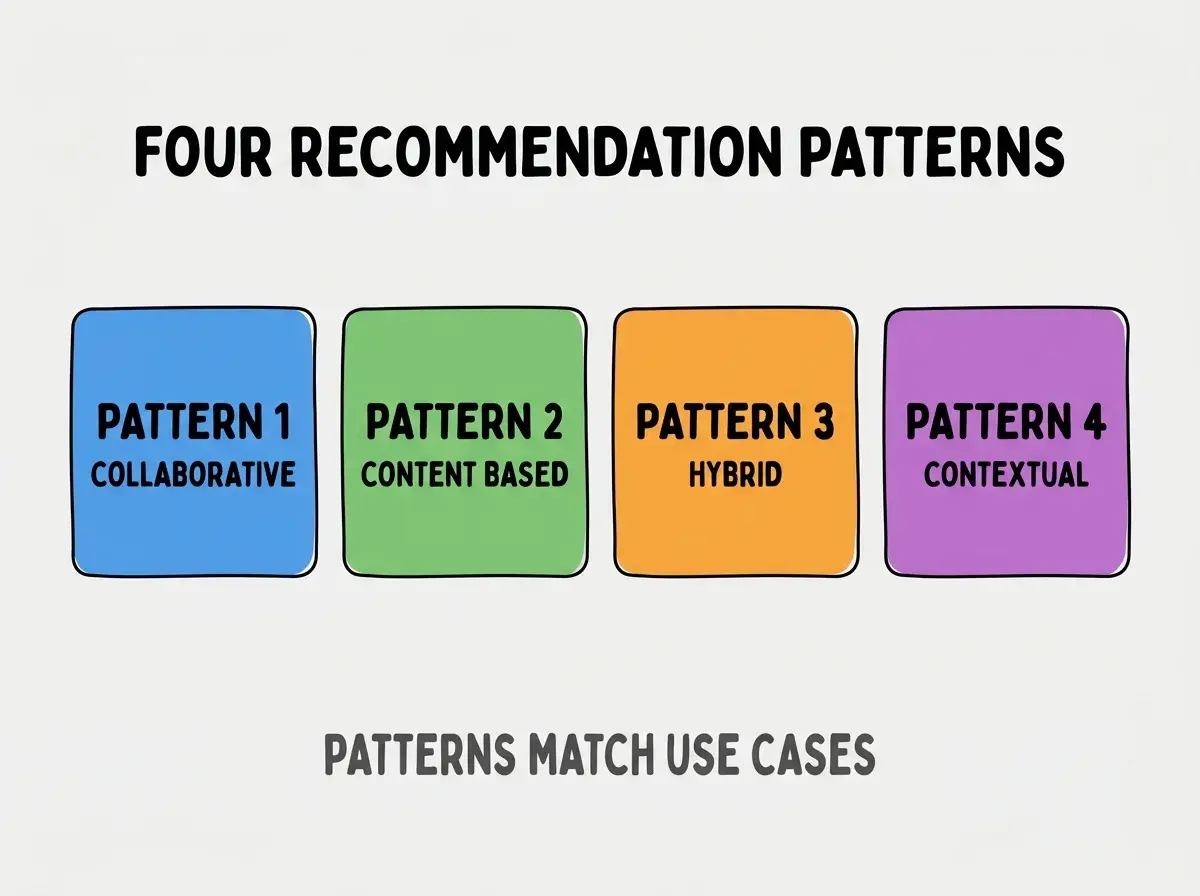
Pattern 3, hybrid combining collaborative and content based. Best of both approaches. Hybrid handles cold start better than pure approaches.
Pattern 4, contextual using session signals. Time of day, location, recent activity. Context produces recommendations matching current intent.
What Makes Recommendations Valuable
Three patterns characterize valuable recommendations.
Pattern 1, recommendations diverse not narrow. Filter bubble bad; diversity good. Diversity matters for user experience.
Browse more AI features
Read more buildPattern 2, recommendations explainable to users. Why recommended matters; explanation builds trust. Without explanation, recommendations feel arbitrary.
Pattern 3, recommendations responsive to feedback. User feedback updates recommendations. Without responsiveness, system stays static.
The Specific Tooling That Works
Three tool categories combine effectively for recommendations.
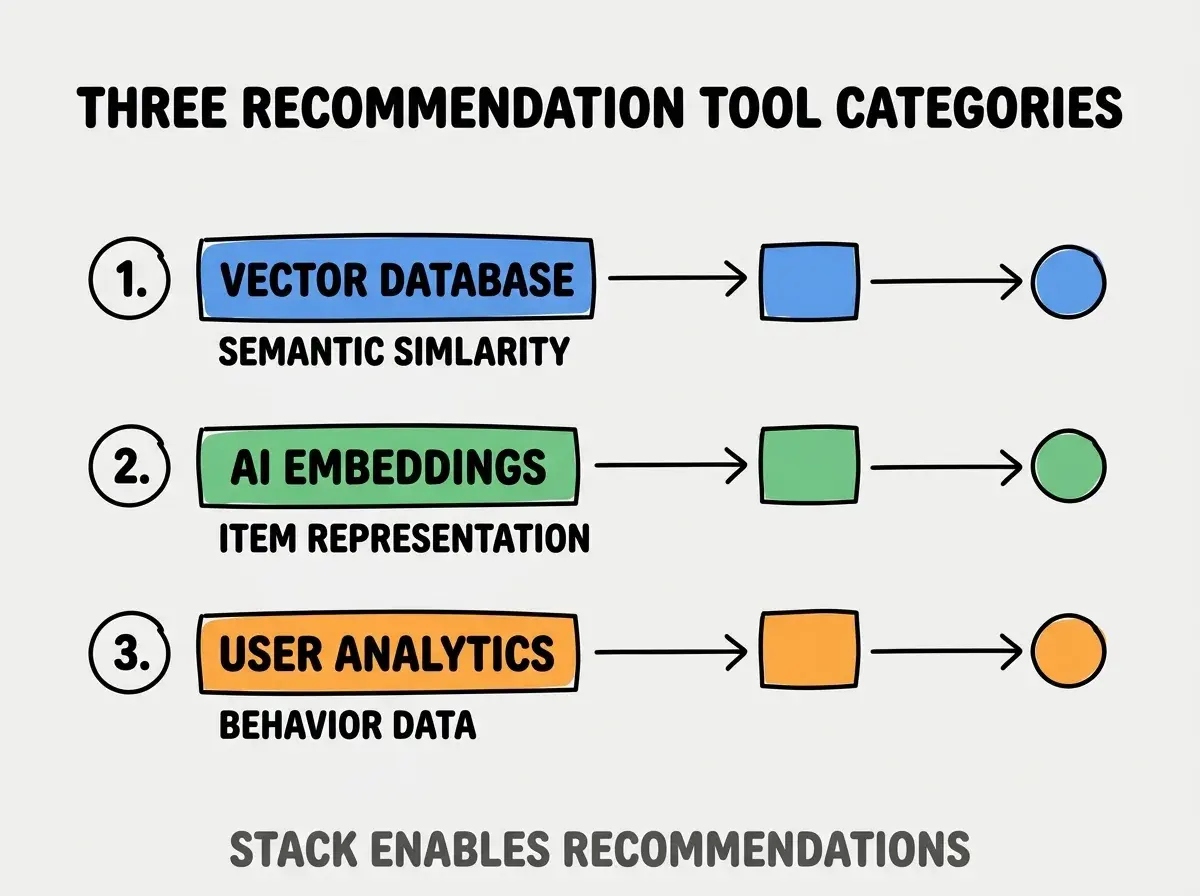
Tool 1, vector database for similarity. Pinecone, Weaviate, pgvector. Vector similarity enables semantic recommendations.
Tool 2, AI embeddings for item representation. OpenAI embeddings, Sentence Transformers. Embeddings represent items as vectors.
Tool 3, user analytics for behavior data. PostHog, Mixpanel, custom analytics. Behavior data informs collaborative patterns.
What Makes Recommendation Systems Sustainable
Three patterns separate sustainable systems from problematic ones.
Pattern 1, regular evaluation of recommendation quality. Click through, conversion, engagement metrics. Without evaluation, quality drifts.
Pattern 2, A/B testing changes before broad rollout. Recommendation changes often have unexpected effects. Testing prevents bad changes.
Pattern 3, user controls for recommendation tuning. Users can adjust what they see. Controls build trust.
The combination produces sustainable recommendation systems. Without these patterns, systems drift from value or produce trust issues.
How To Build Your First Recommendation System
Three implementation patterns help first systems succeed.
Pattern A, start with simple content based filtering. Item similarity easy to implement. Without simplicity, complex starts often fail.
Pattern B, instrument user feedback from start. Implicit and explicit feedback. Without feedback, system cannot improve.
Pattern C, evaluate against random baseline. Recommendations should beat random. Without baseline, value claims stay anecdotal.
The combination produces first systems that establish value patterns. Without patterns, first systems often launch without measurable improvement.
The most damaging recommendation system mistake is optimizing only for click through rate without considering user satisfaction. Click through rate optimization can produce clickbait recommendations that erode trust. The fix is to optimize for combined metrics including satisfaction; click through alone misleads. Systems optimizing for satisfaction produce sustained engagement; systems optimizing only click through often produce short term metrics with long term damage.
The other mistake is missing the explanation layer. Unexplained recommendations feel arbitrary; explanations build trust.
A third mistake is over personalizing producing filter bubbles. Diversity matters; pure personalization narrows user experience.
A fourth mistake is treating recommendations as static. Recommendations need ongoing evaluation and tuning.
How To Handle Specific Recommendation Scenarios
Three scenarios deserve specific approaches.
Scenario A, new user cold start. Content based recommendations work without history. Collaborative requires history.
Scenario B, niche user with unusual taste. Content based handles niche better than collaborative. Niche taste suits content patterns.
Scenario C, exploration user wanting variety. Diversity injection produces variety. Pure relevance optimization narrows.
The combination produces scenario specific approaches. Without specific approaches, generic recommendations serve scenarios mediocrely.
How AI Recommendations Will Likely Evolve
AI recommendations will likely continue evolving as AI capabilities mature.
The first likely evolution is conversational recommendations. Users describing what they want; AI generating recommendations. Conversation enables nuanced recommendations.
The second likely evolution is multi modal recommendations. Text plus image plus context. Multi modal produces richer recommendations.
The third likely evolution is reasoning based recommendations. AI explaining why through reasoning. Reasoning builds user trust.
The combination suggests recommendations will become more capable. Builders learning patterns now build skills that remain valuable.
Common Questions About AI Recommendations
AI recommendations raise questions worth addressing directly.
The first question is whether to build or use existing services. Build for differentiation; use services for commodity needs. Choice depends on strategic importance.
The second question is how to measure recommendation quality. Click through, conversion, satisfaction surveys. Multiple metrics together reveal quality.
The third question is whether AI recommendations replace search. Complement rather than replace; both have purposes. Combination produces better experience.
The fourth question is how to handle cold start without any user data. Content based with onboarding preferences. Without data, content based works while collaborative requires data.
How Recommendations Affect Product Trust
Recommendations affect product trust beyond engagement metrics. Trust effects compound over user lifetime.
The first compounding effect is product perception as helpful versus pushy. Helpful recommendations build trust; pushy recommendations erode it. Tone matters dramatically.
The second compounding effect is user autonomy perception. Recommendations that respect user agency build trust; recommendations that constrain choice erode it.
The third compounding effect is differentiation through quality. High quality recommendations differentiate products; commodity recommendations do not.
Recommendation quality compounds through user lifetime; users notice quality difference even when individual recommendations seem similar. Compounding produces retention benefits that individual recommendations cannot show directly.
The investment in recommendation quality pays back through retention that lower quality systems cannot match. Quality matters more than quantity for sustained value.
Building recommendation quality requires sustained iteration based on usage data and user feedback. Iteration produces compounding improvement that one time setup cannot match.
Recommendation systems operating well become competitive advantages that competing products struggle to match without similar investment over time.
What This Means For You
AI powered recommendations drive engagement when done well and erode trust when done poorly. The four patterns, tool combinations, and quality patterns produce framework for valuable recommendations.
- If you're a senior dev: Recommendation system quality affects user experience dramatically. Invest in quality patterns; quality compounds across user lifetime.
- If you're an indie hacker: AI recommendations differentiate solo products that compete against established alternatives. Differentiation matters for solo viability.
- If you're a founder: Recommendation quality affects retention and engagement. Plan recommendation strategy alongside product strategy.
Browse more AI features
Read more build