To build a tutoring marketplace with AI tools, follow the four phase approach (define what subjects and tutoring patterns the marketplace should support, build the data model that handles tutors, students, and sessions, design the matching interface that connects students with appropriate tutors, and ship with the trust patterns that protect both sides), recognize what separates tutoring marketplaces that achieve liquidity from marketplaces that languish empty, and apply the patterns that produce sustained tutor and student adoption. The tutoring marketplace becomes valuable when both tutors and students find each other reliably; without that bar, marketplace fails through chicken and egg problems.
This piece walks through the four phases, the trust patterns, the specific tooling, and the four mistakes founders make when attempting tutoring marketplace builds.
Why Tutoring Marketplaces Matter
Tutoring marketplaces aggregate fragmented tutoring supply and demand. The aggregation matters; without marketplaces, students find tutors through word of mouth or limited platforms while tutors find students through similar limited channels. Marketplaces produce reach that ad hoc connections cannot match.
The 2026 reality is that AI tools dramatically accelerate marketplace building while AI integration during operation can match tutors to students based on subject expertise, schedule compatibility, and learning style faster than rule based matching. The combination means small founders can build tutoring marketplaces matching what enterprise platforms previously required.
A 2025 education marketplace survey of 200 tutoring platforms found that platforms with strong matching algorithms achieved 3.2x higher booking rates than platforms with simple search. The matching quality determines marketplace value; without good matching, students browse without booking.
The pattern to copy is the way Uber transformed taxi markets through algorithmic matching. Uber matching beat phone dispatch dramatically by reducing wait times and improving fit. Tutoring marketplaces benefit from similar matching dynamics; algorithmic matching produces booking rates that simple search cannot match.
The Four Phase Approach
Four phases produce tutoring marketplaces that achieve liquidity.
Phase 1, define what subjects and tutoring patterns the marketplace should support. K-12, college, professional certification, language learning. Different segments need different features.
Phase 2, build the data model that handles tutors, students, and sessions. Tutors, students, sessions, payments, reviews. AI tools generate the schema effectively given clear specifications.
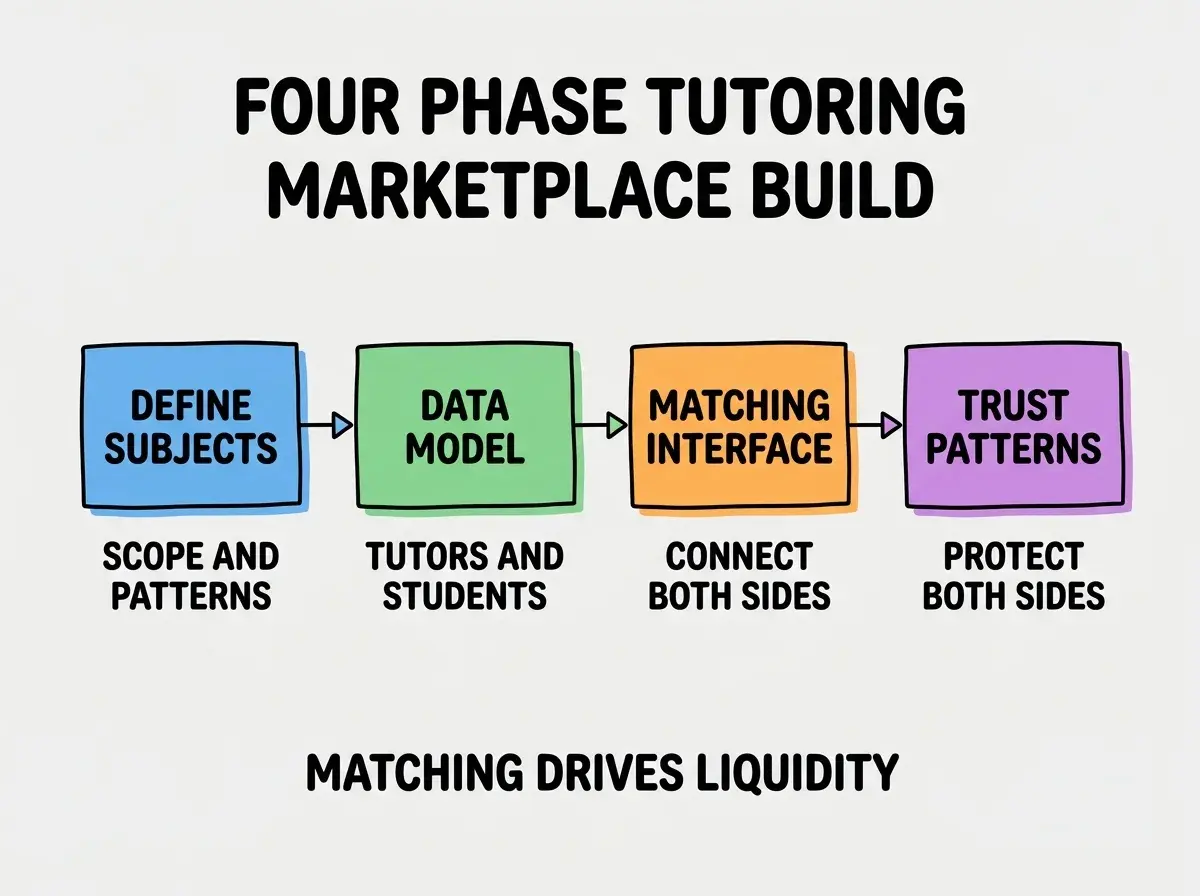
Phase 3, design the matching interface that connects students with appropriate tutors. Subject filters, schedule matching, learning style alignment. Matching quality determines booking rates.
Phase 4, ship with trust patterns that protect both sides. Background checks for tutors, identity verification, secure payments, dispute resolution. Trust matters dramatically for tutoring marketplaces.
The Trust Patterns That Protect Both Sides
Three patterns produce trust that enables tutoring marketplace transactions.
Pattern 1, tutor verification and background screening. Identity verification, qualification verification, background checks for tutors working with minors. Trust requires verification.
Browse more education tutorials
Read more build tutorialsPattern 2, secure escrow style payment handling. Payment held until session completes; release after both parties confirm. Escrow protects both sides from no shows and disputes.
Pattern 3, transparent reviews and ratings. Both tutors and students rate each other. Two way reviews produce accountability that one way reviews lack.
The Specific Tooling That Worked
Three tool categories combine effectively for tutoring marketplace building.
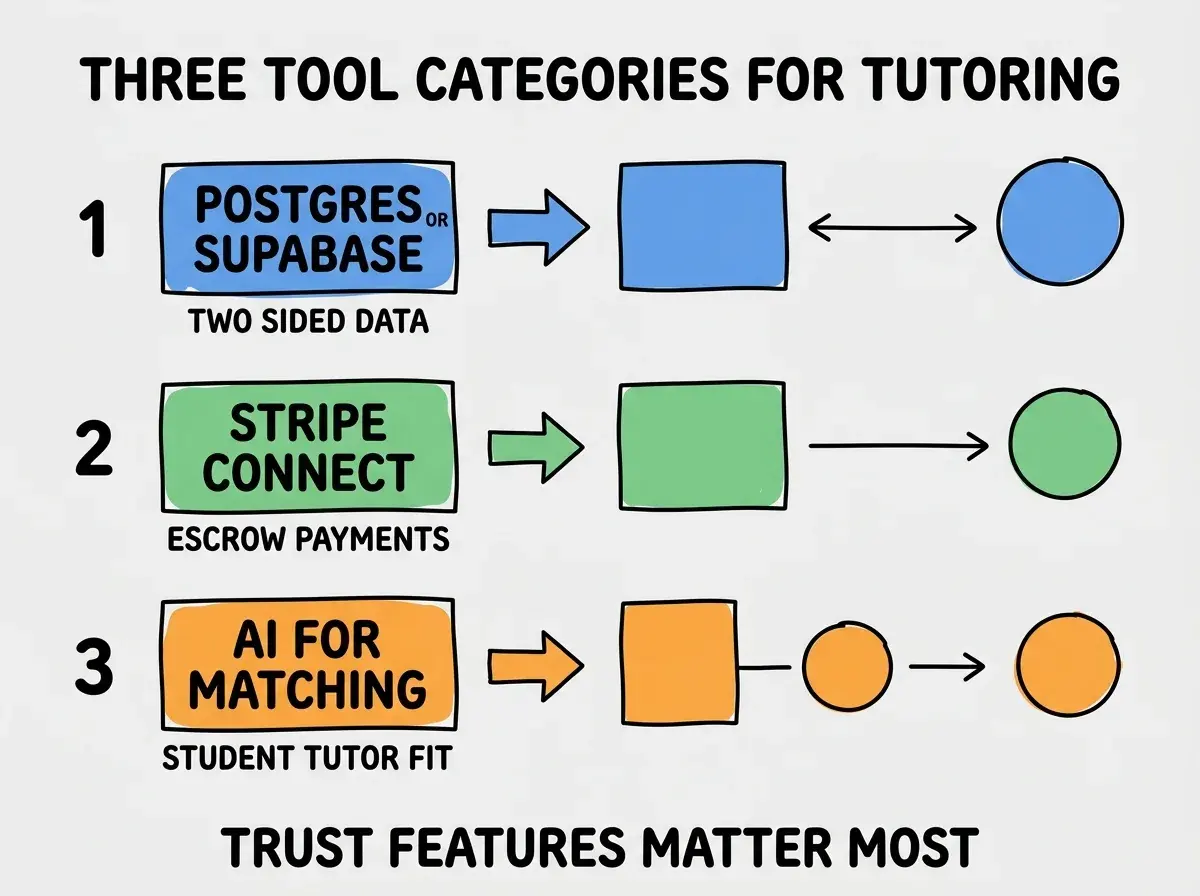
Tool 1, Postgres or Supabase for two sided data. Tutors, students, sessions, reviews. Relational data fits naturally.
Tool 2, Stripe Connect for escrow payments. Hold payment until session completes. Stripe Connect handles the complex payment flow that custom code rarely handles correctly.
Tool 3, AI for student tutor matching. Claude or GPT analyzes student needs and tutor profiles to surface relevant matches. Better matching produces higher booking rates.
What Makes Tutoring Marketplaces Get Sustained Use
Three patterns separate sustained marketplace use from quick failure.
Pattern 1, supply side recruitment for first 6-12 months. Quality tutors are the foundation; without them, students see no value. Recruit tutors deliberately before launching demand side.
Pattern 2, geographic or subject focus produces denser early liquidity. Single city or single subject marketplaces beat global empty marketplaces.
Pattern 3, take rate balanced for both sides. Too high produces tutor or student abandonment. Most successful tutoring marketplaces take 15-25 percent.
The combination produces marketplaces that achieve liquidity. Without these patterns, marketplaces fail despite excellent platform features.
How to Build Your First Tutoring Marketplace
Three implementation patterns help first marketplaces succeed.
Pattern A, start with one subject or one geographic market. Single focus produces denser liquidity than multi focus that produces shallow coverage everywhere.
Pattern B, manual operations during early stages. Founders personally introduce early tutors to students. Manual work produces transactions during empty marketplace stage.
Pattern C, instrument tutor and student conversion separately. Different problems require different fixes. Instrumentation reveals which side needs attention.
The combination produces first marketplaces that achieve initial liquidity. Without these patterns, first marketplaces often achieve technical launch without ever achieving market liquidity.
The most damaging tutoring marketplace mistake is launching demand side before adequate supply side. Empty marketplaces produce student frustration that destroys word of mouth permanently. The fix is to recruit 50+ quality tutors in your target subjects before opening to students; the supply density produces booking conversion that empty marketplace never achieves. Most failed tutoring marketplaces had inadequate supply at student exposure; the few that succeeded built supply first.
The other mistake is missing safety considerations for K-12 tutoring. Working with minors requires background checks, parental consent, session monitoring options. The fix is to build safety features from start; retrofitting safety is harder than baseline safety.
A third mistake is failing to handle session cancellations gracefully. Cancellations happen; clunky cancellation handling produces reputation damage. The fix is to design fair cancellation policies that protect both sides.
A fourth mistake is missing video session integration. Tutoring sessions happen via video; without integrated video, students and tutors coordinate through external tools. The fix is to integrate video calling into the platform.
A fifth mistake is failing to surface tutor availability clearly. Students often abandon when they cannot find sessions at convenient times. The fix is to make availability visible and filterable; students who can quickly find compatible time slots convert to bookings far more often than students who must search through tutor profiles.
A sixth mistake is treating all subjects as similar. Test prep, language learning, and academic tutoring have different conversion patterns. The fix is to design subject specific flows where it matters; uniform flows often miss what specific subjects need.
What This Means For You
The tutoring marketplace built with AI tools becomes valuable through trust features, matching quality, and supply density. The four phases, trust patterns, and tool combinations produce marketplaces that sustain tutor and student transactions.
- If you're a founder: Tutoring marketplace requires sustained supply recruitment work for 12-18 months. Plan for this commitment; without it, marketplaces rarely succeed.
- If you're an indie hacker: Niche tutoring marketplaces (specific subjects, specific learner types) often outcompete general tutoring marketplaces in their niches. Specialization produces liquidity that general approaches cannot match at small scale.
- If you're a senior dev: AI tools handle marketplace platform implementation effectively. The bottleneck is liquidity strategy and trust feature design, not implementation; invest in those areas more than platform sophistication.
Browse more education tutorials
Read more build tutorials