To build a marketplace with buyer and seller accounts using AI tools, follow the four phase approach (define what categories your marketplace will host and what trust patterns matter for both sides, build the data model that supports listings, transactions, and dual side reputations, design the discovery and trust interfaces that make matches likely, and ship with the operational patterns that handle the chicken and egg liquidity problem), recognize what separates marketplaces that achieve liquidity from marketplaces that languish empty, and apply the patterns that produce sustained two sided growth. The marketplace becomes valuable when both buyers and sellers find each other reliably; without that bar, marketplaces die from chicken and egg problems.
This piece walks through the four phases, the liquidity patterns, the specific tooling, and the four mistakes founders make when attempting two sided marketplace builds.
Why Two Sided Marketplaces Matter
Two sided marketplaces aggregate fragmented supply and demand into liquid markets. The aggregation matters; without marketplaces, buyers and sellers find each other through ad hoc means, while marketplaces produce the trust and discovery that ad hoc connections cannot match.
The 2026 reality is that AI tools dramatically accelerate marketplace building while AI integration during operation can match buyers with sellers, detect fraud patterns, and surface relevant listings faster than rule based matching. The combination means small founders can build marketplaces matching what enterprises previously required as expensive platforms.
A 2025 marketplace founder survey of 600 marketplace launches found that only 23 percent achieved sustained liquidity within 18 months. The chicken and egg problem produces high failure rates; the marketplaces that succeed solve liquidity through deliberate strategy rather than expecting organic growth. Building the platform is the easy part; achieving liquidity is the hard part.
The pattern to copy is the way farmers markets succeeded in cities. Farmers markets needed both farmers and shoppers; the chicken and egg problem dominated early stages. Markets that succeeded recruited farmers first with subsidies and guarantees, then attracted shoppers to the established farmer base. Marketplaces play similar role for digital goods and services; the supply side recruitment matters first.
The Four Phase Approach
Four phases produce two sided marketplaces that achieve liquidity.
Phase 1, define what categories your marketplace will host and what trust patterns matter for both sides. Specific niches outperform general marketplaces. Trust patterns differ for goods versus services versus digital products.
Phase 2, build the data model that supports listings, transactions, and dual side reputations. Listings, users, transactions, reviews, ratings. AI tools generate the schema effectively given clear specifications.
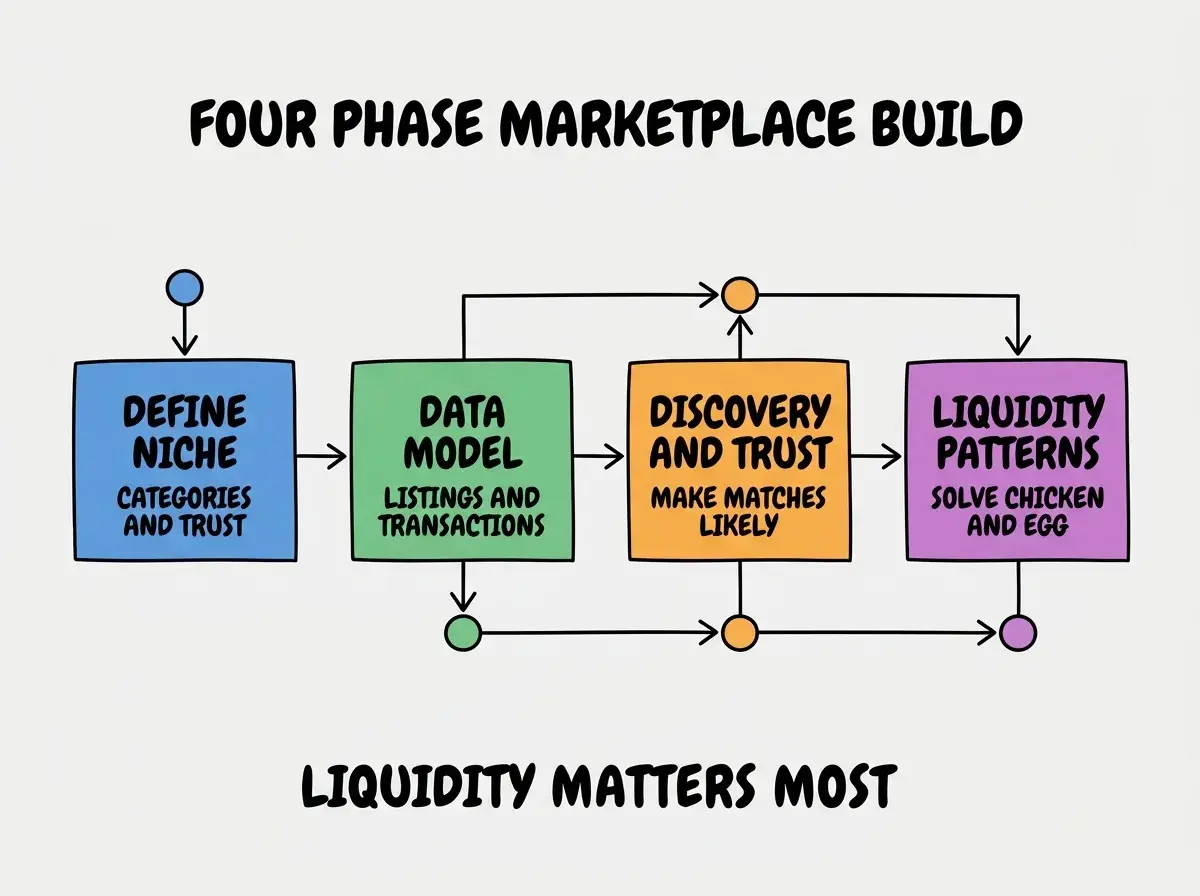
Phase 3, design the discovery and trust interfaces that make matches likely. Search, filters, ratings, reviews, verification. Discovery determines whether buyers find sellers; trust determines whether they transact.
Phase 4, ship with operational patterns that handle the chicken and egg liquidity problem. Supply side recruitment, demand seeding, geographic concentration. The liquidity work matters more than the platform features.
The Liquidity Patterns That Work
Three patterns produce liquidity in two sided marketplaces.
Pattern 1, supply side recruitment before demand side launch. Recruit 20-50 sellers first; launch demand side after supply is established. Demand to empty marketplace produces frustration.
Browse more business tutorials
Read more build tutorialsPattern 2, narrow geographic or category focus produces denser early liquidity. Single city marketplaces beat global empty marketplaces. Density matters more than breadth in early stages.
Pattern 3, manual matching during early stages. Founders manually introduce early buyers to sellers. Manual work produces transactions that algorithmic matching at empty stage cannot.
The Specific Tooling That Worked
Three tool categories combine effectively for marketplace building.
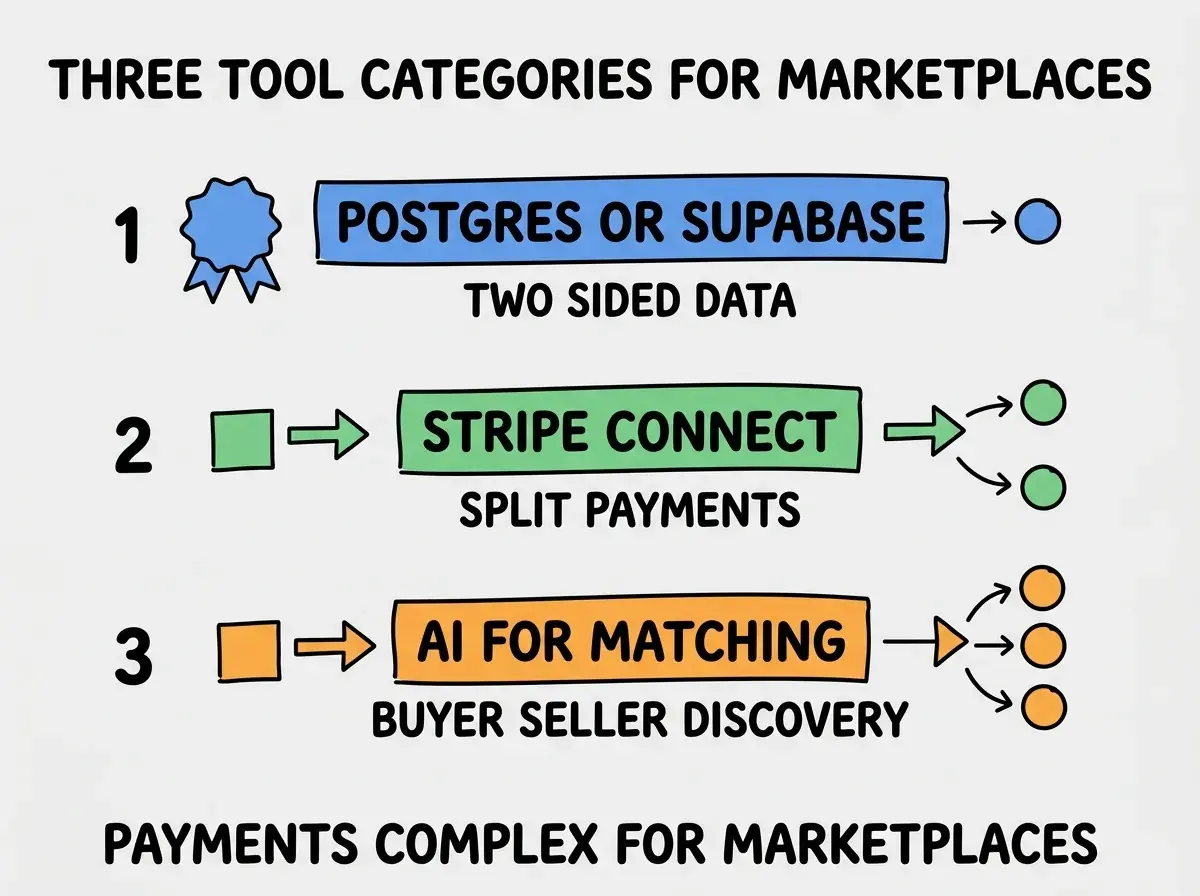
Tool 1, Postgres or Supabase for two sided data. Listings, users, transactions, reviews. Relational data fits naturally; AI tools generate the schema effectively.
Tool 2, Stripe Connect for split payments. Marketplaces need to split payments between sellers and platform; Stripe Connect handles the complexity. Custom payment splitting often produces compliance issues.
Tool 3, AI for buyer seller matching. Claude or GPT analyzes listings and buyer needs to surface relevant matches. AI matching beats keyword search for marketplace discovery.
What Makes Marketplaces Achieve Sustained Liquidity
Three patterns separate marketplaces that achieve liquidity from those that fail.
Pattern 1, founder commitment to supply recruitment for 6-12 months. Founders who personally recruit supply for extended periods achieve liquidity; founders who launch and wait usually fail.
Pattern 2, transaction volume matters more than user count. 100 transactions per week beats 10,000 inactive users. Transaction focus produces marketplace health; user count without transactions produces vanity metrics.
Pattern 3, monetization through transaction fees rather than listing fees. Transaction fees align platform incentives with marketplace success. Listing fees produce supply revenue but discourage listings.
The combination produces marketplaces that achieve liquidity. Without these patterns, marketplaces fail despite excellent platform features.
How to Build Your First Marketplace
Three implementation patterns help first marketplaces succeed.
Pattern A, start with one geographic market or niche. Single market validates the model. Multi market from day one usually produces sub critical density everywhere.
Pattern B, manual operations in first 6 months. Hands on supply recruitment, manual matching, personal outreach. Manual operations produce learning that automated operations miss.
Pattern C, instrument transaction completion rate carefully. What percentage of buyer searches produce transactions. Without instrumentation, liquidity problems stay hidden until they become fatal.
The combination produces first marketplaces that establish liquidity. Without these patterns, first marketplaces often achieve technical launch without ever achieving market liquidity.
The most damaging marketplace mistake is treating the platform build as the hard work and liquidity as easy. The opposite is true; building the platform is straightforward, achieving liquidity is the hard work that determines marketplace success or failure. The fix is to budget liquidity work as the dominant activity for first 12 months; founders who treat liquidity as the work usually achieve it, founders who treat platform features as the work usually fail. Most failed marketplaces have great platforms; few have liquidity.
The other mistake is launching demand and supply simultaneously rather than supply first. Empty marketplaces produce abandoned demand that does not return. The fix is supply first, demand second.
A third mistake is taking too high a transaction fee in early stages. High fees discourage early transactions when liquidity is fragile. The fix is to start with low or zero fees; raise fees after liquidity is established.
A fourth mistake is missing trust building from launch. Trust takes time to build; marketplaces without trust features cannot recover trust failures. The fix is to build trust features (verification, reviews, dispute handling) from launch.
What This Means For You
The two sided marketplace built with AI tools becomes valuable through deliberate liquidity work, not platform features. The four phases, liquidity patterns, and tool combinations produce marketplaces that achieve sustainable transaction volume.
- If you're a founder: Marketplace founding requires sustained personal liquidity work. Plan for 12-18 months of intensive supply and demand recruitment; without that commitment, marketplaces rarely succeed.
- If you're an indie hacker: Niche marketplaces have lower liquidity barriers than general marketplaces. Hyper specific niches with established communities accelerate liquidity dramatically.
- If you're a senior dev: AI tools handle marketplace platform implementation effectively. The bottleneck is liquidity strategy and operational execution, not implementation; invest in those areas more than platform sophistication.
Browse more business tutorials
Read more build tutorials