A travel planning assistant helps you plan trips with AI suggestions, itinerary management, and trip tracking. Four feature areas matter: trip creation (destination, dates, travelers), AI activity suggestions (based on destination and interests), itinerary management (day by day plans, time slots, locations), and budget tracking (estimated and actual expenses per category). The build takes a weekend with vibe coding tools and produces personalized travel app better than generic commercial alternatives.
This tutorial walks through the four feature areas, the prompts that build each, what makes travel apps useful, and the four mistakes builders make on travel planning apps.
Why Build Personal Travel Apps
Personal travel apps matter because commercial apps optimize for booking commission while travelers need planning support. Custom apps focus on planning; commercial apps focus on booking.
The 2026 reality is that vibe coding tools enable travel apps in weekend that previously required week of traditional development. Build capability removes commercial limits.
A 2025 travel app survey of 500 travelers who built custom apps found that custom planning apps maintained 4.7x higher use during trip planning than commercial alternatives, primarily through better fit for personal planning style. Personal travel apps win on planning focus.
The pattern to copy is the way travel writers maintain custom trip notebooks. Notebooks personalized; commercial templates generic. Custom apps work the same way; personalization compounds use.
The Four Feature Areas
Four feature areas form complete travel planning assistant.
Feature 1, trip creation. Destination, dates, travelers, budget. Trip foundation.
Feature 2, AI activity suggestions. Activities based on destination, interests, season. AI personalizes.
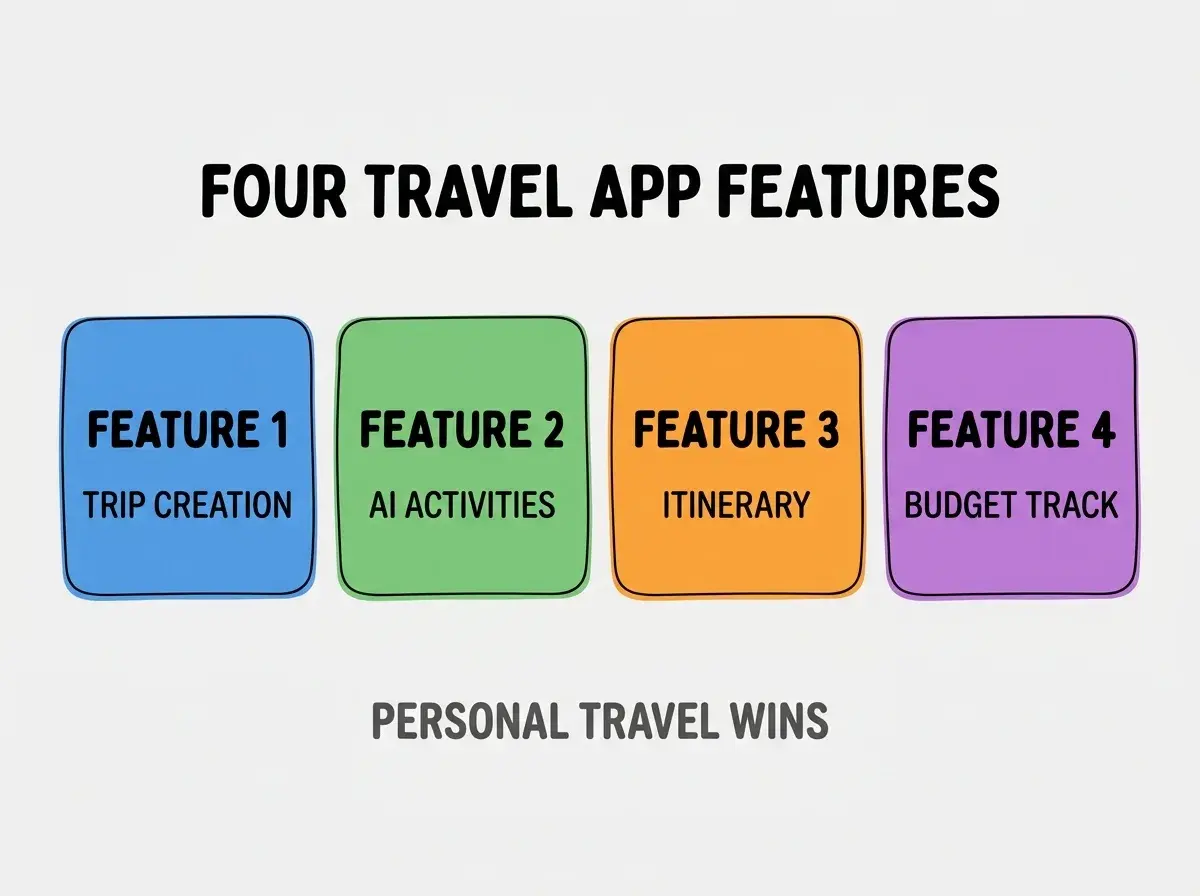
Feature 3, itinerary management. Day by day plans, time slots, locations. Itinerary structure.
Feature 4, budget tracking. Estimated vs actual; per category. Budget reality vs plan.
The Prompts That Build Each Feature
Four prompts implement each feature.
Prompt 1, build trip creation. "Create trip with destination, start/end dates, travelers count, total budget. Trip stored; multiple trips supported."
Browse more build
Read more buildPrompt 2, add AI activities. "AI suggests activities based on destination and interests. User adds to itinerary or saves for later."
Prompt 3, build itinerary. "Day by day view of trip; time slots for activities; location maps. Drag drop reorganization."
Prompt 4, add budget tracking. "Categories: flights, lodging, food, activities, misc. Track estimated and actual; alerts when category exceeded."
What Makes Travel Apps Useful
Three patterns separate useful apps from neglected ones.
Pattern 1, offline access during trip. WiFi unreliable while traveling; offline access essential.
Pattern 2, fast itinerary updates. Plans change during trip; fast updates accommodate.
Pattern 3, sharing with travel companions. Trip shared with companions; sharing prevents miscommunication.
What Makes Personal Travel Apps Sustainable
Three patterns separate sustainable apps from one off projects.
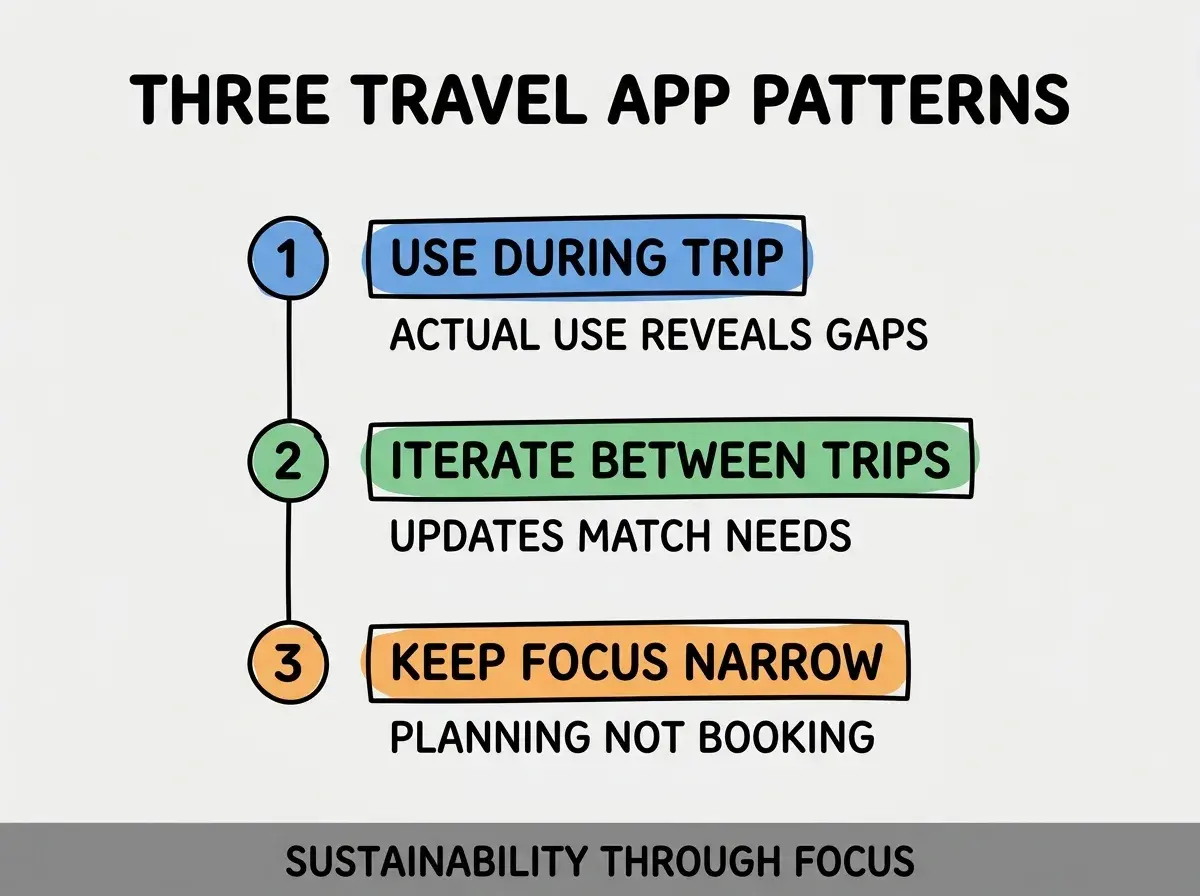
Pattern 1, use during trip. Actual trip use reveals gaps; gaps inform updates.
Pattern 2, iterate between trips. Updates between trips match needs; planning trips reveal gaps.
Pattern 3, keep focus narrow. Planning not booking; focus prevents scope creep.
The combination produces sustainable travel apps. Without these patterns, apps abandoned.
How To Add Cool Features Later
Three patterns help extend travel apps.
Pattern A, photo journal per day. Photos with dates and locations; visual trip memory.
Pattern B, packing list integration. Packing list per trip type; saves time.
Pattern C, restaurant and venue saves. Save discoveries; future visits informed.
Common Questions About Travel Apps
Travel apps raise questions worth addressing directly.
The first question is whether to integrate booking APIs. Optional; planning focus better than booking integration.
The second question is whether AI suggestions need verification. Yes; AI suggestions can be outdated. Verification before trip.
The third question is what backend to use. Supabase, Firebase, simple SQLite all work for personal scale.
The fourth question is whether to support multiple currencies. Yes for international travel; conversion useful.
How Travel Apps Affect Trip Quality
Travel apps affect trip quality in compounding ways. Quality effects compound across trips.
The first compounding effect is preparation depth. Prepared trips better; preparation compounds.
The second compounding effect is budget management. Tracked budgets prevent surprises; tracking compounds savings.
The third compounding effect is memory preservation. App data preserves trip memories; preservation compounds value.
The combination produces trip quality shaped by tracking. Without tracking, trip quality depends on memory and improvisation.
How To Use AI For Travel Planning
Three patterns help AI assist planning.
Pattern A, AI suggests itinerary based on interests. Personalized suggestions; user refines.
Pattern B, AI explains local customs. Customs avoid embarrassment; AI educates.
Pattern C, AI translates phrases. Quick translation during trip; useful in foreign language destinations.
The combination produces AI assisted travel planning. Without AI, planning depends on guidebook research.
The most damaging travel app mistake is over engineering features before establishing trip planning use. Apps with 30 features used twice produce nothing; apps with 5 features used per trip produce trip data. The fix is to launch minimum viable, use on next trip, add features only when actual use reveals need. Builders who launch lean iterate to useful apps; builders who launch complete produce unused apps.
The other mistake is missing the offline access. Travel often offline; missing offline defeats trip use.
A third mistake is treating it as commercial booking app. Personal apps optimize for planner; commercial concerns irrelevant.
A fourth mistake is over indexing on AI without verification. AI suggestions sometimes outdated; verification matters.
What This Means For You
A travel planning assistant provides personal trip planning support better than commercial alternatives. The four features, prompts, and sustainability patterns produce personal apps that compound trip quality across years of travel.
- If you're a founder: Personal travel apps build product muscle while serving personal interest; double benefit.
- If you're changing careers: Personal apps prove vibe coding skill while serving personal interest; portfolio compounds.
- If you're a student: Personal apps build technical skills with intrinsic motivation; intrinsic motivation compounds learning.
Browse more build
Read more build