To build a sports league management tool with AI tools, follow the four phase approach (define what sports and league patterns the tool should support, build the data model that handles teams, schedules, and results, design the manager interface that simplifies league administration, and ship with the participant features that engage players and parents), recognize what separates league tools managers use season after season from tools managers abandon for spreadsheets, and apply the patterns that produce sustained league adoption. The sports league management tool becomes valuable when it reduces administrative burden while improving participant experience; without both, spreadsheets and group texts win.
This piece walks through the four phases, the participant features, the specific tooling, and the four mistakes that produce league tools managers abandon.
Why Sports League Management Tools Matter
Sports league management tools turn fragmented league administration into structured workflows. The transformation matters; league managers handle scheduling, team rosters, game results, communication, and registration through scattered tools without dedicated platforms. Centralization produces efficiency that ad hoc tools cannot match.
The 2026 reality is that AI tools dramatically accelerate league tool building while AI integration during operation can suggest fair schedules, draft team communications, and detect scheduling conflicts faster than manual operations. The combination means small platforms can serve leagues at quality matching what enterprise sports management software previously required.
A 2025 amateur sports survey of 800 community league managers found that managers using purpose built league tools spent an average of 8 fewer hours per week on administration compared to spreadsheet based management. The time savings allow managers to focus on player development and league growth.
The pattern to copy is the way SignUpGenius transformed volunteer coordination for events. Centralized signup beat email coordination dramatically; the structure produced clarity that scattered email threads could not match. Sports league tools play similar role for amateur leagues; structure produces efficiency that ad hoc tools cannot match.
The Four Phase Approach
Four phases produce sports league management tools managers use season after season.
Phase 1, define what sports and league patterns the tool should support. Soccer, basketball, baseball, hockey. Different sports have different scoring, scheduling, and tournament patterns.
Phase 2, build the data model that handles teams, schedules, and results. Teams, players, games, results, standings. AI tools generate the schema effectively given clear specifications.
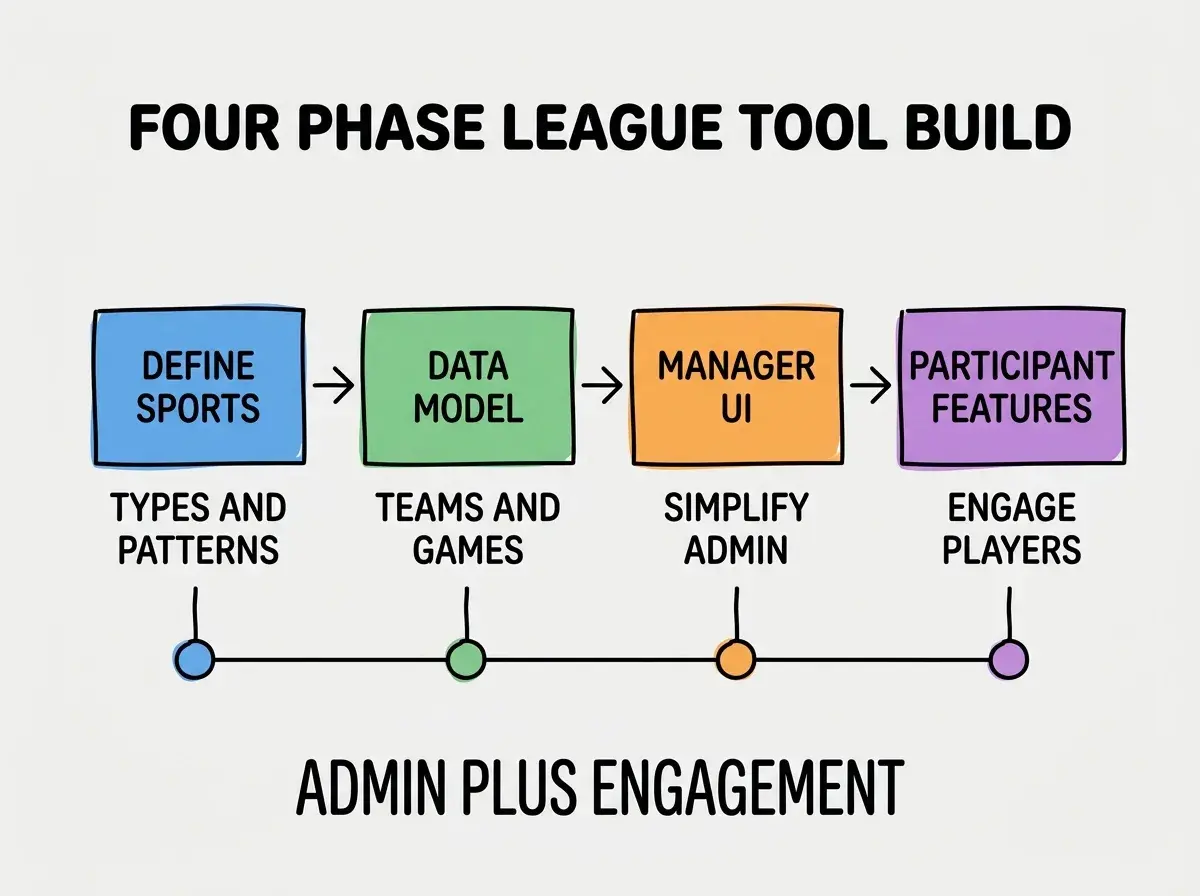
Phase 3, design the manager interface that simplifies league administration. Schedule generation, score entry, standings calculation, communications. Manager efficiency determines tool adoption.
Phase 4, ship with participant features that engage players and parents. Schedule view, score history, team rosters, communications. Participant engagement drives word of mouth that grows leagues.
The Participant Features That Engage
Three patterns produce participant engagement that grows league participation.
Pattern 1, mobile schedule access for players and parents. Quick schedule check from phone matters for busy families. Mobile design dominates participant access patterns.
Browse more sports tutorials
Read more build tutorialsPattern 2, team communication centralized in app. Coach to team messages, parent communications. Centralization preserves history and prevents information loss in scattered email and text threads.
Pattern 3, season stats and personal records. Players and parents enjoy stats and milestones. Stats engagement drives sustained app use beyond immediate scheduling needs.
The Specific Tooling That Worked
Three tool categories combine effectively for sports league tool building.
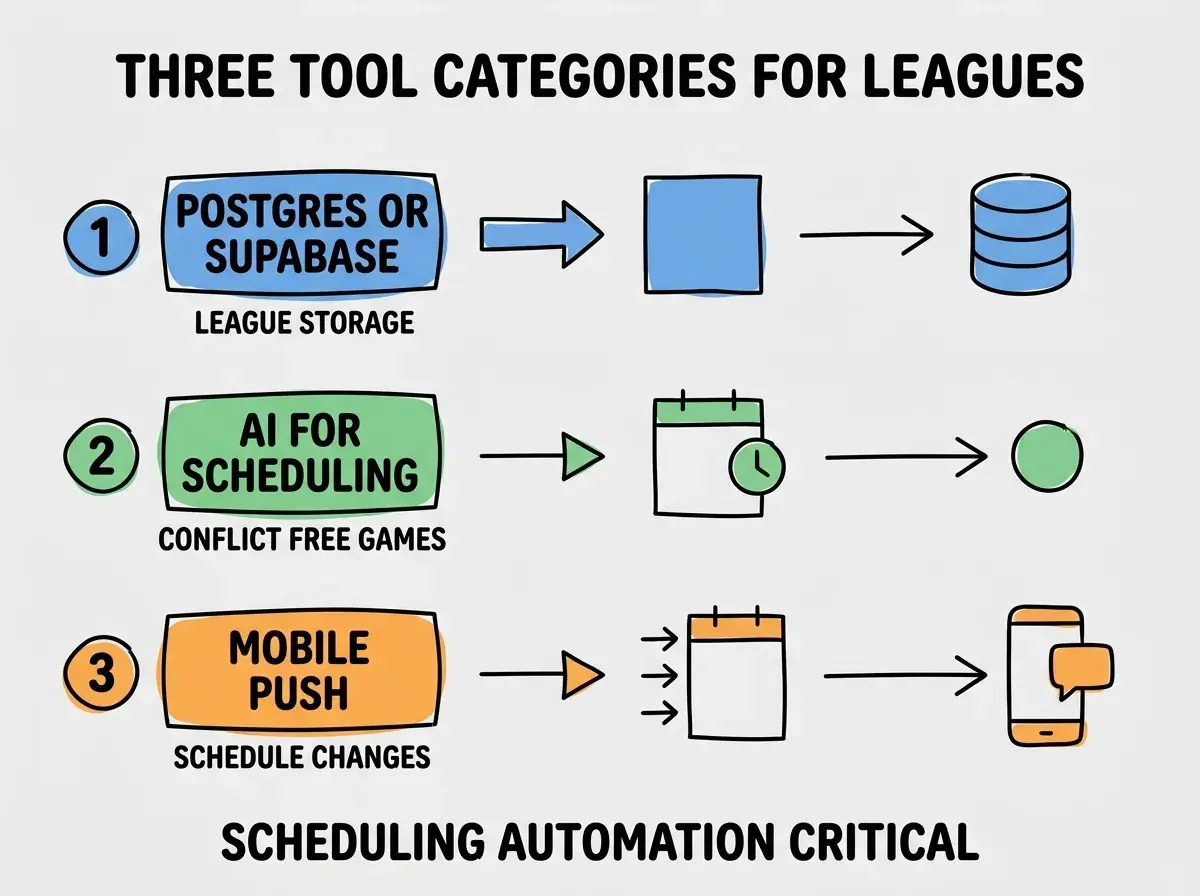
Tool 1, Postgres or Supabase for league data. Teams, players, games, results, standings. Relational data fits naturally.
Tool 2, AI for schedule generation. Claude or GPT generates conflict free schedules given constraints. Manual schedule generation is among the most time consuming league management tasks.
Tool 3, mobile push notifications for schedule changes. Players and parents need to know about cancellations and reschedules immediately. Push notifications reach faster than email.
What Makes League Tools Get Sustained Use
Three patterns separate sustained tool use from manager abandonment.
Pattern 1, easier than spreadsheets for season setup. Initial season setup often determines whether managers stick with tool. Smooth setup matters dramatically.
Pattern 2, registration and payment integration. League fees and registration through tool. Without integration, managers handle these separately, producing reconciliation work.
Pattern 3, rollover support between seasons. Teams and players carry over with adjustments. Without rollover, each season requires full setup.
The combination produces tools managers use across many seasons. Without these patterns, tools get tried then abandoned for spreadsheets.
How to Build Your First League Management Tool
Three implementation patterns help first league tools succeed.
Pattern A, start with one sport before adding more. Single sport validates patterns. Multi sport from day one often produces incomplete coverage.
Pattern B, partner with one league as design partner. Real league use reveals operational issues. Beta validation catches problems before broader exposure.
Pattern C, instrument season setup completion rate. Where do managers drop off in setup. Without instrumentation, setup friction stays hidden.
The combination produces first tools that establish league use patterns. Without these patterns, first tools often launch with workflows that do not match real league operations.
The most damaging sports league tool mistake is building for the manager only and ignoring participants. Manager only tools produce inputs without engagement; participant features drive word of mouth that grows leagues. The fix is to build participant experience alongside manager experience; both serve the league. League tools that delight managers but bore participants miss the engagement that grows leagues; tools that engage both grow leagues sustainably.
The other mistake is missing officiating tool integration. Referee assignments, official records matter for organized leagues. The fix is to handle officiating from start.
A third mistake is failing to handle weather cancellations gracefully. Outdoor sports have weather impact; clunky weather handling produces league frustration. The fix is to design rescheduling flows for weather scenarios.
A fourth mistake is treating youth and adult leagues identically. Youth leagues have parents as primary users; adult leagues have players directly. The fix is to design for the actual user pattern of your target leagues.
How League Tools Generate Sustained Value Over Years
Three sustained value patterns matter for league tool businesses. First, season over season retention compounds revenue dramatically; leagues that adopt a tool typically use it for 5+ years which produces lifetime value far exceeding acquisition cost. Second, league referrals dominate growth in this market; one league recommending a tool to neighboring leagues produces customer acquisition costs lower than paid marketing. Third, expansion into adjacent league types from established league relationships often grows accounts; soccer leagues that adopt a tool may add basketball or other sports through the same platform.
What This Means For You
The sports league management tool built with AI tools becomes valuable through manager efficiency, participant engagement, and seasonal continuity. The four phases, participant features, and tool combinations produce tools leagues use season after season.
- If you're a founder targeting sports: Sports league software has substantial market with competitors but niche opportunity remains. Specific sports or specific league sizes can produce sustainable businesses.
- If you're a career changer with sports background: Sports league tools combine technical work with sports knowledge. The combination produces career paths beyond pure tech work.
- If you're a senior dev: AI tools handle league tool implementation effectively. The bottleneck is sports domain understanding and seasonal workflow design, not implementation; invest in those areas more than feature breadth.
Browse more sports tutorials
Read more build tutorials