To build a social media scheduler with AI tools, follow the four phase approach (define which platforms and posting patterns the scheduler must support, build the integration with the social platform APIs, design the composition interface that produces good posts efficiently, and ship with the publishing patterns that prevent failed posts), recognize what separates schedulers users invest in from schedulers they abandon for native tools, and apply the patterns that produce sustained scheduling. The social media scheduler becomes valuable when posting becomes more efficient than direct posting; without that bar, native tools beat custom schedulers.
This piece walks through the four phases, the composition patterns that work, the specific tooling, and the four mistakes that produce social media schedulers users abandon.
Why Social Media Schedulers Matter
Social media schedulers separate the creative work of writing posts from the timing work of publishing them. The separation matters; writing in batches produces better posts than writing in real time, and timing posts strategically produces better engagement than ad hoc posting.
The 2026 reality is that AI tools dramatically accelerate scheduler building while AI integration during composition can suggest variations, optimize for platform conventions, and surface relevant context faster than manual writing. The combination means even small teams can build personalized schedulers matching what enterprises previously paid for as expensive SaaS subscriptions.
A 2025 social media operations survey of 800 small teams found that teams using scheduled posting saw 27 percent higher engagement than teams posting in real time. The strategic timing produces engagement gains; ad hoc posting often misses optimal posting windows for each platform.
The pattern to copy is the way news organizations separate writing from publishing. Reporters write articles; editors publish them at strategic times. The separation produces better content and better timing than either function performed alone. Social media schedulers play similar role for solo creators and small teams.
The Four Phase Approach
Four phases produce social media schedulers users invest in.
Phase 1, define which platforms and posting patterns the scheduler must support. Twitter, LinkedIn, Instagram, threads. Different platforms have different post formats and timing patterns; clarity here determines downstream complexity.
Phase 2, build the integration with the social platform APIs. OAuth for authentication, posting APIs, media upload handling. Platform APIs handle the heavy lifting; AI tools generate integration code effectively given clear specifications.
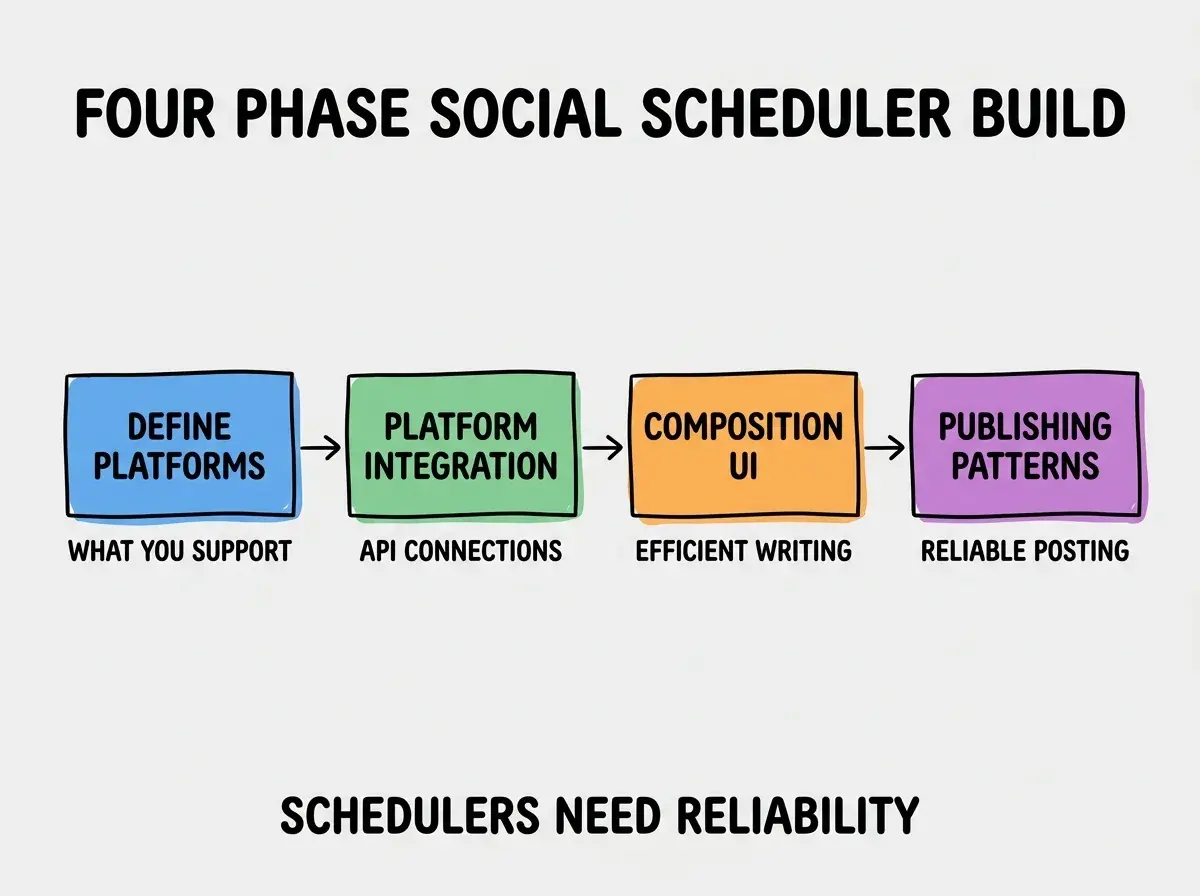
Phase 3, design the composition interface that produces good posts efficiently. Multi platform preview, AI assisted variation, hashtag suggestions. Composition friction determines posting velocity; high friction produces fewer posts.
Phase 4, ship with publishing patterns that prevent failed posts. Retry logic, error notifications, fallback to manual posting. Failed posts hurt more than no posts; reliability matters dramatically.
The Composition Patterns That Work
Three patterns produce composition interfaces that produce good posts efficiently.
Pattern 1, multi platform preview before publishing. See how the post will look on each platform before scheduling. Visual preview catches formatting issues before they become public failures.
Browse more marketing tool tutorials
Read more build tutorialsPattern 2, AI assisted variation for cross posting. Same idea, different platform conventions. AI generates platform appropriate variations; manual rewrites for each platform produce friction.
Pattern 3, calendar view for posting schedule visualization. See the upcoming posting schedule across platforms. Visualization reveals gaps and clusters that list views miss.
The Specific Tooling That Worked
Three tool categories combine effectively for social media scheduler building.
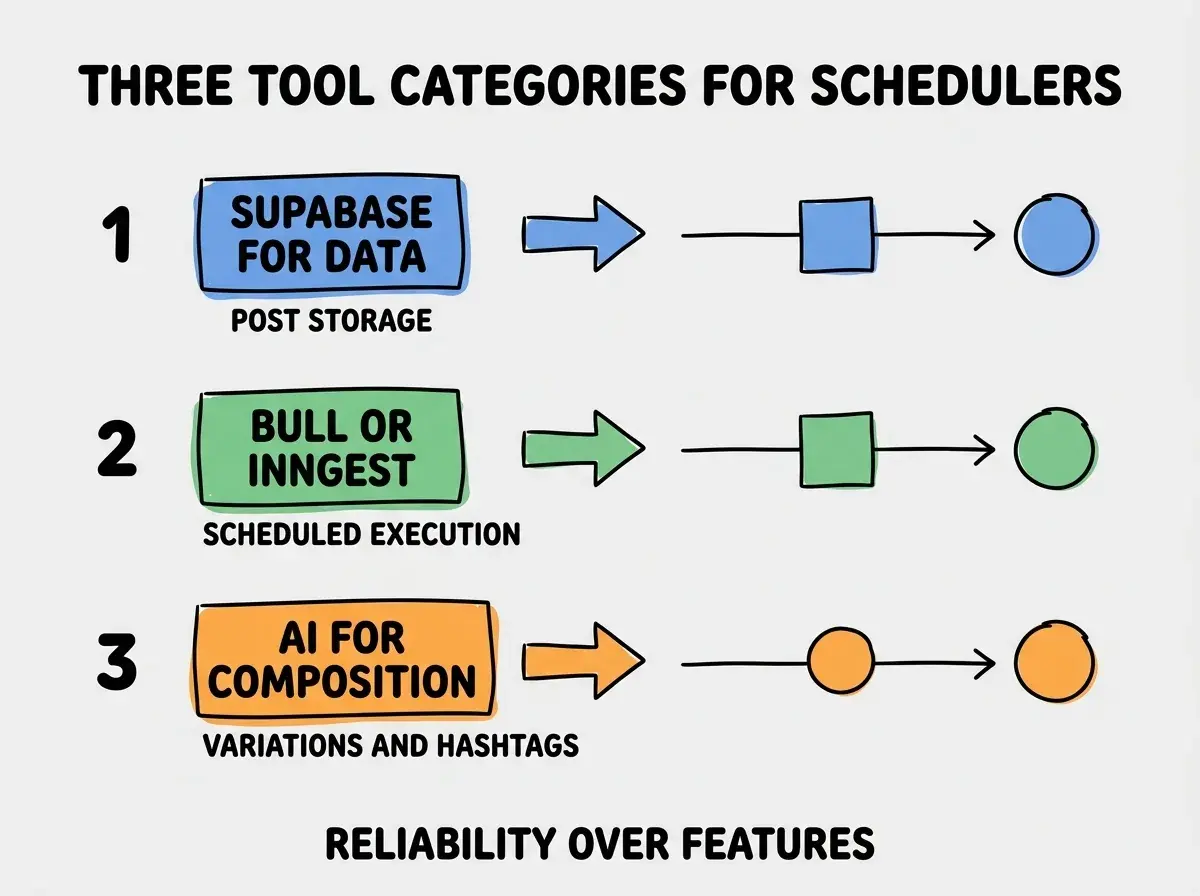
Tool 1, Supabase for post storage. Posts, schedules, accounts, media references. Relational data fits naturally; AI tools generate the schema effectively.
Tool 2, Bull or Inngest for scheduled execution. Reliable scheduled job processing with retries. Without queue layer, scheduling becomes synchronous and fragile; with queue layer, scheduling handles failures gracefully.
Tool 3, AI for composition assistance. Claude or GPT generates platform variations, suggests hashtags, optimizes wording. Reduces composition time dramatically while preserving voice.
What Makes Schedulers Get Sustained Use
Three patterns separate sustained schedulers from abandoned ones.
Pattern 1, posting reliability under 99 percent destroys trust. One failed post per 100 produces user audit habit that consumes time. Reliability above 99.5 percent removes the audit need; below that, audit time exceeds time savings from scheduling.
Pattern 2, native UX matches user mental models. Schedulers that feel like generic forms produce friction; schedulers that feel like native social interfaces produce engagement. UX investment matters dramatically.
Pattern 3, integration with content workflow tools. Notion or Airtable for content calendar, scheduler for publishing. Integration produces sustained workflow; isolation produces tool switching friction.
The combination produces schedulers users invest time in. Without these patterns, schedulers compete poorly with native posting and lose user adoption.
How to Build Your First Social Scheduler
Three implementation patterns help first schedulers succeed.
Pattern A, start with one platform, not multi platform. Single platform first. Validate the pattern. Add platforms after the pattern works; multi platform from day one often produces incomplete coverage of all platforms.
Pattern B, dogfood for 4 weeks before launching. Use your own scheduler for 4 weeks; the use will reveal what features you actually need versus features you imagined needing. Build based on observed need.
Pattern C, test failure modes before relying on the scheduler. Manually trigger failure scenarios. Verify retry and notification logic. Failed posts in production destroy trust faster than missing features.
The combination produces first schedulers that establish credibility for sustained use. Without these patterns, first schedulers often launch then fail at the moment users start trusting them.
The most damaging social scheduler mistake is launching without thoroughly testing failed post handling. Failed posts that go silently unfixed produce missed publishing windows; users notice and lose trust. The fix is to test failure scenarios deliberately before relying on the scheduler; verify retry, notification, and fallback paths work end to end. Schedulers without robust failure handling become liabilities the moment platform APIs hiccup; with robust handling, schedulers absorb the platform issues invisibly.
The other mistake is requiring code knowledge for configuration. Marketing users cannot configure code based schedulers. The fix is visual configuration interfaces; visual interfaces produce broader adoption than code interfaces.
A third mistake is ignoring platform terms of service. Aggressive automation can violate platform rules; account suspensions destroy the value of scheduling. The fix is to follow each platform's automation rules deliberately; conservative automation preserves account health.
A fourth mistake is failing to handle media upload reliably. Image and video uploads fail more often than text posts; failed media posts often skip notification. The fix is to validate media uploads explicitly; without validation, missing media produces text only posts that confuse audiences.
Dig deeper
A few hand-picked sources if you want to go further.
What This Means For You
The social media scheduler built with AI tools becomes valuable through reliable posting, efficient composition, and platform native UX. The four phases, composition patterns, and tool combinations produce schedulers users invest in.
- If you're a marketer: Schedulers separate creative work from timing work. Build them when posting volume justifies; below that volume, native tools may suffice.
- If you're an indie hacker: Even solo creators benefit from scheduling for batched writing. The discipline produces better content; build a simple scheduler early rather than later.
- If you're a senior dev: AI tools handle scheduler implementation effectively. The bottleneck is reliability engineering and UX polish, not implementation; invest in those areas more than feature breadth.
Browse more marketing tool tutorials
Read more build tutorials