To build a SEO content brief generator with AI in a weekend, combine four data sources (SERP results, related keywords, People Also Ask questions, competitor outline analysis) with an LLM that synthesizes a writeable brief in a consistent format. The architecture is small (a single API endpoint, a results page, a saved-briefs library), the data integrations use existing services (DataForSEO, SerpAPI, Anthropic), and the resulting tool generates briefs that writers can actually use rather than the generic outlines that most existing brief generators produce. Roughly 2 days of focused work for a working version.
This piece walks through the architecture, the four data sources, the brief format that actually helps writers, and the four mistakes that turn brief generators into the tool everyone abandons after one use because the output never quite matched what they needed.
Why Existing Brief Generators Are Bad
Most existing SEO brief generators produce briefs that are technically correct and practically useless. They list keywords with no context, suggest headings without hierarchy, and miss the search intent that actually matters for ranking. Writers receive these briefs and ignore most of the content because it does not help them write a better article.
The 2026 opportunity is to build a brief generator that synthesizes the same data into a format writers can actually use. The same SERP data, the same keywords, but presented with context (what is the dominant search intent, what angle do top-ranking pages take, what specific questions users are asking). This synthesis is what AI does well, and most existing tools have not yet adopted it.
A 2025 Surfer SEO benchmark of 200 SEO content pieces compared briefs from generic generators vs AI-synthesized briefs. The AI-synthesized briefs led to articles that ranked in the top 10 of Google 41 percent of the time vs 18 percent for generic briefs. The same SEO data was available to both; the difference was entirely in how it was presented to writers. Format matters as much as substance for SEO briefs.
The pattern to copy is the way restaurant menus translate ingredients into dishes. The ingredients are the same across all restaurants; the difference is how they are combined and presented. SEO briefs are the same: the same keywords and SERP data are available to everyone; the synthesis is what separates useful briefs from generic ones.
The Four Data Sources
Each data source contributes a specific input. The brief generator's job is to synthesize them into something coherent.
Source 1, SERP results. What pages currently rank for the target keyword. Use DataForSEO or SerpAPI to fetch the top 10 results, including titles, URLs, and meta descriptions.
Source 2, related keywords. Variations the search engine considers semantically related. Both DataForSEO and SerpAPI provide this. Useful for ensuring the brief covers the topic comprehensively.
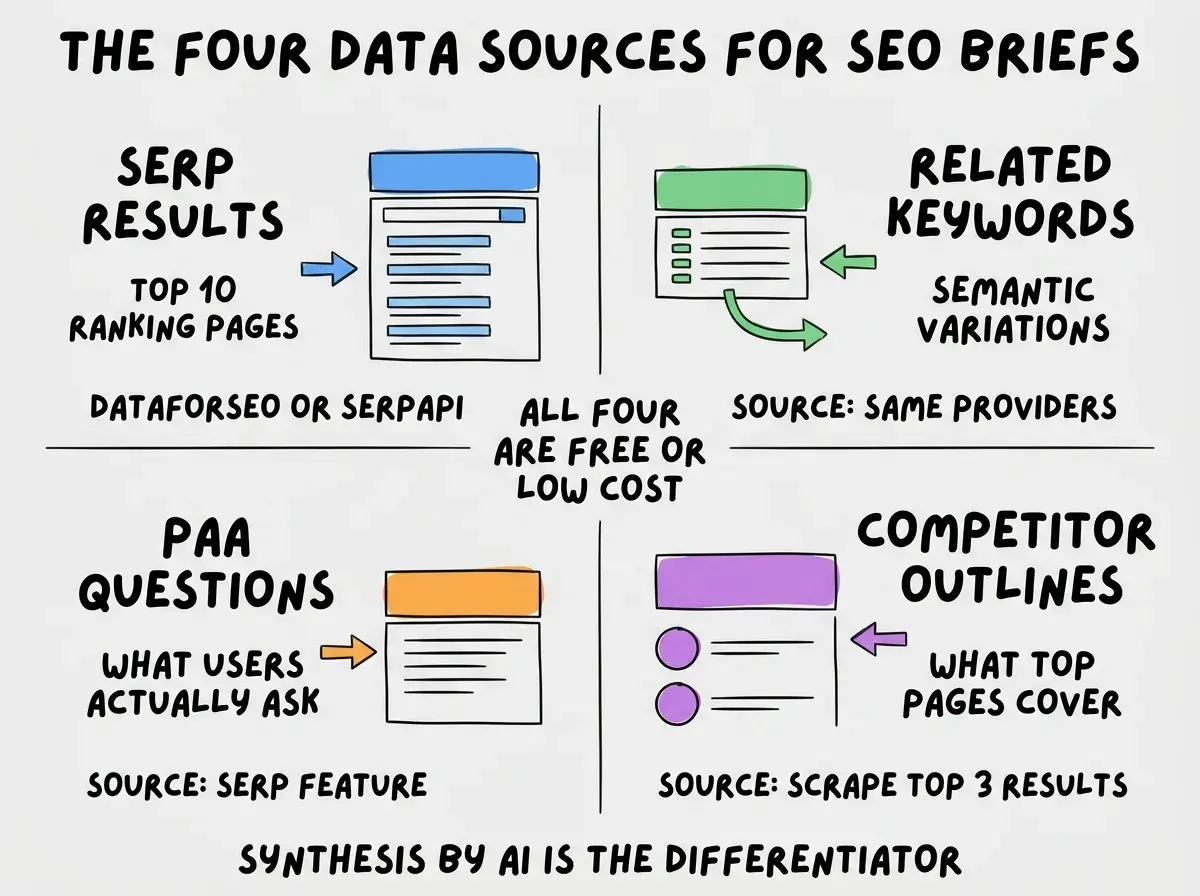
Source 3, People Also Ask questions. The questions users actually ask, surfaced by search engines. These map directly to H2 headings for AEO-friendly content.
Source 4, competitor outlines. Scrape the top 3 ranking pages and extract their headings. This shows what topics the competition covers and where you might differentiate.
The Brief Format That Works
A good brief has six sections that writers can use directly. Generic briefs tend to skip sections 4 through 6, which is where the value lives.
Section 1, target keyword and search intent. The primary keyword, classified as informational, transactional, navigational, or commercial. Tells the writer what kind of content to write.
Section 2, suggested title. A specific title (not a template) that includes the keyword, fits within character limits for SERPs, and matches the dominant title pattern of top-ranking pages.
Browse more marketer build guides
Read more build articlesSection 3, recommended headings. H2s and H3s structured around the PAA questions and the topics top pages cover. This is the core of the brief.
Section 4, key facts to include. Specific data points, statistics, or examples the writer should weave in. Pulled from competitor pages and from authoritative sources.
Section 5, internal links to consider. Links to existing pages on your own site that relate to the topic. Helps build internal link structure for SEO.
Section 6, differentiation angle. What can your article do that the top-ranking pages do not. The writer's competitive edge and the reason your version of the article is worth ranking above the existing top results.
The Architecture That Ships in Two Days
The implementation is small. Three pieces, each takes a few hours.
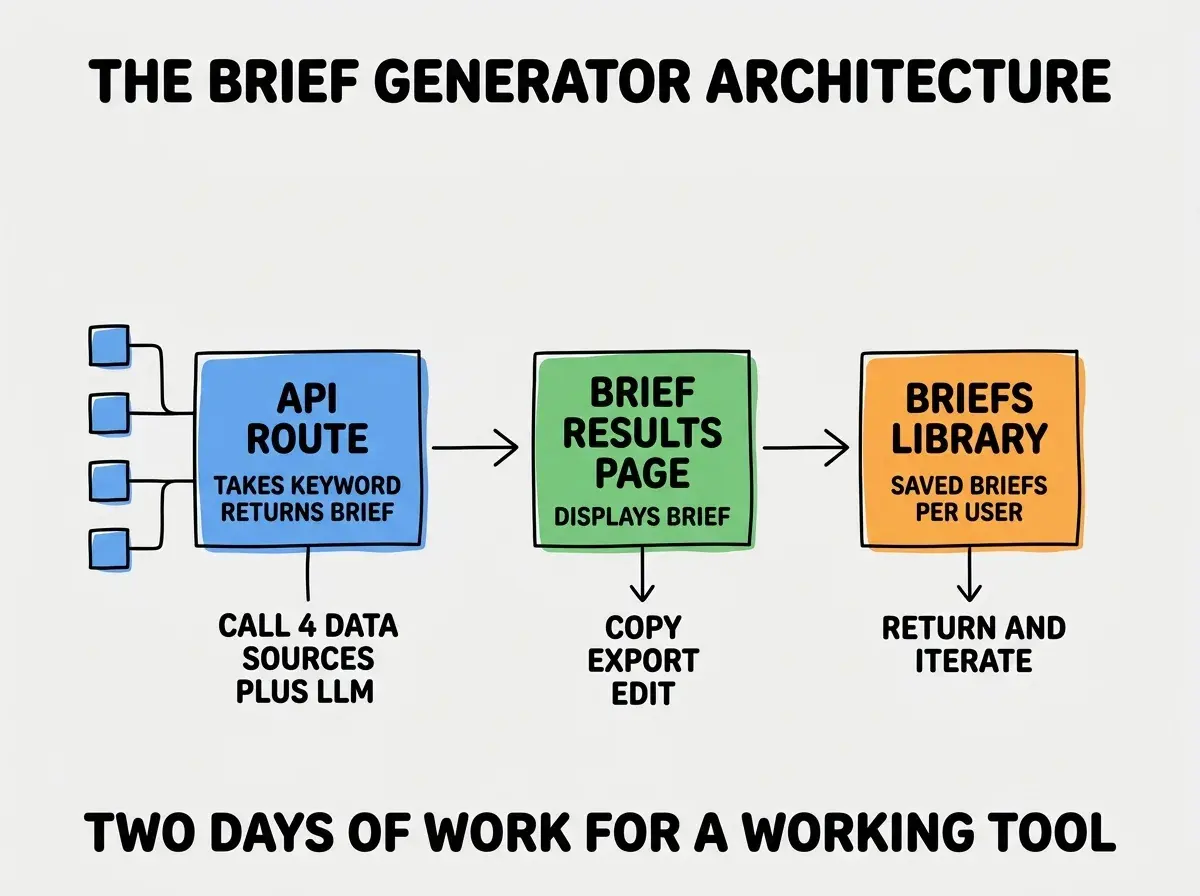
Piece 1, API endpoint. Takes a keyword, calls all four data sources in parallel, passes the combined data to an LLM with a structured prompt, returns the brief in JSON format.
Piece 2, brief display page. Renders the JSON brief in a readable format. Includes copy-to-clipboard for each section, export to markdown, and inline editing.
Piece 3, briefs library. Per-user storage of generated briefs. Lets writers come back to past briefs, iterate, and track what they have already covered.
The most damaging brief generator mistake is generating briefs that are too long. A 5-page brief is harder to use than a 1-page brief because writers cannot hold all of it in their head while writing. The right format is dense and actionable: maybe 400 words covering all six sections. Writers can reference the brief while writing without losing flow. Brief generators that produce 3,000-word briefs are themselves the problem they claim to solve, and they get abandoned within a week.
The other mistake is treating the brief generator as a one-shot tool. Real value comes from iteration: write the article, see how it ranks, refine the brief format based on what worked. Build a feedback loop between briefs and rankings to improve the generator over time.
A useful refinement is to add a "competitor coverage" check that highlights topics top-ranking pages cover but your draft brief does not. The check takes a few extra hours to build and produces noticeably more comprehensive briefs. Most generic generators skip this check, which is why their briefs tend to miss obvious topics that competing articles cover well.
A second useful addition is to track which briefs led to articles that ranked. Over time the data shows which brief formats work best for your specific audience, and the generator can be tuned based on real outcomes rather than assumed best practices. Most teams skip this measurement step and miss the compound improvement opportunity.
Another useful pattern is to add a small section to the brief that explicitly tells the writer what NOT to include. Top-ranking pages often have specific things they avoid (overly technical detail, certain selling angles, dated references) and surfacing this saves the writer from rework after a first draft that includes the wrong angles.
What This Means For You
A SEO content brief generator is one of the highest-leverage marketing tools you can build with AI in a weekend. The data sources are accessible, the synthesis is what AI does well, and the format determines whether writers actually use it.
- If you're a founder: This is a great internal tool to ship for your content team. The improvement in content quality and ranking is measurable within a few months.
- If you're changing careers: Building marketing tools is a friendly entry into AI-assisted development because the audience is non-technical and patient with rough first versions.
- If you're a student: Build a brief generator for your own portfolio site or blog. The hands-on experience teaches both AI integration and SEO fundamentals.
Browse more marketer build guides
Read more build articles