To build a restaurant review platform with AI tools, follow the four phase approach (define what restaurants and review patterns the platform should support, build the data model that handles restaurants, reviews, and reviewers, design the discovery interface that surfaces relevant restaurants, and ship with the trust patterns that prevent fake reviews), recognize what separates restaurant review platforms users trust from platforms users dismiss as fake, and apply the patterns that produce sustained engagement. The restaurant review platform becomes valuable when reviews feel trustworthy and discovery surfaces good fits; without both, established alternatives win.
This piece walks through the four phases, the trust patterns, the specific tooling, and the four mistakes that produce restaurant review platforms users abandon.
Why Restaurant Review Platforms Matter
Restaurant review platforms aggregate diner experiences into discovery resources. The aggregation matters; without platforms, diner discovery happens through word of mouth, advertising, and limited options. Platforms produce reach that ad hoc discovery cannot match.
The 2026 reality is that AI tools dramatically accelerate review platform building while AI integration during operation can detect fake reviews, summarize review themes, and surface restaurants matching specific cravings faster than manual review. The combination means small platforms can serve diners at quality matching what enterprise review platforms previously required.
A 2025 restaurant industry survey of 800 small restaurants found that restaurants with active presence on niche review platforms saw 28 percent higher repeat customer rates than restaurants relying only on Yelp and Google reviews. The niche presence produces customer connection that aggregator platforms rarely provide.
The pattern to copy is the way Yelp transformed restaurant discovery in the early 2000s. Centralized reviews beat newspaper reviews and word of mouth dramatically; the structure produced reach that fragmented sources could not match. Modern niche review platforms continue this trajectory; specific cuisines, dietary needs, or geographic focus produce engagement that general platforms cannot match.
The Four Phase Approach
Four phases produce restaurant review platforms users trust.
Phase 1, define what restaurants and review patterns the platform should support. Geographic focus, cuisine focus, dietary focus. Defined scope determines feature requirements.
Phase 2, build the data model that handles restaurants, reviews, and reviewers. Restaurants, reviews, ratings, reviewers, photos. AI tools generate the schema effectively given clear specifications.
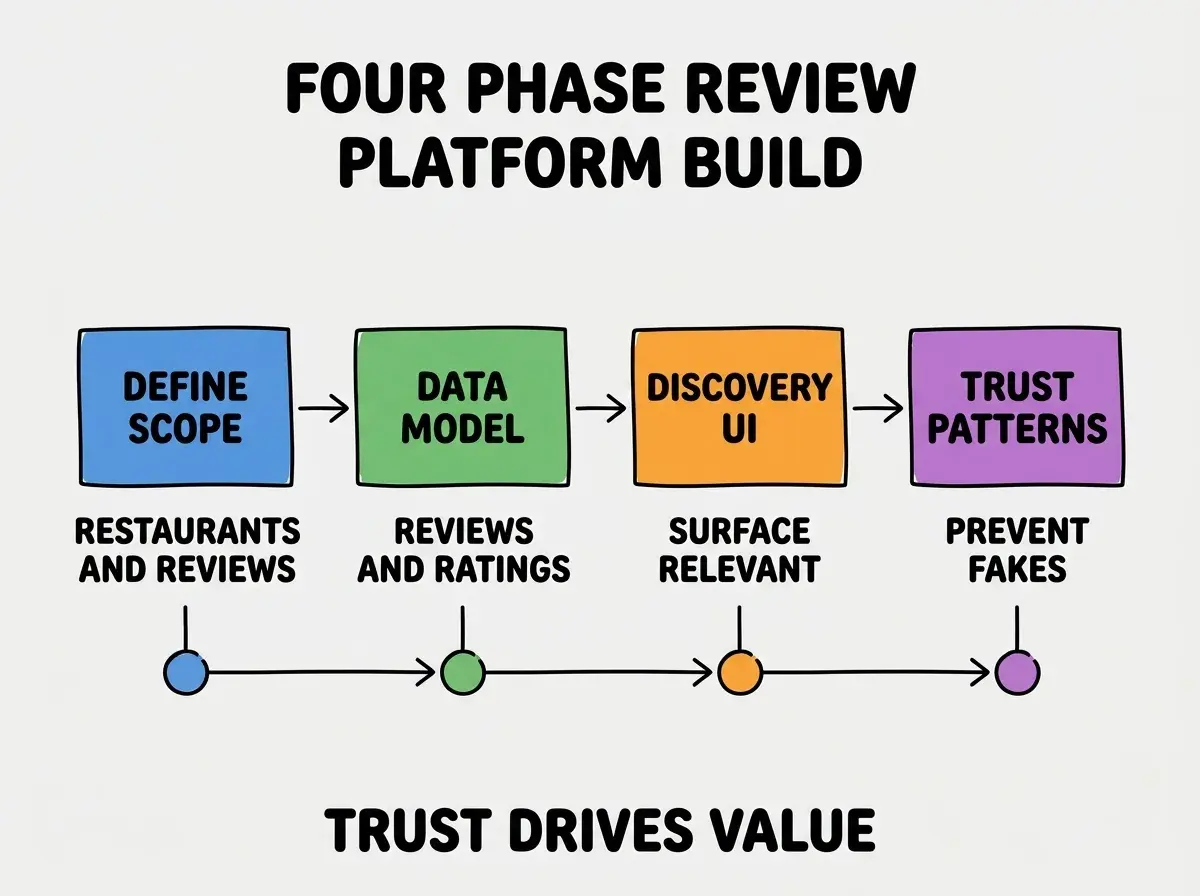
Phase 3, design the discovery interface that surfaces relevant restaurants. Cuisine filters, dietary filters, occasion filters, neighborhood filters. Discovery quality determines repeat use.
Phase 4, ship with trust patterns that prevent fake reviews. Reviewer verification, AI fake detection, business response handling. Trust matters dramatically; fake reviews destroy platform value.
The Trust Patterns That Prevent Fake Reviews
Three patterns produce trust that distinguishes platform from fake review farms.
Pattern 1, reviewer profile and history matter. Verified accounts with review history beat anonymous reviews. Profile transparency produces reviewer accountability.
Browse more business tutorials
Read more build tutorialsPattern 2, AI detection of suspicious patterns. Coordinated reviews, reviews from new accounts, reviews with similar language. AI catches patterns that manual moderation misses.
Pattern 3, restaurant response capability. Restaurants can respond to reviews. Responses provide context that pure reviewer narrative lacks.
The Specific Tooling That Worked
Three tool categories combine effectively for restaurant review platform building.
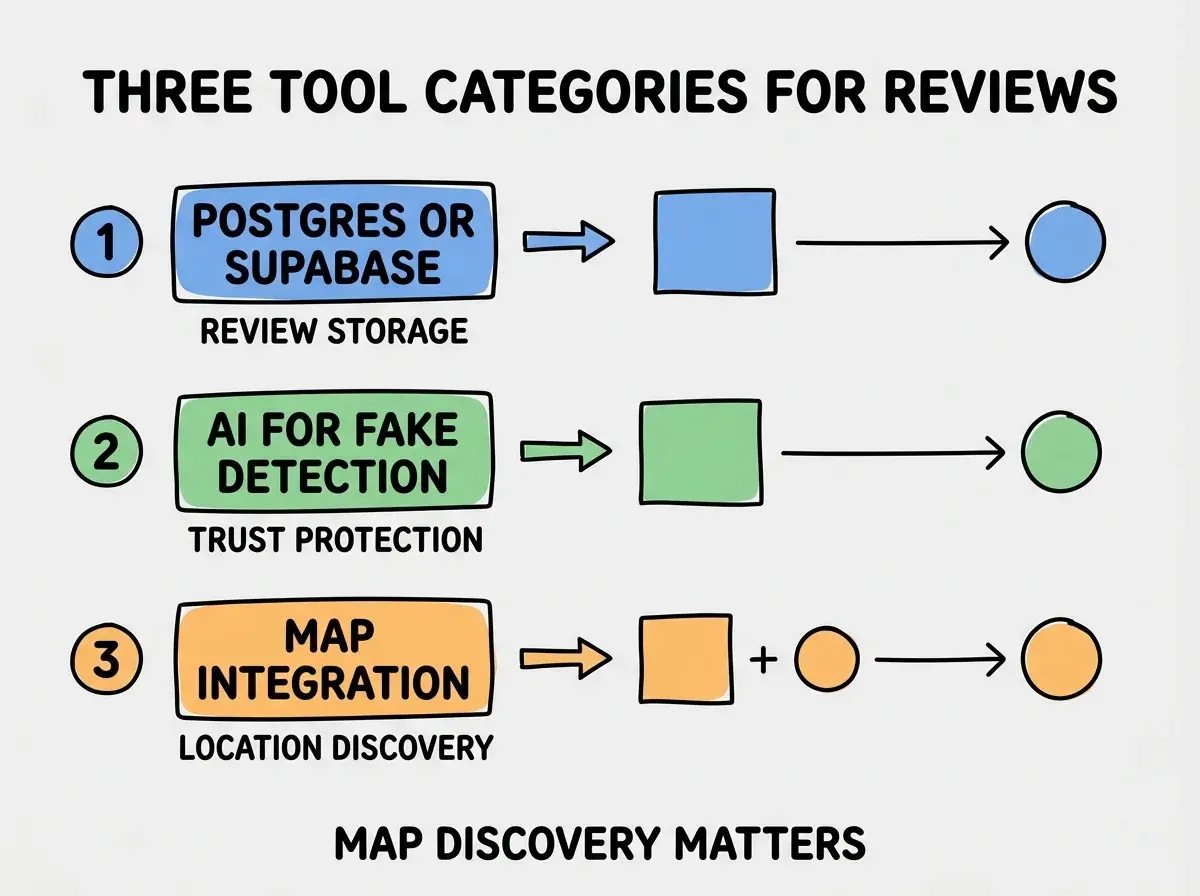
Tool 1, Postgres or Supabase for review data. Restaurants, reviews, photos, reviewer history. Relational data fits naturally.
Tool 2, AI for fake review detection. Claude or GPT analyzes review patterns and surfaces suspicious activity. AI moderation scales beyond human review for fake detection.
Tool 3, map integration for location discovery. Mapbox or Google Maps for restaurant browsing. Location matters dramatically for restaurant decisions.
What Makes Review Platforms Get Sustained Use
Three patterns separate sustained user engagement from quick abandonment.
Pattern 1, faster restaurant discovery than alternatives. Platforms must be faster than search engines or established platforms. Speed matters.
Pattern 2, mobile friendly for in moment decisions. Most restaurant decisions happen mobile. Mobile design dominates user access.
Pattern 3, niche focus produces deeper community than general platforms. Specific cuisines or dietary focus build communities that general platforms cannot.
The combination produces platforms users return to. Without these patterns, platforms get tried then abandoned for established alternatives.
How to Build Your First Restaurant Review Platform
Three implementation patterns help first review platforms succeed.
Pattern A, start with one geographic market or cuisine. Single focus produces denser reviews than multi focus. Density matters more than breadth.
Pattern B, seed with quality reviews before public launch. 100+ reviews across 20+ restaurants produce useful platform. Empty platforms produce no value at first visit.
Pattern C, recruit reviewer community before broad launch. 20-30 active reviewers at launch produce sustained content. Without reviewer community, platforms depend on passive content acquisition.
The combination produces first platforms that establish review patterns. Without these patterns, platforms launch then fade as content velocity struggles.
The most damaging restaurant review platform mistake is launching without enough seed reviews. Empty platforms produce no first impression value; users visit, see nothing useful, and never return. The fix is to seed with 100+ quality reviews before public launch; the seed makes platform useful from first visit. Without seed, platforms struggle to bootstrap from emptiness even with quality features.
The other mistake is missing the local business relationship dimension. Restaurants depend on reviews; review platform that ignores restaurants produces antagonistic relationships. The fix is to build restaurant relationship features that include businesses in the platform.
A third mistake is failing to handle defamation risk. Reviews can produce legal liability; platforms need clear policies and takedown processes. The fix is to handle legal aspects deliberately from start.
A fourth mistake is treating all reviews as equally weighted. Verified diner reviews should weight more than anonymous reviews. The fix is to design weighting systems that reward verification.
A fifth mistake is missing menu data integration. Reviews about specific dishes matter; without menu data, reviews lack context. The fix is to integrate menu data so reviewers can mark which dishes they tried; the integration produces dish level review intelligence that menu less platforms cannot match.
How Restaurant Review Platforms Build Sustainable Communities
Three community patterns matter for restaurant review platform sustainability. First, niche cuisine or dietary focus produces deeper community than general review platforms; specific food cultures have specific reviewing norms that general platforms rarely match. Second, restaurant owner participation matters dramatically; restaurants that respond to reviews and engage with reviewers build loyalty that absent restaurants rarely achieve. Third, photo quality affects platform perception; platforms with good food photography signal credibility that text only platforms struggle to convey to potential users.
What This Means For You
The restaurant review platform built with AI tools becomes valuable through trust features, location discovery, and niche focus. The four phases, trust patterns, and tool combinations produce platforms users return to for restaurant decisions.
- If you're a founder: Restaurant review has substantial market with established competitors. Niche platforms (specific cuisines, specific dietary needs) outcompete general platforms in their niches.
- If you're an indie hacker: Restaurant reviews can become sustainable businesses through targeted niches. Find cuisine or geographic niches that established platforms underserve.
- If you're a senior dev: AI tools handle review platform implementation effectively. The bottleneck is trust design and seed content, not implementation; invest in those areas more than feature breadth.
Browse more business tutorials
Read more build tutorials