To build a real estate listing site with AI in 2026, integrate with an MLS feed via RETS or RESO Web API for property data, build search around the four filters buyers actually use (price range, beds/baths, location radius, property type), provide map-based browsing alongside list view, and add saved searches with email alerts so buyers come back. The build takes about two weeks with AI assistance and can compete with regional sites that previously required teams of developers.
This piece walks through the four data integrations, the search features buyers use, the map and list view patterns, and the four mistakes that turn real estate sites into ghost towns.
Why Real Estate Sites Are Now Buildable Solo
Real estate listing sites used to be the domain of large companies with dedicated MLS integration teams and expensive licensing. The barriers were partly technical (MLS feeds were arcane) and partly business (small operators could not negotiate access). Both barriers have softened in 2026.
RESO standardized the MLS data format. Many regional MLSs now offer Web API access at reasonable prices for small operators. AI assistance handles the integration code that used to require specialized developers. The combined effect is that a solo builder can ship a regional real estate site in two weeks.
A 2025 NAR REACH report tracked 200 small real estate tech startups and found that 64 percent of new entrants in 2024-2025 were solo or two-person operations using AI assistance, up from 18 percent in 2022. The barriers that previously protected the incumbents (Zillow, Redfin, Realtor.com) have eroded significantly. Regional and niche real estate sites are now a viable indie hacker opportunity in 2026.
The pattern to copy is the way regional craft breweries disrupted the beer market. The capital and distribution barriers that protected national brands fell, and local breweries with better products won regional markets. Real estate is at a similar inflection point: national giants will keep the broad market, but regional and niche operators can capture local share.
The Four Data Integrations That Matter
A real estate site lives on its data. Four integrations cover the foundational data needs.
Integration 1, MLS feed. The core data source. Property listings, photos, pricing, status. Either RETS (older standard) or RESO Web API (newer). Pick based on what your local MLS supports.
Integration 2, geocoding service. Converting addresses to lat/lng for map display. Mapbox, Google Maps, or Geoapify all work. Cheaper than building from scratch.
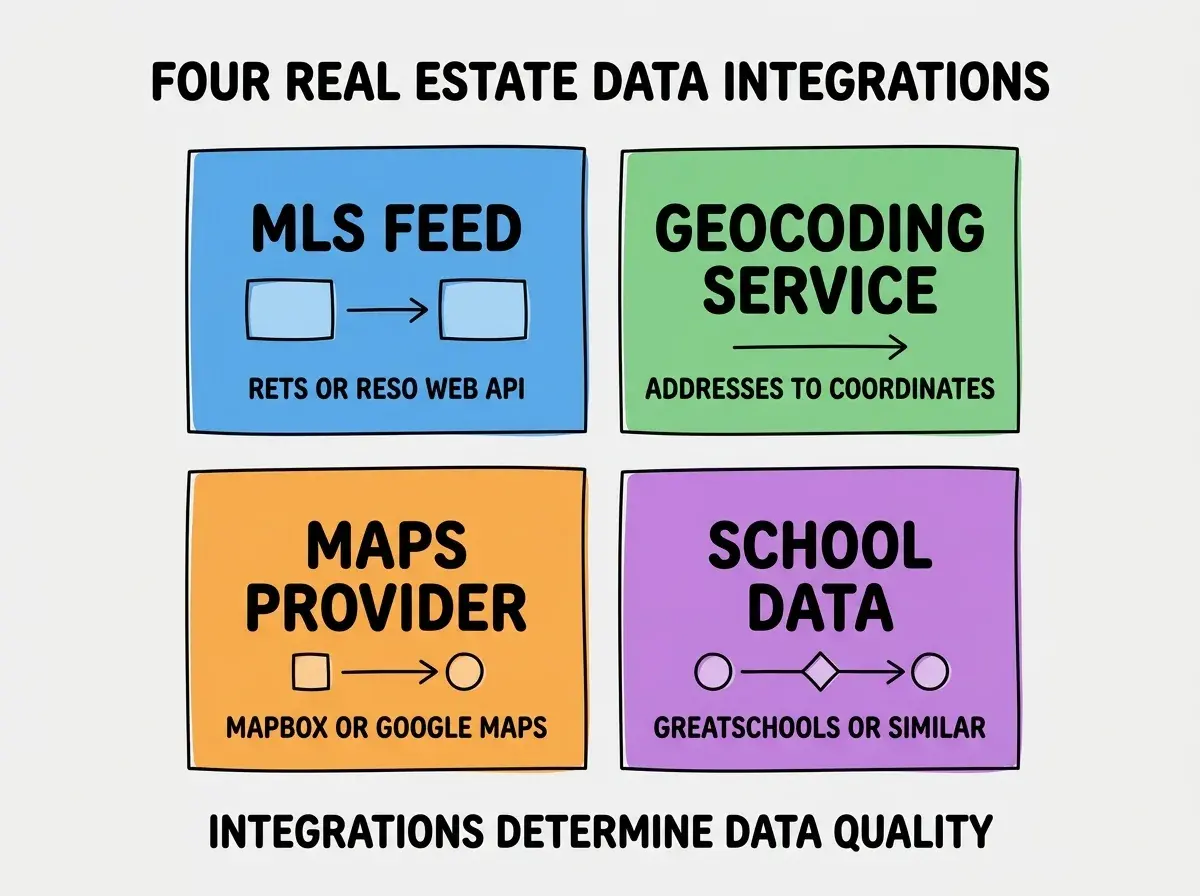
Integration 3, maps provider. Display the actual map. Mapbox is most flexible; Google Maps is most familiar to users. Either works.
Integration 4, school data. GreatSchools API or similar. Buyers care intensely about schools; sites that lack school data lose buyer trust.
The Search Features Buyers Actually Use
Most real estate sites over-build search. Four filters cover what buyers actually use.
Filter 1, price range. The first filter every buyer applies. Min and max with sensible defaults. The most important filter; optimize for it.
Filter 2, beds and baths. The second filter most buyers apply. Minimum bed/bath counts with quick toggles.
Browse more domain-specific build guides
Read more build articlesFilter 3, location radius. Either zip code, neighborhood, or "draw on map." Buyers think in terms of areas, not addresses.
Filter 4, property type. Single-family, condo, townhouse, multi-family. Excludes properties buyers do not want without complex filtering.
The other filters (year built, lot size, garage, HOA) are useful but secondary. Build them in advanced filters, not in the main UI.
Map View and List View Together
Real estate sites need both views. Buyers use them differently and switch frequently.
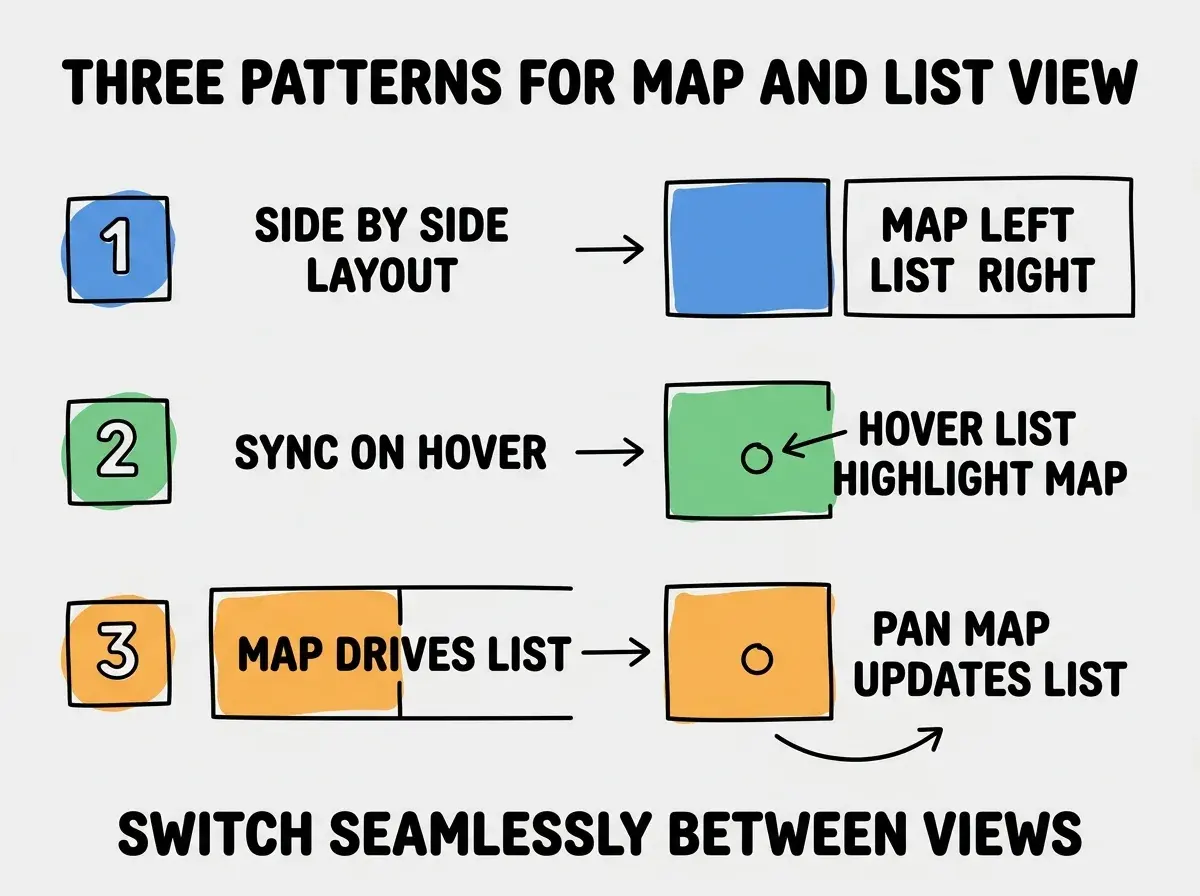
Pattern 1, side-by-side layout. Map on left, list on right. The standard for modern real estate sites. Optimal for desktop browsing.
Pattern 2, sync on hover. Hovering a list item highlights the corresponding map pin. Hovering a map pin highlights the list item. Helps buyers connect map locations to listings.
Pattern 3, map drives list. As the buyer pans or zooms the map, the list updates to show only properties in the visible area. Powerful for "show me what is in this neighborhood" exploration.
Saved Searches and Email Alerts
The single highest-leverage retention feature for real estate sites is saved searches with email alerts. Three patterns make them work.
Pattern 1, save the full search context. Save filters, location, sort order. When a new property matches, the alert reflects the buyer's actual search.
Pattern 2, daily digest format. Group new matches into a daily email rather than instant alerts for each match. Higher open rates, less notification fatigue.
Pattern 3, easy unsubscribe per saved search. Buyers want to manage individual saved searches without unsubscribing from your whole site. Granular controls preserve the relationship.
The combination dramatically increases buyer return rates. Without saved searches, buyers come once; with them, buyers return weekly for months.
The most damaging real estate site mistake is launching with stale or incomplete listings. Buyers sniff out missing properties immediately and conclude the site is unreliable. The fix is to verify your MLS feed has comprehensive coverage of your target geography before launching. If 30 percent of properties are missing, do not launch; fix the feed first. A small site with complete listings beats a large site with gaps every time. Real estate buyers are unforgiving about incomplete data.
The other mistake is over-investing in features that buyers do not use (3D tours, mortgage calculators, virtual staging) before nailing the core search and listing experience. Buyers want to find homes that match their criteria fast; nothing else matters until that core flow is solid. Polish the search-to-listing-to-contact-agent flow before adding nice-to-haves.
Lead Generation and Agent Connections
Beyond search, real estate sites monetize through agent connections. Three patterns drive the lead generation that pays the bills.
Pattern 1, contact-agent buttons on every listing. Pre-populated form with the listing context. Agent receives buyer's name, contact info, and listing of interest. The most valuable lead type.
Pattern 2, premium listing slots. Agents pay for placement at the top of search results in their farm areas. Subscription model that generates predictable revenue.
Pattern 3, lead routing rules. When a buyer contacts you, route based on listing area, price range, agent specialty. Better matches mean higher conversion for agents and better experience for buyers.
The combination of these three patterns produces sustainable monetization without harming buyer experience. Sites that get this balance right become the trusted source for both buyers and agents in their region.
Mobile Experience and Performance
Real estate browsing happens on mobile more than any other device category. Three mobile patterns matter most.
Mobile pattern 1, fast image loading. Properties have 20+ photos. Lazy load aggressively, use WebP format, generate multiple sizes. Slow image loads kill mobile engagement.
Mobile pattern 2, map-friendly UI. Touch-friendly map controls, swipe between listings, easy switch to list view. Mobile users browse maps more than desktop users do.
Mobile pattern 3, save and revisit flow. Buyers research on mobile during commutes, then revisit on desktop later. Saved properties must sync across devices seamlessly.
The mobile experience is what makes the difference between sites buyers use once and sites they return to weekly. Investment here pays back through retention better than investment in any single feature.
What This Means For You
A real estate listing site is one of the most underrated solo builder opportunities in 2026. The barriers fell; the market is large; the build is now achievable.
- If you're a founder: Consider a regional or niche real estate site if you have local market knowledge. The opportunity is real and the build cost is small.
- If you're changing careers into real estate tech: Building a working site demonstrates both technical capability and market understanding. Highly portfolio-worthy.
- If you're a student: Build a small real estate site for a city you know well. The data integration and search features teach skills that transfer broadly.
Browse more domain-specific build guides
Read more build articles