To build a podcast hosting platform with AI tools, follow the four phase approach (define what podcast types and creator workflows the platform should support, build the storage and distribution that handles audio reliably, design the analytics that reveal what creators actually need to know, and ship with the AI features that differentiate from established hosts), recognize what separates podcast platforms creators stick with from platforms creators leave for alternatives, and apply the patterns that produce sustained creator adoption. The podcast hosting platform becomes valuable when distribution works reliably across all major podcast directories while AI features add differentiation; without both, established hosts win.
This piece walks through the four phases, the AI differentiation patterns, the specific tooling, and the four mistakes that produce podcast platforms creators abandon.
Why Podcast Hosting Platforms Matter
Podcast hosting platforms turn audio files into distributable shows reaching listeners across major directories. The transformation matters; without platforms, podcasters manually distribute to each directory while platforms automate the distribution and provide unified analytics across platforms.
The 2026 reality is that AI tools dramatically accelerate podcast platform building while AI integration during creation can transcribe, generate show notes, suggest titles, and create chapters faster than manual work. The combination means small platforms can offer AI features that established hosts charge premium prices for or do not offer at all.
A 2025 podcast creator survey of 600 podcasters found that creators using AI assisted hosting platforms reduced production time by an average of 4 hours per episode compared to traditional hosting plus manual production. The time savings compound across episodes; AI assisted hosting changes the production economics of podcasting dramatically.
The pattern to copy is the way blog hosting platforms transformed publishing in the 2000s. WordPress and similar platforms made publishing accessible without web development; the accessibility produced explosion in publishing. AI assisted podcast platforms play similar role for audio creators; the accessibility plus AI assistance lowers production barriers dramatically.
The Four Phase Approach
Four phases produce podcast hosting platforms creators stick with.
Phase 1, define what podcast types and creator workflows the platform should support. Solo, interview, panel, narrative. Different podcast types need different production support.
Phase 2, build the storage and distribution that handles audio reliably. Object storage, RSS feed generation, directory submission. AI tools generate the infrastructure code effectively.
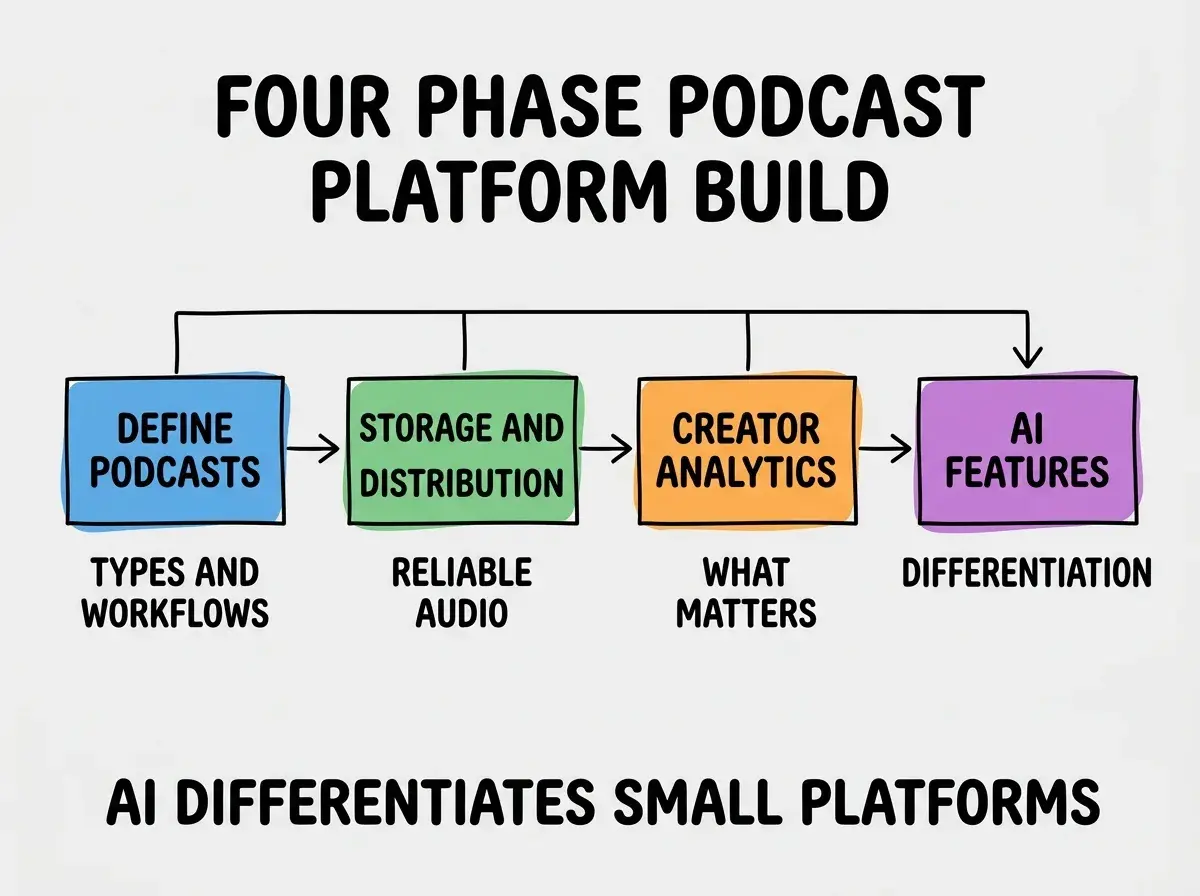
Phase 3, design the analytics that reveal what creators actually need to know. Listens, geographic distribution, episode performance, listener retention. Useful analytics inform creator decisions; raw downloads alone do not.
Phase 4, ship with AI features that differentiate from established hosts. Auto transcription, AI generated show notes, suggested titles, automatic chapters. AI features matter dramatically for differentiation.
The AI Differentiation Patterns That Work
Three patterns produce AI features creators value enough to switch platforms for.
Pattern 1, automatic transcription with high accuracy. Quality transcription enables searchable archives, accessibility, and content repurposing. Transcription quality determines feature value.
Browse more creator tutorials
Read more build tutorialsPattern 2, AI generated show notes from transcripts. Show notes take significant creator time; AI generation reduces this dramatically. Quality show notes matter for SEO and discovery.
Pattern 3, automatic chapter generation from transcripts. Chapter markers improve listener navigation; AI generation removes the manual work that creators often skip.
The Specific Tooling That Worked
Three tool categories combine effectively for podcast platform building.
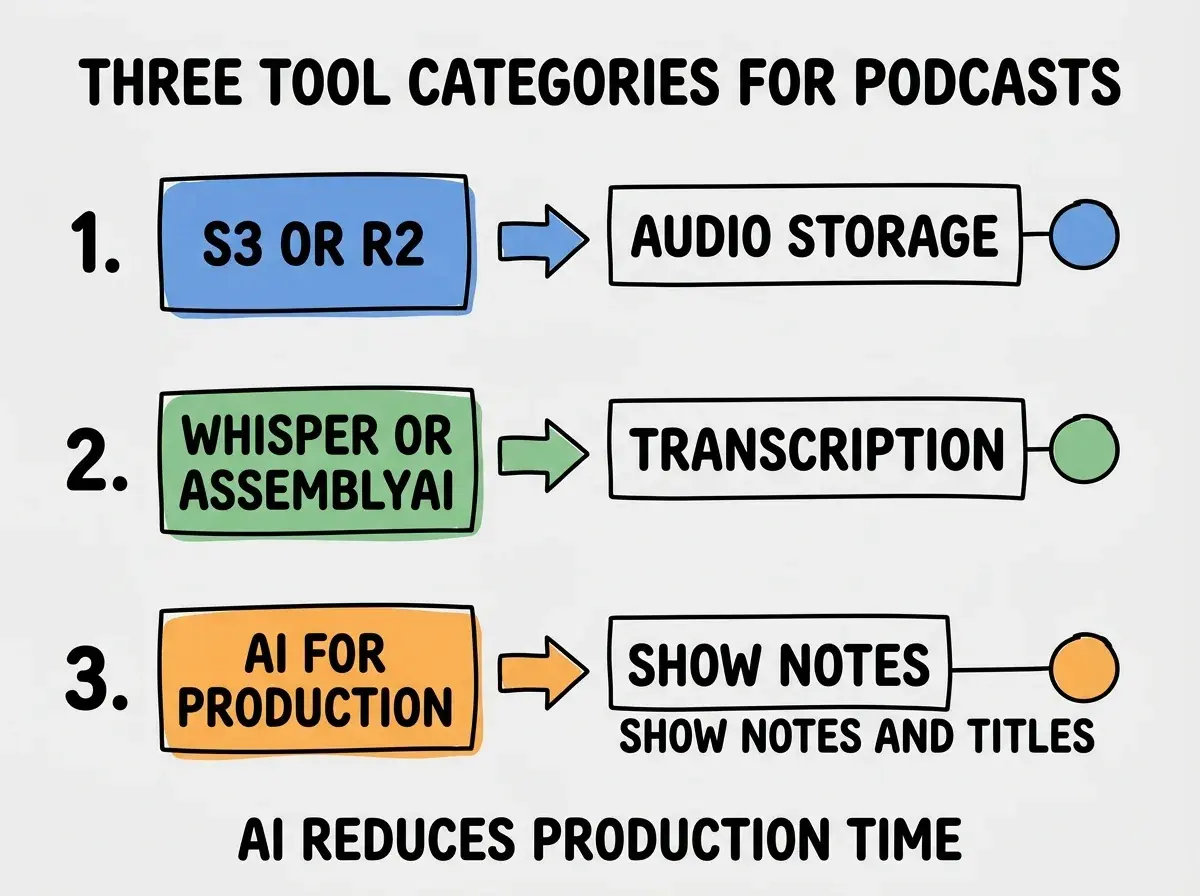
Tool 1, S3 or R2 for audio storage. Object storage handles podcast files at scale. Cloudflare R2 has zero egress fees that matter for podcast bandwidth.
Tool 2, Whisper or AssemblyAI for transcription. Specialized transcription services produce quality that general AI cannot match. Quality matters for downstream features.
Tool 3, AI for production assistance. Claude or GPT generates show notes, titles, chapters from transcripts. Production assistance saves creators hours per episode.
What Makes Podcast Platforms Get Sustained Creator Use
Three patterns separate sustained platform use from creator migration.
Pattern 1, reliable distribution to all major directories. Apple Podcasts, Spotify, Google Podcasts, YouTube Music. Distribution failures lose creators permanently.
Pattern 2, fast upload and processing. Slow upload or processing produces creator frustration. Speed matters for creator workflow integration.
Pattern 3, transparent analytics that creators can act on. Raw download counts mean less than retention curves and geographic distribution. Useful analytics produce sustained creator engagement.
The combination produces platforms creators stick with for years. Without these patterns, platforms get tried then abandoned for established alternatives.
How to Build Your First Podcast Platform
Three implementation patterns help first podcast platforms succeed.
Pattern A, start with reliable distribution before fancy features. Get RSS feeds and directory submission working perfectly first. Fancy features without reliable distribution lose creators.
Pattern B, beta test with friendly podcasters before public launch. 5-10 beta podcasters reveal distribution and workflow issues. Beta validation catches problems before public exposure.
Pattern C, instrument upload success rate and distribution acceptance. Without instrumentation, distribution problems stay hidden until creators complain.
The combination produces first podcast platforms that establish reliability. Without these patterns, first platforms often launch with distribution issues that destroy creator trust.
The most damaging podcast platform mistake is launching without thorough distribution testing across all major directories. Distribution failures hurt creator audience growth and produce migration to established hosts. The fix is to test distribution exhaustively before public launch; verify Apple Podcasts, Spotify, Google Podcasts, and YouTube Music all accept and display feeds correctly. Distribution is the table stakes for podcast hosting; without reliable distribution, no AI features matter.
The other mistake is missing podcast specific compliance. RSS specification requirements, directory specific requirements, copyright handling. The fix is to study podcast technical standards thoroughly before building.
A third mistake is overengineering analytics. Creators need actionable metrics, not comprehensive dashboards. The fix is to focus on metrics creators act on; complexity beyond actionable produces noise.
A fourth mistake is failing to handle podcast hosting bandwidth costs. Audio bandwidth scales with episode length and listener count; pricing must account for bandwidth realistically. The fix is to model bandwidth costs carefully; underestimating produces unsustainable economics.
How AI Production Features Compound Creator Value
Three compounding patterns matter for thinking about AI feature value to creators. First, time saved per episode multiplies across years of episodes; even a 4 hour saving per episode becomes hundreds of hours saved annually for active podcasters. Second, automated transcripts enable content repurposing into blog posts, social media, and newsletters; the repurposing extends content reach beyond the podcast itself. Third, AI generated metadata improves discoverability across podcast directories; better titles, descriptions, and chapters drive listener growth that manual metadata often does not match. The combination produces creator value that compounds over years of consistent podcasting.
What This Means For You
The podcast hosting platform built with AI tools becomes valuable through reliable distribution, useful analytics, and AI production features. The four phases, AI patterns, and tool combinations produce platforms creators stick with.
- If you're a creator: Podcast platforms can serve your audience while building sustainable side business. AI features that save creator time produce sustained creator demand.
- If you're an indie hacker: Podcast hosting has established competitors but AI differentiation creates niche opportunity. Niche podcast platforms (specific genre, specific creator size) can compete with general hosts.
- If you're a senior dev: AI tools handle podcast platform implementation effectively. The bottleneck is distribution reliability and AI feature quality, not implementation; invest in those areas more than feature breadth.
Browse more creator tutorials
Read more build tutorials