To build a pet adoption platform with AI tools, follow the four phase approach (define what shelters and adopter patterns the platform should support, build the data model that handles pets, applications, and shelters, design the matching interface that connects pets with appropriate adopters, and ship with the workflow patterns that handle adoption applications carefully), recognize what separates pet adoption platforms shelters use from platforms that gather dust, and apply the patterns that produce sustained shelter and adopter engagement. The pet adoption platform becomes valuable when it makes shelter operations easier while improving adoption matches; without both, established alternatives win.
This piece walks through the four phases, the workflow patterns, the specific tooling, and the four mistakes that produce pet adoption platforms shelters abandon.
Why Pet Adoption Platforms Matter
Pet adoption platforms turn fragmented shelter operations into structured processes. The transformation matters; shelters with limited staff struggle to manage pet listings, applications, and follow ups. Without platforms, manual processes consume staff time that could go to pet care.
The 2026 reality is that AI tools dramatically accelerate pet adoption platform building while AI integration during operations can categorize pets, draft application responses, and surface high quality applicants faster than manual review. The combination means small platforms can serve shelters at quality matching what enterprise shelter management software previously required.
A 2025 animal welfare technology survey of 600 shelters found that shelters using purpose built adoption platforms increased adoption rates by 31 percent and reduced euthanasia rates by 19 percent compared to shelters using basic websites. The platform features produce both adoption efficiency and direct life saving impact.
The pattern to copy is the way Petfinder transformed pet adoption in the early internet era. Centralized search beat individual shelter websites dramatically; the centralization produced reach that fragmented sites could not match. Modern AI assisted platforms continue this trajectory; better matching and operations produce better adoption outcomes.
The Four Phase Approach
Four phases produce pet adoption platforms shelters use daily.
Phase 1, define what shelters and adopter patterns the platform should support. Local rescues, regional shelters, breed specific. Different shelter types have different needs.
Phase 2, build the data model that handles pets, applications, and shelters. Pets, applications, shelters, adopters, follow ups. AI tools generate the schema effectively.
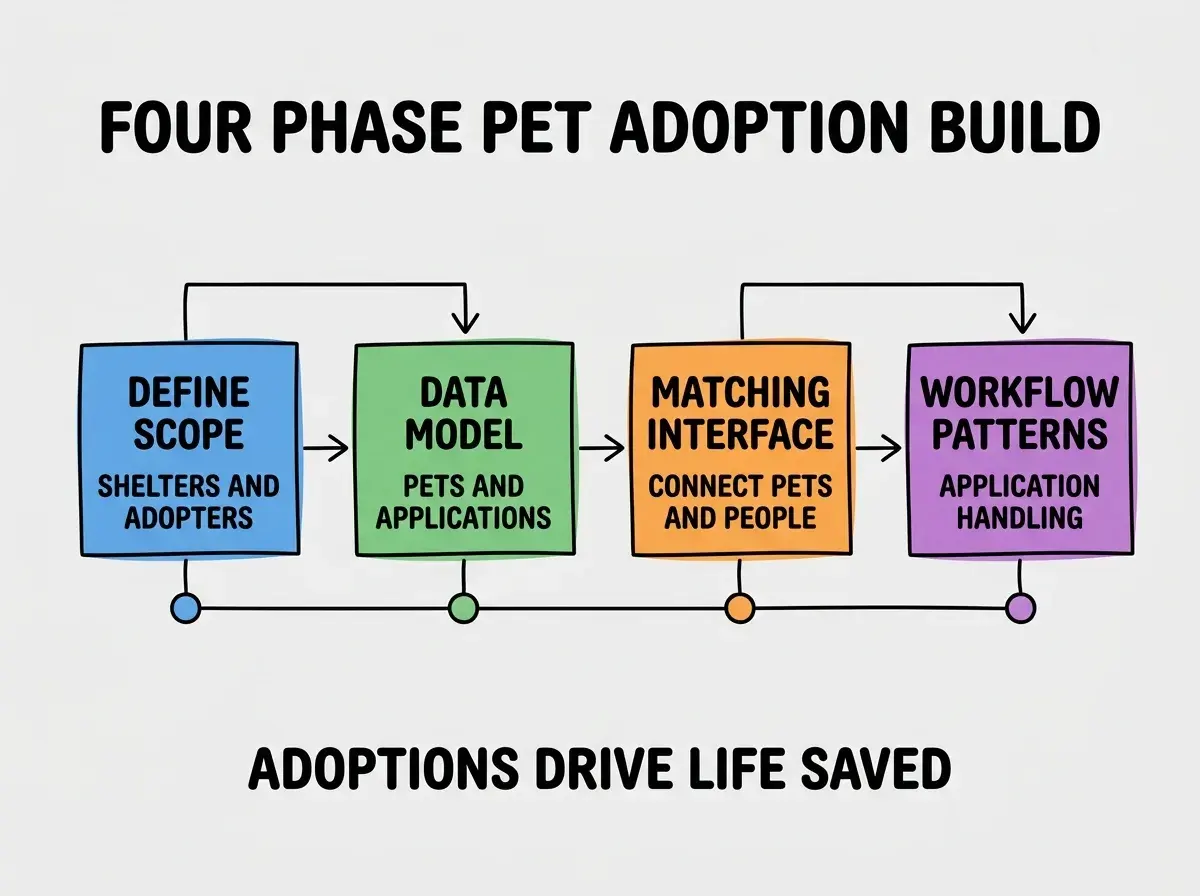
Phase 3, design the matching interface that connects pets with appropriate adopters. Lifestyle matching, experience filters, breed and size preferences. Better matching produces better long term adoption outcomes.
Phase 4, ship with workflow patterns that handle adoption applications carefully. Application review, reference checks, home visit scheduling, follow up tracking. Workflow matters; rushed applications produce poor matches.
The Workflow Patterns That Produce Good Adoptions
Three patterns produce adoption workflows that result in sustained pet placements.
Pattern 1, comprehensive application with appropriate questions. Living situation, experience, time availability. Good questions filter for likely good matches.
Browse more nonprofit tutorials
Read more build tutorialsPattern 2, home visit or video tour scheduling. Verifying living situation matters for some adoptions. Schedule integration enables this verification efficiently.
Pattern 3, post adoption follow up tracking. Check ins at 1 week, 1 month, 6 months. Follow up identifies issues before they become returns.
The Specific Tooling That Worked
Three tool categories combine effectively for pet adoption platform building.
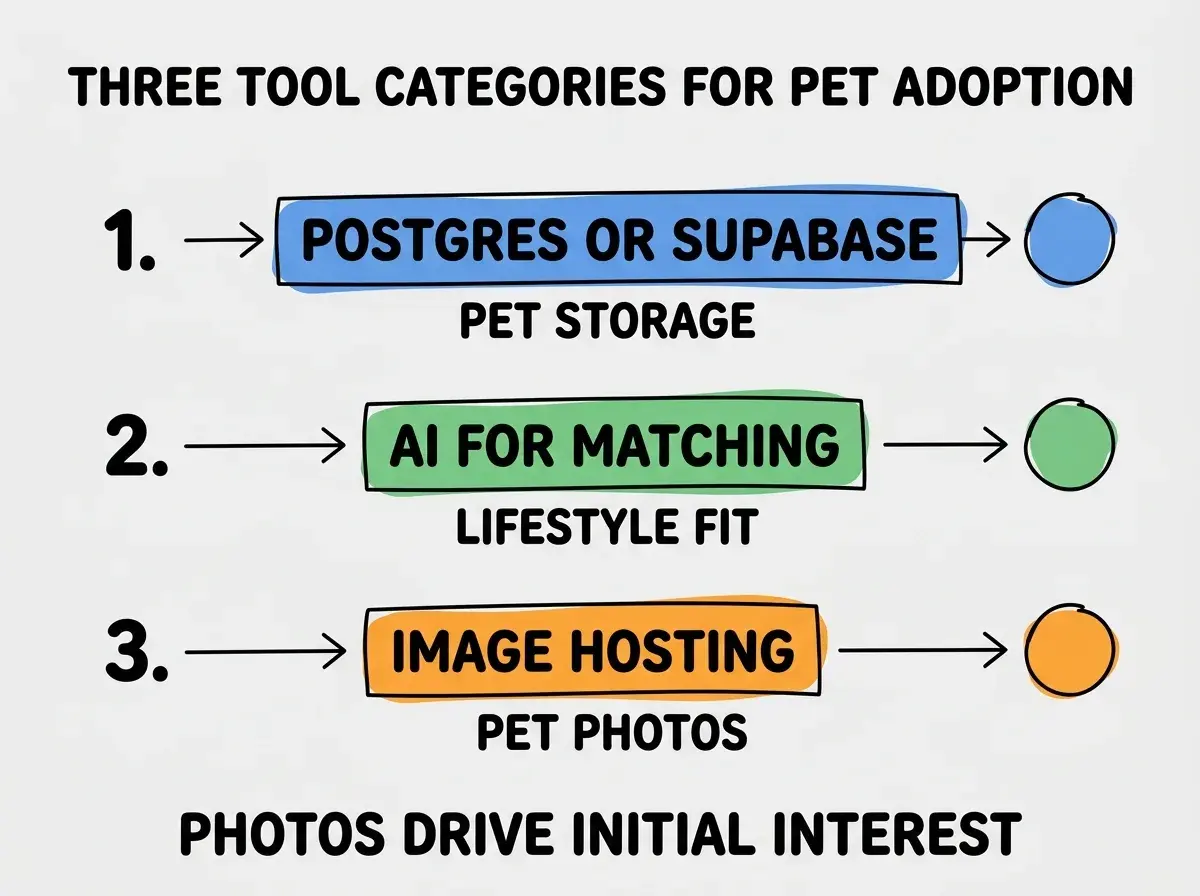
Tool 1, Postgres or Supabase for pet and application data. Pets, shelters, applications, follow ups. Relational data fits naturally.
Tool 2, AI for lifestyle matching. Claude or GPT analyzes adopter applications and pet profiles to surface compatible matches. Matching quality affects long term placement success.
Tool 3, image hosting for pet photos. Cloudinary or Cloudflare Images for fast quality photo display. Photos drive initial interest dramatically.
What Makes Pet Adoption Platforms Get Shelter Adoption
Three patterns separate sustained shelter use from platform abandonment.
Pattern 1, easier than spreadsheets for daily operations. Shelter staff often have limited tech experience; complex platforms produce abandonment. Simplicity matters.
Pattern 2, mobile friendly for on site shelter work. Shelter staff move between cages and offices; mobile design matters. Desktop only platforms exclude mobile use.
Pattern 3, integration with existing shelter operations. Volunteer scheduling, donor management, vet records. Integration produces value beyond just adoption listings.
The combination produces platforms shelters use across years of operations. Without these patterns, shelters try platforms then return to spreadsheets.
How to Build Your First Pet Adoption Platform
Three implementation patterns help first platforms succeed.
Pattern A, start with one shelter as design partner. Single shelter validates platform with real workflows. Multi shelter from day one often produces incomplete fits.
Pattern B, dogfood with friendly shelter for 2-3 months. Real shelter operations reveal platform issues. Beta validation catches problems before broader exposure.
Pattern C, instrument adoption funnel from listing to placement. Where do potential adopters drop off. Without instrumentation, conversion problems stay hidden.
The combination produces first platforms that establish shelter use patterns. Without these patterns, first platforms often launch with workflows that do not match real shelter operations.
The most damaging pet adoption platform mistake is treating it as pure transaction platform rather than mission driven tool. Pet adoption involves emotional decisions, life saving stakes, and shelter limited resources; platforms that ignore these dimensions produce platforms shelters reject. The fix is to build with deep shelter understanding; visit shelters, talk to staff, observe adoption events. Mission driven platforms produce shelter adoption that pure transaction thinking never achieves.
The other mistake is missing volunteer coordination features. Shelters depend on volunteers; volunteer coordination matters as much as adopter coordination. The fix is to build volunteer features alongside adopter features.
A third mistake is failing to handle medical record sharing. Adopters need pet medical history; medical record handling affects adoption decisions. The fix is to support medical record upload and sharing securely.
A fourth mistake is treating all pets as equally adoptable. Some pets are easier to place than others; platforms that surface easy placements quickly while extending hard placements help shelters most. The fix is to build features that support hard to place pets specifically.
How Photos Affect Adoption Rates
Three photo related insights matter for thinking about pet adoption platform design. First, multiple photos per pet substantially outperform single photo listings; potential adopters want to see pets from multiple angles and in different moods. Second, video clips outperform photos for personality conveyance; even short 15 second clips help adopters feel connection that still photos cannot match. Third, professional photo guidelines for shelter staff produce dramatic adoption rate improvements; bad photos hurt even great pets, while good photos help even shy or older pets find homes faster.
What This Means For You
The pet adoption platform built with AI tools becomes valuable through shelter operations efficiency, matching quality, and sustained shelter and adopter engagement. The four phases, workflow patterns, and tool combinations produce platforms that increase adoption rates.
- If you're a founder: Pet adoption has substantial market with mission alignment that attracts both users and capital. Niche platforms (specific species, specific regions) often outcompete general platforms.
- If you're a career changer with animal welfare interest: Pet adoption platforms combine technical work with mission impact. The combination produces career meaning beyond pure tech work.
- If you're a senior dev: AI tools handle pet adoption platform implementation effectively. The bottleneck is shelter domain understanding and mission alignment, not implementation; invest in those areas more than feature breadth.
Browse more nonprofit tutorials
Read more build tutorials