To build an online course platform with AI tools, follow the four phase approach (define what course types and learner patterns the platform should support, build the data model that supports lessons, progress, and engagement, design the learner interface that produces sustained completion rates, and ship with the engagement patterns that prevent the typical course abandonment), recognize what separates course platforms learners complete from platforms learners abandon halfway, and apply the patterns that produce sustained learner success. The course platform becomes valuable when learners actually complete courses; without that bar, platforms generate signups without producing learning outcomes.
This piece walks through the four phases, the engagement patterns, the specific tooling, and the four mistakes that produce course platforms with low completion rates.
Why Online Course Platforms Matter
Online course platforms turn educational content into structured learning experiences. The transformation matters; without platforms, educational content gets consumed passively or abandoned, while platforms produce the structure that drives completion and learning outcomes.
The 2026 reality is that AI tools dramatically accelerate course platform building while AI integration during course delivery can personalize content, suggest next lessons, and detect struggling learners faster than manual interventions. The combination means even small creators can build course platforms matching what enterprise learning systems previously required.
A 2025 online learning survey of 800 course creators found that platforms with strong engagement features achieved 47 percent course completion rates compared to 12 percent for platforms with passive content delivery. The structure produces completion that passive content cannot match; engagement features matter dramatically for learner outcomes.
The pattern to copy is the way fitness apps transformed gym membership economics. Gyms had high signup rates but low completion; fitness apps with progress tracking and social features produced higher completion. Course platforms play similar role for education; structure produces completion that passive content delivery rarely achieves.
The Four Phase Approach
Four phases produce online course platforms that drive learner success.
Phase 1, define what course types and learner patterns the platform should support. Self paced, cohort based, live, hybrid. Different course types need different features; defined scope determines architecture.
Phase 2, build the data model that supports lessons, progress, and engagement. Courses, modules, lessons, progress, completions. AI tools generate the schema effectively given clear specifications.
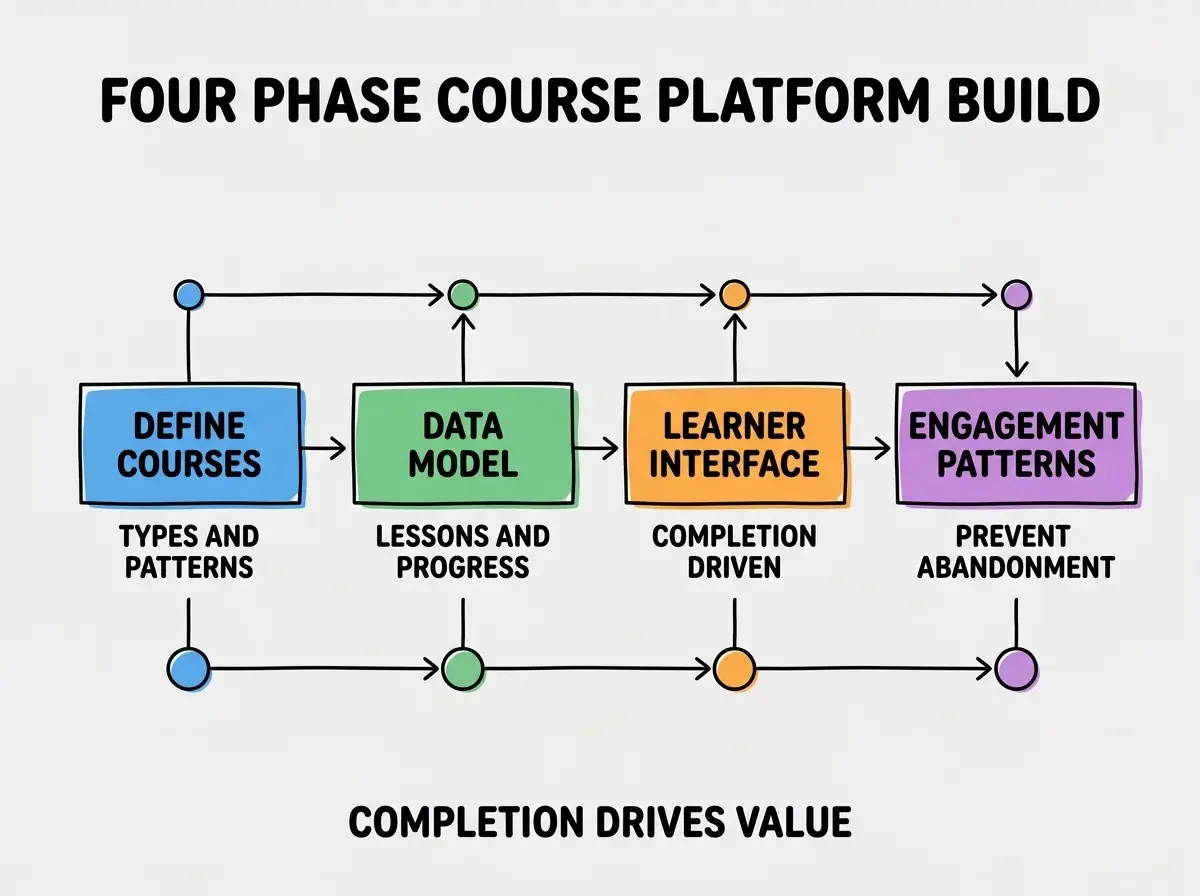
Phase 3, design the learner interface that produces sustained completion rates. Progress visualization, next lesson suggestions, completion celebrations. Interface design determines completion rates dramatically.
Phase 4, ship with engagement patterns that prevent the typical course abandonment. Progress reminders, social features, milestone recognition. Engagement patterns turn signups into completions; without engagement, abandonment dominates.
The Engagement Patterns That Drive Completion
Three patterns produce engagement that prevents course abandonment.
Pattern 1, progress reminders for learners who pause. Email or push notifications when learners stop progressing. Without reminders, paused courses become abandoned courses.
Browse more education tutorials
Read more build tutorialsPattern 2, social features produce accountability. Discussion forums, study groups, peer interaction. Social accountability dramatically improves completion versus solo learning.
Pattern 3, milestone recognition for partial completions. Module completion, halfway markers, streaks. Recognition produces motivation; without recognition, partial progress fades unnoticed.
The Specific Tooling That Worked
Three tool categories combine effectively for course platform building.
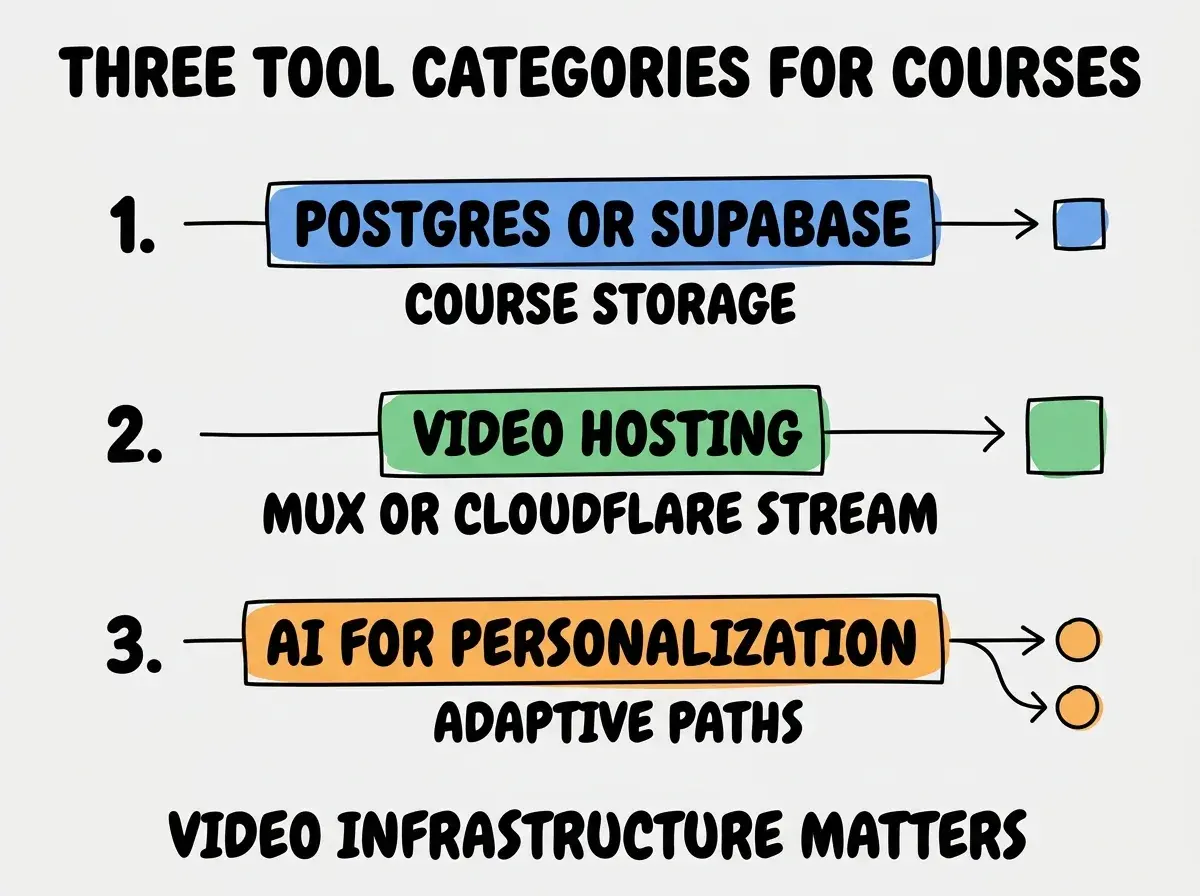
Tool 1, Postgres or Supabase for course storage. Courses, lessons, learner progress, engagement events. Relational data fits naturally.
Tool 2, Mux or Cloudflare Stream for video hosting. Video delivery infrastructure handles the heavy lifting. Custom video infrastructure rarely beats specialized providers.
Tool 3, AI for personalization and adaptive learning paths. Claude or GPT analyzes learner patterns and suggests personalized next steps. Personalization drives engagement that one size fits all cannot.
What Makes Course Platforms Get Sustained Use
Three patterns separate sustained learner engagement from typical drop off.
Pattern 1, content quality matters more than feature breadth. Great content with simple platform beats mediocre content with comprehensive platform. Investment in content quality produces results.
Pattern 2, mobile friendly for learners on the go. Many learners study during commutes or breaks. Mobile design matters; desktop only platforms exclude many learning moments.
Pattern 3, pace flexibility within structure. Self paced learners need flexibility; cohort learners need structure. Platforms supporting both produce more sustained engagement than single approach platforms.
The combination produces platforms learners return to throughout course completion. Without these patterns, platforms produce signups without learning outcomes.
How to Build Your First Course Platform
Three implementation patterns help first course platforms succeed.
Pattern A, start with one course before building general platform. Single course validates the platform with real content. Multi course from day one often produces incomplete platforms.
Pattern B, dogfood with beta cohort before public launch. 10-20 beta learners reveal completion friction. Beta validation catches issues before public launch.
Pattern C, instrument completion funnel from day one. Where do learners drop off. Without instrumentation, completion problems stay hidden.
The combination produces first course platforms that establish completion patterns. Without these patterns, first platforms often launch with low completion rates that affect marketing claims and word of mouth.
The most damaging course platform mistake is treating signup as success metric. High signup with low completion produces vanity metrics without learning outcomes; learners who do not complete rarely return for future courses, and the lack of completion limits word of mouth growth. The fix is to make completion the primary success metric; design platform features around completion rather than signup. Course platforms with high completion produce sustainable businesses; platforms optimized only for signup produce churn.
The other mistake is missing the cohort versus self paced distinction. Cohort courses need synchronous features; self paced courses need asynchronous features. The fix is to be explicit about which model your platform serves.
A third mistake is overengineering quizzes and assessments. Most learning happens through engagement with content rather than quiz completion; complex quiz infrastructure adds friction without proportional learning value. The fix is to use simple completion tracking; quizzes matter less than completion for most courses.
A fourth mistake is failing to handle refunds gracefully. Course refund policies affect learner trust at signup. The fix is to have clear refund policy and easy refund process; clarity drives signup conversion.
A fifth mistake is missing the cohort versus self paced economics. Cohort courses can charge premium prices; self paced courses must scale through volume. The fix is to model your business case for the model you choose; cohort and self paced have different unit economics.
A sixth mistake is failing to support different learner paces. Some learners need encouragement to keep moving; others need permission to slow down. The fix is to support both modes; rigid pacing produces dropout while flexible pacing produces sustained engagement.
What This Means For You
The online course platform built with AI tools becomes valuable through completion focused design, engagement patterns, and quality content. The four phases, engagement patterns, and tool combinations produce platforms that drive sustained learner success.
- If you're a creator: Course platforms can become substantial businesses around your expertise. The platform plus content combination scales income beyond what live teaching can.
- If you're an indie hacker: Course platforms have sustainable business models. Niche course platforms (specific industry, specific skill) often outcompete general platforms in their niches.
- If you're a senior dev: AI tools handle course platform implementation effectively. The bottleneck is content quality and engagement design, not implementation; invest in those areas more than feature breadth.
Browse more education tutorials
Read more build tutorials