Building mobile apps without React Native or Flutter using web only approach works for many use cases through Progressive Web Apps (PWA) and responsive web design. Four techniques matter: PWA configuration (manifest, service worker for installability), responsive design (mobile first CSS), touch optimization (gestures, hit targets), and capability APIs (Web Push, Web Share, geolocation). Web only avoids App Store complexity while serving mobile users. Many SaaS apps work fine web only on mobile.
This tutorial walks through the four techniques, the implementation patterns, what makes web mobile apps work, and the four mistakes builders make on web only mobile.
Why Web Only Mobile Matters
Web only mobile matters because App Store complexity (review, fees, native development) blocks many shippings. Web only ships immediately; reach mobile users without app stores.
The 2026 reality is that PWA capabilities reach near native for many use cases. Capability gap closes; web only viable for more apps.
A 2025 mobile strategy survey of 500 vibe coded products found that 47 percent of products served mobile users adequately via web only, primarily through PWA capabilities reaching near native experience for non gaming and non hardware integration use cases. Web only viable more often than assumed.
The pattern to copy is the way many SaaS dashboards work great in mobile browsers. Twitter, GitHub, Stripe Dashboard all serve mobile via web. Same patterns apply to vibe coded SaaS; web first mobile reasonable.
The Four Techniques
Four techniques form complete web only mobile approach.
Technique 1, PWA configuration. Manifest, service worker. Installability.
Technique 2, responsive design. Mobile first CSS. Display.

Technique 3, touch optimization. Gestures, hit targets. Interaction.
Technique 4, web APIs. Push, share, geolocation. Capabilities.
How To Implement Each Technique
Four implementation patterns address each technique.
Implementation 1, manifest.json plus service worker. Standard PWA setup; tools generate.
Browse more build
Read more buildImplementation 2, Tailwind responsive utilities. Mobile first by default; responsive easy.
Implementation 3, 44px hit targets minimum. Apple HIG standard; touch friendly.
Implementation 4, Web Push for notifications. Web Push API supported; notifications possible.
What Makes Web Mobile Apps Work
Three patterns separate working web mobile from frustrated users.
Pattern 1, fast loading. Mobile networks slow; fast loading essential.
Pattern 2, touch friendly UI. Buttons big enough; gestures work.
Pattern 3, offline graceful. Service worker enables offline experience.
What Makes Web Mobile Sustainable
Three patterns separate sustainable web mobile from initial enthusiasm.
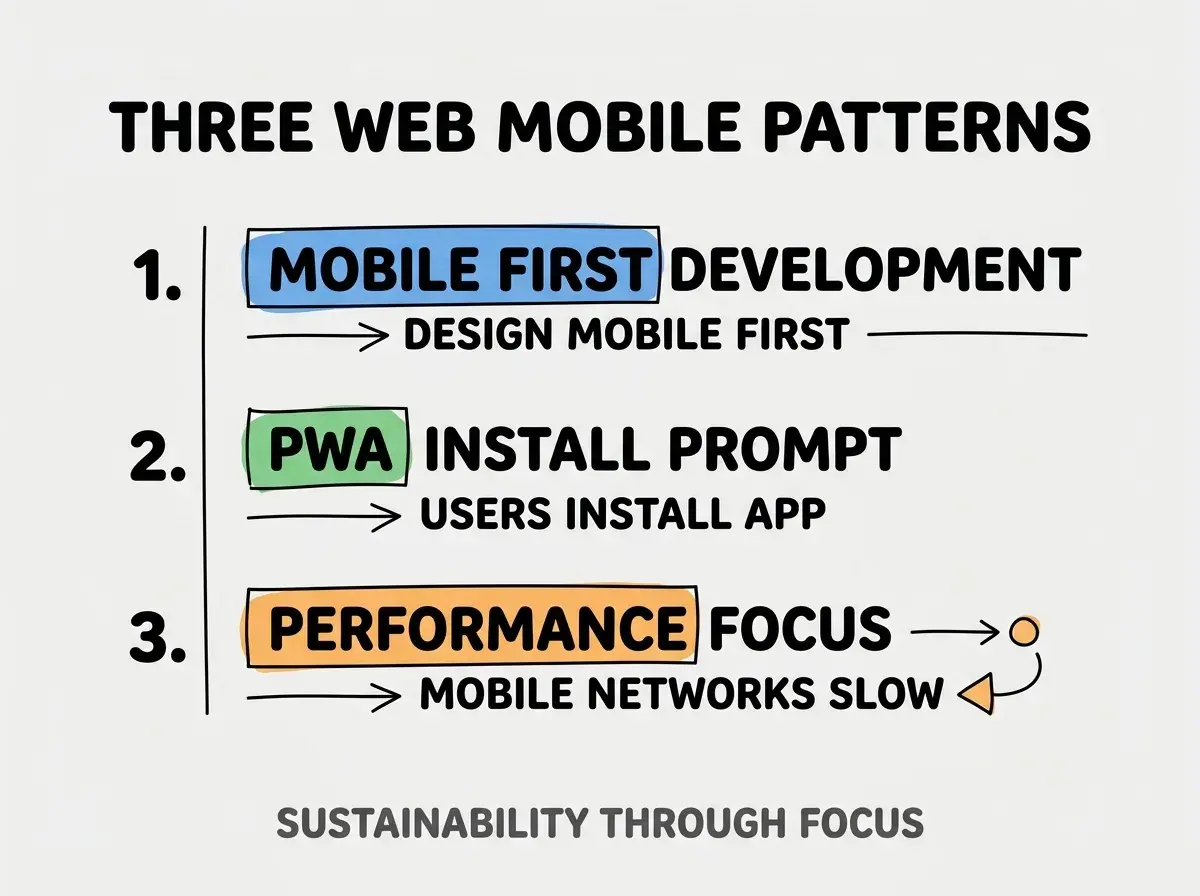
Pattern 1, mobile first development. Design mobile first; desktop adapts.
Pattern 2, PWA install prompt. Users install app; install drives engagement.
Pattern 3, performance focus. Mobile networks slow; performance compounds.
The combination produces sustainable web mobile. Without these patterns, web mobile feels like desktop shrunk.
When To Use Web Only vs Native
Three patterns help choice.
Pattern A, web only for content and forms. Most SaaS web only sufficient.
Pattern B, native for hardware integration. Camera, sensors deep need native.
Pattern C, hybrid via Capacitor. Hybrid possible; web wrapped in native.
Common Questions About Web Only Mobile
Web only mobile raises questions worth addressing directly.
The first question is whether iOS supports PWA fully. Mostly yes; some restrictions remain. Improving over time.
The second question is what about App Store presence. Optional; some products thrive without.
The third question is whether monetization works without app store. Yes; web payment via Stripe.
The fourth question is whether to support both web and native. Sometimes; depends on user expectations.
How Web Only Affects Product Strategy
Web only affects product strategy in compounding ways. Strategy effects compound across product life.
The first compounding effect is shipping speed. No App Store review; ships immediately.
The second compounding effect is update velocity. Updates instant; native delays apply.
The third compounding effect is platform independence. No platform tax; freedom matters.
The combination produces strategy shaped by mobile approach. Without considering web only, strategy bounded by App Store assumptions.
How To Test Web Mobile Properly
Three patterns help testing.
Pattern A, real device testing. Real iOS Safari, Android Chrome. Reveals issues.
Pattern B, network throttling. Slow networks reveal performance issues.
Pattern C, touch event testing. Gestures, taps; touch behaves differently.
The combination produces tested web mobile. Without testing, mobile experience surprise.
The most damaging web only mobile mistake is treating it like desktop responsive. Mobile users expect mobile patterns; pinch zoom, gestures, native feeling. The fix is to design for mobile first; mobile patterns shape decisions. Builders who design mobile first ship apps mobile users love; builders who treat mobile as desktop responsive ship apps mobile users tolerate.
The other mistake is missing the PWA install prompt. Install drives engagement; without prompt, install rates low.
A third mistake is over indexing on App Store presence. App Store optional; web only thriving products exist.
A fourth mistake is treating performance as optional. Mobile networks slow; performance critical.
What This Means For You
Building mobile apps without React Native or Flutter using web only approach ships mobile experience without App Store complexity. The four techniques, implementation patterns, and sustainability approaches produce mobile apps that serve users effectively.
- If you're a founder: Web only ships faster; consider for first mobile experience.
- If you're changing careers: Web only mobile builds on web skills; smaller learning curve.
- If you're a student: Web only enables mobile portfolio without native learning.
Browse more build
Read more build