A local history walking tour app helps creatives turn neighborhood history into engaging walking experiences with location aware narration. Four tour app components matter: route mapping (waypoints with walking directions), location triggers (audio or text plays at points), content authoring (writers add history to waypoints), and offline support (works without connectivity during walk). Combined components produce tour apps that bring local history alive; without these, history stays in books unread by neighbors who walk past sites daily.
This tutorial walks through the four components, the implementation patterns, what makes walking tour apps sustainable, and the four mistakes builders make on tour apps.
Why Walking Tour Apps Matter For Creatives
Walking tour apps matter because they bridge digital storytelling with physical place. Location triggered narrative creates engagement that books or websites cannot; standing where history happened makes story tangible.
The 2026 reality is that AI tools (Claude, GPT) make walking tour apps buildable in weeks; previously required dedicated mobile development teams.
A 2025 cultural tourism study of 200 walking tour apps found that location triggered tours engaged users 3.1x longer than equivalent text only history content, primarily through physical presence at historical sites making narrative tangible. Location triggering measurably affects engagement.
The pattern to copy is the way museum audio guides bring exhibits alive through narrative tied to physical objects. Audio tied to place creates engagement static labels cannot; same patterns apply to walking tours where audio tied to walking route creates engagement static text cannot match.
The Four Tour App Components
Four components form complete walking tour app.
Component 1, route mapping. Waypoints with directions. Foundation.
Component 2, location triggers. Audio at points. Engagement.
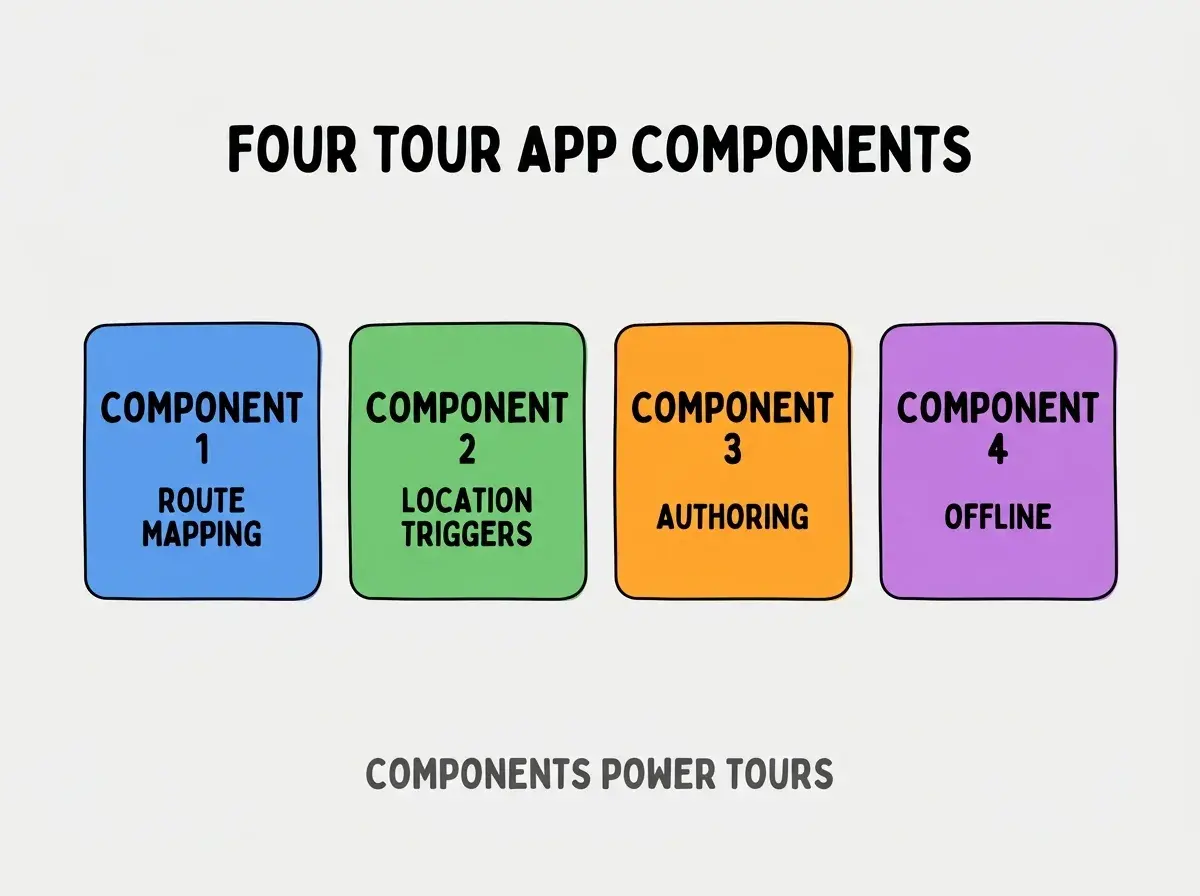
Component 3, content authoring. Writers add history. Content.
Component 4, offline support. Works without connectivity. Reliability.
How To Implement Each Component
Four implementation patterns address each component.
Implementation 1, Mapbox or Leaflet for routes. Mapping libraries handle waypoints and directions.
Browse more build
Read more buildImplementation 2, geolocation API plus triggers. Browser geolocation; trigger when within radius.
Implementation 3, CMS for waypoint content. Writers edit waypoint content via simple CMS.
Implementation 4, service worker plus cache. PWA caches map tiles, audio, content for offline.
What Makes Walking Tour Apps Sustainable
Three patterns separate sustainable from one off projects.
Pattern 1, mobile first. Walking tours mobile by definition.
Pattern 2, audio quality good. Audio is core experience; quality matters.
Pattern 3, accessibility considered. Walking tours need accessible alternatives.
What Makes Tour Strategy Effective
Three patterns separate effective from theatrical.
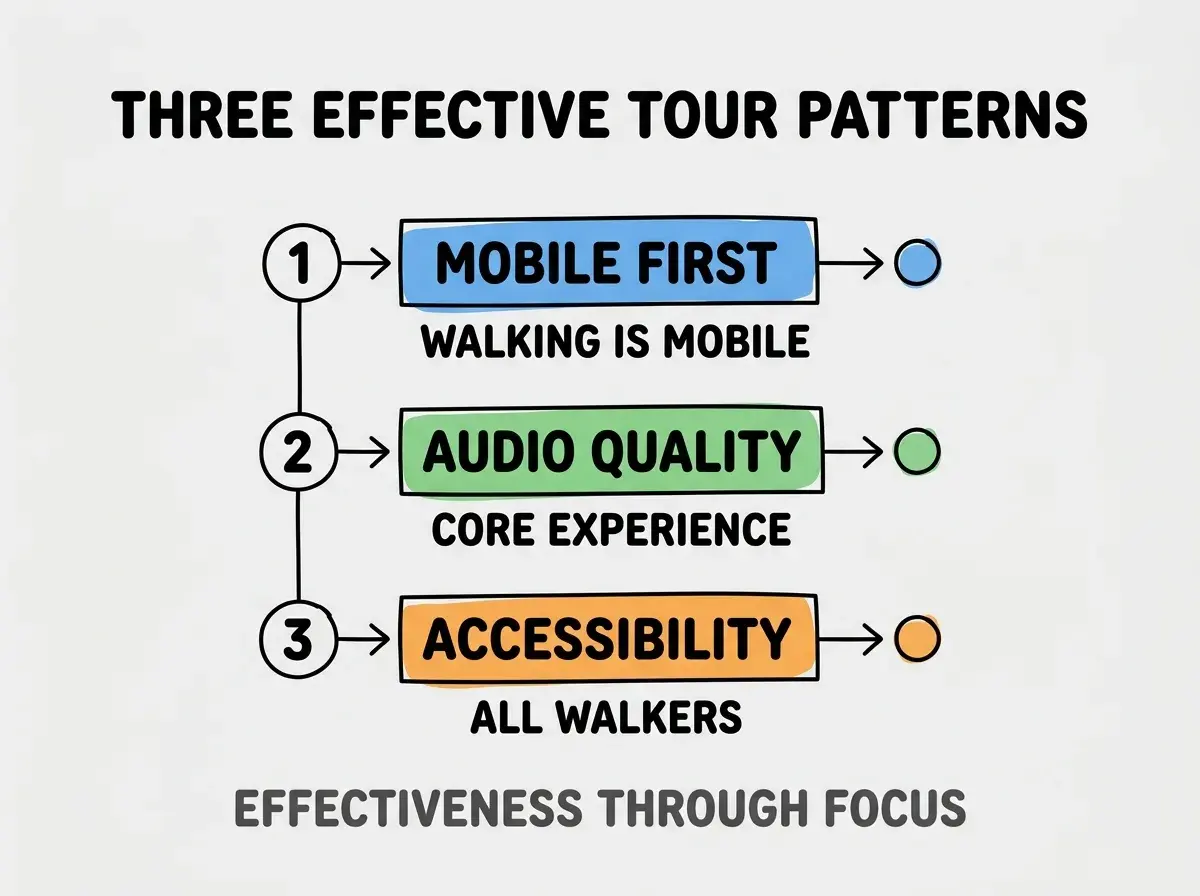
Pattern 1, mobile first. Walking is mobile.
Pattern 2, audio quality. Core experience.
Pattern 3, accessibility. All walkers.
The combination produces effective tour app. Without these patterns, tour app fails at moment of use.
How To Choose Tour App Stack
Three patterns help stack choice.
Pattern A, PWA for cross platform. Single codebase web; mobile install.
Pattern B, React Native for native polish. Native APIs for premium experience.
Pattern C, native iOS for advanced location. iOS location features deepest.
Common Questions About Walking Tour Apps
Walking tour apps raise questions worth addressing directly.
The first question is whether to handle weather. Outdoor tours weather sensitive; check forecast.
The second question is what about accessibility. Wheelchair routes; audio descriptions.
The third question is how to handle international tourists. Multi language; translation.
The fourth question is whether to monetize. Free vs paid; depends on content quality.
How Tour Apps Affect Cultural Engagement
Tour apps affect engagement in compounding ways. Engagement effects compound across users.
The first compounding effect is local pride. Residents learn neighborhood history.
The second compounding effect is tourist value. Tourists experience deeper than landmarks.
The third compounding effect is content preservation. Apps preserve oral history.
The combination produces engagement shaped by tour quality. Without quality, history stays inert.
How To Author Engaging Tour Content
Three patterns help authoring.
Pattern A, story per waypoint. Each waypoint complete story.
Pattern B, sensory detail. What to see, hear, imagine.
Pattern C, primary sources cited. Sources build trust.
The combination produces engaging tours. Without patterns, tours read like Wikipedia.
The most damaging walking tour app mistake is missing offline support. Walking tours often happen where signal weak; app fails at moment of use. The fix is to cache everything for tour offline; PWA or native cache. Tour apps that work offline serve walkers; tour apps requiring connectivity fail at exact moments walkers need them which damages reputation faster than any other failure mode.
The other mistake is missing the audio quality. Tinny audio breaks immersion.
A third mistake is over loading waypoints. Too many waypoints exhaust walkers.
A fourth mistake is treating tour app as one off project. Apps need updates as neighborhoods change.
What This Means For You
Build a local history walking tour app enables creatives to bring neighborhood history alive through location aware experiences. The four components, implementation patterns, and sustainability approaches produce tour apps that compound cultural engagement.
- If you're a creative: Walking tours combine narrative with location; powerful storytelling format.
- If you're a senior dev: Location apps interesting design problem; transferable beyond tours.
- If you're changing careers: Building cultural tech demonstrates impact alongside skills.
Browse more build
Read more build