Build an interactive story choose your own adventure with four components that handle branching narrative, state, presentation, and authoring. Four story components matter: branching engine (track which path reader chose), state management (carry inventory, relationships across scenes), scene rendering (text plus choices presentation), and authoring tool (writers create stories without coding). Combined components produce interactive stories writers can build; without these, every story requires custom code that limits writer participation.
This tutorial walks through the four components, the implementation patterns, what makes interactive stories sustainable, and the four mistakes builders make on interactive story platforms.
Why Interactive Stories Matter
Interactive stories matter because they engage readers as participants rather than passive consumers. Choice based narrative produces deeper engagement than linear; readers reread to explore alternate paths.
The 2026 reality is that AI tools (Claude, GPT) make interactive story platforms buildable in days; writers no longer need programmer collaboration to build interactive narratives.
A 2025 interactive fiction study of 300 platforms found that interactive stories with branching choices retained readers 2.7x longer than equivalent linear stories, primarily through agency keeping readers invested in outcomes their choices shape. Interactivity measurably affects engagement.
The pattern to copy is the way game designers think about player agency. Choices that matter create investment; same patterns apply to interactive fiction where reader choices shape outcome create investment that linear narrative cannot match.
The Four Story Components
Four components form complete interactive story platform.
Component 1, branching engine. Track chosen path. Foundation.
Component 2, state management. Inventory, relationships. Memory.
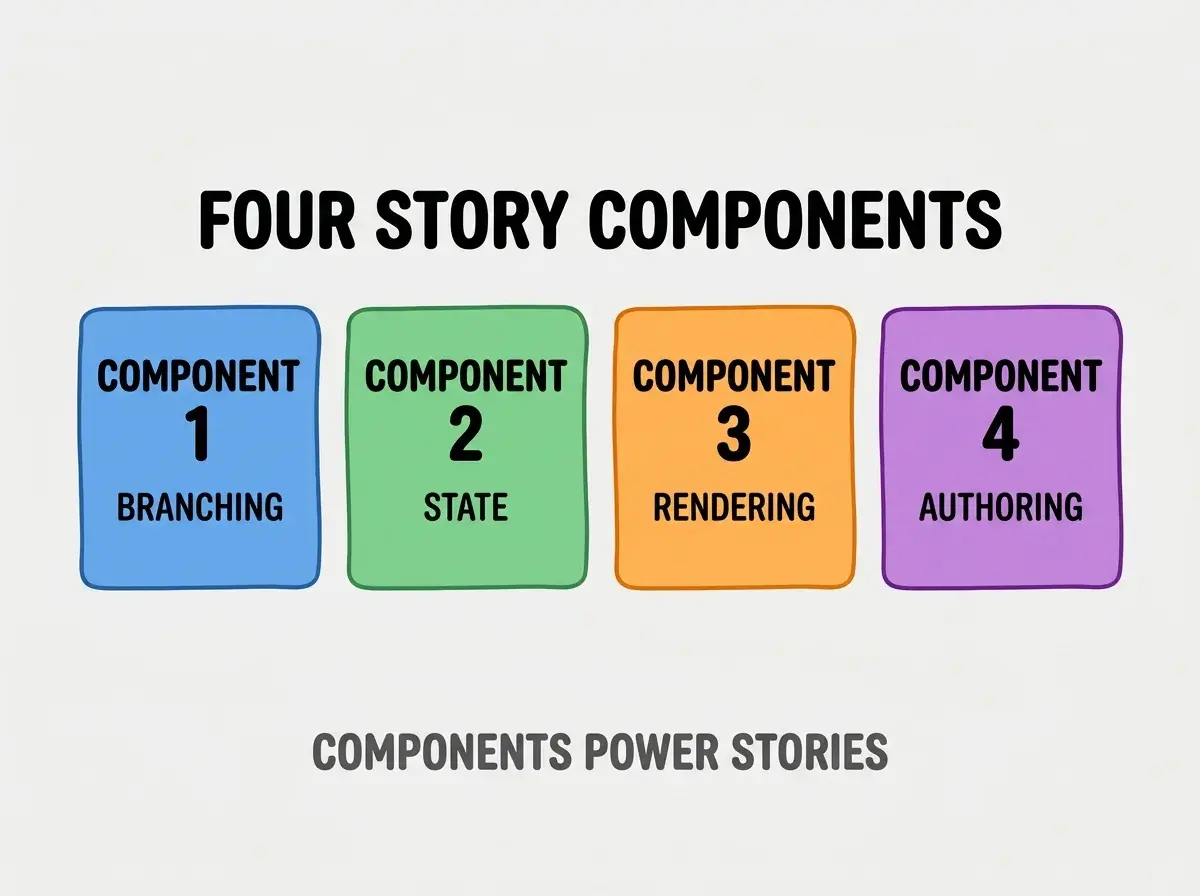
Component 3, scene rendering. Text plus choices. Presentation.
Component 4, authoring tool. Writers create without code. Accessibility.
How To Implement Each Component
Four implementation patterns address each component.
Implementation 1, scene graph data structure. Scenes as nodes; choices as edges; traversal tracks path.
Browse more build
Read more buildImplementation 2, state object passed through scenes. Inventory, flags, relationships in object; each scene reads and writes.
Implementation 3, scene component with text and buttons. Standard React component pattern; styling per story.
Implementation 4, authoring with Inkle Ink or custom DSL. Ink format proven; or custom DSL for specific needs.
What Makes Interactive Stories Sustainable
Three patterns separate sustainable from one off projects.
Pattern 1, story format reusable. Story format works across platform; not coupled to one.
Pattern 2, save and resume. Reader returns; state preserved.
Pattern 3, mobile responsive. Stories read on mobile; design accordingly.
What Makes Story Strategy Effective
Three patterns separate effective from theatrical.
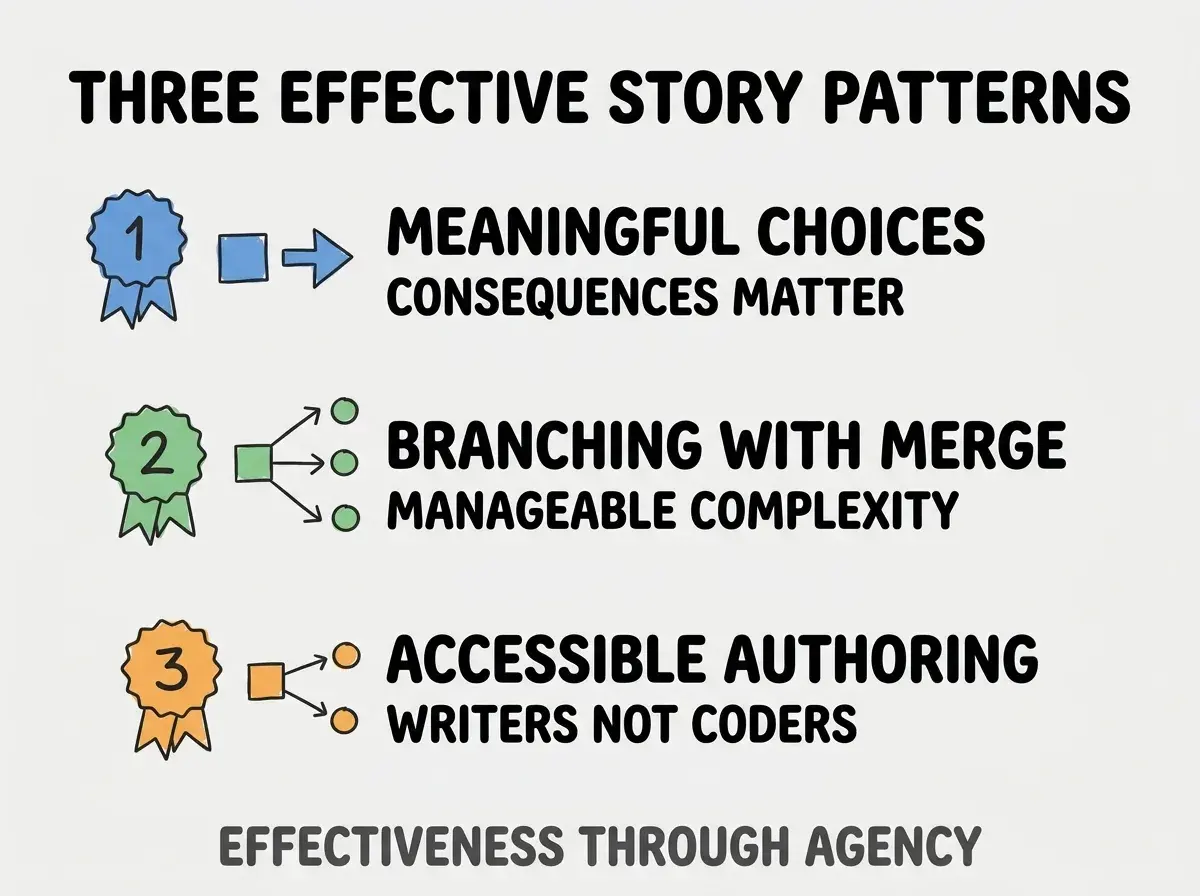
Pattern 1, meaningful choices. Consequences matter.
Pattern 2, branching with merge. Manageable complexity.
Pattern 3, accessible authoring. Writers not coders.
The combination produces effective story platform. Without these patterns, stories underwhelm.
How To Choose Story Stack
Three patterns help stack choice.
Pattern A, Twine for hobbyist. Twine standard for indie interactive fiction.
Pattern B, Ink plus React for custom. Ink scripting language plus custom presentation.
Pattern C, custom for unique needs. When format doesn't fit, custom.
Common Questions About Interactive Stories
Interactive stories raise questions worth addressing directly.
The first question is how to manage branching explosion. Merge branches; not every choice produces unique downstream.
The second question is whether AI can generate stories. AI helps draft; humans validate quality and pacing.
The third question is what about multiplayer stories. Possible; complexity grows fast.
The fourth question is how to measure story success. Reader completion, replay, sharing as signals.
How Interactive Stories Affect Reader Engagement
Interactive stories affect engagement in compounding ways. Engagement effects compound across reads.
The first compounding effect is depth of investment. Choices invest reader.
The second compounding effect is replay rate. Alternate paths drive replays.
The third compounding effect is sharing. Personal choices shared with friends.
The combination produces engagement shaped by interactivity quality. Without quality, engagement bounded.
How To Test Interactive Stories
Three patterns help testing.
Pattern A, all paths explored. Coverage check; no orphan scenes.
Pattern B, beta readers. Readers find issues writers miss.
Pattern C, analytics on choices. Which choices popular; informs next story.
The combination produces tested stories. Without testing, paths broken in production.
The most damaging interactive story mistake is illusion of choice. When choices don't matter (all lead same place), readers detect; engagement collapses. The fix is to make choices have consequences; even subtle ones reader notices. Stories with meaningful choices retain readers; stories with fake choices feel manipulative which damages trust faster than no choice at all because expectations were raised.
The other mistake is missing the merge points. Pure branching produces exponential paths impossible to write.
A third mistake is over engineering authoring. Writers want simple; complex tools fail adoption.
A fourth mistake is treating stories as one off. Stories are content library; platform serves many.
What This Means For You
Build an interactive story choose your own adventure enables writers to create branching narratives that engage readers as participants. The four components, implementation patterns, and sustainability approaches produce platforms that compound creative output.
- If you're a creative: Interactive story platforms enable craft; build for your specific narrative needs.
- If you're a senior dev: Story engines interesting design problem; transferable to game dialogue, training simulations.
- If you're changing careers: Interactive fiction building demonstrates narrative tech; valuable creative tech signal.
Browse more build
Read more build