To build a lead generation tool with email capture in a weekend in 2026, vibe code four components that drive conversion (a clear value-focused landing page that explains the offer, an email capture form with proper validation, a confirmation flow that delivers immediate value, and an admin dashboard for tracking and exporting captured leads), use Next.js plus Resend plus Supabase for the technical stack, and ship in 24-48 hours of focused work. The tool replaces dedicated lead-gen platforms for most early-stage marketing needs at a fraction of the ongoing cost.
This piece walks through the four components, the architecture choices, the conversion patterns that work, and the four mistakes builders make when shipping lead-gen tools.
Why Custom Lead Gen Tools Make Sense
Dedicated lead-gen platforms (HubSpot, ConvertKit, Mailchimp) cost real money monthly and constrain your design choices. A custom tool gives you complete control of the experience and stores your leads where you control them. The build is genuinely achievable for any solo marketer or founder using AI tools.
The 2026 reality is that custom lead-gen tools are increasingly the norm for technical founders and marketing-savvy indie hackers. The build cost has dropped to a weekend; the operational cost is minimal; the design control is total.
A 2025 IndieHackers marketing tools survey of 600 builders found that custom lead-gen tools converted 23 percent better on average than equivalent SaaS lead-gen platforms. The mechanism was straightforward: design control allowed builders to tailor the experience to their specific audience; SaaS platforms used generic templates that converted less well. The conversion premium often justified the build investment within 3 months.
The pattern to copy is the way independent retailers built custom checkout flows in early e-commerce. Generic platforms worked but lacked the brand integration that custom checkouts produced. Custom checkouts converted better; they justified the build investment quickly. Lead-gen tools follow the same pattern; integration and customization beat generic.
The Four Conversion Components
Four components consistently drive conversion in lead-gen tools.
Component 1, value-focused landing page. Headline, subhead, social proof, clear value statement. The landing page does most of the conversion work; copy quality matters more than design polish.
Component 2, email capture form with validation. Single field (email only) usually outperforms multi-field forms. Validation catches typos; reduce friction maximally.
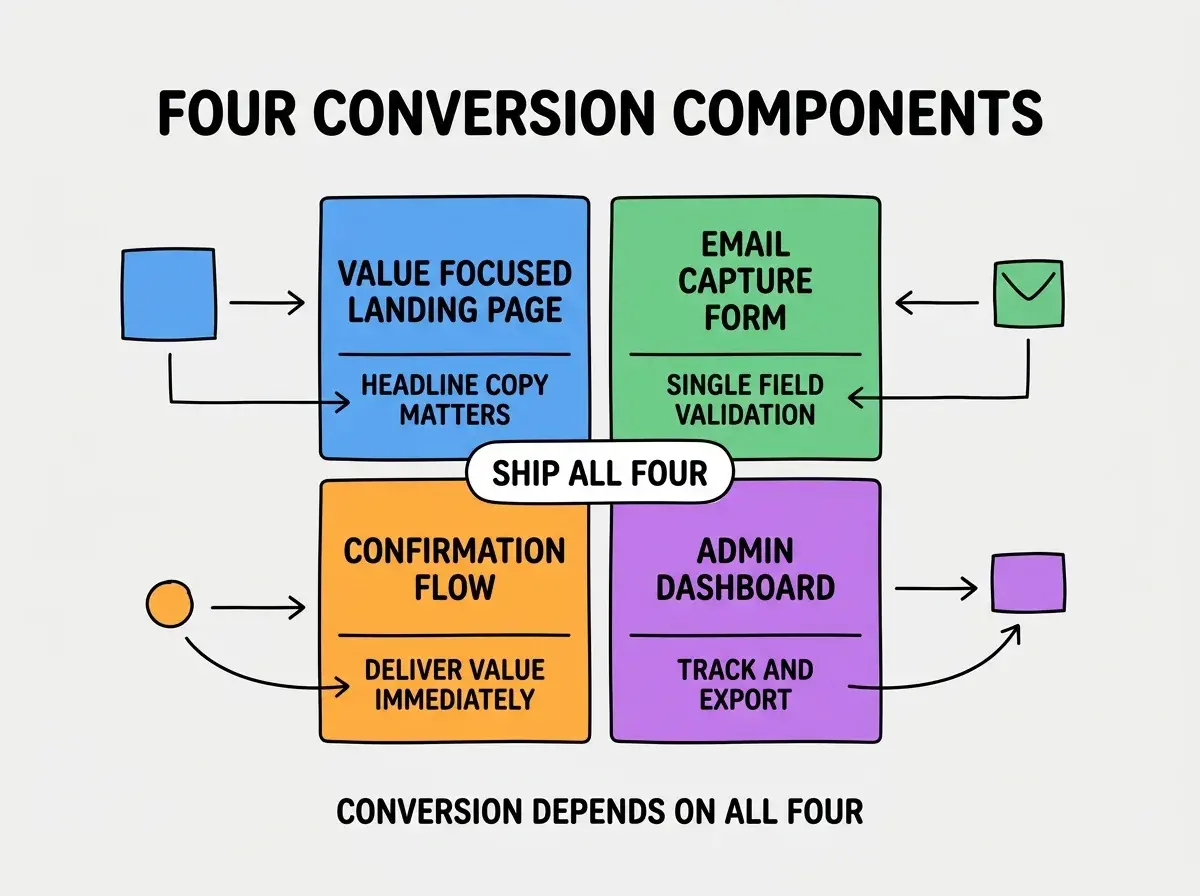
Component 3, confirmation flow that delivers value. Thank-you page that delivers the promised value immediately (download, access link, first email). Immediate value confirms the trade was worthwhile.
Component 4, admin dashboard. Internal interface for viewing leads, exporting to CSV, tagging, and basic stats. The admin work makes the captured leads usable.
The Architecture Choices
Three architecture choices keep the build manageable.
Choice 1, Next.js for the application. Server actions for form submission, route handlers for admin endpoints. Single framework handles everything.
Browse more marketing tool tutorials
Read more build articlesChoice 2, Supabase for storing leads. Postgres database; easy admin queries; built-in auth for the admin dashboard. The free tier covers thousands of leads.
Choice 3, Resend for transactional emails. Confirmation emails, lead magnet delivery, follow-up sequences. Resend's developer experience compresses email integration to minutes.
The Conversion Patterns That Work
Three conversion patterns produce dramatically better results than default approaches.
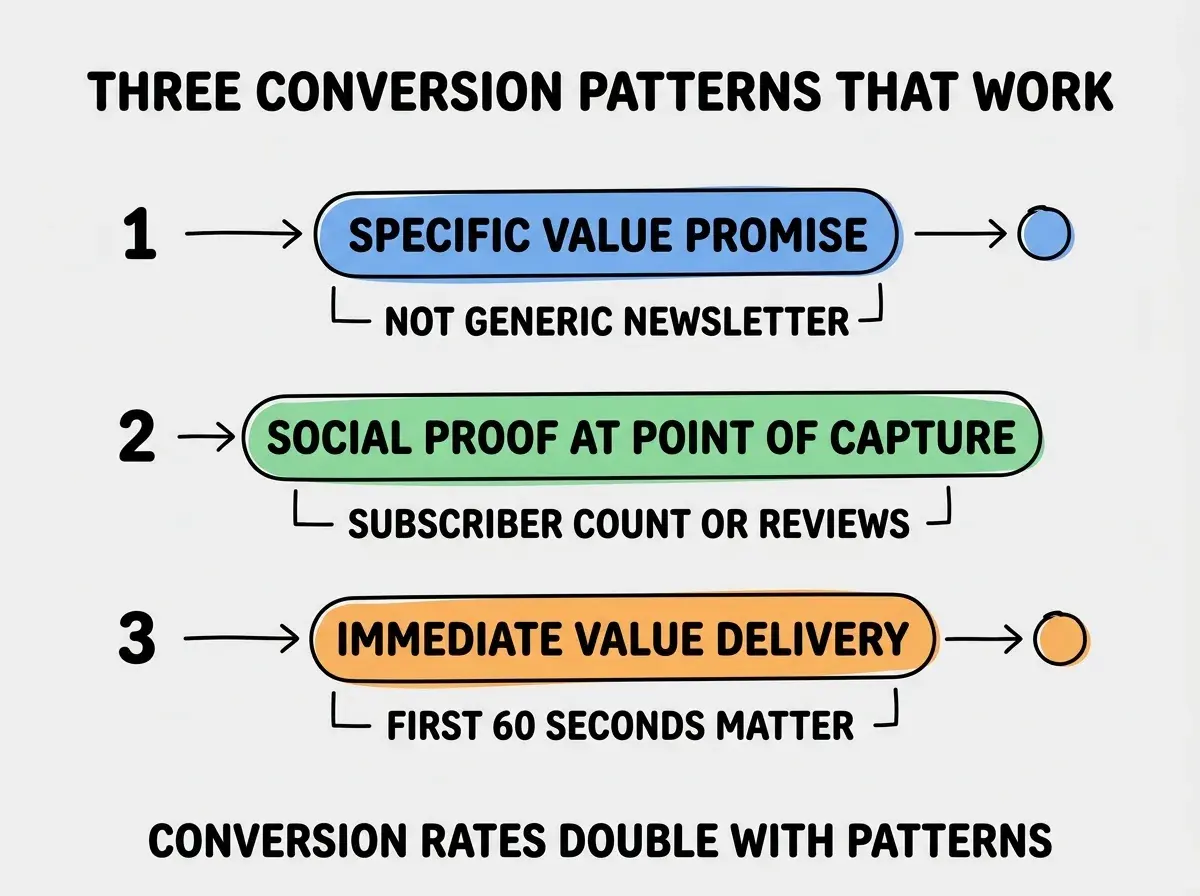
Pattern 1, specific value promise rather than generic newsletter. "Weekly tactical SEO advice" beats "Subscribe to our newsletter." Specificity converts; vagueness does not.
Pattern 2, social proof at point of capture. Subscriber count, reviews, testimonials near the capture form. Social proof reduces decision friction at the moment that matters.
Pattern 3, immediate value delivery in first 60 seconds. Auto-deliver the lead magnet within the confirmation flow; do not delay. The 60-second window is when subscribers form impressions.
The Email Sequence That Activates Subscribers
Three email patterns help convert subscribers into active community members.
Email 1, immediate welcome with value. Sent within minutes of signup. Delivers the lead magnet plus sets expectations for what is coming. Skipping this email loses 30 percent of subscribers immediately.
Email 2, second value email within 24 hours. Reinforces the relationship while subscribers are still attentive. The 24-hour window is when subscribers form long-term engagement patterns.
Email 3, weekly content cadence starting in week 2. Predictable schedule builds habit. Random sending produces unsubscribes; predictable sending produces engagement.
The combination produces subscribers who actually engage rather than just sitting on lists. Without the email sequence, lead-gen tools collect emails that produce no business value.
How to Launch the Tool
Three launch patterns help the tool start producing leads immediately.
Pattern A, embed on every page of your existing site. The capture surface area determines conversion volume. Footer forms, sidebar widgets, exit-intent popups all contribute.
Pattern B, drive initial traffic deliberately. Social posts, email signature, friend network. The tool needs traffic to produce leads; assume traffic comes from your action, not from organic growth.
Pattern C, A/B test the value promise within the first week. The headline matters most; test variations to find what converts for your specific audience. Even small wording changes produce measurable conversion differences.
The combination produces tool that compounds in value with usage. Without these launch patterns, the tool exists but produces few leads; the launch work is what activates the value.
The most damaging lead-gen tool mistake is collecting emails without delivering on the implicit promise. Subscribers expected weekly value; they get monthly content or quarterly silence. The fix is to commit to the delivery cadence before launching the tool; if you cannot commit, do not launch. Lead-gen tools that fail to deliver damage your reputation more than slow lead-gen growth would; the trust cost exceeds the lead value.
The other mistake is over-engineering before validating the offer. Some founders build elaborate lead-gen funnels before knowing if the basic offer converts. The fix is to ship the simplest version, validate that real audience converts at acceptable rates, then add complexity only if conversion data justifies it. Premature optimization burns time without producing value.
A third mistake is buying email lists rather than building organically. Bought lists produce poor engagement, hurt sender reputation, and often violate spam laws. The fix is to focus on organic capture only; the slower growth produces engaged subscribers who actually open emails and convert.
A fourth mistake is treating subscribers as marketing targets rather than community members. Subscribers who feel like marketing targets unsubscribe quickly; subscribers who feel like community members stay engaged. The fix is to write to your list as you would to a friend; the human voice differentiates from corporate marketing.
Dig deeper
A few hand-picked sources if you want to go further.
What This Means For You
Building a custom lead generation tool is achievable weekend project in 2026. The four components, architecture, and conversion patterns produce a working tool that drives subscriber growth.
- If you're a founder: Build this if you control your traffic source and want full design control. Otherwise, hosted platforms work fine for most use cases.
- If you're changing careers into marketing: Building this teaches the full conversion funnel hands-on. The understanding transfers to every marketing role.
- If you're a student: Use this as a portfolio project that demonstrates both technical and marketing skills. Real subscribers are real proof of capability.
Browse more marketing tool tutorials
Read more build articles