To build a file sharing platform with upload and preview using AI tools, follow the four phase approach (define what file types and sharing patterns the platform must support, build the storage and access control that handles files securely, design the preview generation that lets users see files without downloading, and ship with the sharing patterns that make collaboration easy), recognize what separates file sharing platforms users adopt from platforms users abandon for established alternatives, and apply the patterns that produce sustained value. The file sharing platform becomes valuable when sharing is faster than email attachments while previews reduce download friction; without both, established alternatives win.
This piece walks through the four phases, the sharing patterns, the specific tooling, and the four mistakes that produce file sharing platforms users abandon.
Why File Sharing Platforms Matter
File sharing platforms turn fragmented file delivery into structured collaboration. The transformation matters; without platforms, files get shared through email attachments that limit size, get lost in inbox archives, and produce versioning chaos when multiple people edit. Platforms produce structured sharing that ad hoc email cannot match.
The 2026 reality is that AI tools dramatically accelerate file platform building while AI integration during file handling can extract content from various formats, summarize documents, and detect security issues faster than manual review. The combination means small teams can build file platforms matching what enterprises previously required as expensive collaboration suites.
A 2025 collaboration tools survey of 800 mid sized teams found that teams using purpose built file sharing platforms reduced version control errors by 53 percent and saved an average of 12 minutes per teammate per day on file management compared to email attachment workflows. The structure produces both accuracy and efficiency improvements.
The pattern to copy is the way library systems organized book lending. Libraries replaced random book passing with structured tracking; the structure produced accountability and efficiency that random sharing cannot match. File sharing platforms play similar role for digital files; structured sharing produces collaboration efficiency.
The Four Phase Approach
Four phases produce file sharing platforms users adopt.
Phase 1, define what file types and sharing patterns the platform must support. Documents, images, videos, code. Public, private, team based sharing. Defined scope determines architecture choices.
Phase 2, build the storage and access control that handles files securely. Object storage, signed URLs, permission system, audit trail. AI tools generate the storage code effectively given clear specifications.
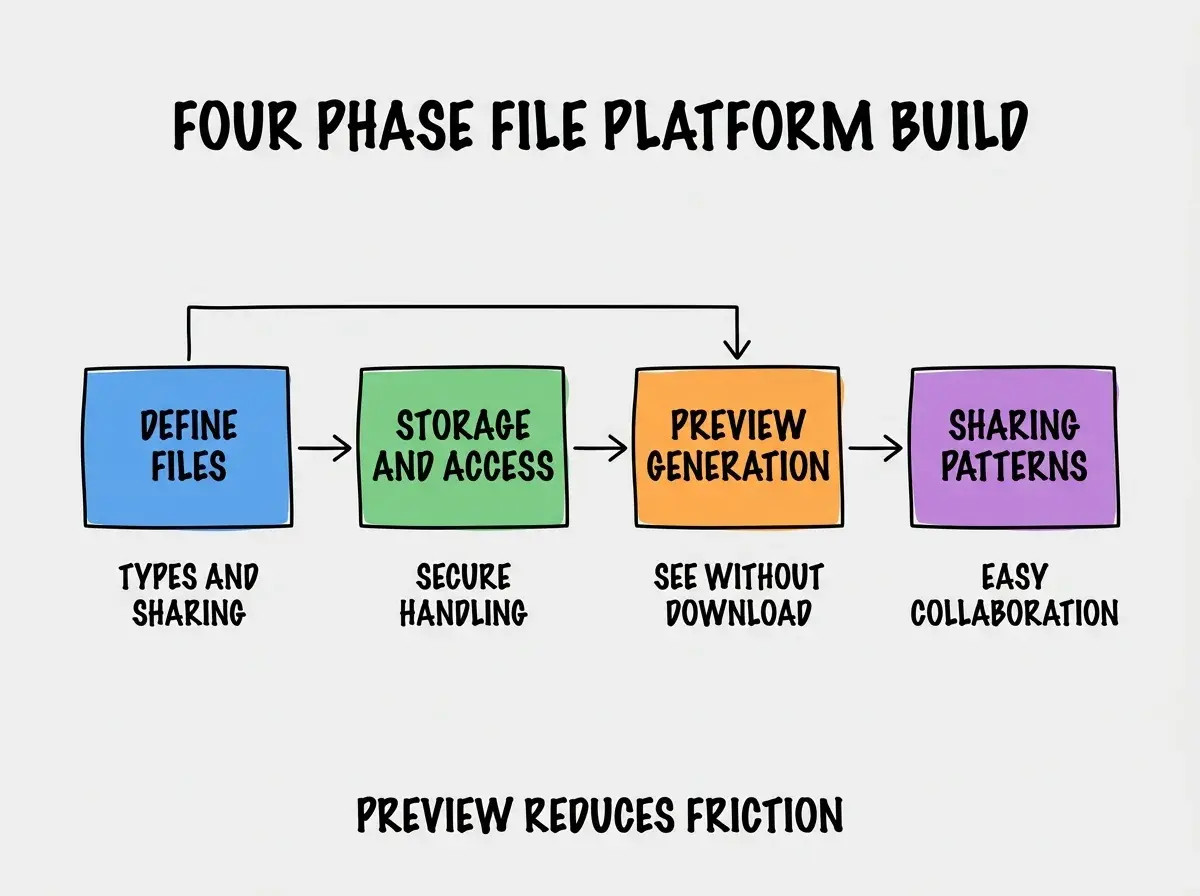
Phase 3, design the preview generation that lets users see files without downloading. Image previews, document rendering, video thumbnails, code syntax highlighting. Preview reduces friction; without preview, users download to view, increasing time and bandwidth.
Phase 4, ship with sharing patterns that make collaboration easy. Link sharing, expiry options, comment threads, version history. Sharing patterns determine collaboration quality; clunky sharing produces fallback to email.
The Sharing Patterns That Produce Adoption
Three patterns produce sharing that users adopt over alternatives.
Pattern 1, link sharing without account creation requirement for recipients. Recipients clicking links should view files without signing up. Required signup produces abandoned shares.
Browse more developer tool tutorials
Read more build tutorialsPattern 2, granular permissions for different stakeholder types. View only, comment, edit, admin. Granular permissions match real collaboration patterns; binary share or do not share rarely matches needs.
Pattern 3, expiring links for sensitive content. Time limited or view limited links for sensitive sharing. Expiry provides security that permanent links cannot.
The Specific Tooling That Worked
Three tool categories combine effectively for file platform building.
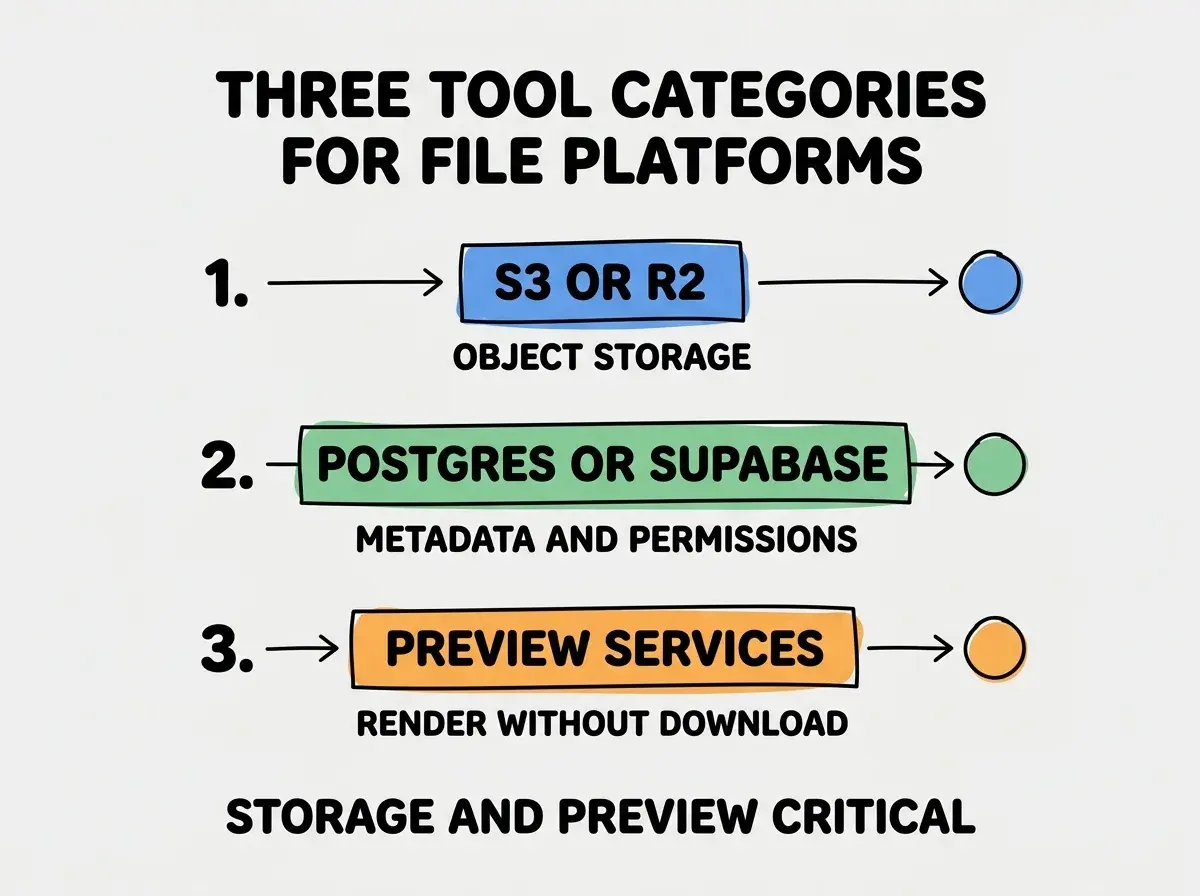
Tool 1, S3 or R2 for object storage. AWS S3 or Cloudflare R2 for file storage. Object storage handles files at scale that database storage cannot.
Tool 2, Postgres or Supabase for metadata and permissions. File metadata, sharing permissions, audit trail. Relational data fits naturally for the metadata layer.
Tool 3, preview services for rendering without download. Cloudinary for images, custom services for documents. Preview infrastructure determines user experience quality.
What Makes File Platforms Get Sustained Use
Three patterns separate sustained file platform use from abandonment.
Pattern 1, faster than email attachments for common operations. If platform is slower than email for sharing, users default to email. Speed determines daily use frequency.
Pattern 2, integration with where users already work. Slack, Teams, browser based. Standalone platforms see less use than integrated platforms. Integration produces use; isolation produces abandonment.
Pattern 3, reliable upload and download under various network conditions. Mobile, slow connections, large files all need handling. Reliability determines whether platforms survive network variability.
The combination produces file platforms users return to. Without these patterns, platforms get tried then abandoned for established alternatives.
How to Build Your First File Platform
Three implementation patterns help first file platforms succeed.
Pattern A, start with one file type, not all file types. Documents first or images first. Single type validates the pattern. Multi type from day one often produces incomplete handling.
Pattern B, dogfood with internal team for 4 weeks. Internal use reveals usability issues before external exposure. Internal validation catches problems while they remain fixable.
Pattern C, instrument upload success rate and preview load time. Without instrumentation, performance problems stay hidden until they affect adoption. Instrumentation enables fixing problems before they hurt growth.
The combination produces first file platforms that establish credibility for sustained use. Without these patterns, first platforms often launch with friction that destroys adoption potential.
The most damaging file platform mistake is treating preview as nice to have rather than core feature. Without preview, users download every file to view, defeating the platform value over email attachments. The fix is to invest in preview from day one for the file types your platform supports; preview is the differentiation that makes platforms preferable to email. Files behind download walls produce email like behavior; files with rich preview produce platform native behavior.
The other mistake is missing access control granularity. Binary share or do not share misses real collaboration patterns. The fix is to build granular permissions from the start; granular permissions match real needs.
A third mistake is failing to handle large file uploads gracefully. Large files require resumable uploads, progress indicators, and failure recovery. The fix is to design for large files from start; small file only platforms exclude important use cases.
A fourth mistake is ignoring file versioning. Files get edited; without versioning, edits create confusion about which version is current. The fix is to build versioning from the start; versioning matters for collaborative file use.
What This Means For You
The file sharing platform with upload and preview built using AI tools becomes valuable through fast preview, granular permissions, and integration with existing workflows. The four phases, sharing patterns, and tool combinations produce platforms users adopt over established alternatives.
- If you're a senior dev: File platforms compete with established tools like Google Drive and Dropbox. Differentiate through specific use case fit rather than competing on general features; niche platforms outcompete general platforms in specific niches.
- If you're an indie hacker: File platforms can become sustainable businesses through niche focus. Industry specific or use case specific file platforms often outcompete general alternatives in their niches.
- If you're a founder: File handling is core infrastructure for most products. Build it well from start; clunky file handling affects all subsequent feature development.
Browse more developer tool tutorials
Read more build tutorials