To build a changelog and release notes page with AI tools, follow the four phase approach (define what changes belong in the changelog and what does not, build the entry data model that supports filtering and search, design the writing patterns that make entries readable, and ship with the publishing patterns that produce sustained updates), recognize what separates changelogs that get read from changelogs that get ignored, and apply the patterns that produce changelog readers return to. The changelog becomes valuable when readers genuinely care about updates; the caring depends on writing quality and update frequency.
This piece walks through the four phases, the entry writing patterns, the specific tooling, and the four mistakes that produce changelogs no one reads.
Why Changelogs and Release Notes Matter
Changelogs and release notes communicate product evolution to users. The communication matters; users who do not know about new features cannot use them, and users who do not see active development lose confidence in product longevity.
The 2026 reality is that AI tools dramatically accelerate changelog building while AI integration during entry writing can draft entries from commit history. The combination means even small teams can maintain professional changelogs matching what enterprise products historically required dedicated technical writers for.
A 2025 SaaS retention study of 800 products found that products with active changelogs (weekly updates or more frequent) had 18 percent higher user retention than products with infrequent changelog updates. The correlation suggests changelog discipline signals product health to users; products without visible evolution lose users to products with visible evolution.
The pattern to copy is the way magazines maintain regular publication schedules. Weekly or monthly issues create reader expectations; readers return because they know new content arrives predictably. Changelogs play similar role for product communication; predictable updates create reader expectations that produce sustained engagement.
The Four Phase Approach
Four phases produce changelogs that get sustained reading.
Phase 1, define what changes belong in the changelog and what does not. New features, improvements, bug fixes worth noting. Internal refactors, minor patches usually do not belong; the curation matters for readability.
Phase 2, build the entry data model that supports filtering and search. Entries, categories, tags, dates. AI tools generate the schema effectively given clear specifications.
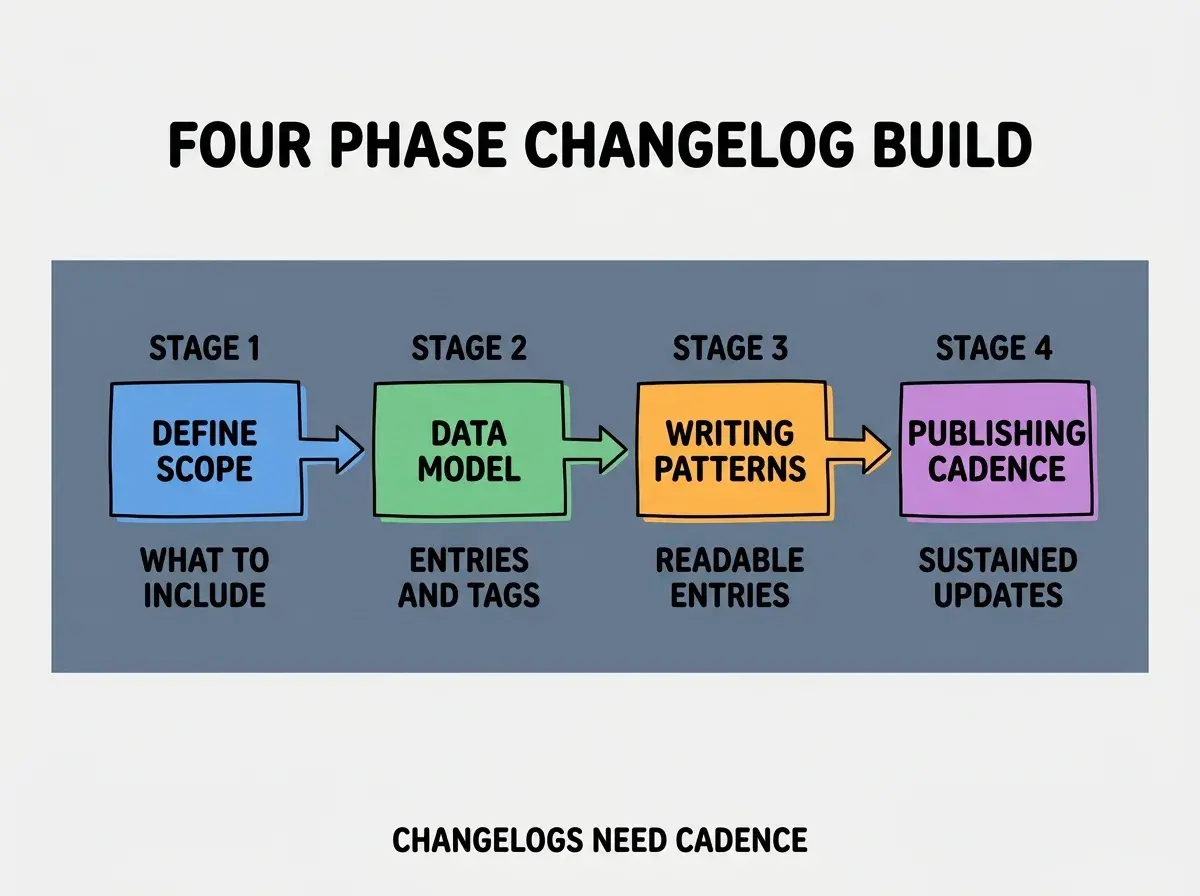
Phase 3, design the writing patterns that make entries readable. Active voice, user benefit framing, screenshots for visual changes. Writing quality determines reader engagement; technical jargon limits readership.
Phase 4, ship with publishing patterns that produce sustained updates. Weekly or biweekly cadence, AI assisted entry drafting, review process. Without sustained cadence, changelogs become abandoned; with cadence, they become product communication channels.
The Entry Writing Patterns That Work
Three patterns produce changelog entries readers engage with.
Pattern 1, lead with user benefit, not technical change. "Faster search" beats "Optimized search index". User benefit framing produces engagement; technical framing limits it.
Browse more developer tool tutorials
Read more build tutorialsPattern 2, screenshots for visual changes. Visual changes need visual showing; text descriptions of visual changes confuse readers. Screenshots eliminate the confusion.
Pattern 3, link to related documentation when applicable. New features need usage docs; changelog entries that link to docs reduce friction for users who want to try the feature. Without links, users see features but cannot easily start using them.
The Specific Tooling That Worked
Three tool categories combine effectively for changelog building.
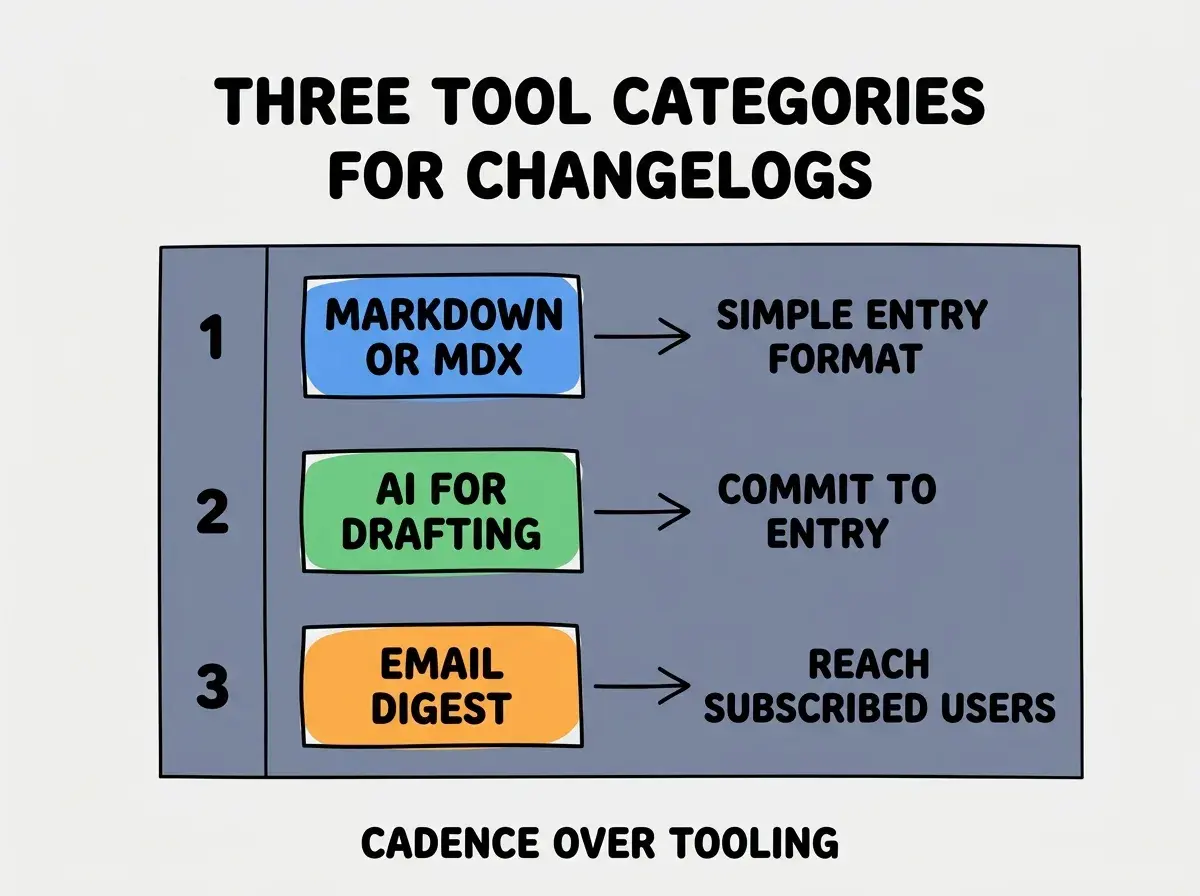
Tool 1, Markdown or MDX for entry format. Simple to write, supports embedding screenshots, version controllable in git. Lower friction than CMS based tools.
Tool 2, AI for drafting entries from commits. Claude or GPT drafts entry text from PR descriptions and commit messages. Reduces the write friction that often produces missed updates.
Tool 3, email digest for reaching subscribed users. Weekly digest of changelog updates to subscribers. Reach users where they are rather than waiting for them to visit the changelog page.
What Makes Changelogs Get Read
Three patterns separate read changelogs from ignored ones.
Pattern 1, predictable publishing cadence builds reader habit. Weekly Friday updates produce Friday readers; sporadic updates produce no readers. Predictability matters more than frequency.
Pattern 2, brevity beats comprehensiveness. Short entries get read; long entries get scanned. Most updates fit in one or two sentences; longer entries need strong reason for length.
Pattern 3, voice matters for engagement. Conversational voice produces engagement; bureaucratic voice limits it. Changelogs that sound like a person wrote them get more attention than changelogs that sound automated.
The combination produces changelogs that users genuinely follow. Without these patterns, changelogs become checkbox compliance rather than product communication.
How to Build Your First Changelog
Three implementation patterns help first changelogs succeed.
Pattern A, start with biweekly cadence, not weekly. Sustainable cadence beats ambitious cadence that lapses. Biweekly that sustains beats weekly that lapses to monthly.
Pattern B, write the first 5 entries before launching publicly. Empty changelog hurts more than no changelog. Pre populated entries show the cadence; empty pages produce no engagement.
Pattern C, include subscription option from launch. Email subscription captures interested readers immediately. Adding subscription later misses the launch attention.
The combination produces first changelogs that establish reader habit. Without these patterns, first changelogs often launch then lapse, producing the negative impression that worse than no changelog.
The most damaging changelog mistake is failing to maintain consistent cadence. Lapsed changelogs hurt more than no changelogs; readers who notice lapses lose confidence in product activity. The fix is to commit to sustainable cadence from launch and protect that cadence; biweekly that sustains beats weekly that lapses. Empty changelog pages or stale top entries signal inactive products even when products are active.
The other mistake is using technical language for non technical audiences. SaaS user audiences include non technical users; technical changelog entries exclude them. The fix is to write for the broadest realistic audience; technical detail can live in linked docs.
A third mistake is treating changelog as marketing channel rather than communication channel. Marketing language produces eye rolls; honest communication produces engagement. The fix is to use plain honest voice; readers prefer authentic over polished.
A fourth mistake is missing the connection between changelog and product. Changelog entries that do not match what users see in the product produce confusion. The fix is to coordinate changelog publishing with feature releases; entries publish when features ship, not weeks later.
A fifth mistake is failing to engage with reader feedback on entries. Comments and reactions on changelog entries provide signal about which features land well. The fix is to monitor reader response and incorporate the signal into product decisions; engagement rewards the readers who provide feedback.
What This Means For You
The changelog and release notes page built with AI tools becomes valuable through writing quality, sustained cadence, and audience appropriate voice. The four phases, writing patterns, and tool combinations produce changelogs users genuinely follow.
- If you're a senior dev: Changelogs reduce support load by communicating new features visibly. Build them when product complexity justifies; for simple products, README updates may suffice.
- If you're an indie hacker: Even small products benefit from changelogs. The discipline signals product activity to potential users; absent changelogs signal abandoned products even when active.
- If you're a founder: Changelogs serve user retention by demonstrating active development. Build them as product matures and user base grows; before that, in app announcements may suffice.
Browse more developer tool tutorials
Read more build tutorials