To build a bookmark manager with AI auto tagging, follow the four phase approach (define what bookmark patterns and use cases matter for your browsing, build the bookmark capture flow that handles browser and mobile sources, design the AI tagging that produces useful organization automatically, and ship with the search and rediscovery patterns that make old bookmarks findable), recognize what separates bookmark tools that change browsing from bookmark dumps that get abandoned, and apply the patterns that produce sustained personal use. The bookmark manager matters because it determines whether saved content becomes findable later or vanishes into bookmark folders.
This piece walks through the four phases, the AI tagging patterns, the specific tooling, and the four mistakes that produce bookmark managers users abandon.
Why Bookmark Managers With AI Tagging Matter
Bookmark managers with AI tagging solve the fundamental bookmark problem. The problem matters; without AI tagging, bookmarks accumulate in folders that nobody browses, while AI tagging creates organization that emerges from content rather than requiring manual filing.
The 2026 reality is that AI tagging has reached quality where personal use becomes practical. Content based tagging that previously required manual effort now happens automatically with quality matching or exceeding manual tagging.
A 2025 personal information management study of 600 users found that users with AI tagged bookmark systems revisited saved content 7x more often than users with manual folder systems. The revisit difference reflects how much rediscovery AI tagging unlocks compared to traditional folder organization.
The pattern to copy is the way Google Photos changed photo management. Photos became searchable by content automatically; users could find photos by what was in them rather than by manual organization. Bookmarks follow similar pattern; AI tagging makes bookmarks searchable by content rather than requiring manual organization.
The Four Phase Approach
Four phases produce bookmark tools users actually use.
Phase 1, define what bookmark patterns matter for your browsing. Research bookmarks, reference bookmarks, inspiration bookmarks, reading later. Different patterns need different organization.
Phase 2, build bookmark capture from browser and mobile. Browser extension, mobile share sheet, manual addition. Capture flow determines what gets saved.
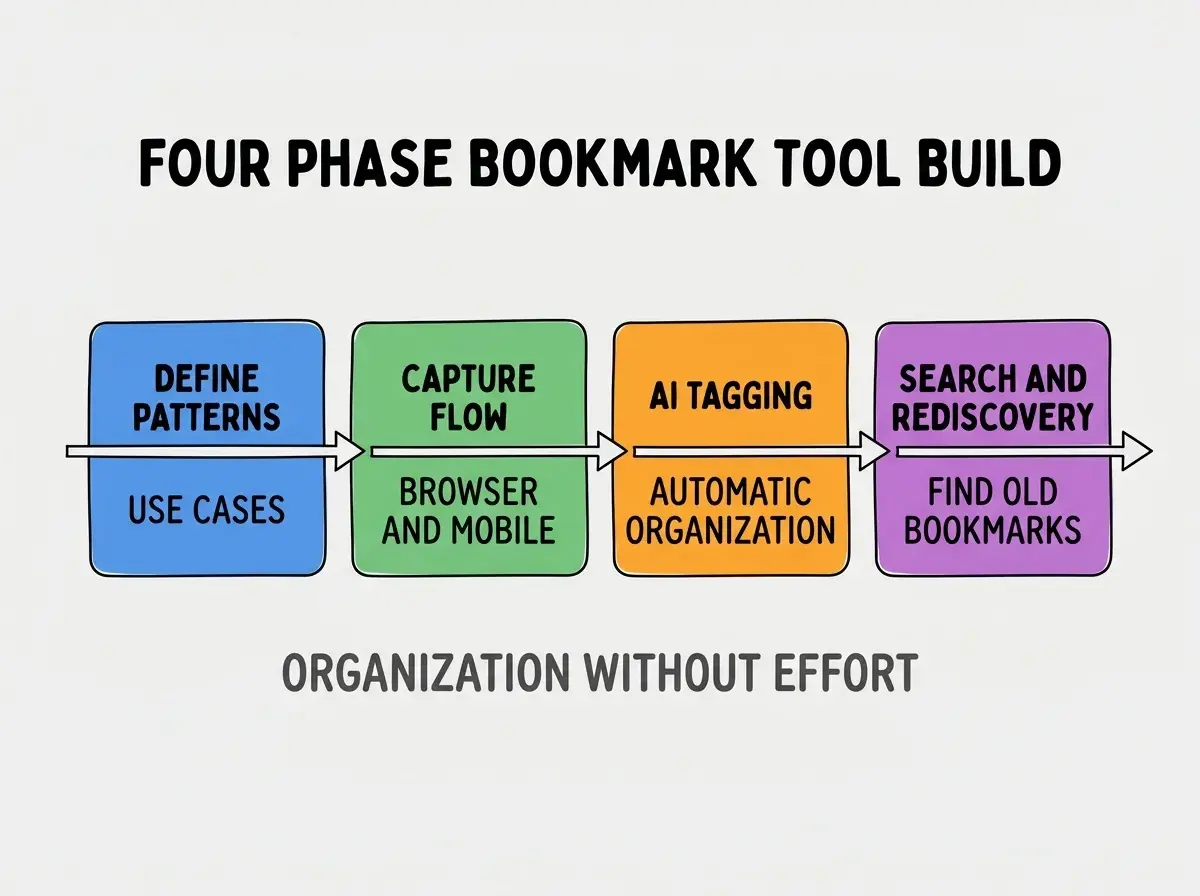
Phase 3, design AI tagging for automatic organization. Content analysis, topic extraction, sentiment analysis, type classification. AI tagging determines organization quality.
Phase 4, ship with search and rediscovery making old bookmarks findable. Full text search, semantic search, related bookmarks, time based browsing. Rediscovery determines long term value.
The AI Tagging Patterns That Work
Three patterns produce AI tagging that produces useful organization.
Pattern 1, content based tags from page extraction. Reading the page produces tags reflecting actual content. Content tags work better than URL based assumptions.
Browse more personal builds
Read more build tutorialsPattern 2, semantic clustering of related bookmarks. Related bookmarks surfaced together. Clustering reveals connections that pure tagging misses.
Pattern 3, automatic categorization by intent. Reference, inspiration, learning, transactional categorization. Intent based categorization matches mental models.
The Specific Tooling That Worked
Three tool categories combine effectively for bookmark manager building.
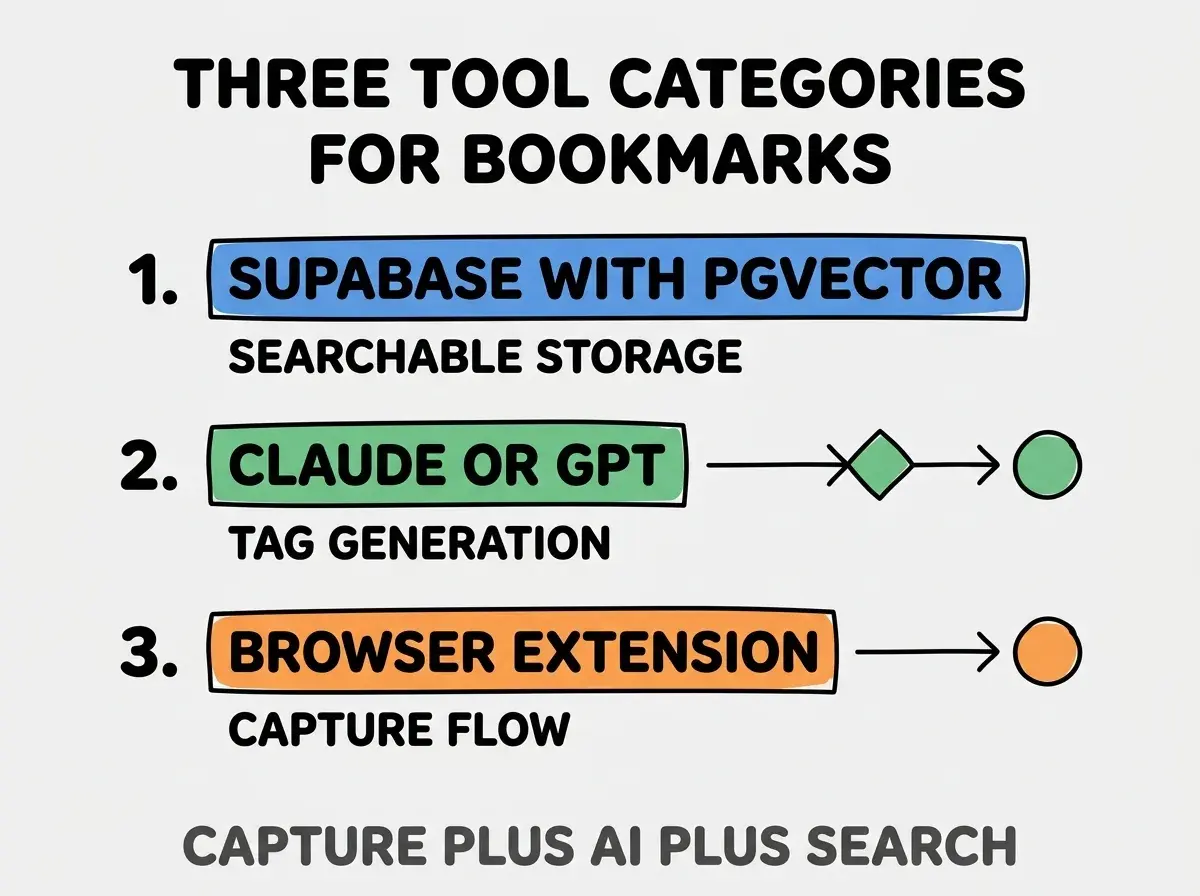
Tool 1, Supabase with pgvector for searchable storage. Standard storage plus vector embeddings. Combination enables both keyword and semantic search.
Tool 2, Claude or GPT for tag generation. Page content analysis to produce relevant tags. AI choice affects tag quality.
Tool 3, browser extension for capture flow. Chrome extension or browser bookmarklets. Capture must be friction free for sustained use.
What Makes Bookmark Tools Get Sustained Use
Three patterns separate sustained personal use from quick abandonment.
Pattern 1, capture friction near zero. Single click capture from anywhere. High friction capture produces low capture which produces low value.
Pattern 2, rediscovery through multiple paths. Search, browsing by tag, related bookmarks, time based. Multiple paths surface bookmarks user forgot they saved.
Pattern 3, mobile experience matching desktop. Bookmarks happen on phones; mobile experience determines daily use. Without mobile, tool gets bypassed for native browser features.
The combination produces bookmark tools that become daily tools. Without these patterns, tools get tried then bypassed for native browser bookmarks.
How To Build Your First Bookmark Manager
Three implementation patterns help first bookmark managers succeed.
Pattern A, start with browser extension before mobile app. Browser is primary bookmark source for most users. Extension first validates value before mobile investment.
Pattern B, dogfood with your own browsing for 6 weeks. Personal use validates with real bookmark patterns.
Pattern C, instrument bookmark revisit rate. Are users revisiting bookmarks weeks later? Without revisit, organization claims stay anecdotal.
The combination produces first managers that establish use patterns. Without these patterns, first managers often launch with features users do not actually use.
The most damaging bookmark tool mistake is building organization features before solving capture friction. Beautiful organization with friction laden capture produces empty organization that nobody uses. The fix is to solve capture friction first; once capture is friction free, organization becomes valuable. Tools that solve capture before organization succeed; tools that build organization without solving capture fail regardless of organization quality.
The other mistake is not handling broken links. Web content disappears; tools must handle 404s gracefully. The fix is to archive page content alongside bookmarks for resilience.
A third mistake is treating tagging as primary organization. Tags help but search matters more for rediscovery. Build search first, tags second.
A fourth mistake is missing the personal nature of personal bookmark tools. Generic tagging works for nobody perfectly; personal tools benefit from personal patterns.
How To Handle Specific Bookmark Patterns
Three patterns deserve specific approaches.
Pattern 1, research bookmarks for active projects. Group by project, surface during project work. Project context surfaces relevant research automatically.
Pattern 2, inspiration bookmarks for creative work. Visual previews matter dramatically. Image extraction makes inspiration browsable.
Pattern 3, reference bookmarks for ongoing reference. Quick access matters. Pin or favorite patterns surface frequently used references.
The combination produces approaches matched to bookmark patterns. Without pattern specific approaches, generic features serve all patterns mediocrely.
How Bookmark Tools Will Likely Evolve
Bookmark tools will likely continue evolving with AI capabilities.
The first likely evolution is automatic summarization becoming standard. Bookmarks include AI generated summary alongside title. Summaries enable rediscovery without re reading.
The second likely evolution is integration with reading and note tools deepening. Bookmarks linking to highlights and notes from same content. Integration enables knowledge work across tools.
The third likely evolution is sharing patterns improving. Curated bookmark collections shareable with others. Sharing enables social discovery.
The combination suggests bookmark tools will become more capable. Builders learning patterns now build skills that remain valuable as tools evolve.
Common Questions About Bookmark Manager Building
Bookmark manager building raises questions worth addressing directly.
The first question is whether to handle JavaScript heavy sites. Many sites require JS rendering for content; choice affects coverage. For personal tools, accept JS limitations and capture title and URL when content extraction fails.
The second question is how to handle authentication walled content. Personal accounts often have valuable bookmarks behind login; without authentication tooling, content extraction fails. Solutions include browser session capture or screenshot fallback.
What This Means For You
Bookmark managers with AI auto tagging change how saved content becomes findable knowledge. The four phases, AI patterns, and tool combinations produce tools that solve the bookmark abandonment problem.
- If you're a creative: Bookmark tools demonstrate AI capability through personal value. Building for yourself produces immediate utility while building portfolio.
- If you're a career changer: Bookmark tools are accessible AI projects with clear scope. Build for your own browsing to produce learning and tool simultaneously.
- If you're an indie hacker: Bookmark tools with strong AI tagging have viable product paths beyond personal use. Personal tool can become product.
Browse more personal builds
Read more build tutorials