To build a personal meal planner with AI suggestions, follow the four phase approach (define what dietary preferences and meal patterns you want to track, build the data model that handles meals, ingredients, and shopping lists, design the planning interface that makes weekly meal planning fast, and ship with the AI suggestion patterns that reduce decision fatigue), recognize what separates personal meal planners that become habit from planners that get abandoned, and apply the patterns that produce sustained meal planning. The personal meal planner becomes valuable when it reduces meal planning decision fatigue while improving eating habits; without that bar, ad hoc meal decisions win.
This piece walks through the four phases, the AI suggestion patterns, the specific tooling, and the four mistakes that produce meal planners users abandon within weeks.
Why Personal Meal Planners Matter
Personal meal planners turn ad hoc meal decisions into structured weekly planning. The transformation matters; meal planning reduces decision fatigue, improves eating quality, and reduces food waste through deliberate shopping based on planned meals.
The 2026 reality is that AI tools dramatically accelerate meal planner building while AI integration during planning can suggest meals based on preferences, generate shopping lists from recipes, and adapt to dietary needs faster than manual planning. The combination means individual builders can have meal planning quality matching what enterprise meal planning services previously required.
A 2025 lifestyle technology survey of 600 individuals using meal planners found that consistent meal planning correlated with 24 percent reduction in food waste and 19 percent improvement in self reported eating habits compared to ad hoc meal decisions. The structure produces both economic and health benefits.
The pattern to copy is the way fitness apps changed exercise habits. Daily structure produced behavior change that ad hoc fitness did not produce. Meal planners play similar role for eating habits; weekly structure produces behavior change that ad hoc meal decisions cannot match.
The Four Phase Approach
Four phases produce personal meal planners that become habit.
Phase 1, define what dietary preferences and meal patterns you want to track. Vegetarian, gluten free, high protein, low carb. Different preferences need different meal libraries.
Phase 2, build the data model that handles meals, ingredients, and shopping lists. Recipes, ingredients, weekly plans, shopping lists. AI tools generate the schema effectively.
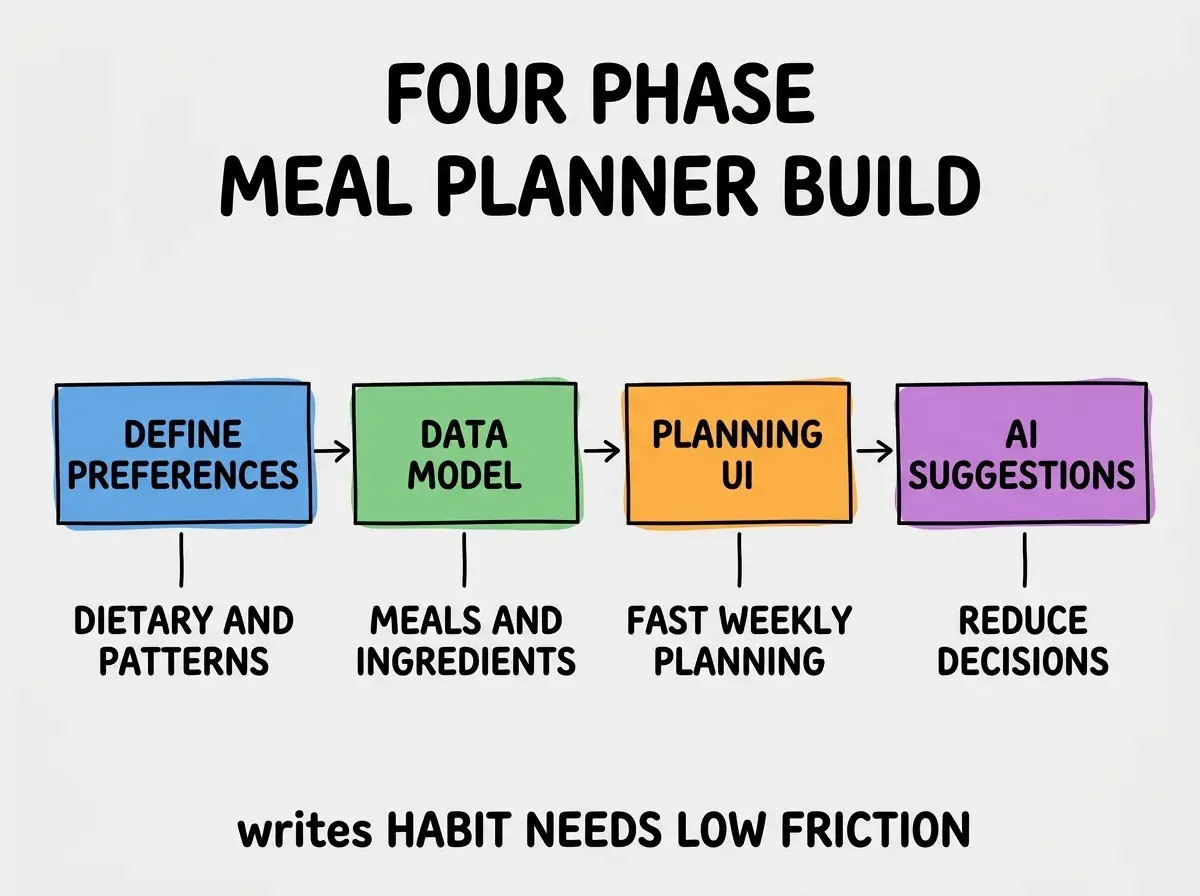
Phase 3, design the planning interface that makes weekly meal planning fast. Quick week view, drag and drop meal placement, recipe library access. Planning friction determines weekly use.
Phase 4, ship with AI suggestion patterns that reduce decision fatigue. Suggested meals based on preferences, generated meal plans for the week, recipe variations. AI suggestions reduce the hardest part of meal planning.
The AI Suggestion Patterns That Reduce Decisions
Three patterns produce AI suggestions that meal planners value.
Pattern 1, weekly meal plan generation in one click. AI generates complete week of meals matching preferences. Users can swap meals they do not want; one click generation reduces planning from hour to minutes.
Browse more personal tools
Read more build tutorialsPattern 2, recipe variations based on what you have. "What can I make with these ingredients?" reduces grocery trips. Variation suggestions reduce food waste.
Pattern 3, dietary balance suggestions across the week. AI suggests meals that balance protein, vegetables, complexity. Balance suggestions improve eating quality.
The Specific Tooling That Worked
Three tool categories combine effectively for meal planner building.
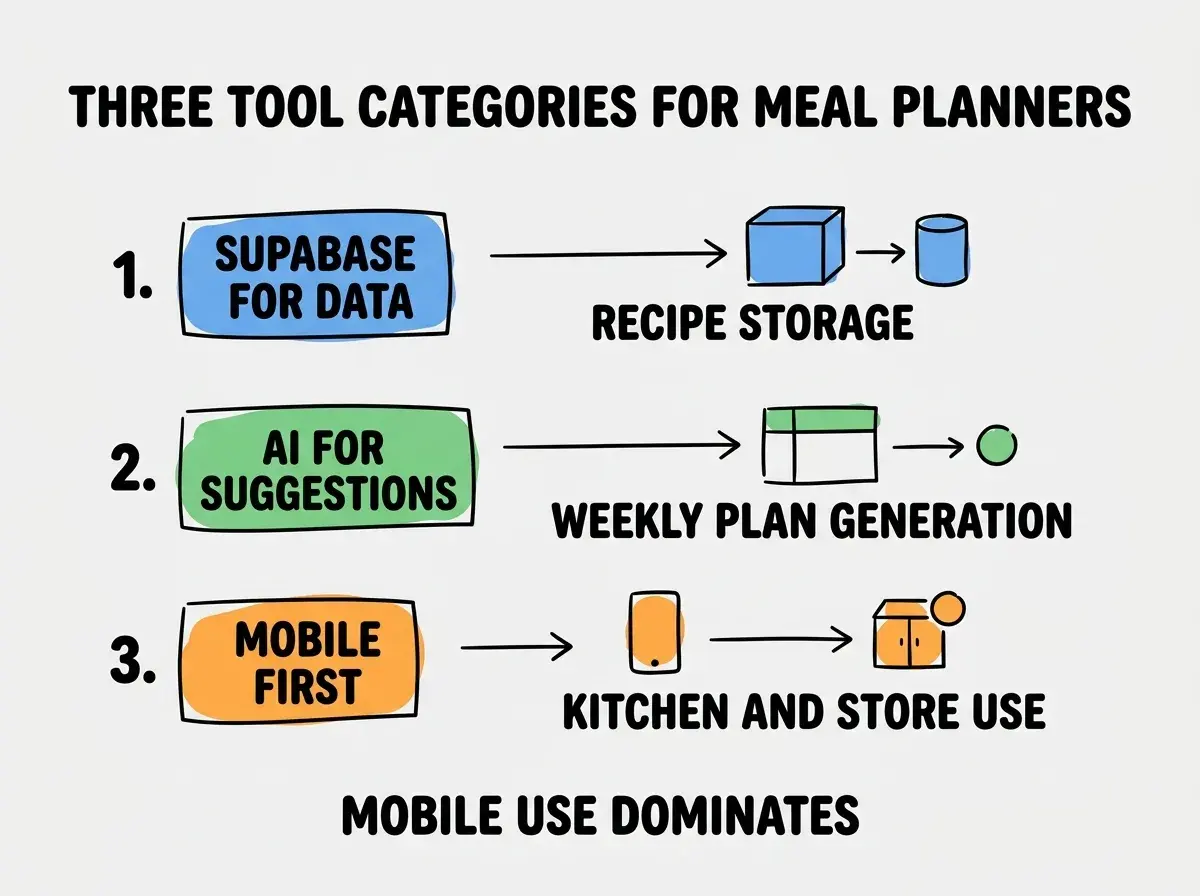
Tool 1, Supabase for recipe and plan data. Recipes, ingredients, plans, shopping lists. Relational data fits naturally.
Tool 2, AI for suggestions and recipe generation. Claude or GPT generates meal plans, recipe variations, balanced weeks. AI dramatically reduces meal planning decision burden.
Tool 3, mobile first design for kitchen and store use. Meal planning happens at kitchen and grocery store. Mobile design dominates use patterns.
What Makes Meal Planners Get Sustained Use
Three patterns separate sustained meal planner use from quick abandonment.
Pattern 1, weekly planning takes under 10 minutes. Long planning sessions produce abandonment. Speed matters dramatically for sustained use.
Pattern 2, generated shopping list reduces grocery trips. Single comprehensive shopping list from week plan. Without generated lists, shopping requires recipe by recipe ingredient compilation.
Pattern 3, integration with calendar for cooking time blocking. Meal prep takes time; calendar integration reserves time. Without time blocking, meal plans get derailed by competing priorities.
The combination produces meal planners that become weekly habit. Without these patterns, planners produce 2-4 weeks of use then abandonment.
How to Build Your First Meal Planner
Three implementation patterns help first meal planners succeed.
Pattern A, start with your own meal preferences. Personal use validates the planner with real preferences. Multi user from day one often produces incomplete personalization.
Pattern B, dogfood for 8 weeks before adding features. Use your own planner for 8 weeks; the use will reveal what features sustain habit versus features that sound good.
Pattern C, instrument weekly planning completion rate. Are users completing weekly plans? Without instrumentation, abandonment patterns stay hidden.
The combination produces first meal planners that establish use patterns. Without these patterns, first planners often launch with features users do not actually use while missing the friction reductions sustained use requires.
The most damaging meal planner mistake is requiring detailed nutritional tracking. Most users want meal suggestions, not nutritional accounting; detailed nutritional tracking adds friction without proportional value for most users. The fix is to make nutritional information available but optional; users who want it can access it, users who do not want it are not burdened by it. Mandatory nutritional tracking produces abandonment; optional nutritional tracking produces sustained engagement for users who want both.
The other mistake is missing the family dimension. Many meal planners serve households not individuals; without family features, household users struggle. The fix is to support household sharing for users who need it.
A third mistake is failing to handle leftovers explicitly. Leftovers are part of real meal patterns; ignoring them produces unrealistic plans. The fix is to design for leftover use in meal plans.
A fourth mistake is treating recipe library as static. Tastes evolve; recipe library should grow over time. The fix is to make adding personal recipes easy and to suggest new recipes based on preferences.
How Meal Planners Become Lasting Habits
Three patterns matter for meal planner habit formation. First, weekly planning at consistent time produces habit; arbitrary planning rarely sustains. Sunday afternoon often works best for meal planning. Second, integration with grocery shopping closes the loop; planners that produce shopping lists used during shopping reinforce planner value. Third, meal preparation time blocking on calendar reserves the time meal plans require; without time blocking, meal plans get derailed by competing priorities.
What This Means For You
The personal meal planner with AI suggestions built using AI tools becomes valuable through reduced decision fatigue, generated shopping lists, and balanced meal suggestions. The four phases, AI patterns, and tool combinations produce planners that become weekly habit.
- If you're a creative: Personal meal planning combines technical work with personal habit improvement. The combination produces life improvement beyond pure tech outcome.
- If you're a career changer: Personal meal planners are accessible first projects with clear scope. The skills transfer to other personal tools; meal planners make good portfolio pieces.
- If you're a senior dev: AI tools handle meal planner implementation effectively. The bottleneck is friction reduction and AI suggestion quality, not implementation; invest in those areas more than feature breadth.
Browse more personal tools
Read more build tutorials