To build an artist portfolio and print shop with AI tools, follow the four phase approach (define what artwork types and print products the shop will offer, build the data model that handles artworks, prints, and orders, design the portfolio interface that showcases work beautifully, and ship with the print on demand integration that fulfills orders), recognize what separates artist shops that sell from shops that only display, and apply the patterns that produce sustained art sales. The artist portfolio and print shop becomes valuable when it converts portfolio visitors into print buyers; without that bar, social media platforms produce more art reach.
This piece walks through the four phases, the conversion patterns, the specific tooling, and the four mistakes that produce artist shops with no sales.
Why Artist Portfolio and Print Shops Matter
Artist portfolio and print shops turn art display into income streams. The transformation matters; without shops, artists rely on commissions, gallery sales, or social media for income. Shops produce direct artist to buyer relationships that compound over time.
The 2026 reality is that AI tools dramatically accelerate shop building while AI integration during operation can suggest related artworks, generate product descriptions, and handle pricing recommendations faster than manual operations. The combination means individual artists can build shops matching what enterprise art platforms previously required.
A 2025 independent artist survey of 600 artists found that artists with custom portfolio shops earned median 3.2x more annual print income than artists relying solely on Etsy or Society6 marketplaces. The retention difference compounds; over time custom shop economics dramatically exceed marketplace alternatives.
The pattern to copy is the way independent musicians transitioned from labels to direct sales through Bandcamp. Direct sales captured more revenue per sale and built direct fan relationships. Artist portfolio shops play similar role for visual artists; direct art relationships produce sustained income that platform sales rarely produce.
The Four Phase Approach
Four phases produce artist portfolio and print shops that convert.
Phase 1, define what artwork types and print products the shop will offer. Originals, prints, posters, apparel, home goods. Different products need different fulfillment.
Phase 2, build the data model that handles artworks, prints, and orders. Artworks, products, variants, orders, customers. AI tools generate the schema effectively given clear specifications.
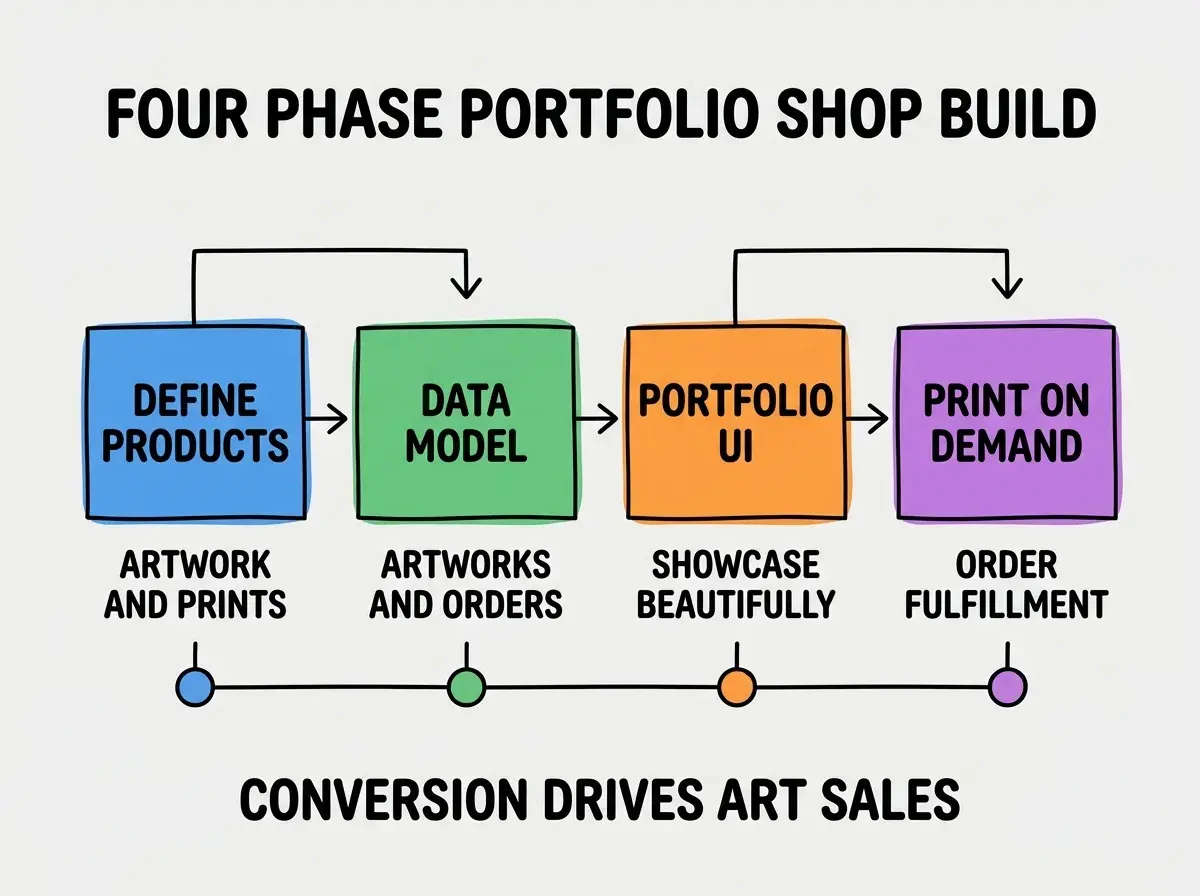
Phase 3, design the portfolio interface that showcases work beautifully. Image quality matters dramatically for art; portfolio layout affects perception of artist quality.
Phase 4, ship with print on demand integration that fulfills orders. Printful, Printify, or similar handle the print and ship operations. Without integration, artists handle fulfillment manually.
The Conversion Patterns That Drive Art Sales
Three patterns produce conversion from portfolio visitors to buyers.
Pattern 1, high quality images with zoom capability. Art purchase decisions require detailed image inspection. Zoom enables this without leaving the page.
Browse more creative tutorials
Read more build tutorialsPattern 2, multiple product format options per artwork. Same artwork as poster, print, canvas, apparel. Multiple formats capture different buyer preferences.
Pattern 3, artist story alongside artwork. Buyer connection to artist drives sales; pure artwork display produces less conversion than artwork plus artist story.
The Specific Tooling That Worked
Three tool categories combine effectively for artist shop building.
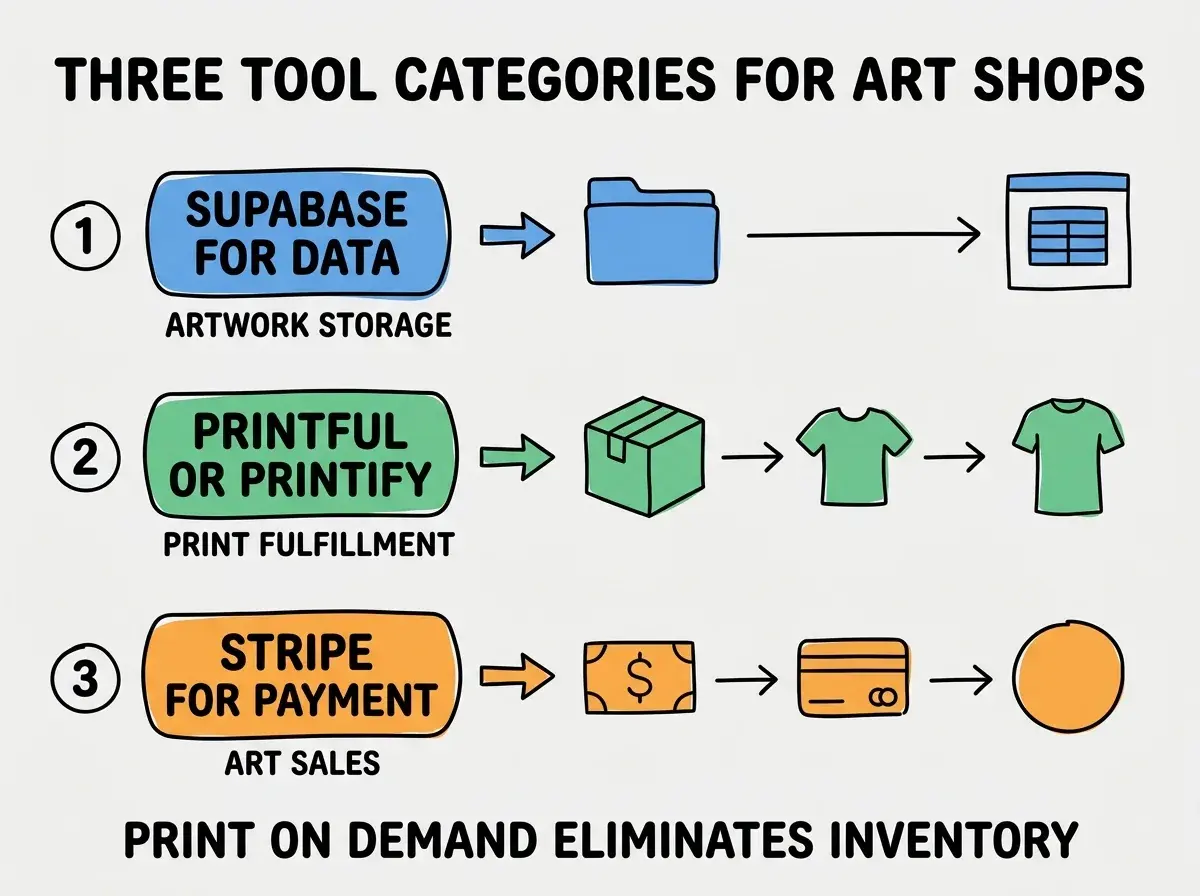
Tool 1, Supabase for artwork and order data. Artworks, products, orders, customers. Relational data fits naturally.
Tool 2, Printful or Printify for print fulfillment. Print on demand services handle production and shipping. Inventory free model enables artist scale without capital.
Tool 3, Stripe for payment processing. Standard ecommerce payment with strong refund handling. Payment integration handles complexity that custom code rarely handles correctly.
What Makes Artist Shops Get Sustained Sales
Three patterns separate sustained sales shops from one time launch shops.
Pattern 1, SEO investment for organic art discovery. Sustainable sales require sustainable traffic. Pinterest, Google Image Search, and SEO drive ongoing discovery.
Pattern 2, email list building from every visitor. Visitors who do not buy today might buy when new artwork releases. Email captures the relationship.
Pattern 3, regular new artwork releases sustain interest. Static portfolios plateau; portfolios adding new work sustain interest. Release cadence matters for creator businesses.
The combination produces shops that grow over years. Without these patterns, shops often peak at launch then decline.
How to Build Your First Artist Shop
Three implementation patterns help first artist shops succeed.
Pattern A, start with one product type before expanding. Prints first or apparel first. Single product type validates fulfillment partner and process.
Pattern B, soft launch to email list before public launch. Email list launches reveal conversion friction with friendly audience.
Pattern C, instrument conversion funnel from artwork view to purchase. Where do visitors drop off. Without instrumentation, conversion problems stay hidden.
The combination produces first shops that establish conversion patterns. Without these patterns, first shops often launch with low conversion that affects business model viability.
The most damaging artist shop mistake is using low quality artwork images. Art purchase decisions require seeing artwork details; low quality images destroy conversion regardless of artwork quality. The fix is to invest in professional photography or scanning of artwork; quality images convert browsers to buyers, low quality images produce browse without buy. Most failed artist shops have great art with bad images; few have bad art with great images.
The other mistake is missing the print on demand quality variance. Print on demand services vary dramatically in quality; choosing wrong service produces customer complaints. The fix is to test print quality with personal orders before launching; visual quality matters for art products beyond what generic services may provide.
A third mistake is failing to handle international shipping considerations. Print on demand fulfillment varies by region; international shipping affects customer experience. The fix is to design for international from start.
A fourth mistake is treating original artwork the same as prints. Originals are scarce; prints are abundant. The fix is to design different flows for different scarcity levels; originals deserve more care than prints.
How Artist Shops Build Sustainable Income Over Years
Three patterns matter for artist business sustainability. First, email list building from every visitor compounds dramatically over years; established artists with substantial email lists have launch advantages new artists cannot match without similar lists. Second, recurring artwork releases sustain audience interest; static portfolios plateau while active portfolios grow. Third, multiple revenue streams (originals, prints, commissions, licensing) produce stability that single revenue source artists cannot match; diversification reduces risk that economic shifts produce.
What This Means For You
The artist portfolio and print shop built with AI tools becomes valuable through quality images, print on demand integration, and ongoing artwork releases. The four phases, conversion patterns, and tool combinations produce shops that sustain artist income.
- If you're a designer: Custom portfolio shops produce more income than marketplace alternatives. Build when your work is established enough to sell directly; below that bar, marketplaces may suffice.
- If you're a creative: Print on demand enables income without inventory investment. The model has dramatically lowered the barrier to becoming a selling artist.
- If you're a senior dev: AI tools handle artist shop implementation effectively. The bottleneck is image quality and print on demand integration, not implementation; invest in those areas more than feature breadth.
Browse more creative tutorials
Read more build tutorials