To build an A/B testing framework with AI tools, follow the four phase approach (define what experiments your team will run and what statistical rigor matters, build the experiment infrastructure that supports random assignment and result tracking, design the analysis interface that produces actionable conclusions, and ship with the operational patterns that make testing the default rather than the exception), recognize what separates A/B testing frameworks that drive product decisions from frameworks that produce dashboards no one acts on, and apply the patterns that produce sustained experimentation culture. The A/B testing framework becomes valuable when teams change behavior based on results; without that bar, testing becomes ritual rather than instrument.
This piece walks through the four phases, the operational patterns, the specific tooling, and the four mistakes that produce A/B testing frameworks teams ignore.
Why A/B Testing Frameworks Matter
A/B testing frameworks turn product hypotheses into measurable decisions. The transformation matters; without testing, product decisions rely on opinion and intuition, while testing produces evidence that informs better decisions over time.
The 2026 reality is that AI tools dramatically accelerate testing framework building while AI integration during analysis can detect statistical significance, surface unexpected patterns, and recommend follow up tests faster than manual analysis. The combination means even small teams can have testing infrastructure matching what enterprises previously paid for as separate platforms.
A 2025 product experimentation survey of 800 SaaS companies found that companies running 10+ tests per month achieved 34 percent higher conversion improvement rates than companies running fewer than 3 tests per month. The testing volume produces the learning velocity that drives product improvement; low test volume produces opinion driven product decisions that often miss user reality.
The pattern to copy is the way agricultural research uses controlled trials. Researchers test specific interventions against controls to identify what works; opinion based farming gets outperformed by trial based farming consistently. A/B testing plays similar role for products; controlled tests produce evidence that opinion cannot match.
The Four Phase Approach
Four phases produce A/B testing frameworks that drive decisions.
Phase 1, define what experiments your team will run and what statistical rigor matters. Conversion tests, UI tests, pricing tests, copy tests. Defined scope and rigor determine framework requirements.
Phase 2, build the experiment infrastructure that supports random assignment and result tracking. Randomization, exposure tracking, conversion measurement. AI tools generate the infrastructure code effectively given clear specifications.
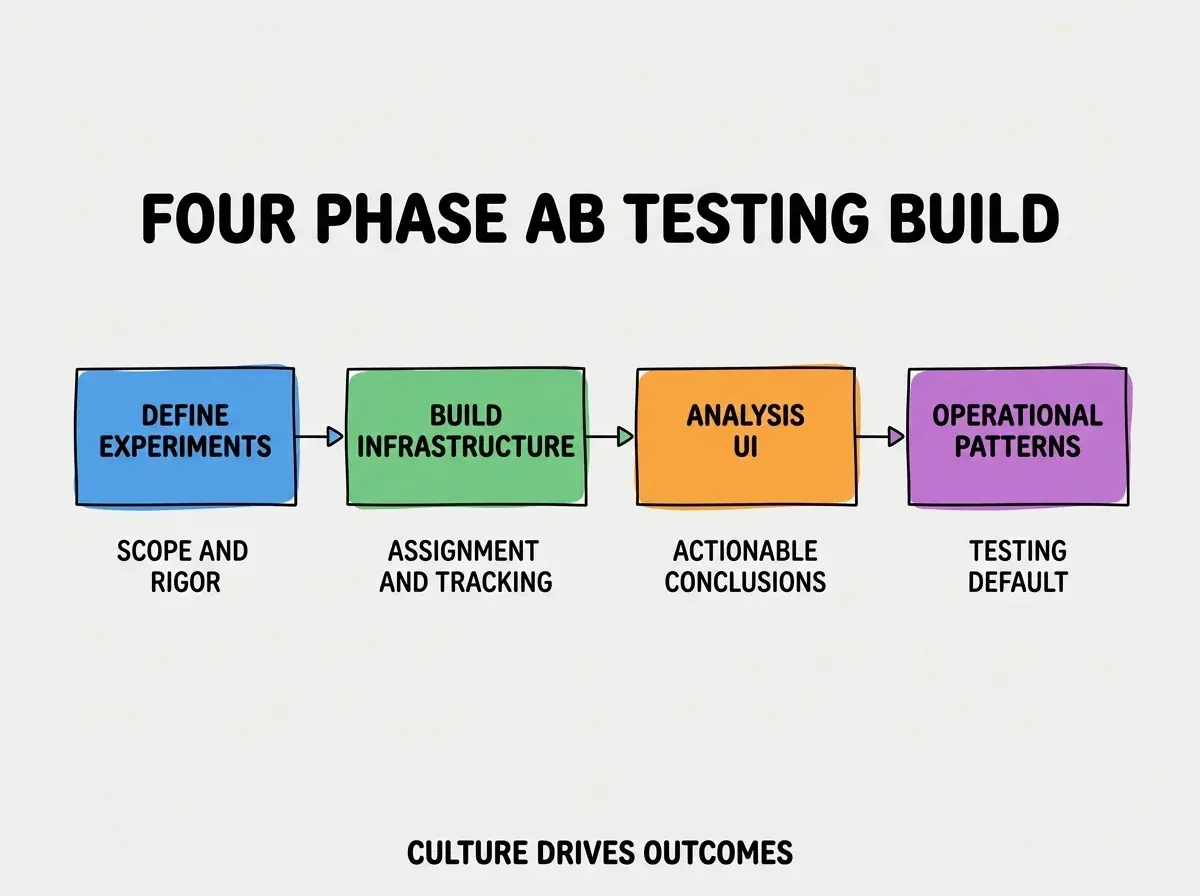
Phase 3, design the analysis interface that produces actionable conclusions. Statistical significance, confidence intervals, recommended actions. Analysis quality determines decision quality; poor analysis produces poor decisions even with good data.
Phase 4, ship with operational patterns that make testing the default rather than the exception. Test before launch, regular reviews, learning libraries. Operational patterns turn framework into culture; without them, frameworks become unused infrastructure.
The Operational Patterns That Drive Testing Culture
Three patterns produce testing as default rather than exception.
Pattern 1, test before launch as default workflow. New features default to testing rather than full launch. Default behavior matters; opt in testing produces less testing than opt out testing.
Browse more product tutorials
Read more build tutorialsPattern 2, regular learning reviews share results across team. Weekly review of completed tests produces shared learning. Without sharing, individual experiments produce isolated learning.
Pattern 3, learning library captures completed test insights. Searchable repository of past tests prevents repeated experiments. Library produces compound learning; without library, teams repeat tests unnecessarily.
The Specific Tooling That Worked
Three tool categories combine effectively for A/B testing framework building.
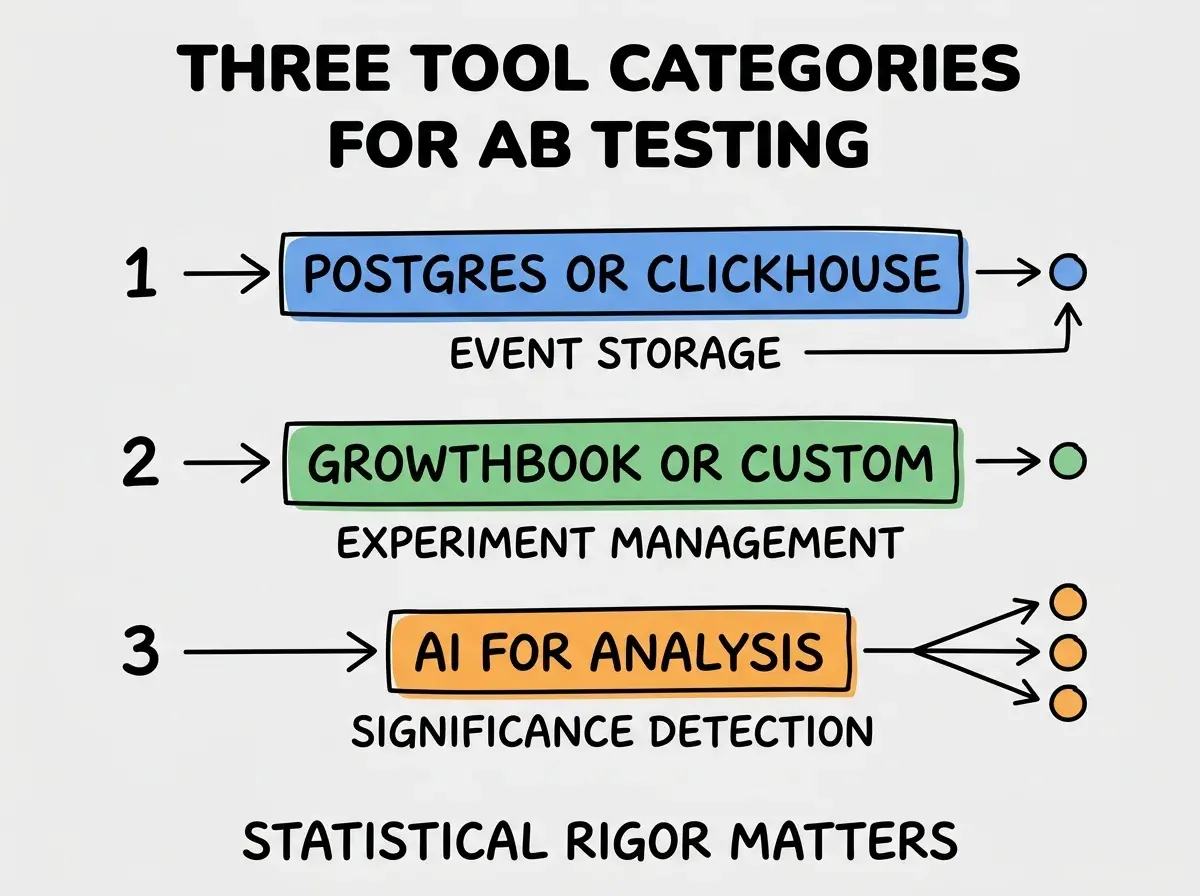
Tool 1, Postgres or ClickHouse for event storage. Exposure events, conversion events, experiment metadata. ClickHouse for higher volume; Postgres for moderate volume.
Tool 2, GrowthBook or custom framework for experiment management. Experiment definition, randomization, result calculation. Open source frameworks save build time for standard functionality.
Tool 3, AI for analysis and significance detection. Claude or GPT analyzes results and surfaces significant findings. AI catches patterns that manual review might miss.
What Makes A/B Testing Drive Real Decisions
Three patterns separate decision driving testing from theater testing.
Pattern 1, results connect to specific decisions before tests start. Tests with predetermined decision criteria produce decisions; tests without criteria produce arguments about interpretation.
Pattern 2, statistical rigor prevents false positive trust. P value awareness, multiple test corrections, sample size discipline. Rigor produces trustworthy results; loose statistics produce false confidence.
Pattern 3, leadership references test results in product decisions. When leadership cites test results, teams test more. When leadership ignores results, teams test less.
The combination produces testing that drives real product direction. Without these patterns, testing becomes infrastructure that consumes resources without producing decisions.
How to Build Your First A/B Testing Framework
Three implementation patterns help first frameworks succeed.
Pattern A, start with one experiment type, not all types. Conversion tests first or feature tests first. Single type validates the pattern. Multi type from day one often produces incomplete handling.
Pattern B, run validation experiments before relying on framework. Test the framework with known outcomes. Validation reveals issues before real experiments depend on the framework.
Pattern C, instrument framework usage from day one. Tests started, tests completed, tests producing decisions. Without instrumentation, framework health stays hidden.
The combination produces first frameworks that establish testing patterns. Without these patterns, first frameworks often produce technical infrastructure without driving culture change.
The most damaging A/B testing mistake is launching framework without statistical rigor practices. Loose statistics produce false confidence; teams ship "winning" variants that did not actually win. The fix is to build statistical rigor into the framework from day one; significance thresholds, sample size guidance, and multiple test corrections should be defaults, not options. Frameworks that produce false positives erode test trust faster than no framework at all; rigor protects the credibility that makes testing valuable.
The other mistake is testing too many variants per experiment. Many variants reduce statistical power per variant. The fix is to test fewer variants with adequate power; usually 2-3 variants beats 5-10 variants for the same total traffic.
A third mistake is ignoring test interaction effects. Multiple concurrent tests can interact; isolated test analysis misses interactions. The fix is to design test schedules that minimize interactions or analyze interactions explicitly.
A fourth mistake is failing to follow up on inconclusive results. Inconclusive tests teach nothing if not followed up. The fix is to redesign and rerun inconclusive tests; inconclusive results should produce next test, not abandonment.
A fifth mistake is mistaking statistical significance for practical significance. Statistically significant results may be too small to matter for product decisions. The fix is to define minimum effect sizes worth shipping; statistical significance without practical significance produces shipped changes that do not matter.
What This Means For You
The A/B testing framework built with AI tools becomes valuable through statistical rigor, operational patterns, and cultural commitment to testing. The four phases, operational patterns, and tool combinations produce testing that drives sustained product improvement.
- If you're a senior dev: Testing infrastructure requires statistical sophistication beyond basic random assignment. Build with rigor from start; lazy statistics destroy test trust faster than no testing.
- If you're a product manager: Testing reduces opinion driven product decisions. Build testing into your team's default workflow; opt in testing produces less learning than opt out testing.
- If you're a founder: Testing culture compounds across all product decisions. Establish testing early; teams without testing culture rarely develop it later.
Browse more product tutorials
Read more build tutorials