The best tool stack for small teams 2 to 5 people balances individual productivity with collaboration needs. Four stack components matter: AI coding tools (team licenses for Cursor, Claude Code), collaboration tools (Slack or Discord, Linear or Notion), shared infrastructure (GitHub Team, deployment platform), and observability stack (shared monitoring, error tracking). Total cost typically $200-$500 monthly per developer. Small teams with right stack outperform larger teams with wrong stack.
This piece walks through the four stack components, the implementation patterns, what makes small team stacks sustainable, and the four mistakes builders make on small team tool stacks.
Why Small Team Stacks Differ
Small team stacks differ because team coordination needs exceed solo while remaining below enterprise complexity. Stack must enable coordination without enterprise overhead.
The 2026 reality is that small team tooling has matured to where teams can punch above weight. Tooling enables small team capability.
A 2025 small team productivity study of 400 vibe coding startups (2-5 person teams) found that teams with optimized tool stacks shipped 56 percent more features than equivalent teams with basic tools, primarily through tool stack enabling team coordination at velocity. Stack measurably affects small team output.
The pattern to copy is the way 2-5 person musical bands tour. Equipment scaled for team but not orchestra; same tools for years. Same patterns apply to small team coding stacks; right scale matters.
The Four Stack Components
Four components form complete small team stack.
Component 1, AI coding tools. Team licenses; coordinated tool selection.
Component 2, collaboration tools. Slack or Discord, Linear or Notion. Communication core.
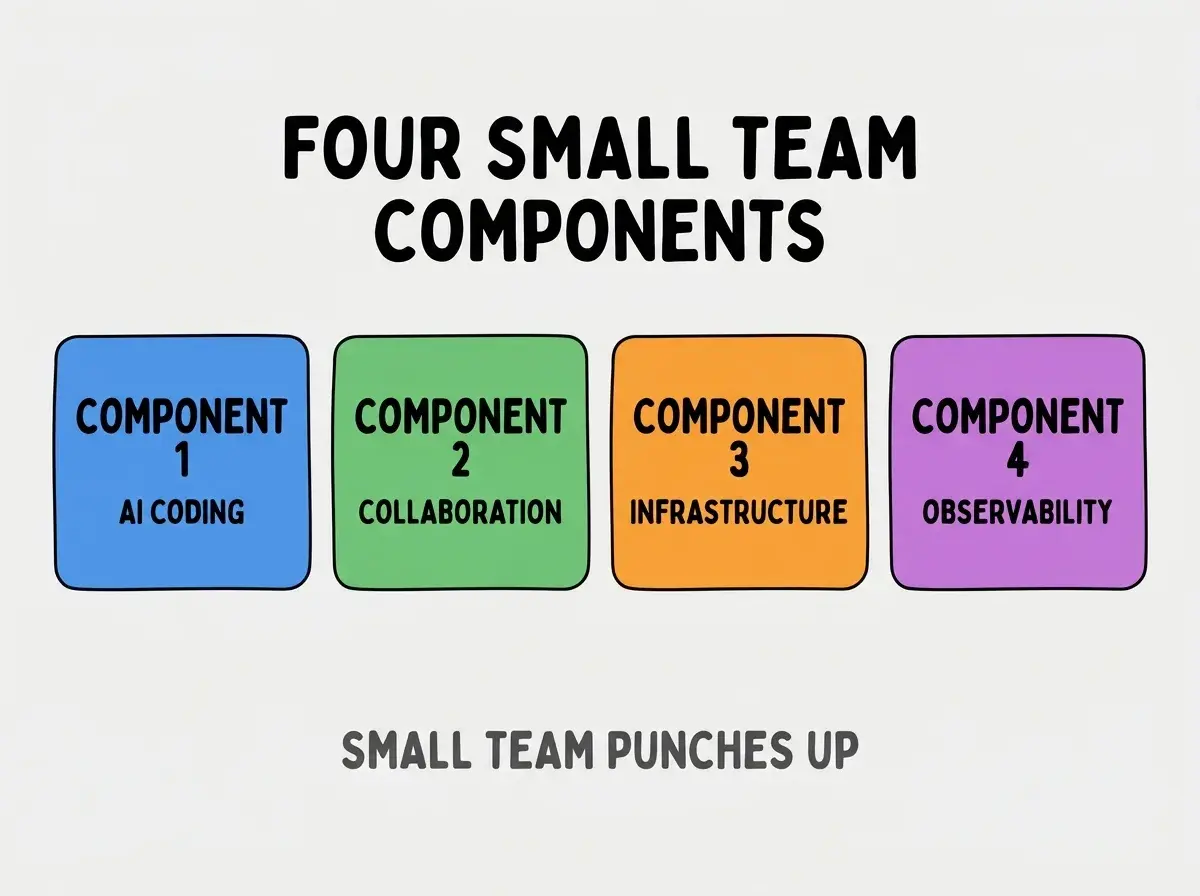
Component 3, shared infrastructure. GitHub Team, deployment platform. Foundation.
Component 4, observability stack. Shared monitoring, error tracking. Visibility.
How To Implement Each Component
Four implementation patterns address each component.
Implementation 1, Cursor Business or Claude Code Team. Team licenses; admin features.
Browse more tools
Read more toolsImplementation 2, Slack plus Linear. Communication plus PM; standard combo.
Implementation 3, GitHub Team plus Vercel. GitHub for code; Vercel or alternative for deploy.
Implementation 4, Sentry plus PostHog. Error tracking plus product analytics. Standard.
What Makes Small Team Stacks Sustainable
Three patterns separate sustainable stacks from constant churn.
Pattern 1, stable core tools. Core tools stable; peripherals can rotate.
Pattern 2, monthly cost monitoring. Costs creep; monitoring prevents bloat.
Pattern 3, team alignment on tools. Alignment compounds; fragmented produces friction.
What Makes Small Team Stacks Effective
Three patterns separate effective stacks from theatrical.
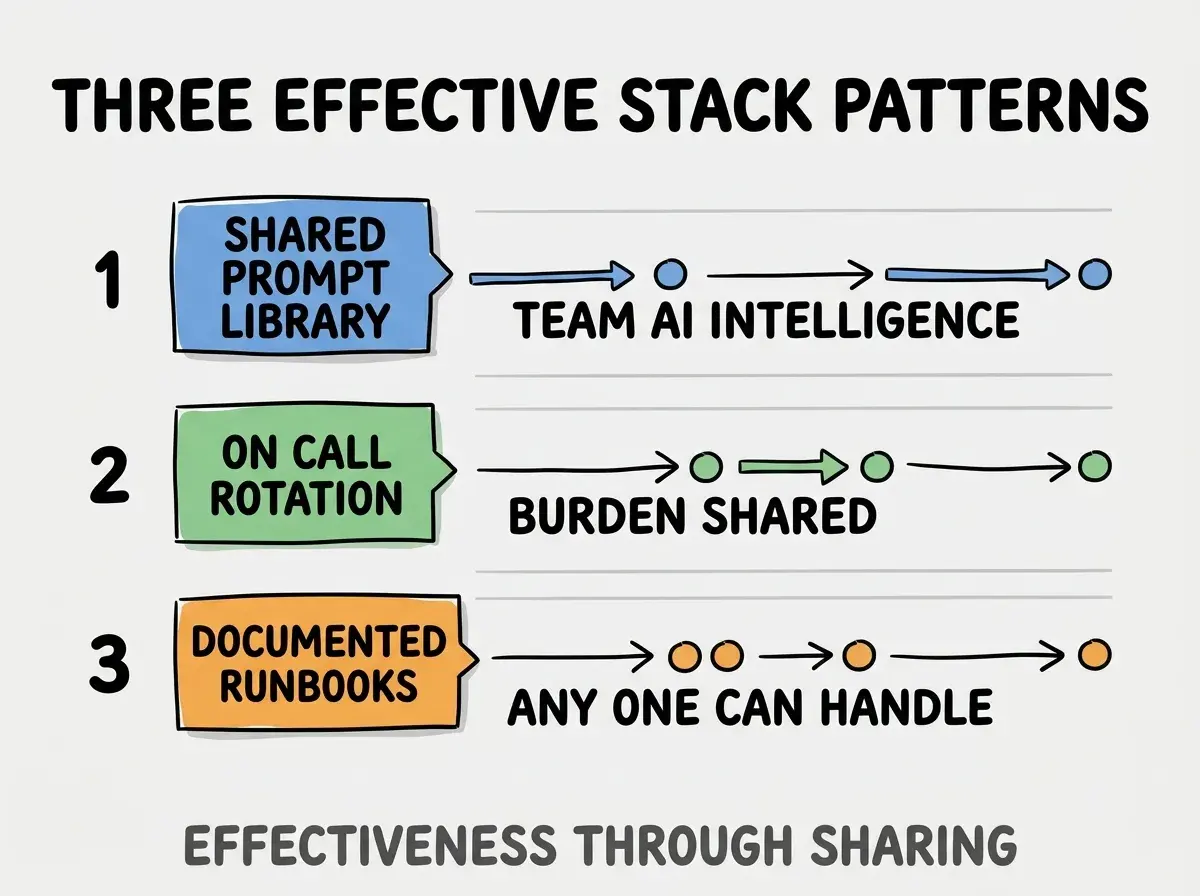
Pattern 1, shared prompt library. Team AI intelligence; library compounds.
Pattern 2, on call rotation. Burden shared; sharing matters.
Pattern 3, documented runbooks. Any one can handle; documentation enables.
The combination produces effective small team stacks. Without these patterns, stacks become individual collections.
How To Coordinate AI Tool Usage
Three patterns help AI coordination.
Pattern A, shared prompts repository. Team prompts in repo; reuse compounds.
Pattern B, AI usage retrospectives. What worked, what did not; team learns.
Pattern C, model preference alignment. Team uses similar models; consistency.
Common Questions About Small Team Stacks
Small team stacks raise questions worth addressing directly.
The first question is whether all team members need same AI tool. Mostly yes; consistency compounds.
The second question is what total cost reasonable. $200-500 per developer monthly typical.
The third question is whether to use Slack or Discord. Slack for B2B feel; Discord for community feel.
The fourth question is whether Linear or Notion or both. Linear for engineering PM; Notion for docs. Often both.
How Stack Affects Team Output
Stack affects team output in compounding ways. Output effects compound across team scale.
The first compounding effect is shipping cadence. Better stack faster shipping; cadence compounds.
The second compounding effect is quality consistency. Shared tools produce consistent quality; consistency compounds.
The third compounding effect is hiring attractiveness. Modern stack attracts; attraction compounds team quality.
The combination produces team output shaped by stack. Without thoughtful stack, output bounded by tool friction.
How To Onboard New Team Members To Stack
Three patterns help onboarding.
Pattern A, stack documentation in repo. Documentation enables self onboarding.
Pattern B, pairing on tools first week. Pairing accelerates learning.
Pattern C, tool training budget. Budget for courses or training.
The combination produces effective onboarding. Without patterns, onboarding stalls.
The most damaging small team stack mistake is enterprise tooling for small team. Enterprise tools have enterprise complexity; small team buried in configuration. The fix is to use small team appropriate tools (Linear over Jira, GitHub over GitLab Enterprise). Teams using right scale tools ship faster; teams using oversized tools fight tools.
The other mistake is missing the team alignment component. Each member with different tools fragments; alignment matters.
A third mistake is over investing in tools without revenue. $500/month stack on $5K monthly revenue ratio off; revenue should support stack.
A fourth mistake is treating stack as static. Stack evolves with team; ongoing evaluation matters.
What This Means For You
The best tool stack for small teams 2 to 5 people balances individual productivity with team coordination. The four components, implementation patterns, and sustainability approaches produce stacks that enable small teams to compete.
- If you're a product manager: Stack affects team velocity; PM input shapes stack.
- If you're a senior dev: Lead stack decisions; technical leadership compounds.
- If you're a founder: Stack affects team scaling; consider in hiring planning.
Browse more tools
Read more tools