Navigating a large enterprise codebase often feels like wandering through a maze blindfolded. When you join a new team or inherit a legacy project, the biggest hurdle is rarely writing new logic. The real challenge is understanding how the existing pieces fit together. Augment Code aims to solve this by providing deep codebase context directly within your editor. According to their documentation at official documentation, the platform centers around codebase context and coding agents, offering integrations like the Auggie CLI alongside standard VSCode and JetBrains extensions.
Retrospective edition for 2026-03-15. Researched and published September 9, 2026. Product details reflect documentation checked at publication unless explicitly identified as historical.
This documentation-based review explores how a context engine might change the way we approach complex repositories. We will look at a proposed evaluation task, examine the mechanics of codebase retrieval, and discuss the practical questions teams should ask before integrating these tools into their daily workflows.
Understanding the Context Challenge in Large Repositories
Modern applications rarely live in a single file or even a single directory. They are distributed across microservices, shared libraries, and monorepos. When an artificial intelligence assistant tries to help you write code, it needs to know about these scattered definitions.
Two useful approaches to compare to providing this knowledge. One approach supplies a large selection of repository content directly in the prompt. Context limits and relevance still constrain how much can usefully be included. While models are getting better at handling huge amounts of text, this brute force method can be slow and computationally expensive. It also risks overwhelming the model with irrelevant details, leading to hallucinations or degraded reasoning.
A complementary approach, used by systems like Augment, relies on intelligent retrieval. Instead of reading the whole repository every time you ask a question, the system maintains an index of your codebase. When you request help, it searches this index to find only the most relevant snippets, functions, and types. This targeted retrieval is designed to provide the necessary background without drowning the model in noise.
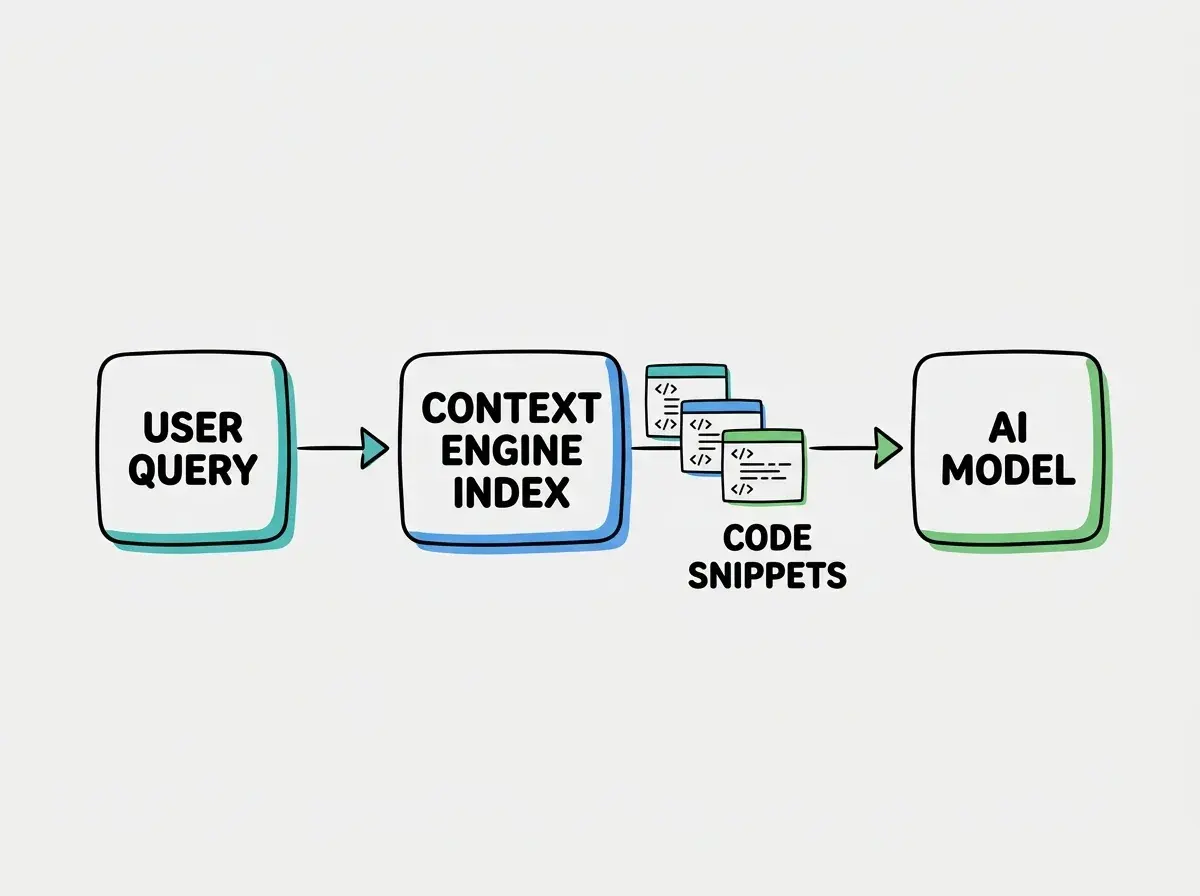
This distinction is crucial when evaluating tools for enterprise environments. A generic assistant might write a brilliant standalone function, but if it does not know about your company specific error handling library, you will spend more time rewriting the code than you saved. Augment positions its platform to bridge this gap by maintaining awareness of your specific project structure, as noted on their homepage at official documentation.
Proposed Task Tracing Authentication Across Packages
To truly evaluate a context engine, you need to test it on a task that spans multiple boundaries. A perfect example is tracing an authentication flow in a monorepo.
Imagine you have a frontend application built with React, a backend API written in Node, and a shared package containing your data transfer objects and validation schemas. A user reports a bug where their session token is expiring prematurely. To fix this, you need to understand how the token is generated on the backend, how it is validated in the shared package, and how the frontend handles the expiration event.
If you were to test this workflow, you might start by opening the frontend file that handles API requests. You would highlight the network call and ask the assistant to explain the authentication lifecycle for this specific endpoint.
This deliberately incomplete diagnostic fixture represents an existing token-based application, not a recommended production authentication design. The unused import is a clue to investigate, not proof of a real dependency.
// frontend/src/api/client.ts
import { AuthSchema } from '@internal/shared-types';

export async function fetchUserData(userId: string) {
  const token = localStorage.getItem('session_token');
  const response = await fetch(`/api/users/${userId}`, {
    headers: {
      'Authorization': `Bearer ${token}`
    }
  });

  if (response.status === 401) {
    handleTokenExpiration();
  }

  return response.json();
}
A robust context engine should recognize the @internal/shared-types import. It should check whether the unused AuthSchema import is relevant, locate the definition if needed, and identify the backend route handler that corresponds to /api/users/:userId and pull in the middleware that verifies the token.
The true value of a context engine is not generating boilerplate, but connecting the dots between isolated components. A successful tool must seamlessly traverse package boundaries to provide a complete picture of a feature lifecycle.
By asking the assistant to trace this flow, you are testing its ability to map dependencies and retrieve relevant files that are not currently open in your editor. If the tool simply explains standard JWT practices without referencing your specific backend middleware, it has failed the context retrieval test.
Explore clear explanations of AI coding tools, project context, and reliable development workflows.
Explore the blogAddressing Stale Indexes and File Permission Queries
Relying on an indexed representation of your codebase introduces new operational questions. The most pressing issue is index staleness. If you switch branches, pull the latest changes from the main repository, or run a massive refactor, you need to know when the index reflects the new state.
If the context engine operates on outdated information, it will suggest using deprecated functions or hallucinate variables that have been renamed. When evaluating a tool like Augment, teams must investigate how quickly the workspace index syncs with the current state of the file system. You should test this by renaming a core utility function and immediately asking the assistant to write a new feature utilizing that utility.
Another critical area involves ignored files and permissions. Enterprise repositories often contain sensitive configuration files, environment variables, or proprietary algorithms that should not be processed by external models.
# .augmentignore example
config/secrets.json
scripts/deploy.sh
**/*.key
The workspace indexing documentation, checked at publication, says workspace code is uploaded to Augment’s cloud. It describes .gitignore and .augmentignore exclusions and a Workspace Context sync view. This is a concrete data-transfer decision, not a local-only indexing setup. Check the applicable retention policy and any explicit inclusion patterns before enabling a sensitive workspace. If a developer does not have read access to a specific module in the repository, does the context engine still expose that code through its suggestions? These are not just technical nuances; they are fundamental security and compliance requirements.
| Evaluation | Indexed retrieval | Manually supplied context |
|---|---|---|
| Source selection | Tool retrieves from configured sources | Developer chooses the excerpts |
| Missing context | Check indexing, retrieval, and permissions | Check whether the right files were supplied |
| Staleness | Verify sync status and branch state | Verify excerpts against the current checkout |
| Review | Inspect cited source files | Inspect supplied source files |
These are workflow patterns, not mutually exclusive product categories. Other coding assistants also offer search, repository indexing, or tool-based retrieval.
When comparing a dedicated context engine to a generic coding assistant, the workflow differences become apparent. When using a chat workflow with manually supplied excerpts, you act as the context selector. You find and supply relevant files or functions. This manual gathering breaks your flow and limits the scope of the problem you can solve.
The dedicated tool automates this gathering phase. However, this automation requires trust in the indexing mechanism. If the index is flawed, the automated context gathering will be flawed, leading to frustrating interactions where you have to correct the assistant's assumptions.
Do not assume that an AI tool automatically understands your entire architecture just because it is installed in your IDE. Always verify that the tool is actively indexing the correct directories and respecting your ignore rules before relying on its architectural advice.
What This Means For Your Engineering Team Workflows
Integrating a tool like Augment Code into your daily operations requires a shift in how developers interact with their environment. You are no longer just writing code; you are querying your architecture.
For onboarding new engineers, this capability can be transformative. A new hire can ask the context engine to explain a feature’s data flow, then compare its answer with source files and an experienced teammate’s explanation. This review does not establish any reduction in onboarding time. By testing the tool on real tasks like tracing authentication flows, teams can establish a baseline of trust.
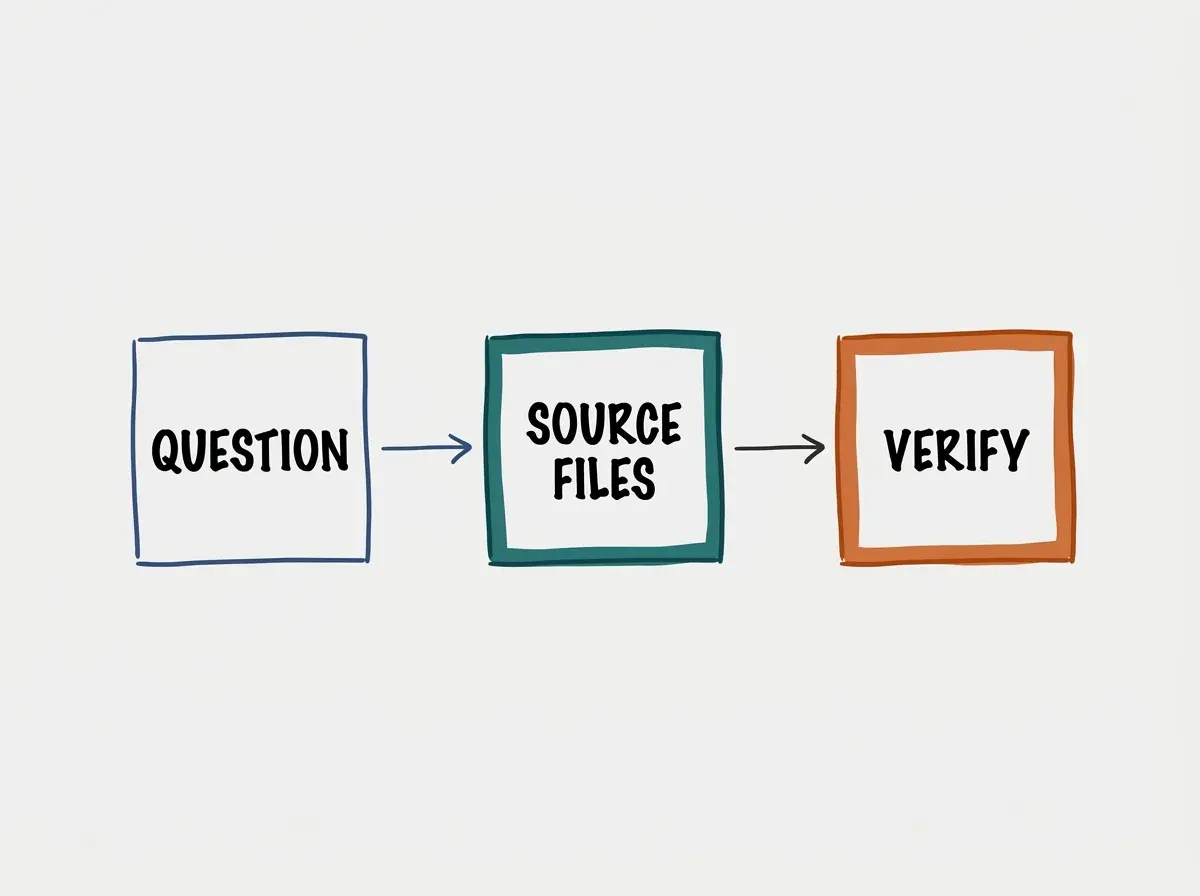
However, engineering managers must remain vigilant about the operational realities. Use ignore files to control indexing, and enforce sensitive-data access through the underlying permissions as well. You must educate your team on how to write effective queries that leverage the context engine capabilities. Most importantly, you must foster a culture where developers still critically evaluate the generated code, understanding that the AI is a navigator, not the driver.
Ultimately, the goal of these tools is to remove the friction of discovery. By providing accurate, contextualized information exactly when it is needed, a well implemented context engine allows developers to focus on solving complex business problems rather than searching for lost function definitions.
Record Evidence Before Expanding Access
Prepare an answer key for the authentication exercise before asking the assistant anything. List the frontend request wrapper, backend route, token-validation middleware, shared schema, and the tests that cover expiration. Record which files really participate in the failing request. This gives you something more concrete than an impression that the explanation sounds plausible.
Ask the assistant for a trace with file references and unresolved questions. Score whether it identifies the actual expiration setting, distinguishes access tokens from refresh tokens, and admits when a dependency is outside the indexed workspace. A confident explanation of a nonexistent refresh flow should count as a failure even if the prose is polished. Do not grant broader repository access simply to make the answer look more complete.
Repeat after switching to a branch that changes one relevant symbol. Record the sync state and whether the response cites the current name. Finally, have a second engineer reproduce the trace from the cited files without reading the assistant’s conclusions first. The useful result is a verifiable map of the implementation. If reviewers must redo every search, the tool has not yet demonstrated a discovery benefit for this task.
Read more practical articles for choosing tools, reviewing changes, and shipping useful software.
Read more guides