Architecture decision records (ADRs) document why technical decisions were made, not just what was decided. Four ADR sections produce records that remain valuable years later: context describing the problem, decision describing what was chosen, alternatives considered with trade offs, and consequences expected. ADRs prevent re deriving decisions and inform future decisions; without them, why decisions were made evaporates as team changes.
This piece walks through the four ADR sections, the format that works well for vibe coded projects, when to write ADRs, and the four mistakes builders make with decision documentation.
Why ADRs Matter Specifically For Vibe Coded Projects
ADRs matter specifically for vibe coded projects because AI assisted development produces decisions faster than memory captures them. Without documentation, decision rationale evaporates within months.
The 2026 reality is that vibe coded projects accumulate decisions invisibly; invisibility creates problems when team changes or projects scale.
A 2025 vibe coded project longevity study of 200 projects found that projects with active ADR practice had 56 percent fewer reverted decisions than projects without ADRs. Decision documentation measurably affects decision quality over time.
The pattern to copy is the way scientific researchers maintain lab notebooks. Notebooks capture what was tried, why, and what happened. Future researchers (or future you) reference notebooks rather than re experimenting. ADRs work the same way for technical decisions.
The Four ADR Sections
Four sections form complete ADRs.
Section 1, context describing the problem. What situation triggered the decision; why decision needed.
Section 2, decision describing what was chosen. What specifically was decided; precision matters.
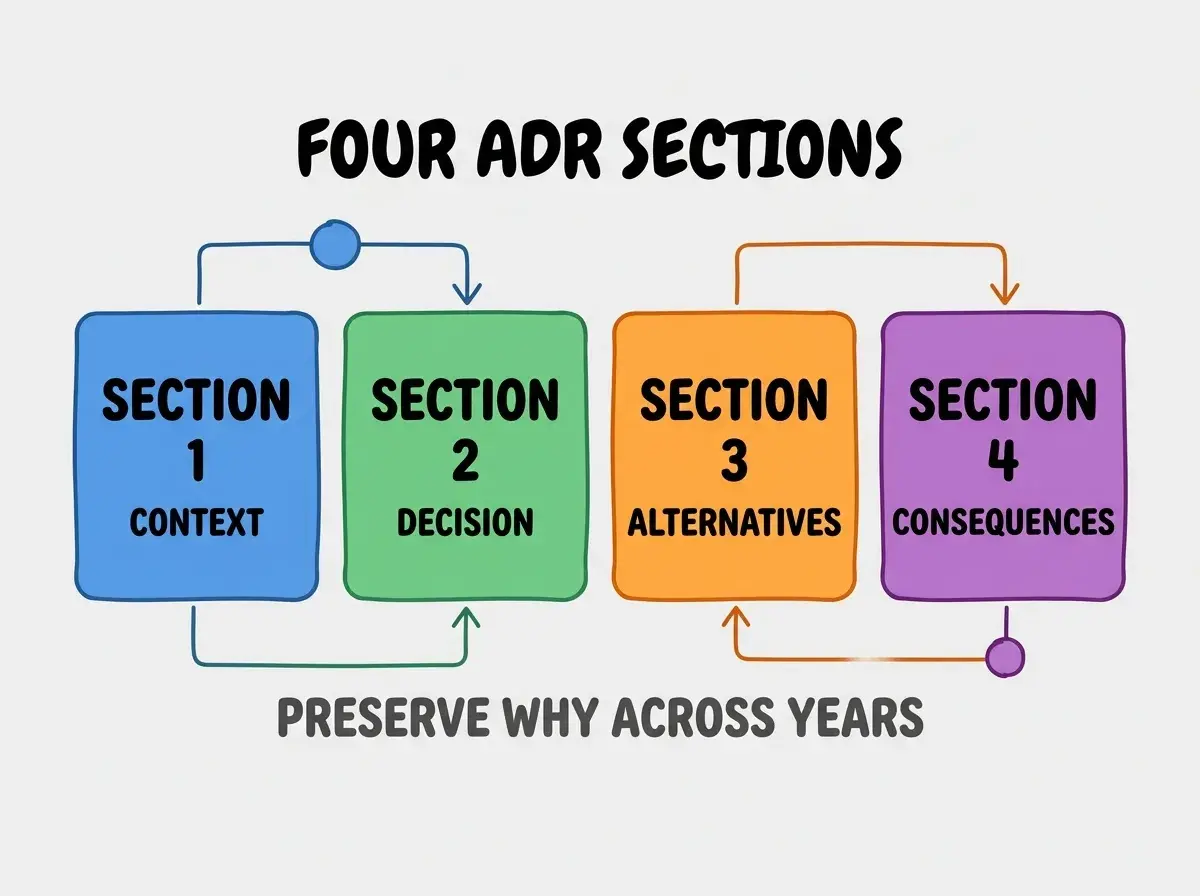
Section 3, alternatives considered with trade offs. What other options existed; why each was rejected.
Section 4, consequences expected. What outcomes anticipated; both positive and negative.
The Format That Works For Vibe Coded Projects
Three format patterns work well for vibe coded ADRs.
Pattern 1, markdown files in docs folder. docs/adr/0001-database-choice.md. Numbered for order; descriptive for findability.
Browse more ship articles
Read more shipPattern 2, brief over comprehensive. 200-500 words per ADR; longer ADRs do not get written.
Pattern 3, append only over edit. Old ADRs preserved; new ADRs supersede when needed. History matters.
When To Write ADRs
Three situations warrant ADRs.
Situation 1, technology choices that affect future work. Framework, database, language choices all warrant ADRs.
Situation 2, architectural patterns adopted. Microservices vs monolith, REST vs GraphQL, layered vs hexagonal architecture.
Situation 3, deviations from common practice. When you do something unusual, ADR explains why; future contributors understand.
What Makes ADR Practice Sustainable
Three patterns separate sustainable ADR practice from one off documentation.
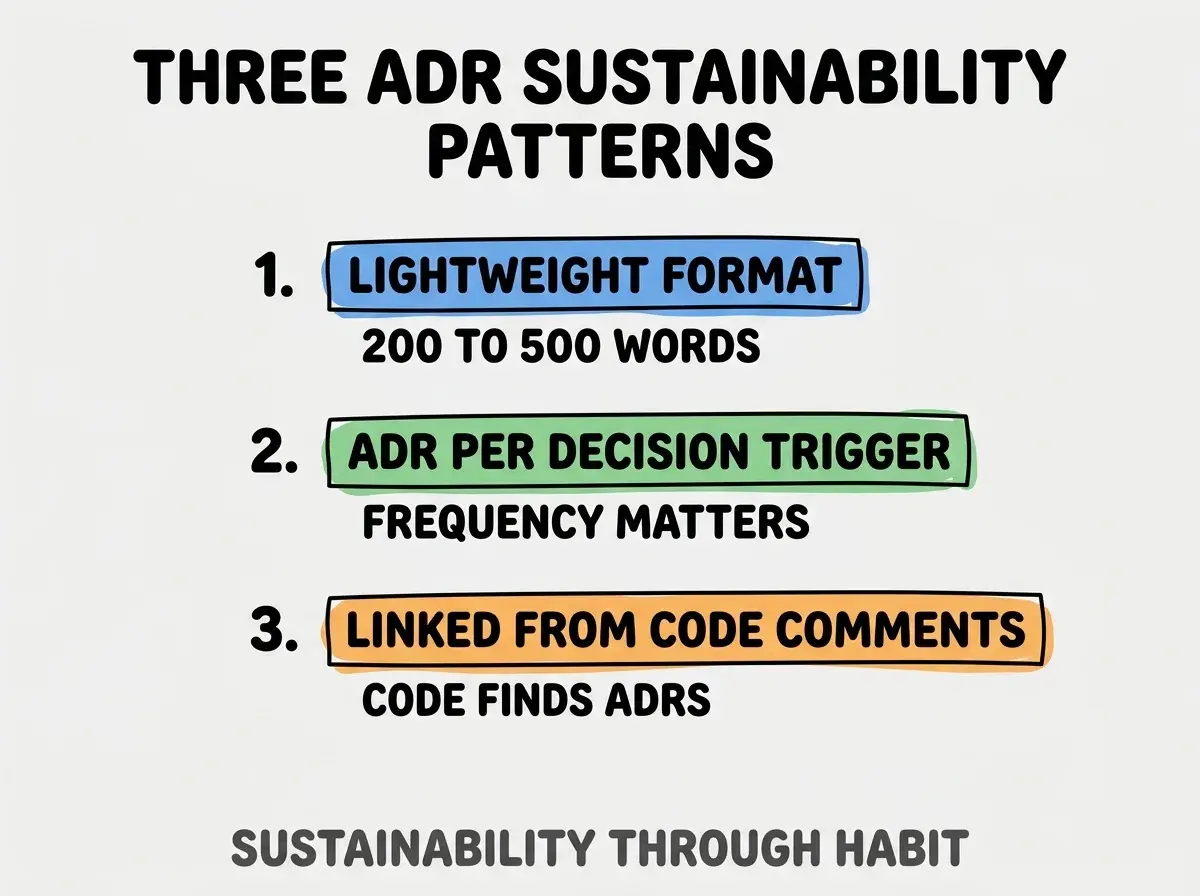
Pattern 1, lightweight format keeps writing fast. Long format prevents writing; short format enables writing.
Pattern 2, ADR per decision trigger. Decision happens, ADR follows. Frequency builds habit.
Pattern 3, linked from code comments. Comments reference ADR; ADRs become discoverable from code.
The combination produces sustainable ADR practice. Without these patterns, practice fades.
How To Use AI For ADR Writing
Three patterns help AI assist ADR writing.
Pattern A, AI generates first draft from decision conversation. Conversation transcript becomes ADR draft; human edits.
Pattern B, AI suggests alternatives section. AI knows common alternatives; suggestions complete trade off analysis.
Pattern C, AI reviews ADR for clarity. Clarity review catches ambiguity; iteration improves quality.
Common Questions About ADRs
ADRs raise questions worth addressing directly.
The first question is whether to retroactively document past decisions. Selectively yes; most important past decisions worth documenting.
The second question is whether ADRs replace other architecture documentation. No; ADRs complement other docs. Both serve different purposes.
The third question is who should write ADRs. Whoever made decision; ownership produces accuracy.
The fourth question is when to mark ADR superseded. When new ADR replaces it; superseded marker preserves history.
How ADRs Affect Long Term Project Sustainability
ADRs affect long term sustainability in compounding ways. Sustainability effects compound across years.
The first compounding effect is faster onboarding. New contributors read ADRs; reading speeds productivity.
The second compounding effect is consistent decisions. Past decisions inform future decisions; consistency improves quality.
The third compounding effect is reduced revisiting. Decisions stay decided; revisiting wastes time without value.
The combination produces sustainability that compounds. Without ADRs, decisions fade and revisit cycles dominate.
How To Adopt ADR Practice Progressively
Three adoption patterns help teams add ADR practice.
Pattern A, start with high impact decisions only. Low impact decisions skip ADR; high impact get documented.
Pattern B, ADR template reduces friction. Template provides structure; structure speeds writing.
Pattern C, review ADR adoption quarterly. Review reveals what works; revealed issues inform adjustment.
The combination produces sustainable adoption. Without progression, attempts at comprehensive coverage fail.
The most damaging ADR mistake is treating ADRs as bureaucratic ceremony rather than productivity investment. Ceremony gets skipped; investment gets done. The fix is to frame ADRs as future productivity rather than current obligation; framing affects adoption. Teams that frame as investment maintain practice; teams that frame as ceremony abandon practice.
The other mistake is over engineering ADR format. Long template prevents writing; short template enables writing.
A third mistake is missing the alternatives section. Alternatives reveal trade offs; trade offs inform future decisions.
A fourth mistake is treating ADRs as private. ADRs benefit team; sharing matters.
What This Means For You
Architecture decision records preserve decision rationale that AI assisted development produces faster than memory captures. The four sections, format patterns, and adoption approaches produce ADR practice that compounds project sustainability.
- If you're a senior dev: Start ADR practice on current project; first ADR takes 30 minutes, value compounds across years.
- If you're a product manager: ADRs help product understanding; participate in technical ADR conversations.
Browse more ship articles
Read more ship