Deciding when to rewrite vs refactor AI generated code requires evaluating quality, scope, and effort across factors. Four decision factors matter: code understanding (do you understand existing code), test coverage (can you verify equivalence), scope of changes needed (small vs comprehensive), and risk tolerance (production vs prototype). Refactor when understanding plus tests; rewrite when neither. Wrong choice wastes weeks; right choice compounds productivity.
This piece walks through the four decision factors, the implementation patterns, what makes each choice sustainable, and the four mistakes builders make on rewrite vs refactor.
Why The Decision Matters
The decision matters because AI generated code accumulates issues that need addressing. Wrong approach wastes weeks; right approach compounds quality.
The 2026 reality is that AI generates code at velocity that creates rewrite vs refactor decisions weekly. Decision skill compounds with practice.
A 2025 vibe coder workflow study of 600 builders found that builders applying decision framework to rewrite vs refactor saved average 18 hours weekly compared to builders making ad hoc decisions, primarily through avoiding wrong path commitments. Decision quality measurably affects time investment.
The pattern to copy is the way home renovators decide rebuild vs renovate. Renovate when foundation good plus updates needed; rebuild when foundation rotten. Same patterns apply to AI code; foundation matters.
The Four Decision Factors
Four factors decide rewrite vs refactor.
Factor 1, code understanding. Understanding enables refactor; without understanding, refactor risky.
Factor 2, test coverage. Tests verify refactor; without tests, refactor unsafe.
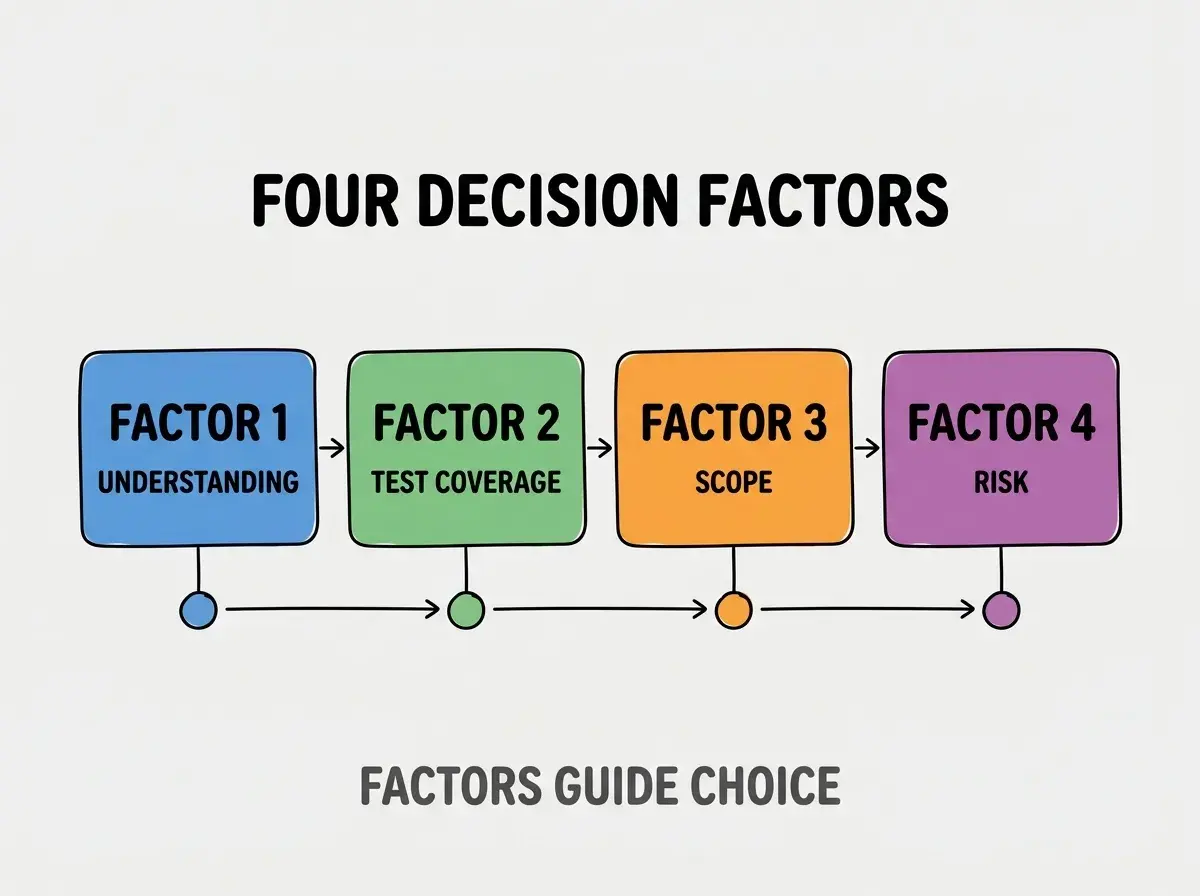
Factor 3, scope. Small scope favors refactor; comprehensive favors rewrite.
Factor 4, risk tolerance. Production code refactor; prototype rewrite ok.
How Each Factor Influences Choice
Four implementation patterns address each factor.
Implementation 1, understanding via reading. Read code before deciding; AI explanations help.
Browse more ship
Read more shipImplementation 2, tests before either. Add tests first; tests enable both refactor and rewrite verification.
Implementation 3, scope estimation. Time refactor mentally; if exceeds rewrite, rewrite considered.
Implementation 4, environment matches risk. Production high risk; prototype low risk.
What Makes Refactor Sustainable
Three patterns separate sustainable refactor from regression generation.
Pattern 1, comprehensive tests first. Tests catch regressions; without tests, refactor risky.
Pattern 2, small incremental refactors. Small refactors review easily; large hide issues.
Pattern 3, frequent commits. Each refactor committed; rollback possible.
What Makes Rewrite Sustainable
Three patterns separate successful rewrites from second system effect.
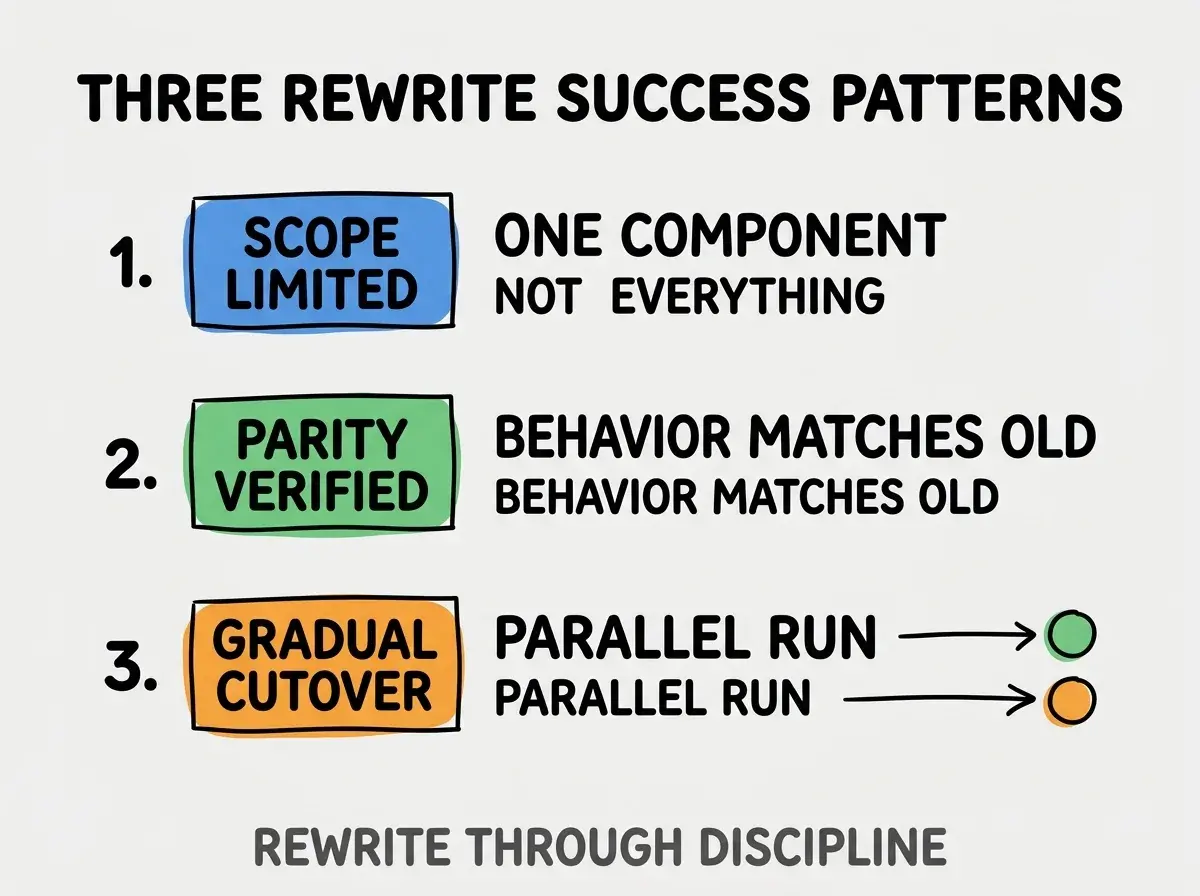
Pattern 1, scope limited. One component not everything; scope creep kills rewrites.
Pattern 2, parity verified. Behavior matches old; verification matters.
Pattern 3, gradual cutover. Parallel run during transition; reduces risk.
The combination produces successful rewrites. Without these patterns, rewrites become disasters.
How To Choose Per Project
Three patterns help per project decisions.
Pattern A, prototype rewrite usually. Prototypes designed to throw away; rewrite acceptable.
Pattern B, production refactor usually. Production user impact; refactor safer.
Pattern C, experimental hybrid. Some rewrite, some refactor; pragmatic.
Common Questions About Rewrite vs Refactor
Rewrite vs refactor raises questions worth addressing directly.
The first question is whether AI helps with rewrite. Yes; AI accelerates rewriting from spec.
The second question is whether to ask AI which to choose. Sometimes useful; AI suggests but human decides.
The third question is what about partial rewrite. Common; refactor majority, rewrite worst parts.
The fourth question is when to give up on refactor. When refactor effort exceeds rewrite effort; switch.
How Decision Affects Project Trajectory
Decision affects project trajectory in compounding ways. Trajectory effects compound across decisions.
The first compounding effect is technical debt accumulation. Right decisions reduce debt; wrong accumulate.
The second compounding effect is team morale. Successful refactors and rewrites build team confidence.
The third compounding effect is shipping cadence. Right decisions enable shipping; wrong decisions delay.
The combination produces trajectory shaped by decision quality. Without framework, trajectory bounded by decision randomness.
How To Use AI For Decision Making
Three patterns help AI assist decisions.
Pattern A, AI summarizes code. Summary reveals understanding; informs choice.
Pattern B, AI estimates effort. AI estimates refactor time; estimate informs.
Pattern C, AI proposes both approaches. Both proposed; comparison enables choice.
The combination produces AI assisted decisions. Without AI, decisions depend on individual judgment.
The most damaging rewrite vs refactor mistake is rewriting because new approach feels exciting. New approach excitement biases toward rewrite even when refactor better. The fix is to apply framework dispassionately; understanding plus tests favor refactor regardless of excitement. Builders who apply framework save weeks; builders who follow excitement waste weeks on unjustified rewrites.
The other mistake is opposite: refactoring code that needs rewrite. Some code beyond refactor; rewrite faster.
A third mistake is missing the test coverage prerequisite. Both rewrite and refactor need tests; without tests, both risky.
A fourth mistake is treating decision as binary. Hybrid approaches valid; some refactor plus some rewrite often optimal.
What This Means For You
Deciding when to rewrite vs refactor AI generated code requires framework across four factors. The four factors, implementation patterns, and sustainability approaches produce decisions that compound project quality.
- If you're a senior dev: Decision fluency compounds career; framework helps.
- If you're an indie hacker: Solo decisions consume time; framework reduces decision time.
- If you're changing careers: Decision frameworks valued; learn early.
Browse more ship
Read more ship