To understand AI pair programming evolution from suggestion to collaboration, recognize the four collaboration phases the evolution reveals (autocomplete suggestion handling individual completions, code generation handling functional units, conversational assistance handling design decisions, and genuine collaboration handling architectural reasoning), see what shifts in each phase, and consider what the evolution means for developers. The collaboration evolution matters because each phase requires different developer skills.
This piece walks through the four collaboration phases, what shifts as evolution progresses, the implications for developers, and the four mistakes when interpreting collaboration evolution.
Why AI Pair Programming Evolution Matters
AI pair programming evolution matters as AI capabilities expand collaboration depth. The matter; deeper collaboration changes developer skill requirements.
The 2026 reality is that AI capabilities have moved beyond autocomplete to genuine collaboration on design decisions. The shift produces both opportunities and challenges that developers should understand.
A 2025 developer productivity study tracking AI usage patterns found that developers using AI for design conversations alongside code generation reported 47 percent higher job satisfaction and 38 percent better feature outcomes compared to developers using AI for code generation only. Collaboration depth matters for both satisfaction and outcomes.
The pattern to copy is the way historians track tool evolution. Tools evolve from simple to complex use cases over time; each evolution stage produces different productivity and skill patterns. AI pair programming follows similar pattern; understanding evolution informs skill investment.
The Four Collaboration Phases
Four phases characterize AI pair programming evolution.
Phase 1, autocomplete suggestion. AI completes individual lines or short blocks. Suggestion phase requires minimal skill change.
Phase 2, code generation for functional units. AI generates functions or components from requirements. Generation requires specification skills.
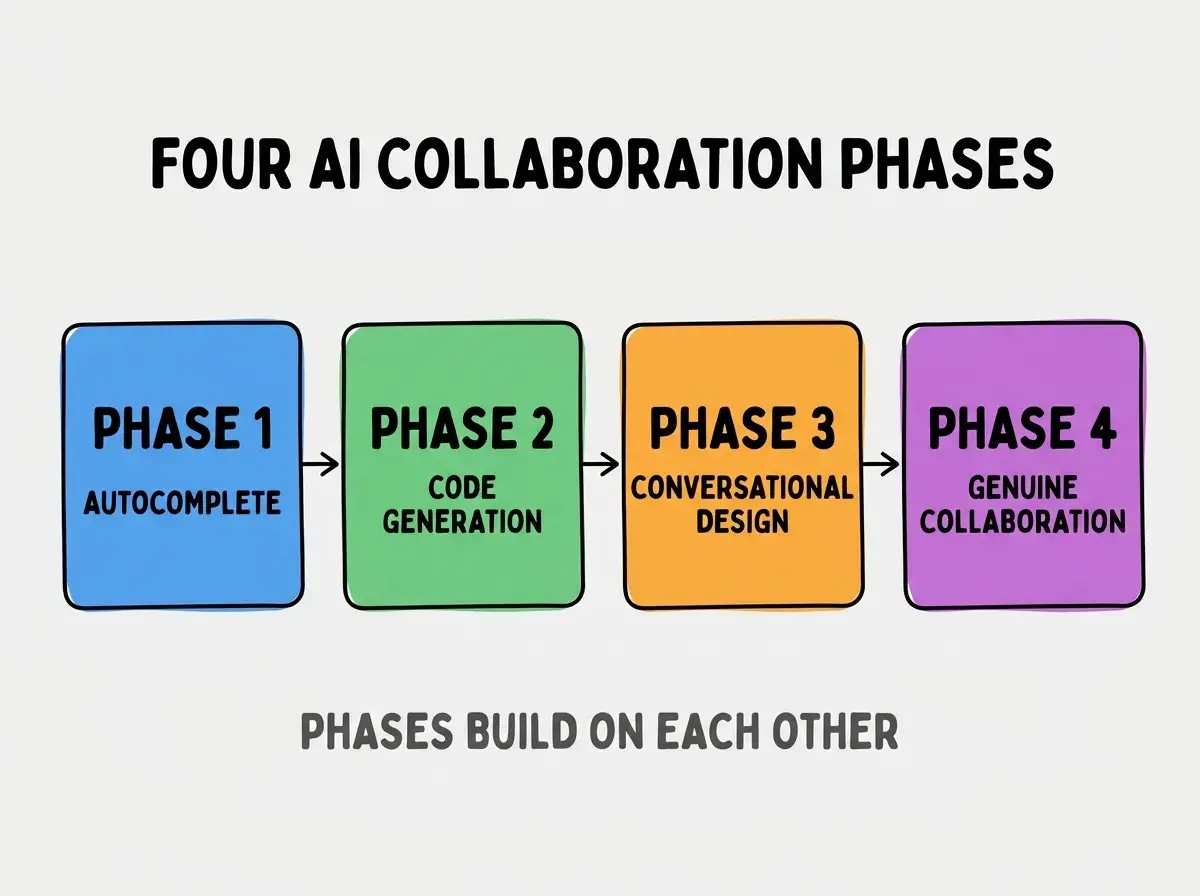
Phase 3, conversational assistance for design decisions. AI participates in design conversations. Conversation requires articulation skills.
Phase 4, genuine collaboration on architectural reasoning. AI contributes architectural perspective. Genuine collaboration requires judgment skills.
What Shifts In Each Phase
Three patterns characterize phase shifts.
Pattern 1, skill requirements shift toward articulation and judgment. Each phase requires more articulation and judgment than previous. Skill shift matters for career planning.
Browse more pulse
Read more pulsePattern 2, productivity gains shift from speed to quality. Early phases produce speed; later phases produce quality. Different value patterns matter.
Pattern 3, developer role shifts from typist to collaborator. Early phases preserve developer typing role; later phases shift to collaboration role. Role shift matters identity wise.
What The Evolution Means For Developers
Three implications matter for developers navigating evolution.
Implication 1, skill investment should anticipate later phases. Building articulation and judgment skills before fully needed. Anticipation matters for career trajectory.
Implication 2, role identity may need rethinking. Pure typing role gives way to collaboration role; identity matters for job satisfaction.
Implication 3, collaboration patterns benefit from deliberate practice. Phase 3 and 4 skills do not develop automatically. Deliberate practice required.
How To Develop Collaboration Skills
Three development patterns build AI collaboration capability.
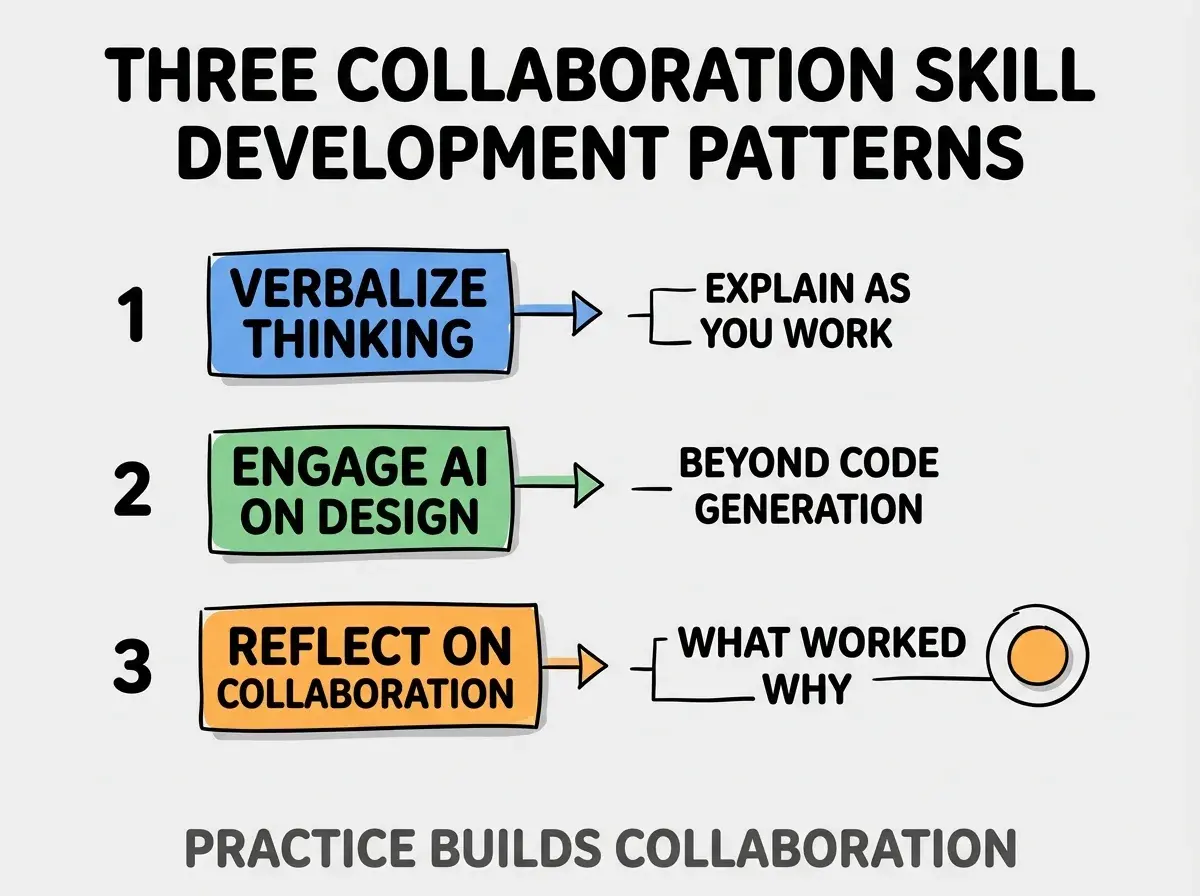
Pattern 1, verbalize thinking during coding. Articulation enables AI collaboration. Without verbalization, AI cannot participate in design.
Pattern 2, engage AI on design questions not just code. Move beyond code generation to design conversation. Engagement builds collaboration patterns.
Pattern 3, reflect on collaboration what worked. Reflection converts experience into skill. Without reflection, experience does not compound.
What Makes Collaboration Evolution Sustainable
Three patterns separate sustainable collaboration evolution from problematic patterns.
Pattern 1, evolution at sustainable pace. Each phase requires adjustment time. Without time, evolution overwhelming.
Pattern 2, role identity adjustment alongside skill adjustment. Identity and skills shift together. Without identity adjustment, skill adjustment incomplete.
Pattern 3, calibration to match actual AI capability. AI capabilities advance unevenly; calibration matters. Without calibration, expectations mismatch reality.
The combination produces sustainable evolution that matches AI capability advancement. Without these patterns, evolution produces either over confidence or unnecessary skepticism.
How To Recognize Phase Transitions
Three transition pattern recognition helps developers navigate evolution.
Pattern A, when AI handles tasks previously requiring human judgment. Capability expansion signals phase transition. Recognition enables adjustment.
Pattern B, when collaboration patterns produce better outcomes than pure code generation. Outcomes signal phase value. Without recognition, value goes uncaptured.
Pattern C, when AI suggestions feel like collaboration not assistance. Subjective shift signals collaboration phase. Subjective experience matters.
The combination produces transition recognition. Without recognition, transitions happen without conscious adjustment.
The most damaging AI collaboration evolution mistake is treating current AI capability as final endpoint rather than evolution waypoint. AI capabilities continue advancing; current capability informs current decisions but should not constrain long term skill investment. The fix is to invest in skills that work across phases; articulation, judgment, design thinking all transfer across phases. Developers who invest in transferable skills produce better outcomes than developers who optimize for current AI capability.
The other mistake is missing the role identity dimension. Skills can shift faster than identity; identity matters for sustained motivation.
A third mistake is avoiding deeper collaboration phases. Collaboration phases produce value that suggestion phases cannot match.
A fourth mistake is treating collaboration as universal across AI tools. Different AI tools support collaboration differently; tool choice affects collaboration depth.
How To Apply Collaboration Patterns To Specific Work
Three work patterns deserve specific collaboration approaches.
Pattern A, exploratory work benefits from conversational collaboration. Discussing approaches before building. Conversation helps direction setting.
Pattern B, well defined work benefits from generation collaboration. Specification then generation. Pattern matches well defined work.
Pattern C, architectural work benefits from genuine collaboration. AI as design participant. Pattern matches high stakes architecture.
The combination produces work specific collaboration approaches. Without specific approaches, generic collaboration produces suboptimal outcomes.
How AI Pair Programming Will Likely Evolve
AI pair programming will likely continue evolving toward deeper collaboration.
The first likely evolution is multi modal collaboration. Voice, sketching, screen sharing all becoming common. Multi modal expands collaboration possibilities.
The second likely evolution is team collaboration with AI. AI participating in team conversations not just individual. Team collaboration extends value.
The third likely evolution is persistent context across sessions. AI maintaining project context over time. Persistence reduces context provision burden.
The combination suggests AI pair programming will become more collaborative over time. Developers learning collaboration patterns now build skills that remain valuable.
Common Questions About AI Collaboration Evolution
AI collaboration evolution raises questions worth addressing directly.
The first question is whether all developers should embrace collaboration phases. Yes; collaboration phases produce value that suggestion phases cannot match.
The second question is whether collaboration replaces human pair programming. No; AI and human collaboration complement each other. Different value patterns.
The third question is whether collaboration phases require specific tools. Some tools support collaboration better than others; tool choice matters.
The fourth question is whether collaboration phases work for solo developers. Yes; collaboration with AI substitutes for missing human pair programming. Solo developers benefit dramatically from collaboration phases.
The fifth question is how to know which phase suits current work. Match phase to work complexity; simple work suits autocomplete, complex work needs collaboration.
What This Means For You
AI pair programming evolution from suggestion to collaboration affects developer skills and outcomes. The four phases, skill development patterns, and recognition approaches produce framework for navigating evolution.
- If you're a senior dev: Develop collaboration skills proactively. Skills produce value as AI capability advances.
- If you're a product manager: Understanding collaboration evolution helps engineering coordination. Help engineers navigate transitions.
- If you're a career changer: Build collaboration skills from start; collaboration represents future state of AI assisted development.
Browse more pulse
Read more pulse