The second quarter of 2026 brought a relentless wave of foundational model updates. Engineering teams found themselves navigating a complex landscape of shifting capabilities, unexpected downtime, and challenging integration decisions. Keeping up with the pace of releases requires more than just reading benchmark scores. It demands a rigorous approach to evaluation and a clear understanding of how these tools fit into production environments.
Retrospective edition for June 29, 2026. Researched and published September 9, 2026. Product details reflect documentation checked at publication unless explicitly identified as historical.
Analyzing the Rapid Pace of Major AI Model Releases in Q2 2026
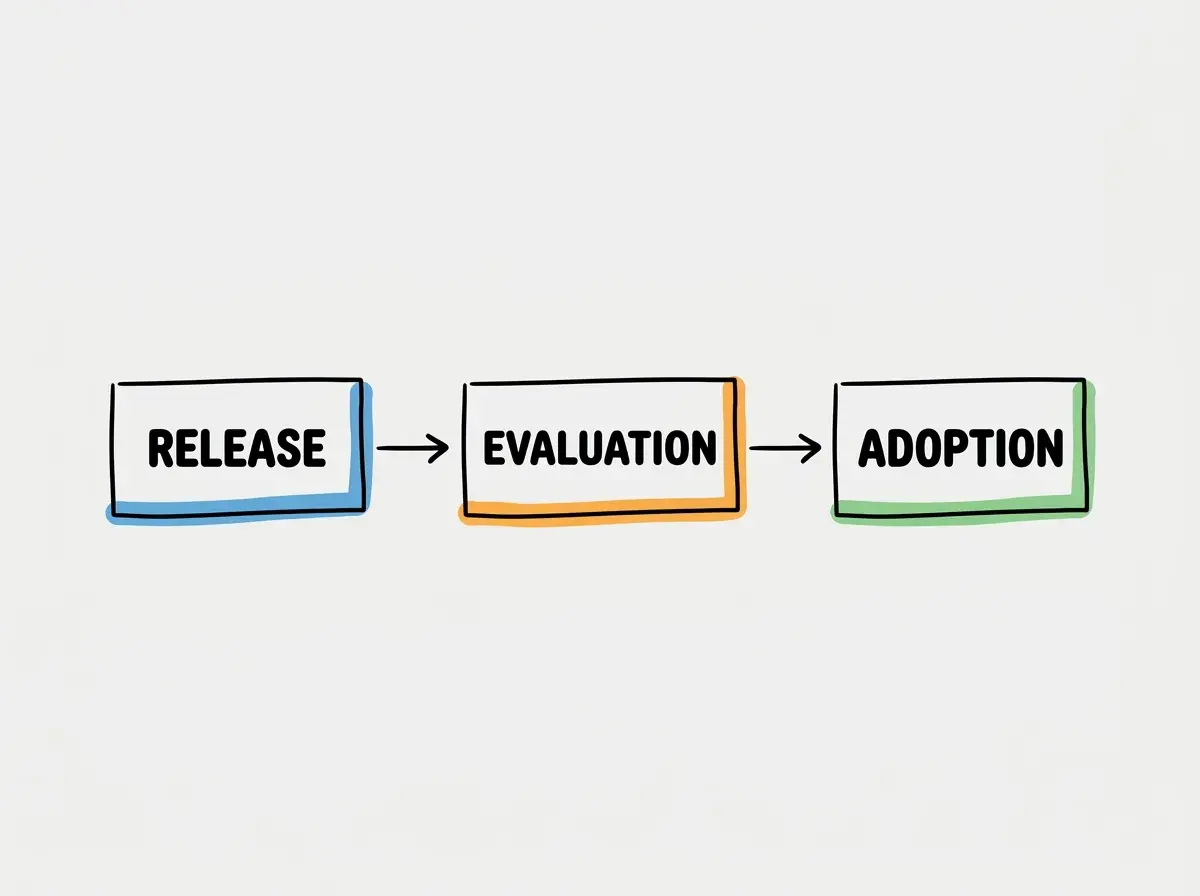
The quarter began with Anthropic releasing Claude Opus 4.7 on April 16, as noted in their official announcement. The vendor emphasized harder software-engineering work. Just one week later, on April 23, OpenAI followed with introducing GPT 5.5, highlighting coding, computer use, and complex professional work.
The momentum continued into May. Google utilized their annual developer conference on May 19 to unveil Gemini 3.5, emphasizing deep integration with their enterprise ecosystem. Anthropic quickly iterated again, launching Claude Opus 4.8 on May 28 with further capability and workflow updates.
June introduced significant turbulence. Anthropic announced Claude Fable 5 and Mythos 5 on June 9, with Fable intended for broader use and Mythos restricted to trusted defensive-security partners. However, on June 12, access to both Fable 5 and Mythos 5 was suspended after their launch. As of June 29, general access had not resumed, highlighting the fragility of relying on cutting edge releases for immediate production use.
Understanding Baseline Fallback Costs and Model Availability
The June suspension of Fable 5 and Mythos 5 serves as a stark reminder that availability is a critical operational constraint, not just a footnote. When designing production systems, engineering leaders must account for baseline fallback costs. If your primary model experiences an outage, your system needs a reviewed response, which may be an approved fallback or a deliberate pause.
This requires maintaining harness compatibility across multiple APIs. For example, if your primary application relies on GPT 5.5 for extracting structured JSON from unstructured text, your fallback harness must be able to translate the task, tool definitions, and required output contract to Gemini 3.5 or Opus 4.8.
Model availability is a functional requirement. Always design your architecture with a tested fallback model to support continuity where the fallback meets the same requirements during unexpected provider outages.
Consider a hypothetical cost evaluation. If your application processes one million input tokens and generates two hundred thousand output tokens daily, you must calculate the financial impact of your fallback strategy. If your primary model costs hypothetical $10 per million input tokens and your fallback costs hypothetical $15 per million, an extended outage will impact your margins. You must weigh this potential cost increase against the engineering effort required to maintain a highly optimized, multi provider routing layer.
| Evidence category | What the Q2 announcements establish | What still needs testing |
|---|---|---|
| Release timing | New model options appeared across April and May | Availability for your account and region |
| Capability claims | Vendors described improvements in selected tasks | Accepted results on your repository |
| Operational continuity | June access changed after launch | Fallback or pause behavior |
| Integration | Different platforms expose different interfaces | Tool schemas, errors, permissions, and usage accounting |
A release announcement establishes neither a universal winner nor compatibility with your existing agent harness.
Explore clear explanations of AI coding tools, project context, and reliable development workflows.
Explore the blogBuilding a Comprehensive Six Task Evaluation Packet for Your Team
Relying on public benchmarks is insufficient for making production decisions. Every organization should develop a custom six task evaluation packet that reflects their specific workloads. This packet should be run against every new model release to determine actual utility.
First, include a data extraction task. Provide a messy, unstructured text document and require the model to output a strictly typed JSON object. Measure how often the model violates the schema. Second, test summarization with specific constraints. Ask the model to summarize a long transcript into exactly three bullet points, ensuring no external information is hallucinated.
Third, evaluate code generation within your specific domain. Provide an existing function from your codebase and ask the model to write unit tests for edge cases. Fourth, test the model ability to follow negative constraints. Give it a customer support scenario and explicitly instruct it not to offer a refund.
Fifth, assess multi turn reasoning. Simulate a conversation where the user changes their mind halfway through, and verify if the model tracks the updated context accurately. Finally, include a task that tests domain specific jargon. If you operate in the legal sector, provide a contract snippet and ask for a plain English explanation, checking for legal accuracy.
Do not rely solely on generalized benchmarks like MMLU or HumanEval. These scores rarely correlate directly with how a model will perform on your proprietary data and specific business logic.
By running this six task packet against GPT 5.5, Gemini 3.5, and Opus 4.8, you generate internal metrics that actually matter. You might find that while one model excels at code generation, another is vastly superior at strict JSON formatting, guiding your routing decisions.
Balancing Sunk Integration Costs Against Potential Upgrade Benefits
Upgrading to a new model is rarely as simple as swapping an API key. Past integration effort is sunk: it should not by itself decide what to do next. The relevant costs are future maintenance, migration, and validation. You have likely spent weeks refining prompts, building specific parsing logic for edge cases, and fine tuning your retrieval augmented generation pipeline to work perfectly with your current provider.
A team that had just stabilized its Opus 4.7 integration faced another evaluation decision when Opus 4.8 arrived. The decision to upgrade requires careful calculation. You must ask whether the incremental improvements in instruction following justify the engineering hours required to re validate your entire test suite.
If your current setup meets your service level agreements, the most prudent business decision is often to delay the upgrade. Reserve your engineering resources for building new features rather than chasing marginal performance gains. Only authorize the migration if the new model solves a critical bottleneck or significantly reduces your hypothetical operational costs.
Implementing Reasoned Workflow Allocation Across Multiple Models
The most sophisticated engineering teams do not seek a single universal winner. Instead, they practice reasoned workflow allocation. This involves routing different tasks to different models based on their specific strengths and cost profiles.
For high volume, low complexity tasks like basic text classification or sentiment analysis, you should route requests to a smaller, faster model. This preserves your budget and reduces latency for end users. Save your expensive, heavy duty models like GPT 5.5 or Opus 4.8 for complex reasoning tasks, such as generating initial drafts of technical reports or analyzing intricate datasets.
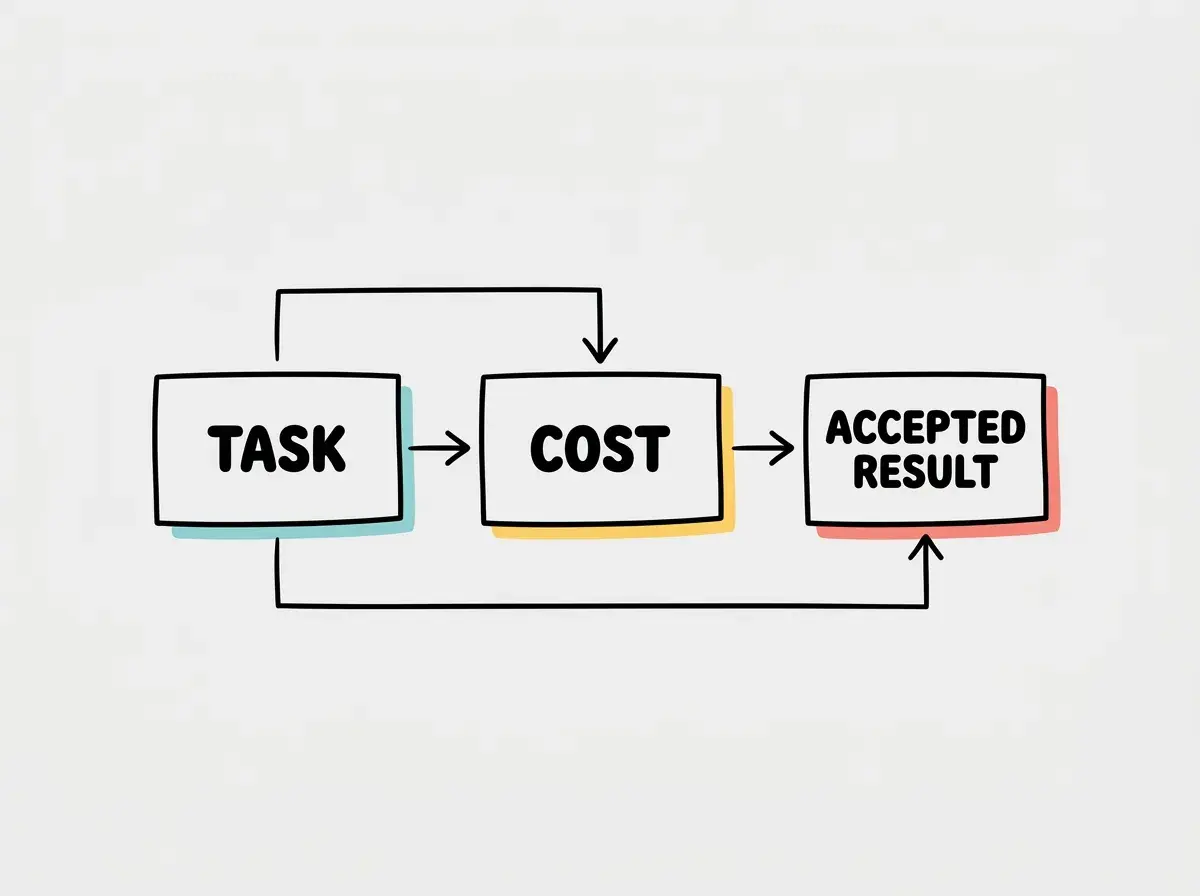
This approach requires a robust middleware layer capable of inspecting incoming requests and dynamically routing them. It also demands comprehensive monitoring to track the performance and cost of each model in real time. By adopting this strategy, you can limit exposure to one model’s availability, while taking on the cost of maintaining several integrations.
Put Migration Costs in the Same Worksheet
For each candidate, estimate the work that remains from today onward. Include changing model identifiers, adapting tool schemas, updating response parsing, rerunning acceptance checks, and teaching reviewers any changed behavior. Separate that estimate from the effort already spent on the current setup. A large past investment is not recoverable by keeping an inferior option, but a real future migration cost still matters.
Use a concrete decision threshold. For example, a hypothetical team might trial a model only if it resolves a recurring failure in its authentication-debugging task or reduces review time on a repeated refactor. The threshold should describe a useful outcome, not a place on a public leaderboard. Record who can approve the change and which failures would trigger a rollback or pause.
The fallback worksheet needs the same discipline. Count the extra usage and operational work during an outage, but also test whether the alternate model supports the tools and data policy required by the task. A fallback that produces valid prose but cannot safely complete a pending repository action is not equivalent service. In that case, stopping with a clear state record may be the more reliable behavior.
Keep the evaluation packet small enough to rerun. Six representative tasks with explicit outcomes are more useful than a large unmaintained collection of prompts. Refresh a task when the application changes, preserving the earlier result and explaining why the acceptance criteria moved. This turns the quarter’s release sequence into a manageable set of engineering decisions rather than a permanent migration project.
Frequently Asked Questions
What This Means for Your AI Strategy in the Next Quarter
The events of Q2 2026 demonstrate that the AI landscape remains highly volatile. The rapid succession of releases from major providers offers incredible new capabilities, but also introduces significant operational risks. Teams that succeed will be those that prioritize architectural resilience over chasing the latest benchmark scores.
Focus on building robust evaluation frameworks, maintaining fallback options, and allocating workloads intelligently. By treating model availability as a core feature and rigorously testing against your specific use cases, you can build AI applications that deliver consistent value regardless of which provider wins the news cycle on any given week.
Read more practical articles for choosing tools, reviewing changes, and shipping useful software.
Read more guides