To understand the vibe engineering movement in 2026 and the shift from vibe coding to vibe engineering, recognize the four discipline patterns the movement promotes (testing discipline that ensures AI generated code actually works correctly across edge cases, architecture discipline that prevents AI generated code from compounding into unmaintainable systems, review discipline that catches AI generation errors before they reach production, and operational discipline that handles AI generated code lifecycle including updates and security), see what the shift reveals about industry maturation, and consider what the movement means for builders thinking about engineering practices. The vibe engineering movement signals industry maturation from initial enthusiasm to sustainable practice.
This piece walks through the four discipline patterns, what the movement reveals, the implications for builders, and the four mistakes when interpreting the engineering shift.
Why the Vibe Engineering Movement Matters
The vibe engineering movement matters because it represents industry maturation beyond initial vibe coding enthusiasm. Early vibe coding emphasized speed and accessibility; vibe engineering adds disciplines that make AI generated code sustainable in production environments.
The 2026 reality is that production deployments of AI generated code revealed gaps in initial vibe coding practices. Quality issues, maintenance challenges, and security vulnerabilities surfaced as production deployments aged; vibe engineering practices address these issues without abandoning AI tool benefits.
A 2025 production engineering survey of 800 teams using AI coding tools heavily found that teams adopting vibe engineering practices had 67 percent fewer production incidents related to AI generated code than teams continuing pure vibe coding practices. The discipline produces production reliability that pure speed does not provide.
The pattern to copy is the way agile development matured from extreme programming. Early agile emphasized speed and flexibility; mature agile added disciplines around testing, continuous integration, and operational practices. The maturation made agile sustainable in production environments. Vibe engineering follows similar maturation pattern; speed plus discipline produces sustainable AI tool use.
The Four Discipline Patterns
Four discipline patterns characterize vibe engineering practices.
Pattern 1, testing discipline ensures AI generated code works correctly. Comprehensive test coverage, edge case testing, integration testing. AI code that passes obvious cases often fails edge cases without testing.
Pattern 2, architecture discipline prevents code compounding into unmaintainable systems. Module boundaries, dependency management, design patterns. AI generation without architecture discipline produces increasingly tangled systems over time.
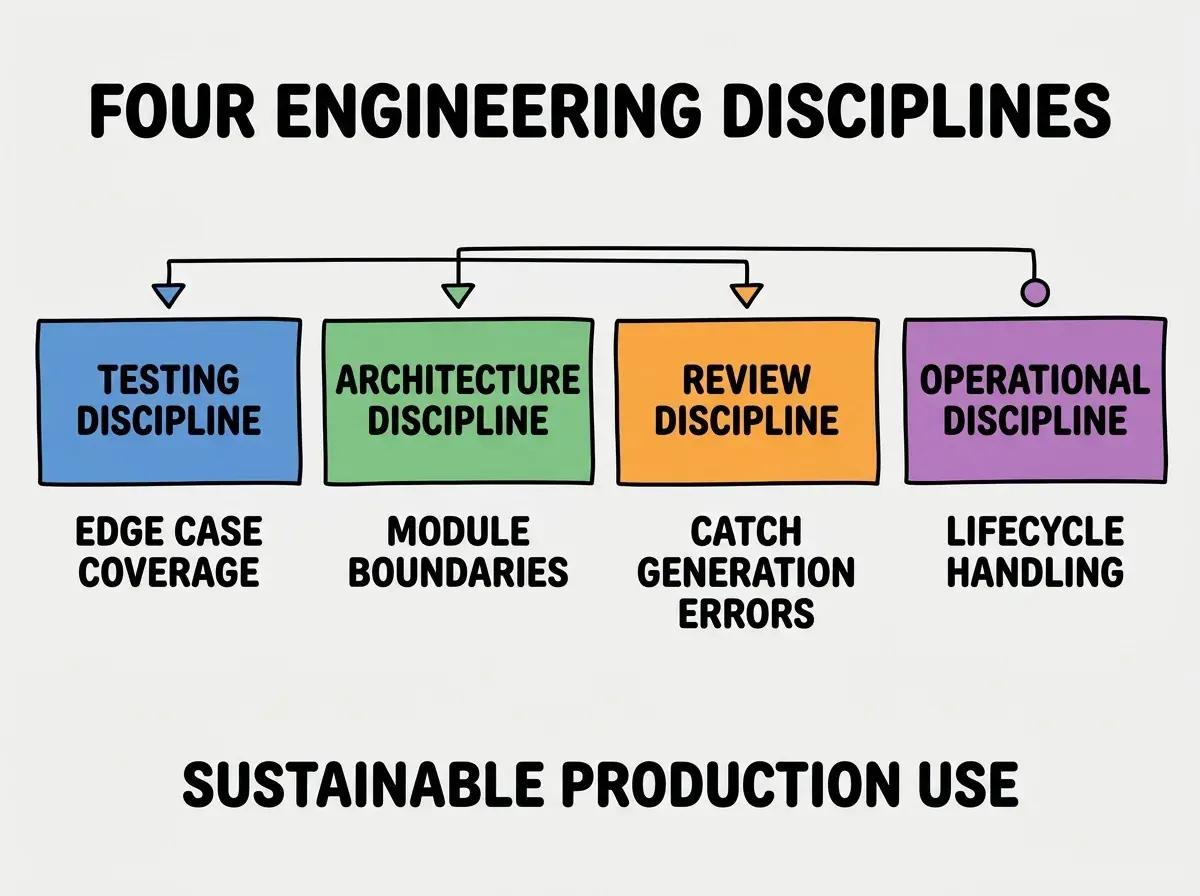
Pattern 3, review discipline catches AI generation errors before production. Mandatory human review of AI generated code, automated linting and security scanning. Review prevents the obvious errors that AI generation occasionally produces.
Pattern 4, operational discipline handles AI generated code lifecycle. Updates, refactoring, security patching, dependency management. AI generated code requires same operational care as human written code.
What the Movement Reveals
Three patterns from the movement reveal industry maturation direction.
Pattern 1, productivity gains require sustainability discipline to compound. Teams that ship fast without discipline produce technical debt that eventually slows them more than initial speed gained. Discipline preserves productivity over time.
Browse more engineering analysis
Read more pulse articlesPattern 2, AI tools amplify both good and bad practices. Teams with strong engineering culture get faster while maintaining quality; teams without discipline get faster while accumulating problems. AI tools amplify existing tendencies.
Pattern 3, production maturity reveals discipline gaps. Demos and prototypes work without discipline; production deployments expose gaps. The exposure has driven the engineering discipline movement.
How Builders Can Apply These Insights
Three application patterns help builders adopt vibe engineering practices.
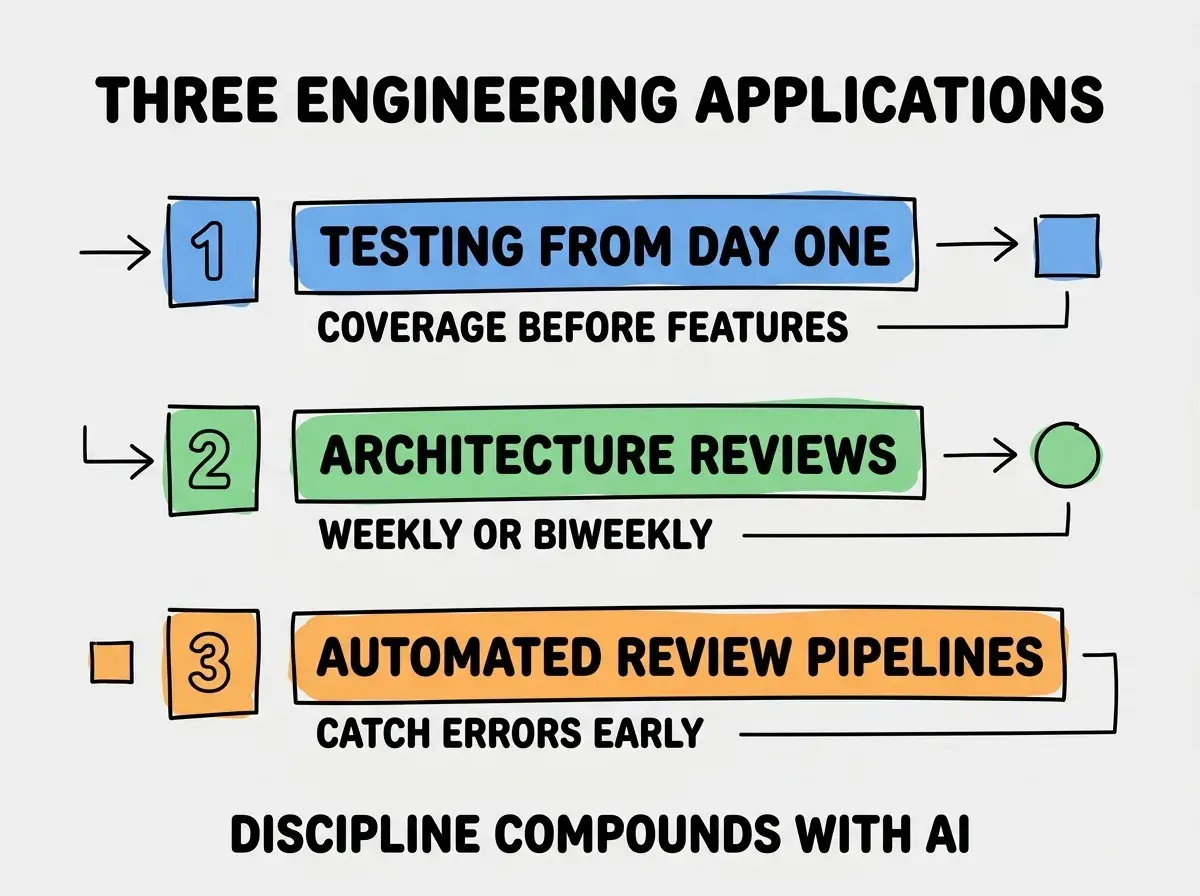
Application 1, testing from day one with coverage before features. New AI generated code should have tests before it ships. Testing later rarely happens; testing now produces sustainable quality.
Application 2, architecture reviews weekly or biweekly. Regular review of system architecture catches drift before it becomes problems. Without reviews, AI generation produces architectural debt.
Application 3, automated review pipelines catch errors early. Linting, security scanning, dependency checking automated. Automated review scales better than manual review for AI generation volume.
What Vibe Engineering Means For Different Roles
Three role implications matter for thinking about how to apply the movement.
Implication 1, senior engineers should lead discipline adoption within teams. Senior engineers have the experience to recognize discipline value; their leadership produces team discipline that junior leadership cannot.
Implication 2, founders should require discipline practices before scaling. Scaling without discipline compounds problems; scaling with discipline preserves quality. Founders who require discipline early have easier scaling later.
Implication 3, junior engineers benefit from discipline learning. Vibe engineering disciplines apply broadly beyond AI tool use. Junior engineers who learn disciplines now build career foundations that compound over decades.
The most damaging vibe engineering interpretation mistake is treating the movement as anti AI tool. The movement is pro discipline plus AI tools, not anti AI tools. The fix is to embrace AI tools while adding the disciplines that make AI generated code sustainable; the combination produces both speed and quality. Teams that interpret the movement as anti AI tool reject the productivity benefits; teams that apply discipline preserve productivity while gaining sustainability.
The other mistake is treating discipline as one time adoption rather than continuous practice. Discipline degrades without continuous practice. The fix is to make discipline continuous; daily testing, weekly reviews, monthly architecture sessions.
A third mistake is overcorrecting from speed to discipline. Both matter; pure discipline without speed produces slow shipping that discipline cannot justify. The fix is to balance discipline and speed deliberately.
A fourth mistake is missing the team culture dimension. Discipline requires culture support; individual discipline within undisciplined team produces friction. The fix is to address culture alongside individual discipline.
How the Vibe Engineering Movement Will Evolve
Three evolution predictions matter for thinking about engineering practice direction. First, the disciplines will become standard practice rather than specialized movement; what is currently called vibe engineering will likely become baseline expectation for AI assisted development teams. Second, tooling will increasingly automate the disciplines; AI powered code review, automated architecture analysis, and continuous test generation will reduce the manual effort that current disciplines require. Third, hiring will increasingly evaluate discipline alongside AI fluency; engineers who can apply discipline produce better long term outcomes than engineers who can only generate code quickly.
The maturation timeline likely takes 2-4 years as practices spread from leading teams to broader industry. Early adopters of vibe engineering disciplines build advantages that lagging adopters take years to match; the timing of adoption matters for both team and individual career outcomes.
Engineering culture transformation rarely happens through individual heroics alone. Successful adoption requires leadership support, dedicated time for discipline practice, and psychological safety for engineers to flag quality concerns about AI generated code. Teams without this culture support often see discipline efforts fade despite individual engineer enthusiasm.
What This Means For You
The vibe engineering movement represents industry maturation toward sustainable AI tool use. The four disciplines, application patterns, and role implications produce framework for thinking about engineering practice direction.
- If you're a senior dev: Vibe engineering disciplines compound your career value. The disciplines make you valuable beyond pure AI tool fluency; the combination produces career growth.
- If you're a founder: Engineering discipline now affects scaling later. Require discipline early; the requirement produces team culture that scales sustainably.
- If you're a student or career changer: Learning disciplines now produces career foundations that compound. AI tools without discipline produce shipped code that does not last; discipline without AI tools produces slow shipping; combination produces sustainable career growth.
Browse more engineering analysis
Read more pulse articles