To understand vibe coding adoption by industry in 2026, recognize the four adoption tier patterns industries fall into (leading adopters where AI coding is core to operations including tech, fintech, and consulting; fast followers where adoption has crossed 50 percent including healthcare tech, retail tech, and media; cautious adopters where pilots are common but full deployment rare including manufacturing, logistics, and government; and lagging adopters where adoption remains experimental including heavily regulated industries and traditional industries with slow tech adoption), see what the patterns reveal about market direction, and consider what the tier patterns mean for builders thinking about vertical positioning. The industry adoption patterns reveal both opportunities and timing constraints.
This piece walks through the four adoption tiers, what the patterns reveal, the implications for vertical builders, and the four mistakes when interpreting industry adoption data.
Why Industry Adoption Patterns Matter
Industry adoption patterns matter for builders thinking about which markets to target. The patterns matter; serving leading adopters requires different positioning than serving lagging adopters; matching strategy to industry adoption stage produces better outcomes than generic positioning.
The 2026 reality is that adoption varies dramatically by industry. Within tech, adoption is near universal; within heavily regulated industries, adoption remains experimental. Builders who understand the variance position more effectively than builders who assume universal patterns.
A 2025 cross industry adoption survey of 12 industries found adoption rates ranging from 89 percent in tech to 23 percent in government. The 66 percentage point spread reveals dramatic industry variance; aggregate adoption statistics hide this variance.
The pattern to copy is the way cloud computing adoption played out across industries through the 2010s. Tech adopted first, financial services followed quickly, manufacturing and government adopted slowly. Cloud vendors who understood this pattern targeted markets in adoption order; vendors who treated all industries equally underperformed. AI coding adoption follows similar pattern; sequential industry targeting produces better outcomes than parallel targeting.
The Four Adoption Tiers
Four tiers organize industry adoption patterns.
Tier 1, leading adopters. Tech (89 percent adoption), fintech (78 percent), consulting (72 percent). These industries built AI coding into core operations and continue expanding use cases.
Tier 2, fast followers. Healthcare tech (61 percent), retail tech (58 percent), media (54 percent). These industries crossed 50 percent adoption recently and are accelerating expansion.
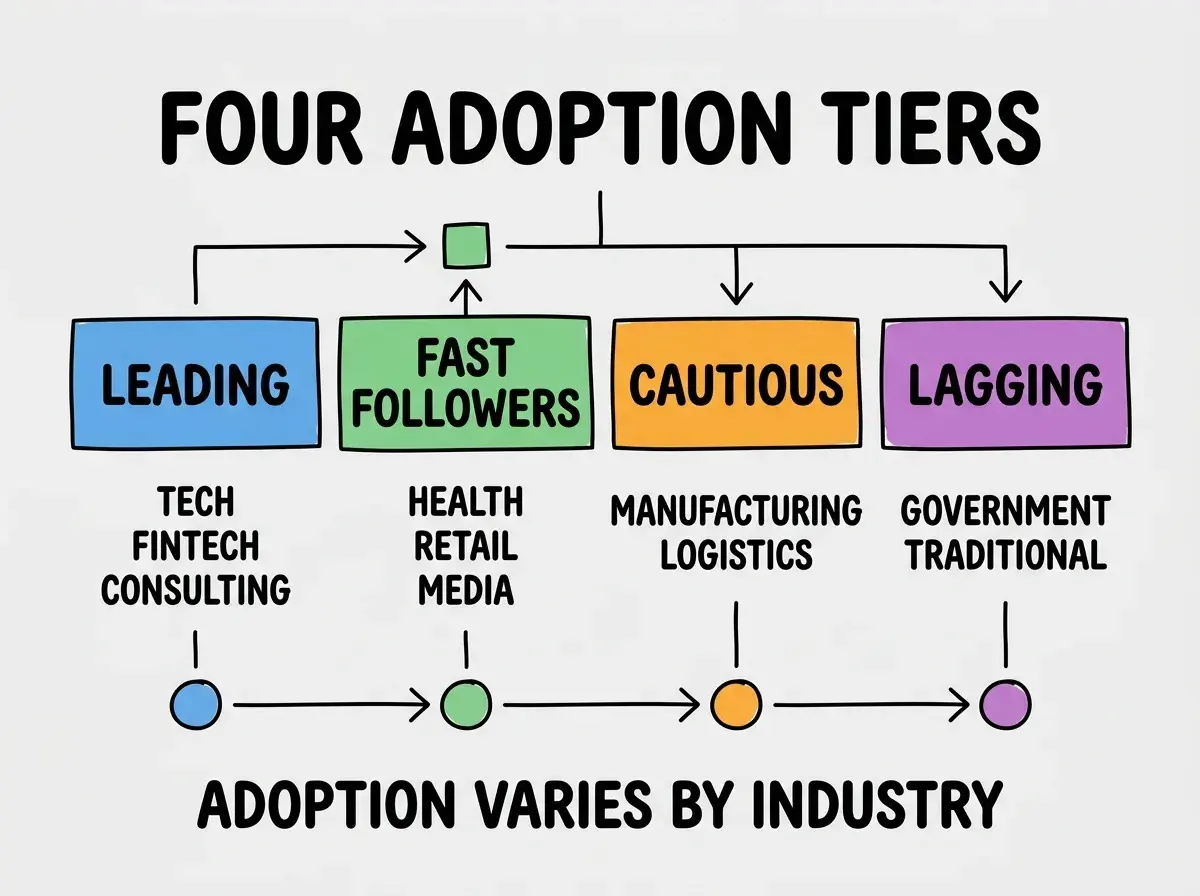
Tier 3, cautious adopters. Manufacturing (37 percent), logistics (34 percent), education (31 percent). These industries have widespread pilots but limited full deployment.
Tier 4, lagging adopters. Government (23 percent), heavily regulated industries (varies 18-28 percent), traditional industries (varies 20-30 percent). Adoption remains experimental in these industries.
What the Patterns Reveal
Three patterns from the data reveal industry adoption direction.
Pattern 1, regulatory environment dominates adoption speed. Heavily regulated industries adopt slowest regardless of size; lightly regulated industries adopt fastest. Regulation matters more than industry size for adoption pace.
Browse more industry analysis
Read more pulse articlesPattern 2, leadership culture affects adoption within industries. Forward looking leaders accelerate adoption regardless of industry tier. Within any industry, leadership culture creates 2-3x adoption rate variance.
Pattern 3, talent availability drives adoption sustainability. Industries with AI fluent talent sustain adoption better than industries without. Talent availability matters for going from pilot to production.
What Industry Patterns Mean For Builders
Three implication patterns matter for builders thinking about vertical positioning.
Implication 1, leading adopter industries are the most competitive markets. High adoption produces many vendors. Differentiation matters dramatically in these markets.
Implication 2, fast follower industries offer the best vendor opportunity currently. Adoption is established but vendor competition remains thinner than leading industries. Fast followers may be the highest value targeting opportunity for new vendors over the next 24 months.
Implication 3, lagging adopter industries offer long term opportunity but require patience. These industries will eventually adopt; early positioning before mass adoption produces incumbent advantages. The patience required is measured in years, not quarters.
How Builders Should Position by Tier
Three positioning patterns help builders match strategy to industry tier.
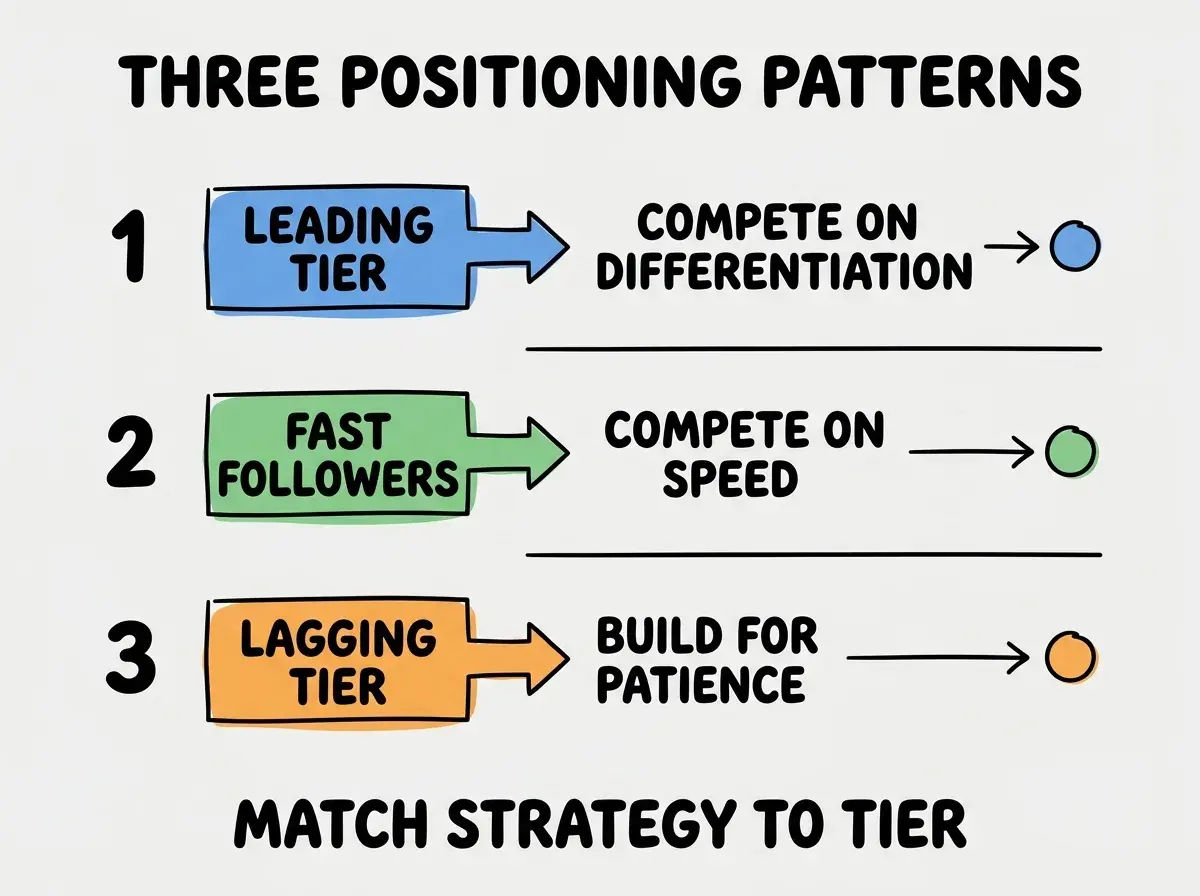
Pattern 1, leading tier requires deep differentiation. Generic AI coding tools fail in leading tier markets. Differentiation through specific capabilities, integrations, or workflows matters dramatically.
Pattern 2, fast follower tier requires speed advantage. First mover advantages compound in fast follower markets. Speed to market matters more than feature completeness.
Pattern 3, lagging tier requires patience and education. Lagging markets need market education alongside product. Vendors who invest in education build market while building product.
How Engineers Should Use Industry Patterns
Three application patterns help engineers apply industry insights to career decisions.
Application 1, target leading tier industries for highest paying current opportunities. AI fluent engineers command premium in leading tier markets where adoption is high.
Application 2, target fast follower industries for fastest career growth opportunities. Fast follower markets have growing demand with thinner talent pool than leading tier markets.
Application 3, build domain expertise alongside AI fluency for lagging tier opportunities. Lagging tier markets often need engineers who understand both AI tools and domain regulations. The combination produces specialist career paths.
The most damaging industry adoption interpretation mistake is treating tier as permanent rather than as current state. Industries move between tiers; today's lagging adopter may become tomorrow's fast follower. The fix is to consider trajectory rather than just current state; industries with accelerating adoption may be better targets than industries with high but stable adoption. Tier movement matters as much as tier position for forward looking decisions.
The other mistake is treating industries as monolithic. Within any industry, leading and lagging organizations exist. The fix is to target specific organizations within industries rather than treating industries as uniform.
A third mistake is missing geographic variance within industries. Healthcare adoption differs between Silicon Valley and rural areas even within the same industry. The fix is to consider geography alongside industry.
A fourth mistake is ignoring the cultural dimension of industry adoption. Industries with engineering cultures adopt faster than industries without; cultural fit matters beyond rational economic analysis. The fix is to assess cultural fit alongside economic factors.
How Industry Tiers Will Likely Shift Over Time
Three shift predictions matter for thinking about industry trajectory over the next 3-5 years. First, fast follower industries will likely move into leading tier as adoption deepens; the next 24 months may produce 1-3 new entrants to leading tier from current fast followers. Second, cautious adopters will likely become fast followers as regulatory clarity emerges; healthcare and education may accelerate adoption substantially as compliance frameworks mature. Third, lagging adopters will likely remain lagging for the foreseeable future; the regulatory and cultural barriers in government and traditional industries change slowly regardless of technology readiness.
What This Means For You
The industry adoption patterns reveal both opportunity and timing for builders thinking about vertical strategy. The four tiers, positioning patterns, and engineering applications produce framework for industry specific decisions.
- If you're a founder: Industry tier dominates strategy effectiveness. Match positioning to industry tier; mismatched positioning produces poor outcomes regardless of execution quality.
- If you're a senior dev: Industry tier affects career opportunities. Skills aligned with high adoption industries produce career growth; skills aligned with lagging industries may take longer to monetize.
- If you're a student: Industry tier affects entry opportunities. Leading tier industries hire AI fluent juniors most aggressively; lagging tier industries may require additional domain skills for entry.
Browse more industry analysis
Read more pulse articles