To understand the cost of AI coding tools and total market spend in 2026, recognize the four spending tier patterns the market organizes into (individual developers spending 20-50 dollars per month for personal subscriptions, small teams spending 200-1000 dollars per month for team plans, mid sized companies spending 5000-50000 dollars per month for enterprise plans plus infrastructure, and large enterprises spending 100000+ dollars per month for organization wide deployments), see what the spending patterns reveal about market dynamics, and consider what the cost data means for budget planning. The cost data reveals dramatic spending variance by buyer tier.
This piece walks through the four spending tiers, what the patterns reveal, the implications for budgeting, and the four mistakes when interpreting AI coding tool costs.
Why AI Coding Tool Costs Matter
AI coding tool costs matter for budget planning across all buyer tiers. The costs matter; tool subscriptions plus infrastructure plus training plus consulting compound into substantial budgets that need accurate planning rather than guesses.
The 2026 reality is that tool costs vary dramatically by buyer tier. Individual subscriptions start cheap but scale; enterprise deployments start expensive but produce productivity gains that justify costs; understanding the variance helps budget planning.
A 2025 Gartner cost analysis of AI coding tool spending found that median per developer cost ranged from 30 dollars per month for individuals to 800 dollars per month for enterprise developers including all infrastructure and support costs. The 27x range reveals dramatic cost variance that aggregate spending statistics hide.
The pattern to copy is the way cloud computing costs are analyzed today. Cloud costs include compute, storage, network, support, and operations; comprehensive analysis includes all components rather than just sticker compute prices. AI coding tool cost analysis benefits from similar comprehensiveness; full cost includes subscriptions, infrastructure, training, and consulting.
The Four Spending Tier Patterns
Four spending tier patterns organize AI coding tool costs.
Tier 1, individual developers. 20-50 dollars per month for personal subscriptions. ChatGPT Plus, Claude Pro, GitHub Copilot Individual. Personal subscriptions remain the entry point for most developers.
Tier 2, small teams. 200-1000 dollars per month for team plans. Cursor Business, Claude Team, GitHub Copilot Business. Team plans add collaboration features and centralized billing.
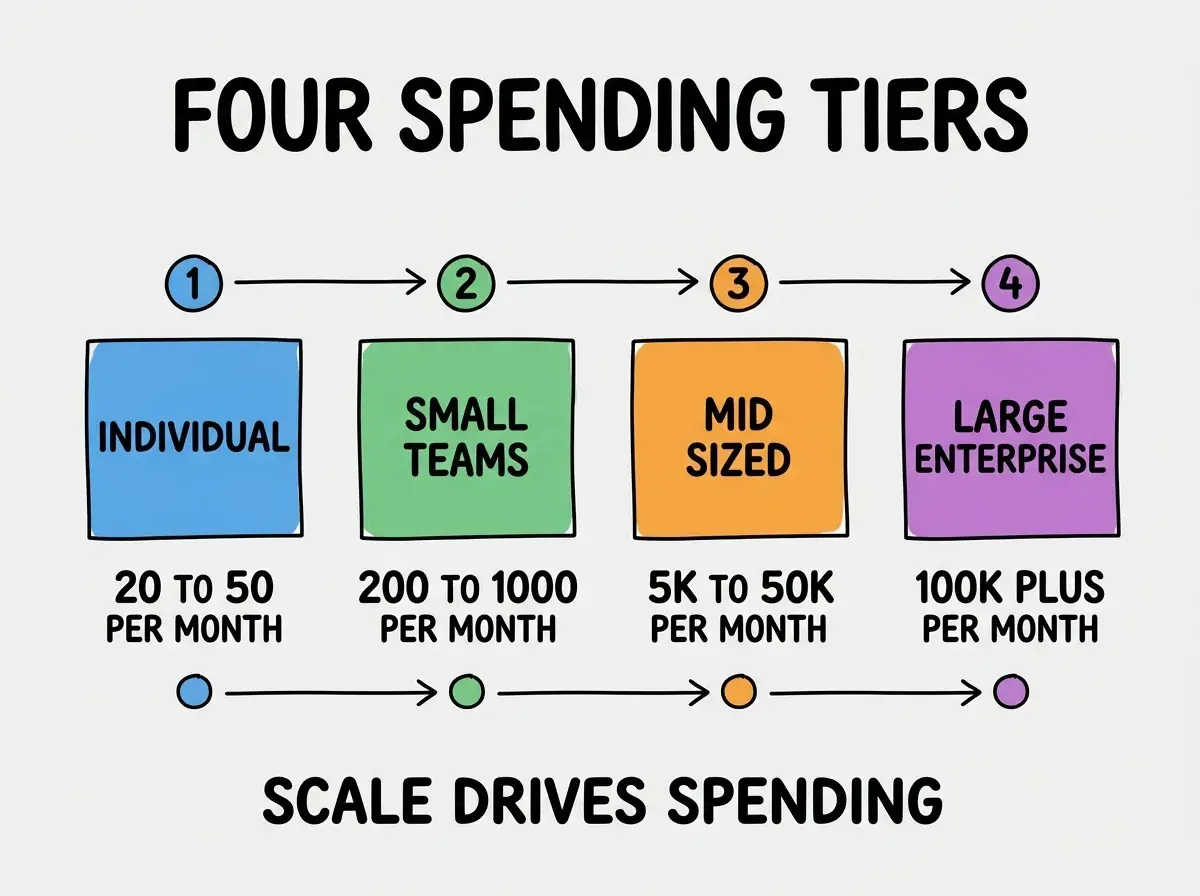
Tier 3, mid sized companies. 5000-50000 dollars per month including infrastructure. Enterprise plans plus AI infrastructure plus support. Mid sized spending often includes substantial infrastructure beyond just tool subscriptions.
Tier 4, large enterprises. 100000+ dollars per month for organization wide deployments. Custom contracts, dedicated support, security review, compliance features. Large enterprise spending includes comprehensive support that smaller tiers do not need.
What the Spending Patterns Reveal
Three patterns from the cost data reveal market dynamics.
Pattern 1, infrastructure costs grow faster than subscription costs at scale. Individual subscriptions are most of small spending; infrastructure dominates enterprise spending. The ratio shifts as deployments scale.
Browse more cost analysis
Read more pulse articlesPattern 2, support and consulting costs add 20-40 percent to enterprise tier spending. Enterprise deployments require change management, training, and ongoing support that smaller deployments do not. These costs often surprise budget planners.
Pattern 3, ROI calculation requires both cost and productivity gain analysis. Cost alone does not determine value; productivity gain alongside cost determines net value. Both sides matter for ROI.
What the Costs Mean For Budget Planning
Three implication patterns matter for different buyer tiers.
Implication 1, individual developers should treat AI tools as professional development investment. 30-50 dollars per month is small relative to professional development budgets and produces career value through skill building.
Implication 2, small teams should evaluate team plans against productivity gains. Team plan ROI is usually positive even at conservative productivity gain assumptions; the math favors team plans for active teams.
Implication 3, enterprises should budget comprehensively beyond just subscriptions. Subscription costs are often the smallest component of enterprise AI tool budgets; infrastructure and operations dominate.
How Buyers Should Apply These Patterns
Three application patterns help buyers across tiers apply cost data.
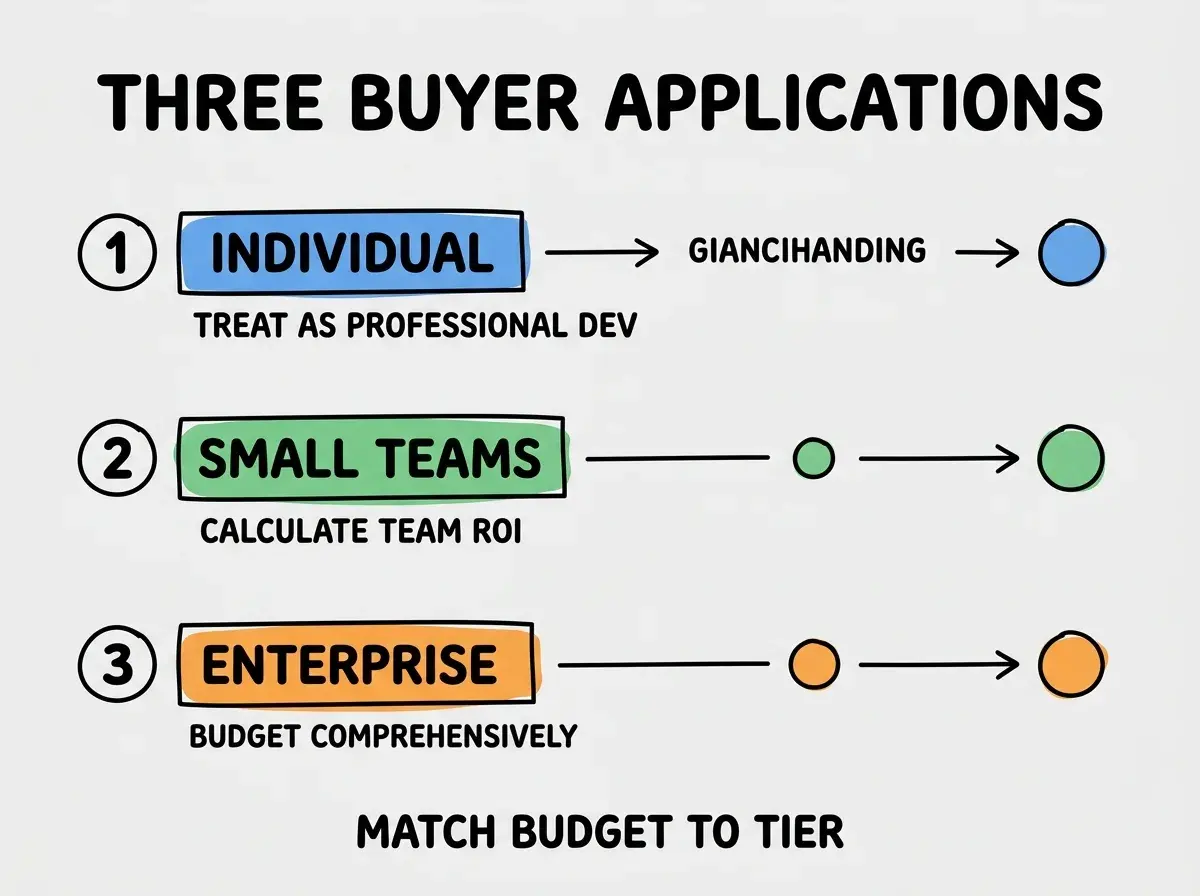
Pattern 1, individual developers should weight career value above narrow ROI. Career skill building from AI tool fluency produces career growth that simple productivity ROI calculation misses.
Pattern 2, small teams should calculate team ROI based on team productivity gains. Team plans cost more than individual subscriptions but provide benefits that justify the cost difference for active teams.
Pattern 3, enterprises should budget for full deployment costs not just subscriptions. Subscription cost is often 20-40 percent of total enterprise AI deployment cost; budgeting only for subscriptions produces project failure.
The combination produces budget planning that matches actual costs across buyer tiers. Without these patterns, individual developers under invest, small teams over pay for individual subscriptions, and enterprises blow budgets on incomplete subscription only planning.
The most damaging cost interpretation mistake is comparing individual subscription costs to enterprise deployment costs as if they are equivalent. Individual subscriptions are sticker prices for individual use; enterprise costs are comprehensive deployment costs including infrastructure, support, security, and operations. The fix is to compare like to like; full cost comparison reveals that enterprise per developer costs are higher because enterprise deployments include components individual subscriptions do not.
The other mistake is treating cost as primary tool selection criterion. Cost matters but features, fit, and team preferences matter more for sustained value. The fix is to weight cost alongside other factors.
A third mistake is missing the cost evolution dimension. AI tool costs evolve continuously; today's cost may not match tomorrow's cost. The fix is to track cost trends quarterly.
A fourth mistake is ignoring the regional cost variance. AI tool costs vary by geographic region. The fix is to consider regional pricing when planning international team budgets.
How AI Coding Tool Costs Will Likely Evolve
Three cost evolution predictions matter for thinking about future budget planning. First, individual subscription costs will likely stay stable while features expand; competition keeps consumer prices stable while feature improvements continue. Second, enterprise costs may grow as enterprises require more support and integration; enterprise pricing follows enterprise needs rather than commodity tool prices. Third, infrastructure costs will likely fall as AI hosting becomes more competitive; cloud providers competing for AI workload share will drive infrastructure prices down even as tool subscription prices stay stable.
The cost evolution matters for budget planning across multi year horizons. Plans that account for likely cost shifts produce different decisions than plans that assume current pricing is permanent.
Finance leaders should track cost per developer trends quarterly rather than annually. AI tool pricing changes faster than typical SaaS pricing; quarterly tracking reveals shifts that annual budgeting misses.
What This Means For You
The AI coding tool cost data reveals dramatic spending variance by buyer tier and application. The four tiers, application patterns, and buyer implications produce framework for budget planning across all scales.
- If you're a founder: Tool budget planning matters for runway management. Calculate full deployment costs including infrastructure rather than just subscriptions; full costs often exceed initial estimates.
- If you're a senior dev: Personal AI tool investment produces career returns. The 30-50 dollars monthly investment pays back through skill building that compounds career value.
- If you're a finance leader: AI tool budget planning requires comprehensive cost analysis. Subscription costs are often misleading; full deployment costs produce more accurate budgeting.
Browse more cost analysis
Read more pulse articles