The two-tier future of software development by 2027 will increasingly split projects into two distinct tiers (vibe coding for MVPs and internal tools, traditional engineering for production-critical systems), with the four characteristics that determine which tier fits a project being scale of users, regulatory requirements, performance constraints, and long-term maintenance expectations. The split is not "good vs bad" but "different tools for different jobs"; understanding which tier your project belongs in shapes every decision from team composition to tool selection.
This piece walks through the four characteristics that determine fit, the demands of each tier, the migration paths between tiers, and the four mistakes that come from putting projects in the wrong tier.
Why the Two-Tier Future Is Inevitable
The software industry has always had different practices for different stakes. The two-tier split is just an evolution of patterns that already existed: prototypes were always built differently than production systems, but the line between them is sharper now because vibe coding makes the gap between "prototype" and "looks production-ready" much smaller.
The 2026 reality is that vibe coding produces code that looks production-ready but often is not. Apps work in demos and break under load. Code that ships in a weekend creates technical debt that compounds over years. The distinction between MVP-quality and production-quality code matters more, not less, in the AI era.
A 2025 incident analysis from Pingdom of 2,000 SaaS startups found that startups that scaled past 10,000 users on vibe-coded MVPs without engineering investment had 4.7x higher production incident rates than startups that invested in engineering hardening. The vibe-coded MVP approach is highly effective for getting to product-market fit; it becomes a liability for scaling beyond that point. The two-tier reality is documented in operational metrics, not just in opinion pieces.
The pattern to copy is the way the construction industry treats temporary structures vs permanent buildings. A festival pavilion gets built fast with looser standards; a hospital gets built slowly with strict standards. Both serve their purposes; neither approach works for the other case. Software is converging on the same pattern: vibe coding for the festival pavilions of software (MVPs, internal tools, prototypes), engineering for the hospitals.
The Four Characteristics That Determine Tier
Four characteristics determine which tier a project belongs in. Honest assessment of each prevents tier mismatch.
Characteristic 1, scale of users. Apps serving 100 users tolerate problems that apps serving 100,000 users cannot. Scale magnifies every quality issue.
Characteristic 2, regulatory requirements. HIPAA, SOC 2, PCI, GDPR all demand engineering rigor. Vibe coding cannot meet these requirements without significant additional investment.
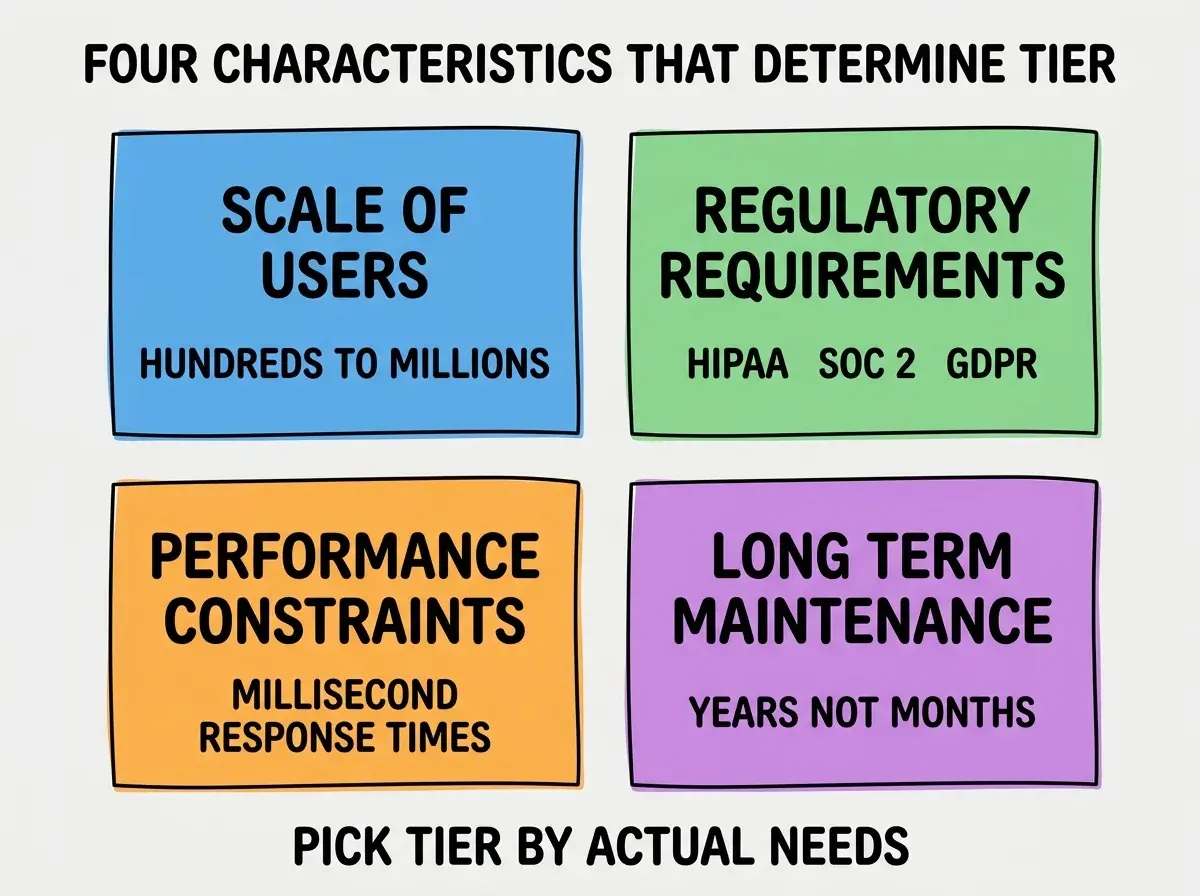
Characteristic 3, performance constraints. Apps that need millisecond response times, predictable latency, or high concurrency need engineering attention. Vibe-coded apps work for forgiving performance budgets.
Characteristic 4, long-term maintenance expectations. Apps maintained for years need code organized for that maintenance. Apps that will be rewritten or retired in months can tolerate looser organization.
The Demands of Each Tier
Each tier has specific demands that the other tier does not need to meet.
Vibe coding tier demands. Speed of shipping, willingness to discard and rebuild, comfort with rough edges, focus on user value over code elegance. Demands suit founders, indie hackers, and rapid-prototype teams.
Browse more future of dev guides
Read more pulse articlesProduction engineering tier demands. Code review discipline, comprehensive testing, monitoring and alerting, documentation, security review, performance budgets. Demands suit teams building systems people depend on.
The demands are not better or worse; they are appropriate for different goals. Confusion between them produces unhappy outcomes for both sides.
The Migration Paths Between Tiers
Successful projects often start in one tier and migrate to the other. Three migration paths matter most.
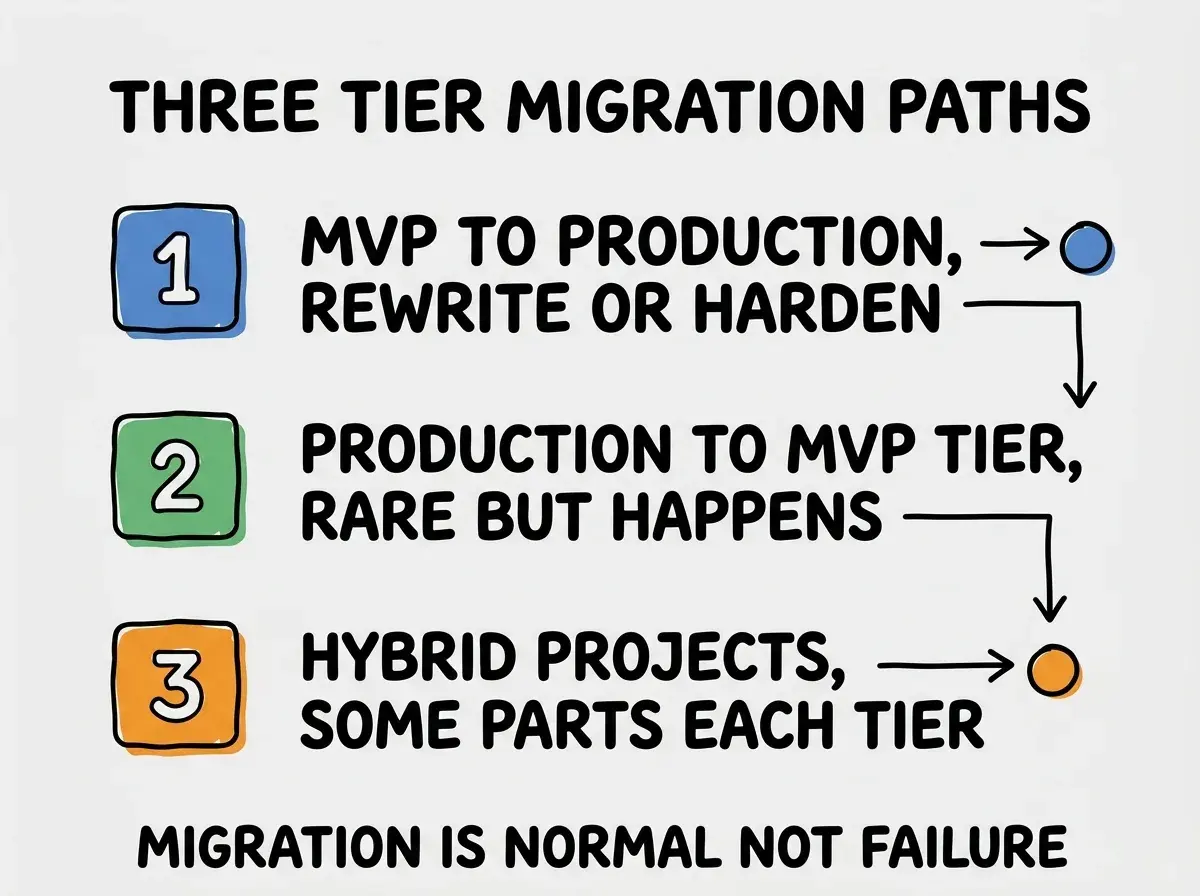
Path 1, MVP to production. Successful vibe-coded MVPs often need to graduate to production engineering. Either rewrite the codebase or progressively harden it. Both paths work; pick based on technical debt level.
Path 2, production-to-MVP-tier. Rare but happens for projects that turn out to need less rigor than initially assumed. Acknowledging the over-engineering frees engineering capacity for other work.
Path 3, hybrid projects. Most mature companies have both tiers running simultaneously. Production-tier core systems with vibe-coded experiments around them. The hybrid is increasingly common.
Implications for Hiring and Team Composition
The two-tier future affects how teams should be staffed. Three implications matter most.
Implication 1, generalist vs specialist split. Vibe coding tier rewards generalists who can ship across the stack. Production engineering tier rewards specialists with deep domain expertise. Both kinds of engineers have permanent roles.
Implication 2, junior-to-senior ratio shifts. Vibe coding tier can tolerate higher junior-to-senior ratios because AI handles much of what seniors used to do. Production engineering tier still benefits from senior judgment.
Implication 3, role specialization grows. New roles emerge: AI engineers, prompt designers, AI ops specialists. Some traditional roles diminish (manual QA, junior frontend) while new ones emerge.
The combination means organizations need to think about which tier each project belongs in and staff accordingly. One-size-fits-all team composition produces poor outcomes for both tiers.
The most damaging two-tier mistake is taking a vibe-coded MVP at scale and refusing to invest in engineering hardening because "it works fine." The MVP that worked for 1,000 users will start producing incidents at 10,000 users and crisis at 100,000 users. The fix is to invest in production engineering when scale demands it, even if the MVP appears to be holding up. By the time the cracks become visible to users, the engineering debt has compounded significantly. Proactive hardening beats reactive incident response every time.
The other mistake is over-engineering vibe-coded MVPs because the team includes senior engineers who default to production patterns. The result is a project that takes 5x longer to ship without commensurate value. The fix is to be explicit about which tier the project belongs in and resist the cultural pull toward over-engineering when the project's stakes do not justify it.
Tools and Practices That Bridge the Tiers
Some tools and practices work well in both tiers. Three categories matter most.
Category 1, version control with git. Both tiers benefit from git. The discipline of commits and branches transfers across tiers without friction.
Category 2, basic testing. Vibe coding tier benefits from a few smoke tests; production tier benefits from comprehensive coverage. Testing scales with stakes but is valuable in both.
Category 3, deployment automation. Both tiers benefit from automated deployment. The complexity differs but the principle is the same: human-triggered, automated execution.
The tools and practices that bridge tiers reduce the friction of moving projects between tiers. Teams that use bridging tools and practices migrate projects more smoothly when scale demands it, and the bridging investment pays back even when migration never happens because the practices add real value at both tiers in slightly different ways.
What This Means For You
The two-tier future is already partially here in 2026. By 2027, the split will be more pronounced and more openly acknowledged. Understanding which tier your work belongs in is increasingly important.
- If you're a founder: Be honest about which tier each project needs. MVPs at vibe-coding tier; revenue-producing systems at engineering tier. The honesty produces better resource allocation.
- If you're changing careers into engineering: Develop both skill sets. The hybrid engineer who can ship quickly AND build production systems is increasingly rare and valuable.
- If you're a student: Learn both tiers in your training. The pure vibe coder cannot graduate to production work; the pure engineer cannot ship MVPs efficiently. Both matter.
Browse more future of dev guides
Read more pulse articles