Sponsorship and advertising revenue for content platforms requires choosing models that fit audience and content type. Four revenue models matter: direct sponsorships (custom integrations with brands), programmatic ads (automated ad networks), affiliate revenue (commission on referred sales), and sponsored content (clearly disclosed brand content). Combined models produce diversified revenue; any single model creates fragility through dependency.
This piece walks through the four models, the implementation patterns, what makes sponsorship sustainable, and the four mistakes content creators make on sponsorship.
Why Sponsorship Strategy Matters For Content Platforms
Sponsorship strategy matters because content platforms need sustainable revenue. Subscription works for some; sponsorship and advertising serve broader audiences without paywalls.
The 2026 reality is that content advertising tools (Substack ads, podcast networks) make sponsorship accessible to indie creators previously locked out by minimum scale.
A 2025 indie creator economy study of 500 content platforms found that platforms with diversified sponsorship models earned 2.4x more revenue per audience member than platforms with single revenue source, primarily through reduced dependency on one model. Diversification measurably affects revenue stability.
The pattern to copy is the way magazines historically combined subscription, newsstand, and advertising revenue. Each channel served different needs; combination produced viable economics. Same patterns apply to content platforms; multiple revenue models produce stability.
The Four Revenue Models
Four models form complete content platform monetization.
Model 1, direct sponsorships. Custom brand integrations. Highest CPM.
Model 2, programmatic ads. Automated networks. Volume based.
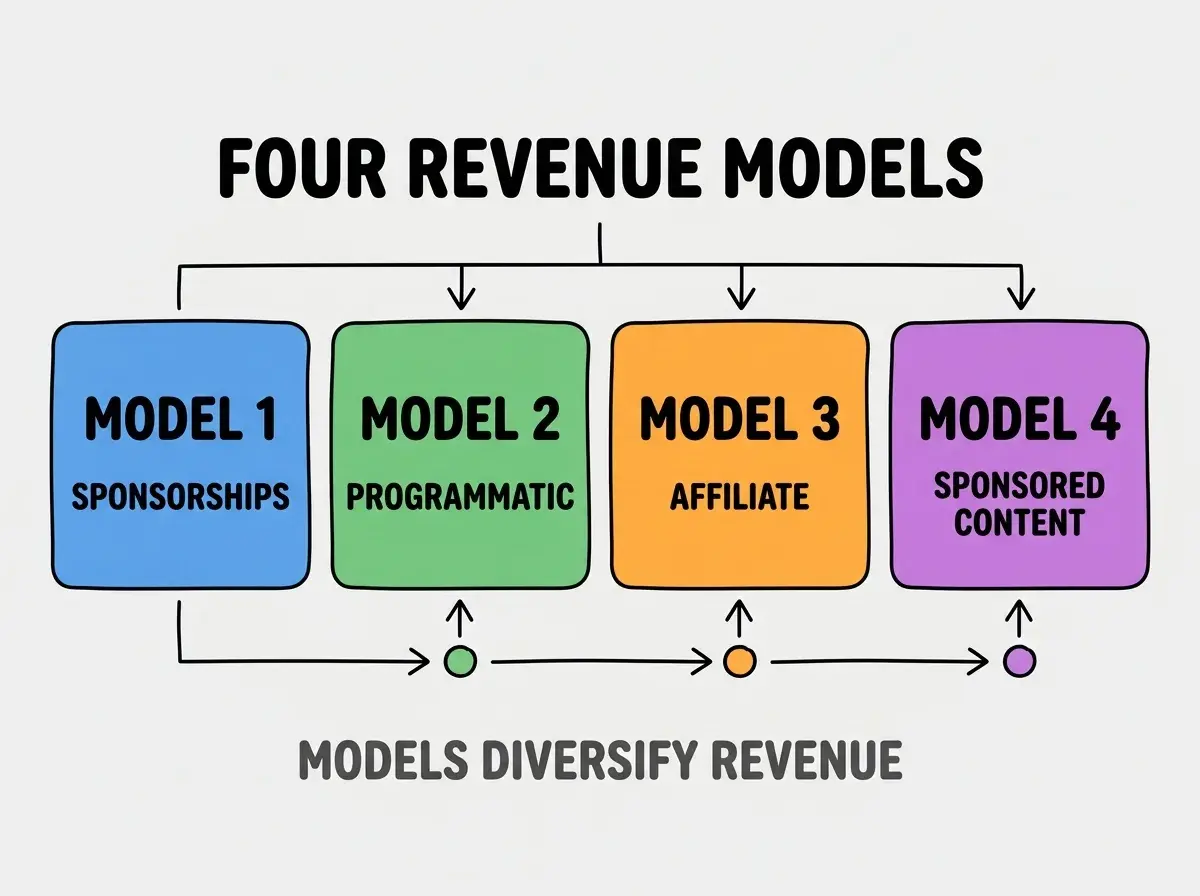
Model 3, affiliate revenue. Commission on sales. Performance based.
Model 4, sponsored content. Disclosed brand content. Higher value per piece.
How To Implement Each Model
Four implementation patterns address each model.
Implementation 1, direct outreach plus sponsorship marketplace. Email brands; list on Passionfroot, Sponsorscape.
Browse more grow
Read more growImplementation 2, programmatic via networks. Google AdSense, Carbon Ads; automated.
Implementation 3, affiliate links integrated. Amazon Associates, Impact, custom; track via UTM.
Implementation 4, sponsored content with clear disclosure. Sponsored label clear; trust preserved.
What Makes Sponsorship Sustainable
Three patterns separate sustainable from churn driving.
Pattern 1, sponsor fit with audience. Sponsors that audience actually wants; not random.
Pattern 2, transparent disclosure. Trust preserved through clarity about commercial relationships.
Pattern 3, diversification across sponsors. No single sponsor dominates; concentration risk managed.
What Makes Sponsorship Strategy Effective
Three patterns separate effective from theatrical.
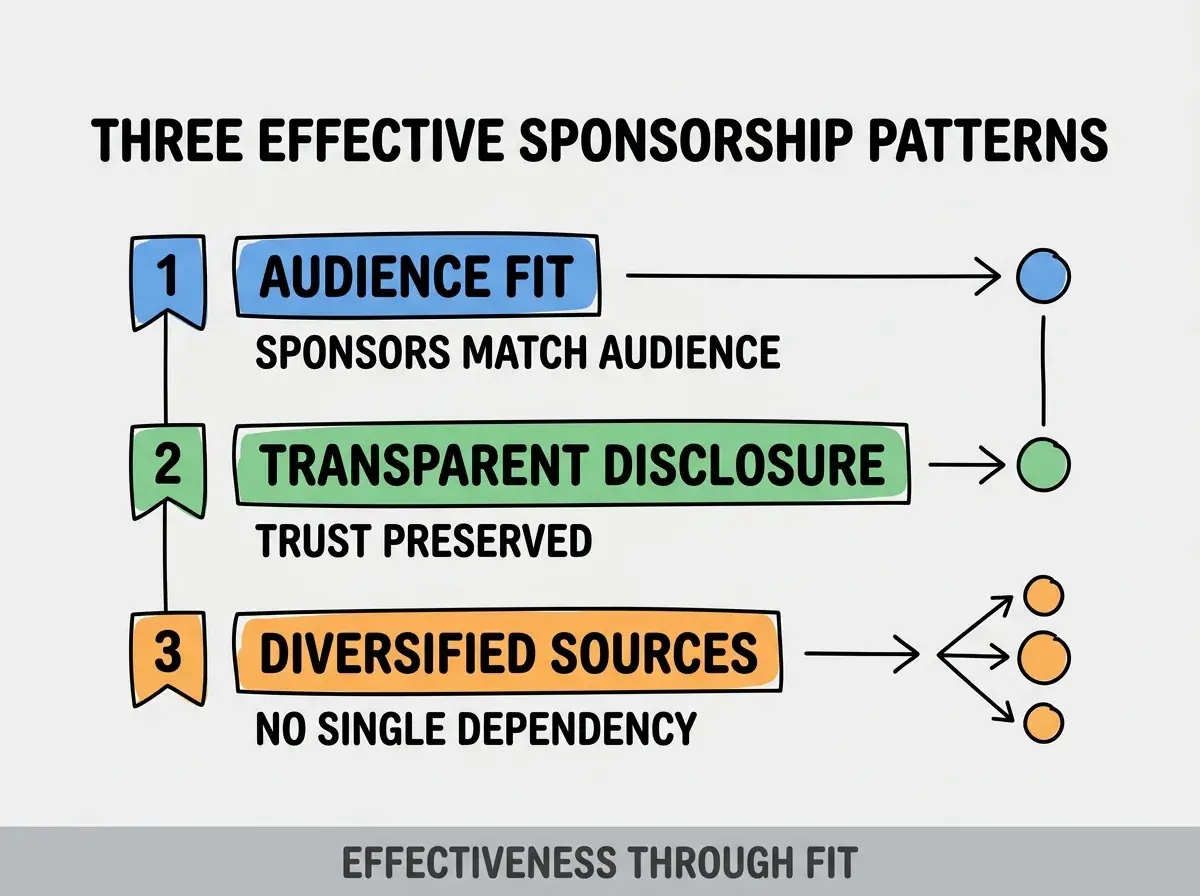
Pattern 1, audience fit. Sponsors match audience.
Pattern 2, transparent disclosure. Trust preserved.
Pattern 3, diversified sources. No single dependency.
The combination produces effective sponsorship. Without these patterns, sponsorship damages.
How To Choose Sponsor Mix
Three patterns help mix selection.
Pattern A, start with affiliate. Lowest barrier; good signal for direct.
Pattern B, add programmatic at scale. When audience large enough for meaningful CPM revenue.
Pattern C, direct sponsors when audience defined. Defined audience commands premium.
Common Questions About Sponsorship
Sponsorship raises questions worth addressing directly.
The first question is what audience size needed for direct sponsors. Varies by niche; 1000 dedicated beats 10000 general.
The second question is how to price sponsorships. CPM benchmarks plus engagement quality; negotiate.
The third question is whether to use sponsorship marketplaces. Yes; lowers transaction friction.
The fourth question is how to handle sponsor disagreements. Editorial independence in writing; sponsor relationship separate.
How Sponsorship Affects Content Platform
Sponsorship affects platform in compounding ways. Platform effects compound across audience.
The first compounding effect is audience trust. Quality sponsors maintain trust; spammy erodes.
The second compounding effect is content quality. Revenue enables investment in content.
The third compounding effect is creator sustainability. Revenue enables full time creator work.
The combination produces platform shaped by sponsorship discipline. Without discipline, platforms churn.
How To Negotiate Sponsorship Rates
Three patterns help negotiation.
Pattern A, benchmark against industry. Public CPM data; ballpark from there.
Pattern B, value engagement quality. Engaged audience commands premium.
Pattern C, package multiple placements. Bundle pricing; better economics for both.
The combination produces fair negotiations. Without patterns, leave money on table or overprice.
The most damaging sponsorship mistake is taking sponsors that don't fit audience. Mismatched sponsors annoy audience; trust erodes; long term revenue loses more than short term gain. The fix is to filter sponsors against audience fit; reject non fits even if revenue tempting. Creators who filter maintain audience; creators who chase revenue regardless of fit watch audience leave faster than sponsors can replace.
The other mistake is missing the disclosure compliance. FTC requires disclosure; non compliance risks regulatory.
A third mistake is over depending on single sponsor. Sponsor leaves; revenue cliff.
A fourth mistake is treating sponsorship as set and forget. Relationships need maintenance; sponsors need results.
What This Means For You
Sponsorship and advertising revenue for content platforms requires diversified strategy with audience fit. The four models, implementation patterns, and sustainability approaches produce revenue that compounds creator sustainability.
- If you're an indie hacker: Sponsorship monetization viable for content platforms; learn models.
- If you're a creative: Sponsorship enables full time creator work; revenue strategy matters.
- If you're changing careers: Content monetization expertise valuable; transferable across creator economy.
Browse more grow
Read more grow