Building and selling templates and themes provides revenue path that scales without per customer effort once template built. Four template categories matter: SaaS starter templates (auth, billing, dashboard already wired), landing page templates for marketing pages, theme variations for popular frameworks, and component libraries for designers. Successful templates generate $1K-$50K monthly with proper marketing. Template businesses suit indie hackers who can build once and sell many times.
This piece walks through the four template categories, the implementation patterns, what makes template businesses sustainable, and the four mistakes builders make on templates.
Why Templates Matter As Revenue Path
Templates matter because they convert one time build effort into recurring revenue. Build once; sell many times; revenue compounds without per customer work.
The 2026 reality is that template marketplaces (Lemon Squeezy, Gumroad, ThemeForest) reach buyers efficiently. Marketplace efficiency makes templates viable revenue path for solo builders.
A 2025 template seller survey of 400 successful template businesses found that top 20 percent generated $5K+ monthly with average 6 hour weekly maintenance, primarily through SaaS starter templates and component libraries. Templates can produce significant revenue with low ongoing effort when category and execution right.
The pattern to copy is the way furniture designers create plans that woodworkers buy. Plans built once; sold to many woodworkers; designer earns without building furniture per customer. Templates work identically for digital products.
The Four Template Categories
Four template categories dominate template revenue.
Category 1, SaaS starter templates. Auth, billing, dashboard, basic CRUD already wired. $200-$500 typical price; saves buyers weeks.
Category 2, landing page templates. Marketing pages, pricing pages, feature pages. $50-$150 typical; high volume.
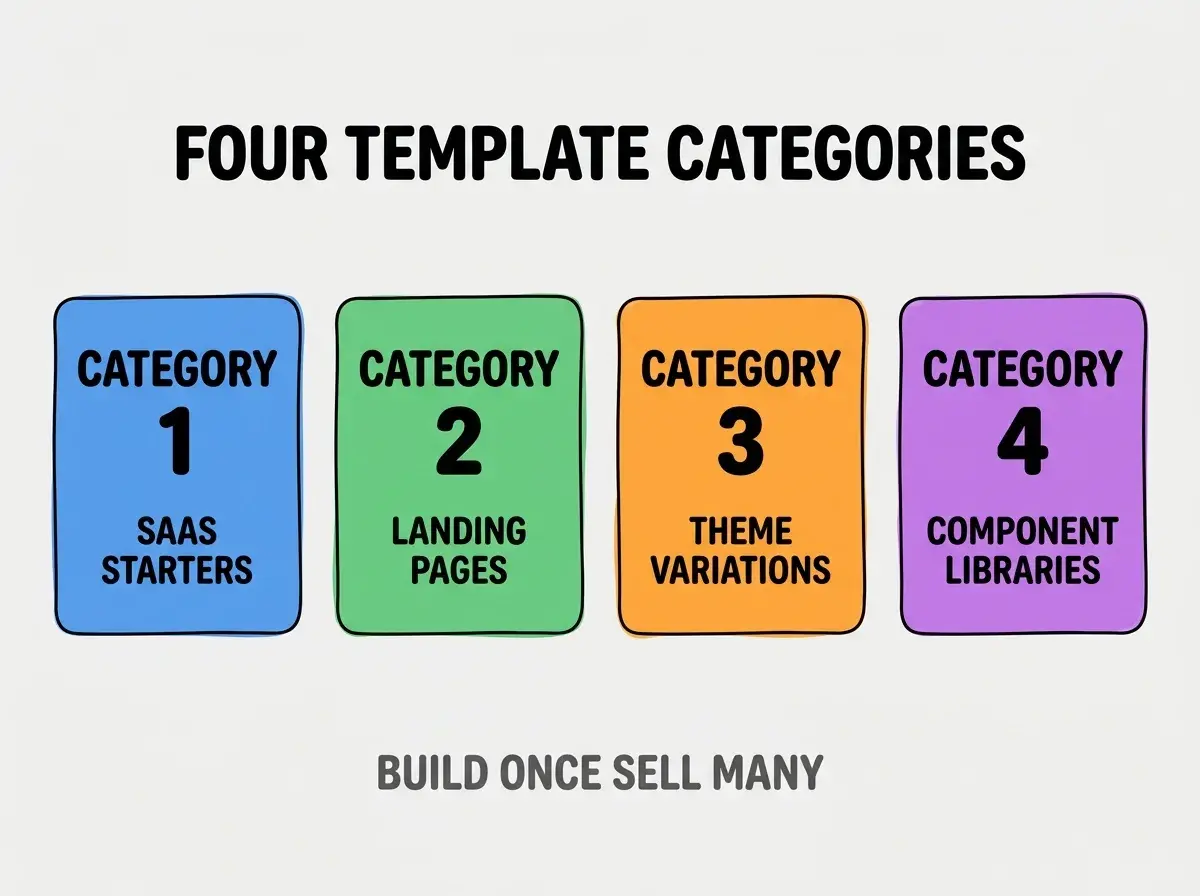
Category 3, theme variations for popular frameworks. Tailwind, Bootstrap, Bulma themes. $20-$80 typical; high volume.
Category 4, component libraries. Reusable components for specific design system. $100-$300; designer focused.
How To Build Each Template Type
Four implementation patterns address each category.
Implementation 1, SaaS starter scoped to specific niche. Generic SaaS starter crowded; niche starters (creator economy, marketplace, B2B) differentiate.
Browse more grow
Read more growImplementation 2, landing pages with conversion focus. Templates that convert sell better than templates that look pretty.
Implementation 3, themes with consistent design language. Variations sharing design language easier to maintain than disparate themes.
Implementation 4, component libraries with comprehensive coverage. Buyers need full set, not partial. Coverage matters.
What Makes Template Businesses Sustainable
Three patterns separate sustainable template businesses from one off launches.
Pattern 1, regular updates. Frameworks update; templates need updates. Stale templates lose buyers.
Pattern 2, customer support responsive. Buyers have questions; support quality affects refunds.
Pattern 3, marketplace plus direct sales. Marketplaces drive volume; direct sales higher margin. Combination works best.
What Makes Template Sales Compound
Three patterns separate compounding template businesses from flat ones.
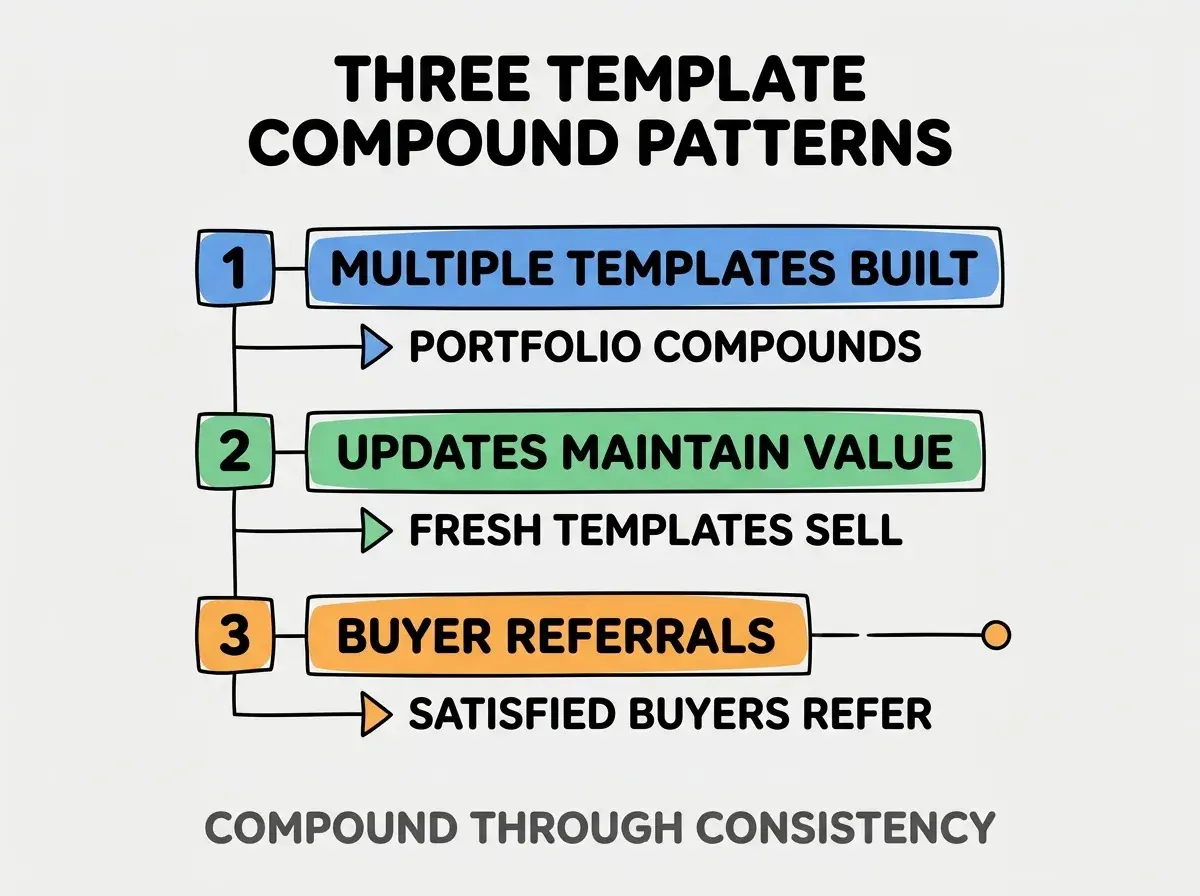
Pattern 1, multiple templates built. Single template revenue limited; portfolio compounds.
Pattern 2, updates maintain value. Updated templates compete; stale templates lose to fresh.
Pattern 3, buyer referrals. Satisfied buyers refer; word of mouth compounds without marketing spend.
The combination produces compounding template businesses. Without these patterns, template revenue peaks then declines.
How To Market Templates
Three patterns drive template sales.
Pattern A, demo videos showing template in action. Videos convert better than screenshots; demonstration matters.
Pattern B, tutorial content using template. Tutorials that use template introduce buyers; SEO compounds.
Pattern C, marketplace optimization. Marketplace listings need keywords, screenshots, descriptions. Optimization matters.
Common Questions About Template Business
Template business raises questions worth addressing directly.
The first question is what license to use. MIT typical for code; commercial license for visual design. Match license to product.
The second question is whether to offer free version. Sometimes; freemium drives leads. Free for limited; paid for full.
The third question is how to handle support. FAQ first; email for paid customers. Set boundaries upfront.
The fourth question is whether to build for one framework or many. One framework deeply better than many shallowly. Specialization compounds.
How Templates Affect Indie Hacker Income
Templates affect indie hacker income in compounding ways. Income effects compound across template portfolio.
The first compounding effect is passive revenue. Templates sell while you sleep; passive enables other work.
The second compounding effect is reputation building. Quality templates build designer reputation; reputation compounds.
The third compounding effect is product validation. Template buyers reveal what builders need; insights inform other products.
The combination produces indie hacker income shaped by template strategy. Without templates, income depends on time alone.
How To Price Templates Right
Three patterns help template builders price right.
Pattern A, anchor to time saved. Templates that save week worth $500+ to professionals.
Pattern B, observe competitor pricing. Marketplace shows market price; bracket within range.
Pattern C, raise prices over time. Initial prices low; raise as reputation builds.
The combination produces template prices that capture value. Without pricing strategy, templates underprice.
The most damaging template mistake is building generic templates competing in saturated markets. Generic SaaS starters compete with thousands; generic landing pages compete with tens of thousands. The fix is to build templates for specific niches; niche starters compete with dozens. Specialization opens differentiation; differentiation enables premium pricing and faster sales.
The other mistake is launching once then ignoring. Templates need updates, marketing, support; passive maintenance fails.
A third mistake is missing the post purchase experience. Buyers need clear setup docs, support; missing experience produces refunds and bad reviews.
A fourth mistake is treating templates as side project. Successful template businesses require business attention; side project commitment produces side project results.
What This Means For You
Building and selling templates and themes provides revenue path that scales without per customer effort. The four categories, sustainability patterns, and compound approaches produce template businesses that generate substantial monthly income.
- If you're an indie hacker: Templates suit indie scale; build niche templates and compound portfolio over years.
- If you're a designer: Component libraries leverage your design skill; consider as primary revenue path.
- If you're a founder: Templates work as side revenue while building primary product; focus matters.
Browse more grow
Read more grow