Anthropic announced Sonnet 4.6 on February 17, 2026. Deciding whether to migrate your automated coding agents and developer workflows requires a careful look at the documentation and a structured testing approach.
Retrospective edition for 2026-02-21. Researched and published September 9, 2026. Product details reflect documentation checked at publication unless explicitly identified as historical.
This documentation-based review explores how to evaluate the transition from the previous generation to the February release. We will focus on practical evaluation strategies rather than hands-on benchmarking, helping you build a robust internal testing pipeline for your engineering team.
Pricing Parity and Context Window Specifications Now
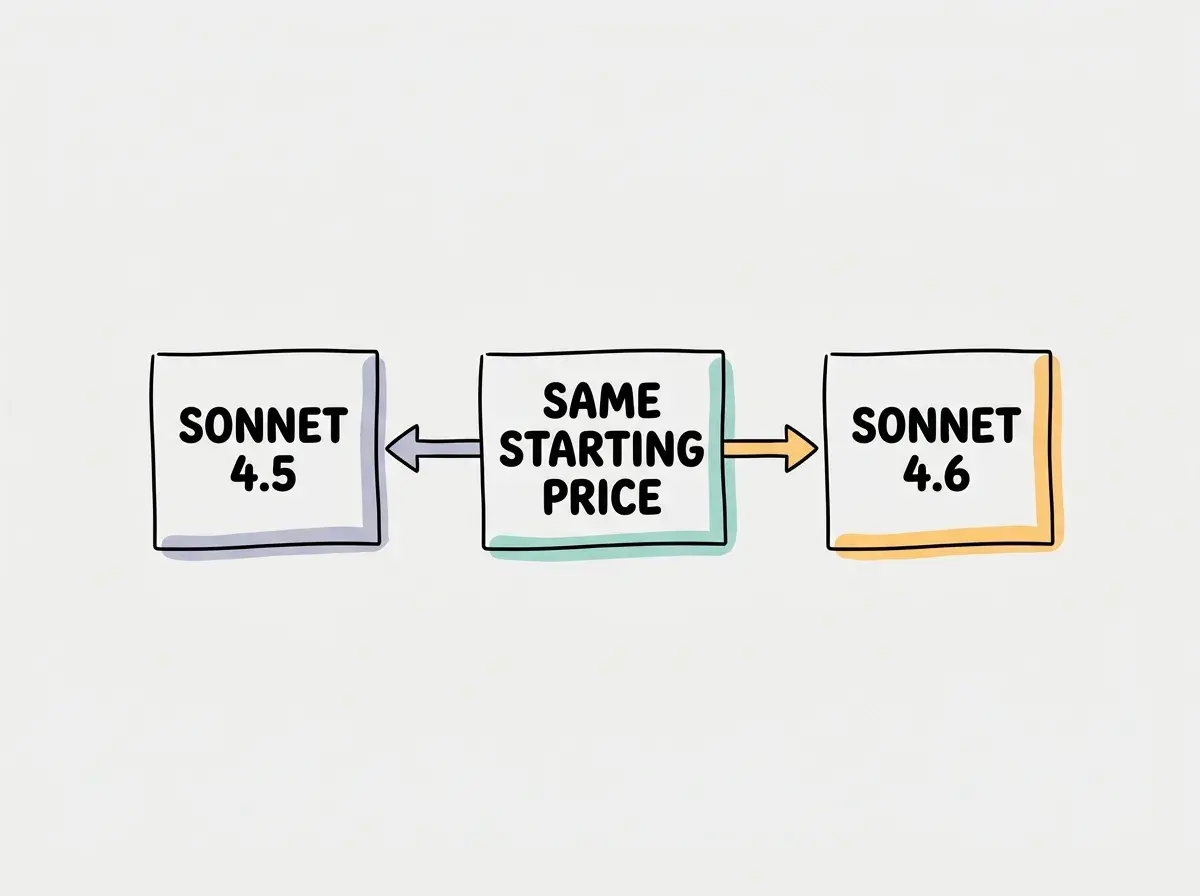
According to the official Anthropic announcement, the February 17 launch of Sonnet 4.6 maintains the same starting API prices as its predecessor. The announced starting rates were three dollars per million input tokens and fifteen dollars per million output tokens. Furthermore, the new model introduces a one million token context window in beta at launch. The vendor also noted that early users of their Claude Code product preferred the new version over the older one roughly seventy percent of the time, citing improvements in instruction following consistency and coding tasks.
Because the pricing remains identical, engineering teams can start a cost estimate from the same unit rates, then measure whether token usage and retries change. For a hypothetical coding task requiring one hundred thousand input tokens and generating ten thousand output tokens, the base cost would be exactly 0.45 USD. This calculation excludes any potential cache savings, tool use premiums, or extra platform charges.
The identical pricing structure means your primary evaluation criteria should include output quality, instruction adherence, latency, and total cost per accepted result. Equal unit prices do not mean equal task costs.
When evaluating the upgrade, it is crucial to rely on your own internal metrics rather than vendor surveys. The reported seventy percent preference is a useful signal, but it is not a universal benchmark. Your specific prompts, system instructions, and codebase architecture will dictate how the model performs in your unique environment.
Designing a Robust Test Harness for Model Upgrades
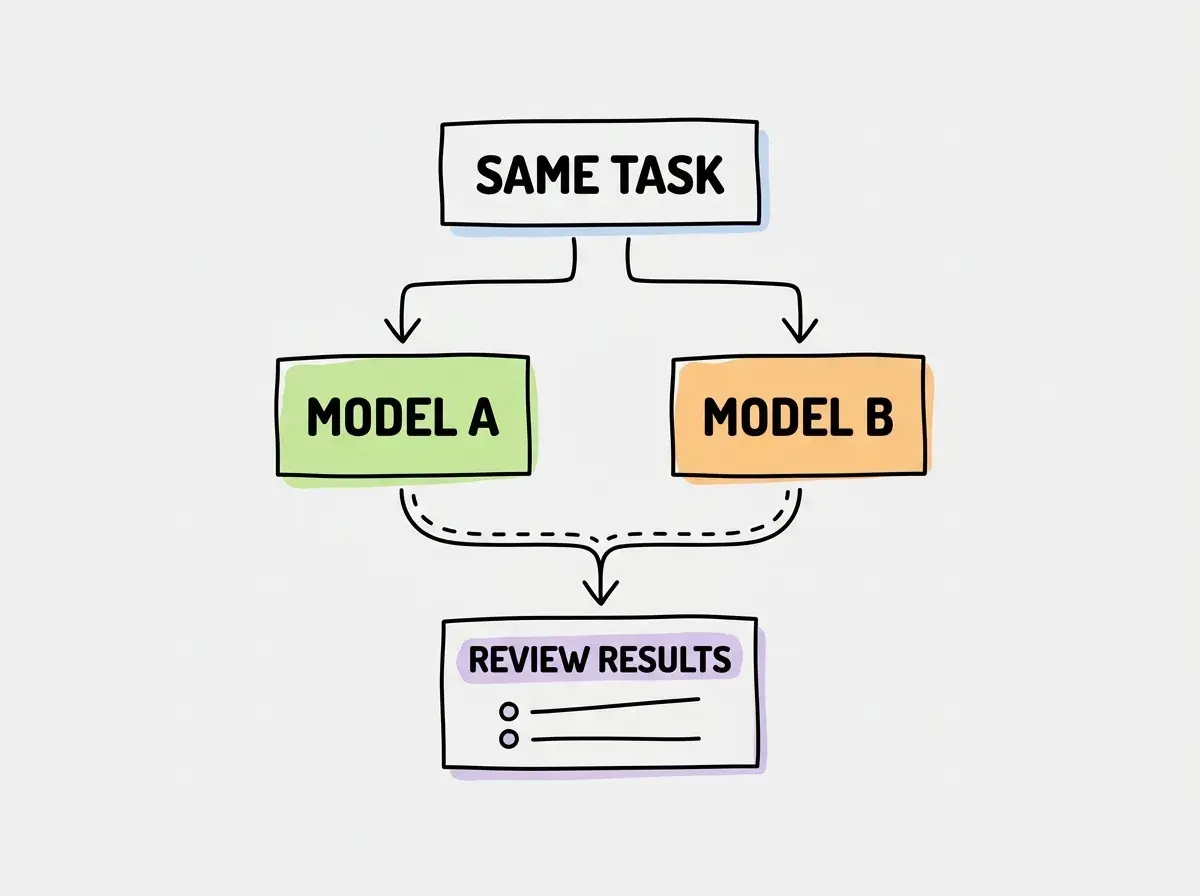
Before switching your production traffic, you need a rigorous testing environment. A proper test harness ensures that you are comparing apples to apples. You must use the exact same prompts, the exact same system instructions, and documented comparable effort budgets, noting when settings differ between models for both models.
Do not tweak your prompts to help the new model succeed during the evaluation phase. Changing instructions for only one model changes what the comparison measures and hides potential regressions in how the new model interprets your existing system prompts.
Your test harness should support immediate rollback capabilities. If the new version begins hallucinating API endpoints or failing to close JSON objects, you should have a tested way to route eligible requests back to an available approved version. This requires storing the model version as an environment variable or feature flag rather than hardcoding it into your application logic.
Explore clear explanations of AI coding tools, project context, and reliable development workflows.
Explore the blogBy maintaining strict control over the input variables, you can isolate the model's behavior. Record the exact token usage, the time to first token, and the total generation time for every test run. This data will help you determine if the claimed instruction following consistency translates into tangible benefits for your specific application.
The Six Task Evaluation Matrix for Software Engineering
To thoroughly evaluate the new model against the old one, we recommend implementing a six-task evaluation matrix. This matrix covers common software engineering scenarios. Instead of assigning arbitrary scores, your evaluation should focus on specific, verifiable checks.
Resolving Complex Authentication Bugs
Authentication logic is notoriously fragile. Provide both models with a sanitized snippet of your authentication middleware containing a subtle race condition or token expiration bug.
The expected checks for this task include verifying that the model identifies the exact line causing the race condition. It should propose a fix that does not introduce new security vulnerabilities, such as logging plain text passwords or bypassing signature validation. The model must also maintain the existing error handling structure rather than rewriting the entire file.
Executing Large Scale Python Refactoring
Refactoring legacy code tests a model's ability to maintain context and adhere to stylistic guidelines. Supply a monolithic Python script that lacks proper modularity and ask the models to extract specific utility functions.
Your evaluation should check if the generated code correctly imports all necessary standard libraries. The extracted functions must include accurate type hints and docstrings that match your internal style guide. Most importantly, the refactored code must not alter the original business logic or drop any edge-case handling.
Managing Complex SQL Schema Migrations
Database migrations require precision. Provide a current database schema and a desired future state, asking the models to generate the necessary SQL migration scripts.
Check the target database’s actual transactional DDL behavior rather than assuming every migration can be wrapped atomically. It must correctly handle data preservation when altering column types. Additionally, the generated script should include a recovery plan that states which changes are reversible, how backups are restored, and which transformations lose information.
Building Accessible React Components
Frontend development requires balancing functionality with accessibility standards. Request a complex interactive React component, such as a multi-select dropdown with asynchronous search capabilities.
The expected checks involve verifying the inclusion of correct ARIA attributes and keyboard navigation support. The component must properly manage internal state without unnecessary re-renders. It should also correctly type the component props using TypeScript, avoiding the use of generic types where specific interfaces are required.
Diagnosing and Fixing Flaky Tests
Flaky tests drain engineering resources. Present a test suite that occasionally fails due to asynchronous timing issues or shared state mutations.
You should check if the model correctly identifies the root cause of the flakiness rather than simply increasing timeout durations. The proposed solution should isolate the test environment, perhaps by mocking external dependencies or properly resetting the database state between test runs.
Generating Comprehensive Regression Tests
Writing tests for undocumented legacy code is a common use case for AI assistants. Provide a complex, undocumented function and ask for a complete suite of regression tests.
The expected checks include verifying that the model covers both standard use cases and extreme edge cases. The generated tests must use your preferred testing framework correctly. Furthermore, the assertions must be specific and meaningful, avoiding tautological checks that always pass regardless of the function's behavior.
High Level Specification Comparison and Overview
To summarize the technical differences based on the official documentation, we can look at the core specifications provided by the vendor.
| Launch detail | What it means for evaluation |
|---|---|
| Same starting input and output prices as 4.5 | Measure usage as well as unit prices |
| 1M-token context beta for 4.6 | Verify account access, pricing conditions, and workload behavior |
| Vendor-reported preference improvement | Reproduce representative tasks in your own environment |
These are February launch details, not a complete current plan or context-limit comparison.
This table highlights that the primary documented difference lies in the expanded context window and the vendor's claims regarding consistency. Your internal testing will verify if these claims hold true for your workloads.
Separate Drop-In Compatibility from Prompt Tuning
Run the first pass with your existing prompts and tool definitions. This answers a narrow question: can the new model replace the old one without changing the surrounding workflow? Record invalid tool arguments, unnecessary file edits, missed constraints, and cases where the model stops before checking its work. A successful build alone may hide a regression in instruction following.
Then run a second, clearly labeled pass using prompts adapted to the new model’s documented behavior. Apply the same time and token budget to both candidates. This answers a different question: how good can each setup become with a reasonable amount of tuning? Keep the results separate so a prompt improvement is not mistaken for a model-only improvement.
For each of the six tasks, record accepted or rejected, the reason, review minutes, retries, and billed usage. Repeat a small sample to see whether a failure is consistent. If the upgrade improves refactoring but makes migration suggestions less dependable, route those task types differently or retain the established setup for migrations. A single overall score should not conceal a failure in the workflow your team most relies on.
Frequently Asked Questions About the Sonnet Upgrade
What This Means for Your Software Engineering Team
Evaluating a new language model requires discipline and a structured approach. By implementing a rigorous test harness and utilizing a comprehensive evaluation matrix, your engineering team can make data-driven decisions about upgrading.
Focusing on specific, verifiable checks rather than subjective scoring ensures that the new model genuinely improves your automated workflows. Whether you are resolving complex authentication bugs or generating comprehensive regression tests, the goal is to enhance developer productivity without introducing new technical debt. Take the time to run these evaluations thoroughly, and you will be well-positioned to leverage the latest advancements in AI-assisted software engineering.
Read more practical articles for choosing tools, reviewing changes, and shipping useful software.
Read more guides