To understand patterns of solo builders making 10K monthly in 2026, recognize the four common patterns the data reveals (narrow vertical focus rather than horizontal product breadth, AI as productivity multiplier not replacement for judgment, distribution before product through audience building first, and recurring revenue models through subscriptions or usage based pricing), see what the patterns reveal about indie hacker success, and apply the patterns relevant to your situation. The patterns matter because they reveal what works in current market rather than past market.
This piece walks through the four common patterns, what they reveal, the implications for aspiring solo builders, and the four mistakes when interpreting solo builder success.
Why Solo Builder Patterns Matter
Solo builder patterns matter for understanding what works in 2026. The mattering increases as more developers consider solo paths; understanding patterns informs better decisions.
The 2026 reality is that AI tools have changed solo builder economics dramatically. What worked in 2020 may not work in 2026; current pattern data informs current decisions better than historical patterns.
A 2025 indie hacker survey of 1,200 solo builders making 10K plus monthly found that 87 percent shared common patterns despite operating in different verticals. The pattern consistency suggests systematic factors driving success rather than vertical specific factors; patterns transferable across verticals.
The pattern to copy is the way historians analyze entrepreneurial waves. Each entrepreneurial wave (manufacturing, software, mobile, AI) has common patterns despite individual variation. Solo builder success follows similar pattern; patterns transfer across waves.
The Four Common Patterns
Four patterns characterize solo builders making 10K monthly in 2026.
Pattern 1, narrow vertical focus over horizontal breadth. Successful solo builders dominate small verticals rather than competing in large ones. Vertical focus enables defensibility solo builders need.
Pattern 2, AI as productivity multiplier not judgment replacement. Successful builders use AI to ship faster while maintaining judgment about what to ship. Judgment matters more than execution speed alone.
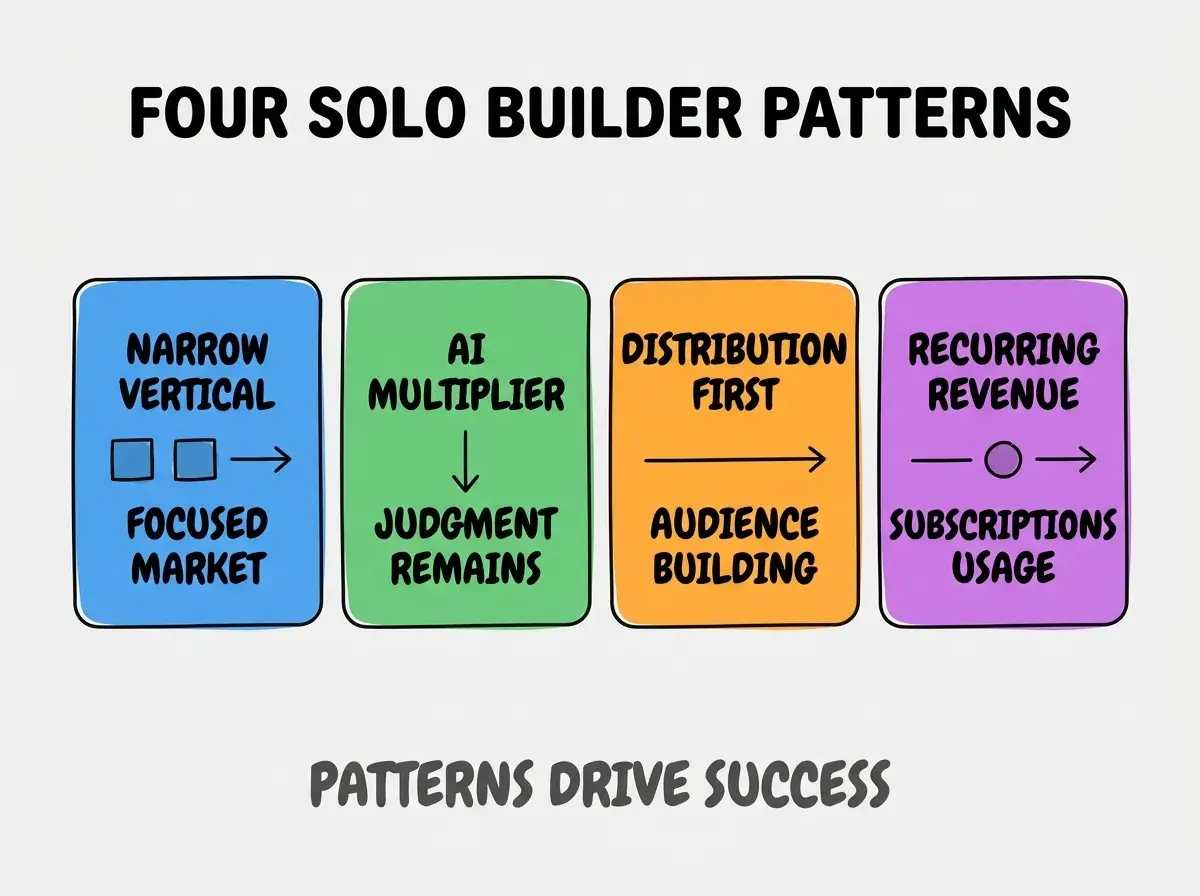
Pattern 3, distribution before product through audience building. Successful builders build audience before launching product. Audience converts at rates pure product launches cannot match.
Pattern 4, recurring revenue models through subscriptions or usage. One time sales produce volatile revenue; recurring revenue compounds. Subscriptions or usage based pricing scale better than transactional.
What The Patterns Reveal
Three patterns reveal underlying success dynamics.
Pattern 1, defensibility matters more than scale at 10K monthly. Solo builders cannot compete on scale; defensibility through verticals enables survival. Scale comes after defensibility, not before.
Browse more pulse articles
Read more pulsePattern 2, productivity gains from AI matter for survival not differentiation. AI productivity is baseline; everyone has access. Differentiation comes from judgment about what to build.
Pattern 3, distribution determines reach more than product quality. Better products with worse distribution lose to worse products with better distribution. Distribution investment pays back through reach.
What The Patterns Mean For Aspiring Solo Builders
Three implication patterns matter for aspiring solo builders.
Implication 1, choose verticals deliberately not opportunistically. Vertical choice shapes 5 year trajectory. Deliberate choice enables defensibility that opportunistic choice misses.
Implication 2, build audience before product where possible. Audience first reduces launch risk and increases conversion. Audience second forces launch into vacuum.
Implication 3, choose business model for recurring revenue. Revenue model choice affects scaling sustainability. Recurring beats transactional for solo builders.
How To Apply These Patterns
Three application patterns help aspiring solo builders apply learnings.
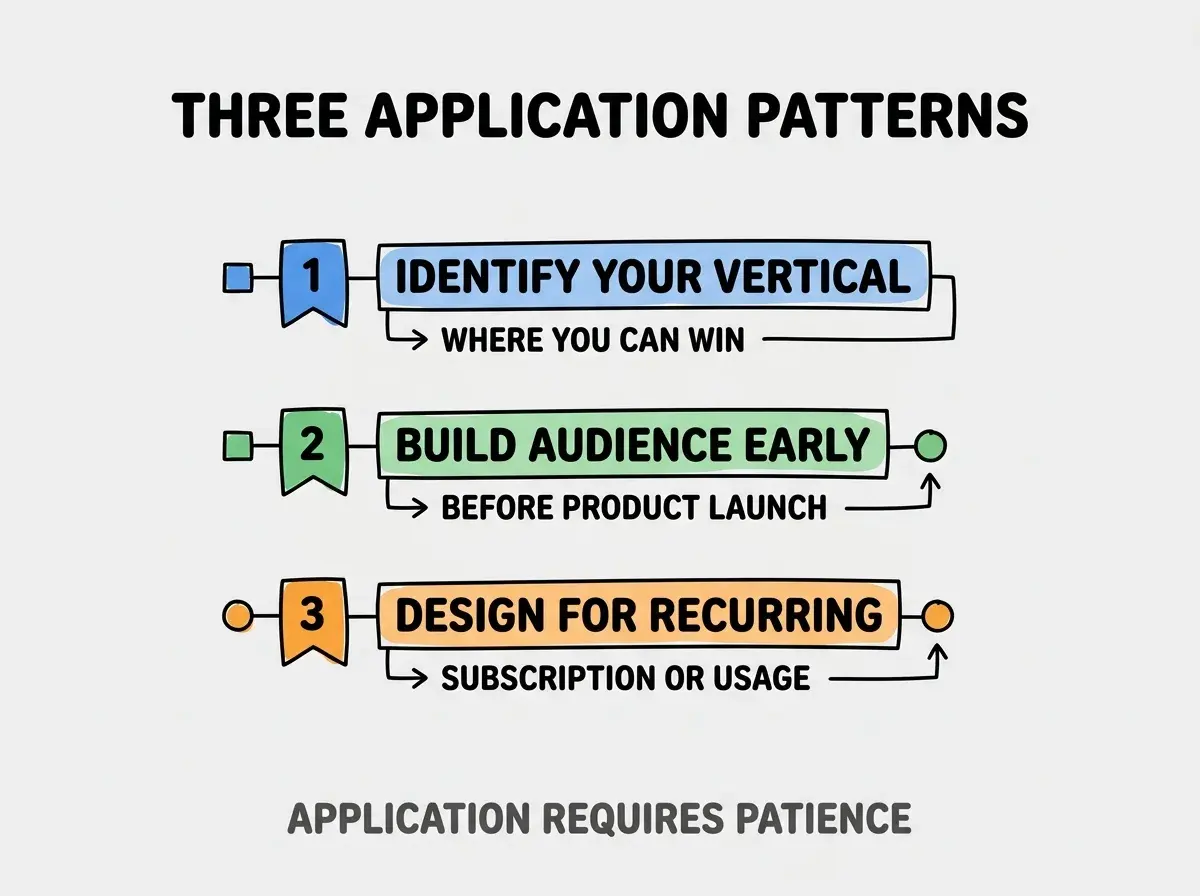
Pattern 1, identify vertical where solo builder can win. Verticals with established large players hard to enter; verticals with no large players too small. Sweet spot exists between.
Pattern 2, build audience early through content or community. Twitter, blog, newsletter, community presence. Audience building takes 6-12 months; start early.
Pattern 3, design product for recurring revenue from start. Subscription or usage based pricing. Recurring matters more than initial pricing decision suggests.
What Makes Patterns Sustainable
Three patterns separate sustainable solo builder success from unsustainable patterns.
Pattern 1, vertical depth over time. Sustained focus on chosen vertical builds depth. Without depth, defensibility erodes.
Pattern 2, customer relationships over time. Relationships compound; each customer interaction builds future value. Without relationships, customers become transactional.
Pattern 3, judgment improvement over time. Each decision teaches; reflection improves judgment. Without reflection, lessons get repeated rather than learned.
The combination produces solo builder success that sustains beyond initial 10K month achievement. Without sustainability patterns, achievement often peaks then declines.
The most damaging solo builder pattern interpretation mistake is treating success patterns as guaranteed formula. Patterns indicate what tends to work; individual outcomes vary. The fix is to apply patterns while expecting variation; patterns are starting points not endpoints. Solo builders who apply patterns flexibly produce better outcomes than solo builders who follow patterns rigidly. Pattern application requires judgment that pure pattern following misses.
The other mistake is missing the survivorship bias in success data. Failed solo builders rarely visible; success patterns may include luck factors that fail to transfer. The fix is to study failures alongside successes.
A third mistake is assuming AI capability eliminates need for traditional business skills. AI accelerates execution but does not replace customer development, marketing, sales. Skills matter as much as ever.
A fourth mistake is treating 10K monthly as endpoint rather than waypoint. Patterns that work at 10K monthly may need adjustment at 100K monthly. Patterns evolve with scale.
How To Handle Specific Solo Builder Challenges
Three challenges deserve specific approaches.
Challenge A, finding initial customers. Audience building before launch produces initial customers. Without audience, finding customers becomes harder than building product.
Challenge B, sustaining motivation through plateau periods. Plateaus happen between growth phases; motivation matters through plateaus. Without sustained motivation, plateaus become exit points.
Challenge C, scaling from 10K to 100K monthly. Scaling requires different patterns than reaching 10K. Recognize transition; apply scaling patterns when 10K achieved.
The combination produces approaches to specific solo builder challenges. Without specific approaches, common challenges produce predictable failures.
How Solo Builder Patterns Will Likely Evolve
Solo builder patterns will likely continue evolving as AI capabilities mature.
The first likely evolution is bar for solo builder success rising. AI accessibility means more competition; differentiation requires more depth. Rising bar requires evolving practices.
The second likely evolution is vertical depth becoming more important. Generic horizontal products lose to focused vertical products. Vertical focus matters more not less.
The third likely evolution is audience building patterns evolving. New platforms, new content types, new community patterns. Building practices evolve continuously.
The combination suggests solo builder success will remain achievable but require evolving practices. Builders learning patterns now build skills that remain valuable as patterns evolve.
Common Questions About Solo Builder Success
Solo builder patterns raise questions worth addressing directly.
The first question is whether solo builder path is harder in 2026 than 2020. Mixed; lower technical barriers but higher competition. Different difficulty rather than more or less difficult.
The second question is whether pattern adoption guarantees success. No; patterns improve odds without guaranteeing outcomes. Apply patterns while preparing for variation.
The third question is whether to keep day job during solo builder building. Yes initially; day job provides runway during 12-24 month build period. Quit when revenue justifies, not before.
What This Means For You
Solo builder patterns reveal what works in 2026 indie hacker landscape. The four patterns, application approaches, and sustainability factors produce framework for solo builder success.
- If you're an indie hacker: Apply patterns with patience; outcomes happen over 12-24 months not immediately. Patience matters as much as pattern selection.
- If you're a career changer: Solo builder path viable but requires sustained effort. Plan for multi year journey rather than expecting quick success.
- If you're a founder: Solo founder context shapes pattern relevance. Some patterns transfer to small teams; some require team modification. Adapt patterns to context.
Browse more pulse articles
Read more pulse